style guides
Blackwork vs. Black-and-Grey Tattoos: Which Ages Better
Blackwork and black-and-grey both skip color, but they age, cost, and read on skin very differently. Here is how to pick between them.

Blackwork and black-and-grey get lumped together because neither uses color, but that is where the similarity ends. One is built on flat, saturated black. The other is built on diluted wash and smooth tonal gradients. Once you understand how each style is packed into the skin, the pick between them stops being a taste question and becomes a body-and-budget question.
This guide covers what actually separates the two styles, what each costs in 2026, how they age on different skin tones, and which one to pick for a first big piece. If you want the deeper single-style breakdowns, read our blackwork style guide and black-and-grey style guide alongside this comparison.
What each style actually is
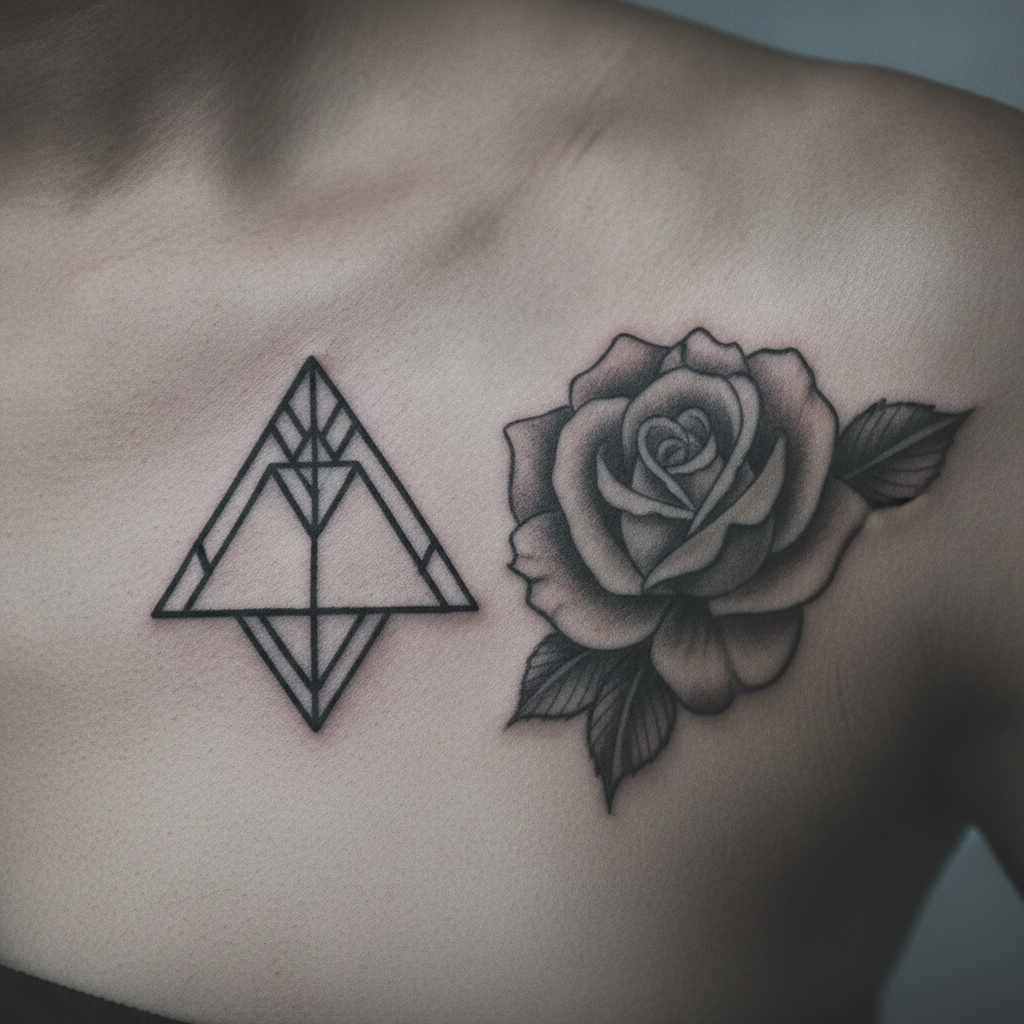
Blackwork is exactly what it sounds like: undiluted black ink packed solid into the skin, usually with a mag or a large round shader for fills and a liner needle for the outline. There are no grey tones in a pure blackwork piece. Designs live on the contrast between solid black shapes and untouched skin. Think ornamental patterns, dense geometric mandalas, bold neo-tribal work, and heavy silhouette designs.
Black-and-grey is a shading style. Artists take the same black ink and dilute it with distilled water or a proprietary grey wash to create three to five tonal values, then use soft round shaders and single-needle groupings to blend those values into smooth gradients. The result reads more like a pencil drawing or a black-and-white photograph than a graphic. Portrait realism, wildlife pieces, religious imagery, and micro-realism almost all live in the black-and-grey family.
The tools give the game away in the studio. If you see a small stack of ink caps holding different grey dilutions, you are watching black-and-grey. If you see one big cap of straight black and the artist packing solid, you are watching blackwork.
Pain, session count, and how the appointment feels
Blackwork hurts more per session than most people expect. Packing solid black into a large fill means the artist goes over the same skin repeatedly with a mag needle until the black reads fully opaque. That repetition is what makes the skin scream by hour three, especially over ribs, sternum, or the back of the arm. A palm-sized solid blackwork fill often takes two to four hours and needs one touch-up after healing to catch any patchy spots.
Black-and-grey is usually gentler in the moment but longer overall. Shading with soft round shaders lays ink in lighter passes, which most clients tolerate better than solid packing. The tradeoff is session count. A realistic black-and-grey half sleeve routinely runs three to six sessions of three to five hours each, because building smooth gradients from light to dark cannot be rushed without muddying the tones. If you are new to long sits, read our guide on how long between tattoo sessions before booking anything larger than a single sitting.
Recovery load also differs. Solid blackwork scabs thicker because the skin is saturated with pigment across a wide area, and the scab tends to peel in bigger flakes. Black-and-grey heals with lighter, more even peeling because the ink density per square inch is lower.
Cost in 2026: what you will actually pay
Blackwork tends to bill by the piece or by the hour on large flat fills. Small to medium ornamental blackwork runs $200 to $600. Larger dense fills, blackout sleeves, or big geometric back pieces land in the $1,500 to $6,000 range depending on artist tier and city. Because the technique is fill-heavy, hourly artists often quote toward the high end of their range for blackwork. Our full blackwork tattoo cost breakdown covers regional variance in detail.
Black-and-grey trends slightly more expensive at the top tier because portrait and realism work depends on rare skill. A small black-and-grey piece starts around $150 to $400. A realistic black-and-grey half sleeve typically runs $2,500 to $6,000 across sessions, and a full sleeve from a booked realism artist can pass $10,000. Compare with a color equivalent using our color vs. black-and-grey tattoo cost guide.
Rough per-hour bands in the US in 2026:
- Blackwork: $150 to $300 per hour at mid-tier shops, $300 to $500 at high-demand specialists
- Black-and-grey realism: $180 to $350 per hour mid-tier, $400 to $800 at portrait specialists
- Small non-realistic black-and-grey (fine line shading, single-needle): $150 to $250 per hour
How each style ages over five and ten years
This is where the pick really matters. Blackwork ages very well when it is done properly. Solid black packed evenly by a skilled hand stays black for a decade or longer because the pigment load is high and the design does not rely on subtle tonal shifts. What blackwork loses first is edge crispness. Sharp geometric lines soften slightly as skin thins, and over ten to fifteen years a solid fill may develop a faint blue-grey undertone as the ink migrates a hair beneath the dermis. Touch-ups every seven to ten years keep the fill reading true black. Our when to get a tattoo touch-up guide covers timing signals.
Black-and-grey is more fragile. The whole style depends on the middle grey tones staying distinct from each other and from the highlights. When those middle tones fade even slightly, contrast collapses and the piece starts to look flat or washed out. Fine-line black-and-grey micro-realism can lose readable detail in five to seven years without sun protection. Bolder black-and-grey with a wider tonal range and stronger blacks holds up ten to fifteen years before it needs meaningful rework.
Sun exposure hits black-and-grey harder for the same reason. Any UV that lifts the lightest values shifts the whole piece toward mud. Both styles benefit from daily SPF, but for black-and-grey it is not optional. See tattoo sunscreen and long-term care for the protocol that keeps grey tones alive.
Skin tone matters more than most guides admit
Blackwork reads clearly on almost every skin tone because pure black against skin gives you the maximum available contrast. Deeper skin tones actually flatter solid blackwork because the black reads as a rich, deep tone rather than a stark graphic. Ornamental blackwork, blackout work, and neo-tribal styles were built on and by artists working on darker skin.
Black-and-grey is harder to execute well on medium and deep skin tones because the light grey values need to be perceptibly lighter than the underlying skin. Skilled artists still pull it off by shifting the tonal range upward and leaning on well-placed highlights, but the effect is different from black-and-grey on light skin. If you have a medium or deep tone and want a shaded portrait, ask to see the artist's healed portfolio on skin tones close to yours, not just fresh work.
Which style fits which design idea
- Ornamental patterns, mandalas, dot-and-line geometry, neo-tribal, blackout, silhouette designs, heavy botanical fills: blackwork
- Portrait realism, animal realism, religious iconography, statues and sculpture, film stills, hyper-detailed micro-realism: black-and-grey
- Bold traditional imagery reworked in one color: blackwork
- Soft floral pieces where petal shading matters: black-and-grey
- Cover-ups of old, dark, faded tattoos: usually blackwork, because solid black is one of the few things that reliably obscures old ink
If your reference is a photograph or a painting, you probably want black-and-grey. If your reference is a graphic, a print, or a symbol, you probably want blackwork.
Picking one for a first big tattoo
For a first piece larger than a palm, blackwork is generally the safer bet. The design language is more forgiving of small execution differences between artists, the healed result is more predictable, and the aging curve is gentler. It also filters artists faster because a bad blackwork portfolio is visible at a glance: patchy fills, wobbly outlines, or visible needle tracks in the black.
Black-and-grey rewards experienced clients who understand what a multi-session project actually feels like. If you have never sat for more than two hours, book a small piece in the style first before committing to a large realism project. Also budget more than you think for tips, aftercare supplies, and travel to sessions. Our how much to tip your tattoo artist guide covers the norms for multi-session work.
Frequently asked
Is blackwork the same as tribal? No. Tribal is a specific historical family of blackwork designs rooted in Polynesian, Maori, and other indigenous traditions. Modern blackwork is a much broader category that includes ornamental patterns, geometric work, blackout designs, and neo-tribal styles. All tribal is blackwork, but not all blackwork is tribal.
Does black-and-grey fade faster than blackwork? The grey values fade faster than solid black because they contain less pigment per square inch. Solid black areas inside a black-and-grey piece age at roughly the same rate as blackwork. The highlights and middle greys are the parts that go first, which is why black-and-grey usually needs a subtle refresh sooner than a pure blackwork piece.
Can you mix blackwork and black-and-grey in one design? Yes, and skilled artists do it constantly. A common composition uses solid blackwork for background elements, borders, or negative-space frames, then places a black-and-grey subject inside that frame. The contrast between graphic solid black and soft shaded grey makes the subject pop.
Which style is cheaper? Small to medium pieces are roughly comparable. Once you scale up, blackwork usually costs less per square inch than realistic black-and-grey because the technique is faster and needs fewer sessions. A blackwork full sleeve typically finishes at 60 to 75 percent of the cost of a comparable black-and-grey realism sleeve.
Do both styles need touch-ups? Both benefit from touch-ups, but on different schedules. Blackwork usually needs one touch-up after initial healing to catch patchy spots, then no work for seven to ten years. Black-and-grey often needs a light refresh at the five to seven year mark to restore contrast in the middle greys.
Which one photographs better? Blackwork photographs cleanly in almost any light because the contrast is already maximum. Black-and-grey needs soft, even light to show the tonal range and can look flat under harsh direct sun. If you are getting a piece specifically to photograph, blackwork is the easier win.