style guides
Black-and-Grey Tattoos: Complete Style Guide
Black-and-grey tattoos use diluted black ink and white highlights to build smooth gradients, photoreal portraits, and tattoos that age slowly.

Black-and-grey is the workhorse of modern tattooing. The style uses one ink color, diluted in stages, to build everything from soft skin tones in a portrait to deep blacks in a religious icon piece. It started in the 1970s in Chicano prison tattoo culture and has since become the dominant approach for realism, religious work, and large-scale sleeves. If you want a tattoo that ages slowly, photographs cleanly, and holds detail at small sizes, this is the style most artists will steer you toward.
What black-and-grey actually means
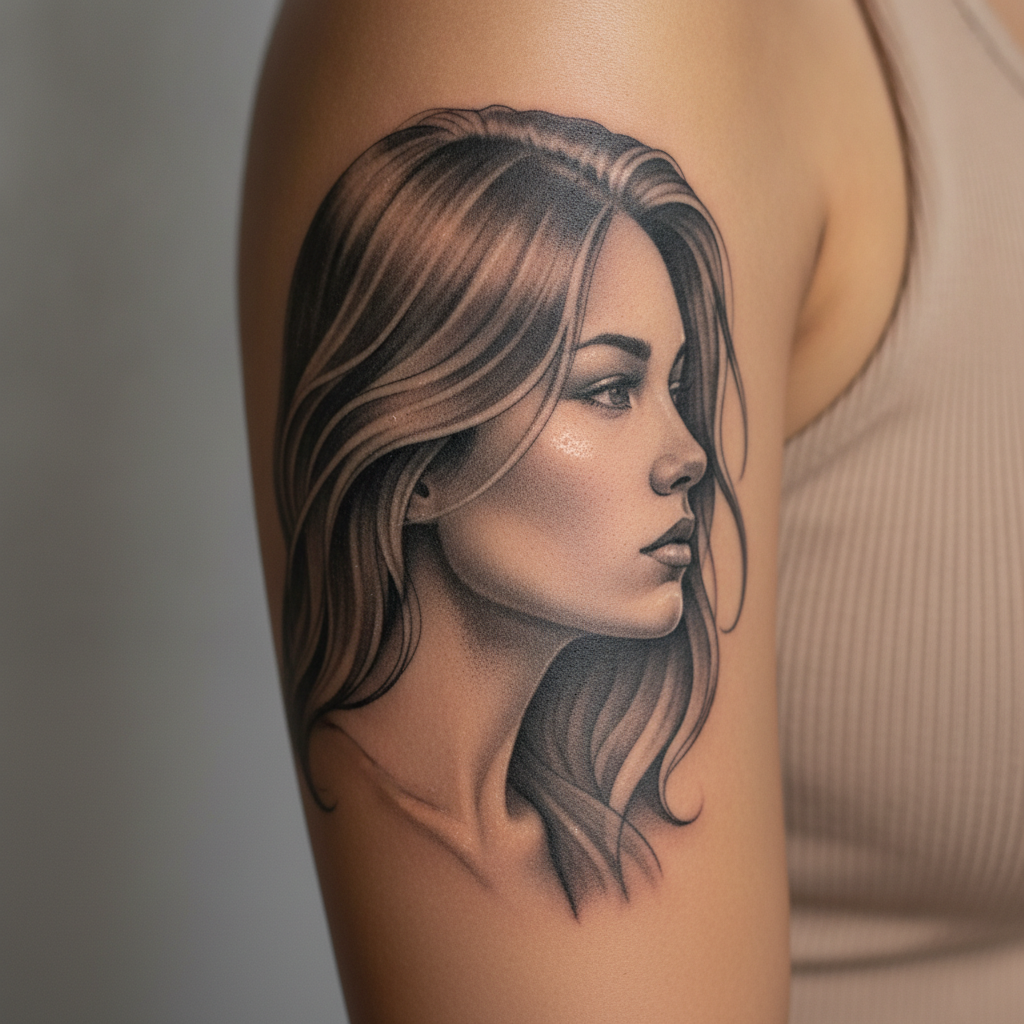
Black-and-grey is not just "a tattoo with no color." The technical definition is a tattoo built from a single black ink, lightened with distilled water or a dedicated grey wash mixing solution to create a value scale, usually three to five shades plus solid black and bare skin. Some artists add white ink for the brightest highlights, which is then called black, grey, and white. The skin itself acts as the lightest tone in pure black-and-grey work, which is why pale skin reads the brightest highlight values and darker skin tones require the artist to plan the value range differently.
Most professional shops carry a pre-mixed grey wash set, usually labeled light, medium, and dark, from brands like World Famous, Solid Ink, or Eternal. Artists who prefer full control mix their own washes session by session using a base black such as Dynamic Triple Black thinned with sterile water or a witch hazel solution. The wash gets less concentrated as the artist works toward the lightest passages, and the same area might get layered with three or four passes of different dilutions to build smooth transitions.
Where the style came from
Black-and-grey was born out of necessity. In California prisons in the late 1960s and 1970s, inmates had no access to colored inks, no professional machines, and no needle variety. Artists like Freddy Negrete and Jack Rudy improvised with single-needle setups built from cassette motors and guitar strings, using cigarette ash or pen ink diluted with shampoo. The single-needle approach forced extreme attention to shading because there were no bold color blocks to hide behind.
When Rudy opened Good Time Charlie's Tattooland in East Los Angeles in 1975, the style moved out of prison walls and into the broader tattoo world. Religious imagery, lowrider iconography, smiling and crying clown faces, Aztec warriors, and portraits of family members became the visual vocabulary, and that imagery still defines the Chicano lineage of black-and-grey today. Realism artists in the 2000s, especially Bob Tyrrell and Nikko Hurtado in his early black-and-grey period, pushed the style into hyper-detailed portraiture and helped it cross over into the realism scene that now dominates Instagram feeds.
How black-and-grey holds up over time
This is the practical reason most artists recommend the style for clients who want one tattoo to last a lifetime. Black ink is the most stable pigment in tattooing. It is made from carbon particles, which are large and chemically inert, so the body's immune system has a hard time breaking them down. Colored inks, by contrast, often use smaller organic pigment particles that are easier for macrophages to carry away over years and decades, which is why reds and yellows fade fastest.
A well-executed black-and-grey tattoo at twenty years typically still reads clearly, with the lightest grey washes softening first and the solid blacks holding most of their depth. The lightest passages can drop out almost entirely on sun-exposed skin, which is why long-term care matters even more for soft-shaded pieces than for bold linework. Compare that to a watercolor tattoo without black outlines, which often loses definition within five to ten years even with diligent aftercare. For tattoos in sun-heavy climates or on sun-exposed placements like forearms and calves, this longevity gap widens further. See our guide on long-term tattoo sunscreen care for protecting either style.
What works in black-and-grey and what doesn't
Subject matter matters. Black-and-grey excels at anything with strong contrast and clear value structure: portraits, religious icons, animals with detailed fur, architectural elements, classical sculpture, fabric folds, smoke, water, and clouds. The style struggles when the original reference is flat or low-contrast, because the artist has to invent a value range that wasn't there in the source. A photo taken in bright midday sun translates poorly. A photo with strong directional lighting, dramatic shadows, and a clear focal point translates beautifully.
- Portraits: best with a high-contrast reference photo, ideally with one strong light source
- Religious imagery: traditional Chicano style or full realism both work
- Florals: roses, peonies, and chrysanthemums all read well in pure black-and-grey
- Animals: anything with fur, scales, or feathers benefits from the soft shading
- Geometry: works but often pairs better with bold black solid fills than with wash
- Lettering: clean script in solid black, not greyed, holds up far better
The size question matters too. Black-and-grey realism needs room to breathe. Most experienced realism artists set a minimum size for portraits at around four inches tall, because below that the eyes, nose, and mouth start to merge during the healing blowout and the piece loses likeness. Smaller black-and-grey work is absolutely possible, but it shifts away from realism toward illustrative or fine-line approaches with stippled or hatched shading instead of smooth grey wash.
Session count, cost, and what to expect
Most full sleeves in black-and-grey realism take between 30 and 60 hours of tattoo time spread across six to twelve sessions, depending on detail density and artist speed. A single-session portrait piece the size of a deck of cards typically runs three to five hours. Artists working in this style usually price hourly because the shading time is unpredictable, with rates in major US cities running $200 to $450 per hour for established realism specialists, and $150 to $250 for solid mid-level artists. Internationally renowned black-and-grey artists like Carlos Torres or Jun Cha command flat-rate project pricing that often starts at $5,000 for medium-sized pieces.
Healing for black-and-grey tends to be more uniform than for color work because the immune response to a single pigment is less complex. The piece will scab in soft sheets that match the shading pattern, and the grey washes can look almost completely faded during the second-week peeling phase. This is normal and the values come back as the deeper layers settle, usually fully visible by week four to six. Resist judging the final result during peeling, and check out our tattoo healing timeline for what each phase looks like.
Choosing an artist
Specialization matters more in this style than almost any other. A great traditional artist will not necessarily produce a great realism portrait, and a great fine-line artist will not necessarily produce a great Chicano religious piece. When reviewing portfolios, look for healed photos taken at least six months after the session, not just fresh work. Fresh tattoos always look sharper than they will at one year because the surrounding redness amplifies contrast and the grey wash sits at maximum opacity. The artist whose healed work still has clear value separation and crisp focal points is the artist who actually understands shading depth.
Watch for smooth transitions between values without visible banding, clean edges between bare skin and the lightest wash, and dark areas that read solid rather than patchy. Patchy darks usually mean the artist rushed packing, and that issue gets worse as the tattoo heals. If you are considering a portrait, bring two or three reference photos when you consult and ask the artist directly which one will translate best. An experienced realism artist will steer you toward the right reference and tell you which one will fail. For broader pricing context across placements and sizes, our tattoo pricing explained guide breaks down the hourly versus flat-rate question in more detail.
Frequently asked
Does black-and-grey hurt less than color? The needle work is identical, so the pain itself is the same. Sessions can feel longer because shading passes cover more area than line work, but most clients report that the soft repetitive shading sensation is more tolerable than the sharp pinch of outlining or color packing. Long sessions over four hours still drain you regardless of style.
Will my black-and-grey tattoo turn blue or green as it ages? Quality modern black inks, properly deposited in the dermis at correct depth, stay black or fade to a soft warm grey. The blue or green shift you see in older tattoos usually comes from outdated India ink formulations from the 1970s and 1980s, or from ink deposited too deep into the subdermal layer. Reputable shops using current inks like Dynamic, Eternal, or Fusion will not produce that color shift.
Can I add color to a black-and-grey tattoo later? Yes, but it requires planning. Adding spot color, like red roses inside a grey wash composition, generally works well if the original artist left clean areas of bare skin in the design. Trying to layer color over fully shaded grey wash almost always reads muddy because the underlying black neutralizes the new pigment. Discuss the possibility with your artist during the original design phase if you think you might want color additions later.
Is black-and-grey good for a first tattoo? It can be, but the style rewards larger sizes and longer sessions, which is the opposite of what most first-tattoo clients want. A small black-and-grey piece three inches or smaller is a reasonable first tattoo. Anything portrait-scale or sleeve-scale is a heavy first commitment in chair time and budget, and most experienced artists will gently steer first-timers toward a single linework piece or a smaller solid black design to start.
How does black-and-grey work on dark skin tones? It works beautifully, but the value range shifts. The skin acts as a medium tone rather than the lightest tone, so the artist needs to use white highlight ink to extend the upper end of the value scale and may push darks deeper to maintain contrast. Look specifically for artists with healed portfolio work on skin tones similar to yours, because the technique adjustments are real and not every realism specialist has the experience.
What's the difference between blackwork and black-and-grey? Blackwork is solid black, with no grey wash and no shading gradients. Think bold geometric patterns, ornamental designs, and heavy negative space compositions. Black-and-grey uses diluted blacks to create a full value range with smooth transitions. The two styles look completely different in person and require different artist specialties. Our blackwork tattoos style guide covers the solid black approach in detail.