aftercare
When to Get a Tattoo Touch-Up: Timing and Signs You Need One
A practical guide to tattoo touch-up timing: when to book, what to watch for after healing, and how to tell if a touch-up is worth it.
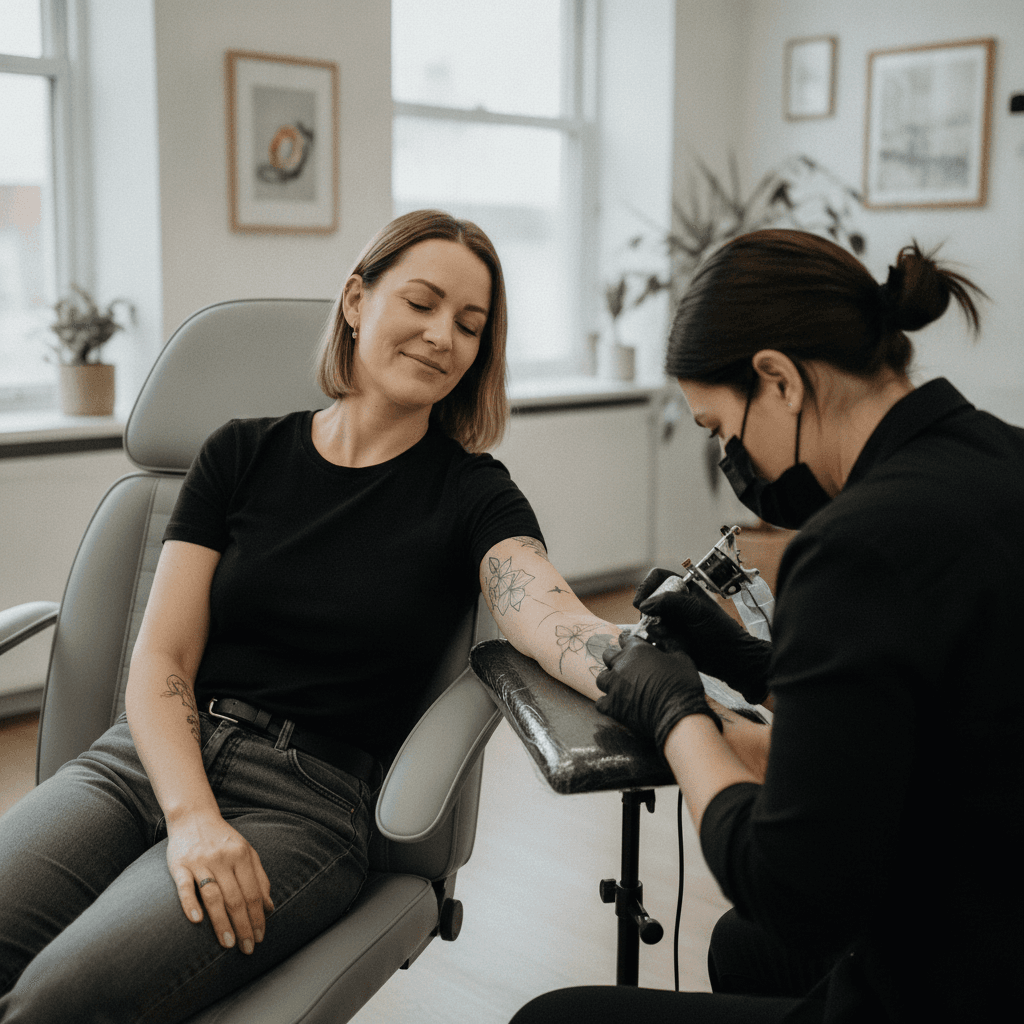
Every tattoo shifts a little between the day it goes on and the day it fully heals. Some settle beautifully and look sharper than the first photo. Others lose a line here, drop a gray value there, or come out patchy in a small area. This guide covers when to book a touch-up, what a healed tattoo should actually look like, and the honest signs that ink needs another pass.
Wait for full healing before you judge anything
Skin is not done healing at two weeks. The surface looks fine by day 14, and the color you see then is not the color you keep. The deeper layers of the dermis are still remodeling for another four to eight weeks after the outer skin closes. During that window a fresh piece often looks cloudy, slightly ashy, or muted under a thin film of new skin. That film sheds gradually and the ink underneath brightens.
The right time to evaluate is between week four and week eight. Book a touch-up appointment no earlier than 30 days after the original session, and most studios prefer 6 to 8 weeks. If you push in at day 15 asking for adjustments, a good artist will send you home. They are protecting the tattoo, not brushing you off. Fresh skin is still fragile, and adding needles to a scab-adjacent surface can cause the exact patchiness you were trying to fix.
Humid climates and heavy sweat can extend the timeline. If you live somewhere hot and wet, or you were back in the gym before the piece was fully closed, give it a full 8 weeks before you decide. Aftercare in humid climates covers why healing runs slower in tropical conditions and what to change about your routine.
What a well-healed tattoo actually looks like
A healed tattoo does not look identical to day-one gloss. Expect a small overall softening. Black lines stay crisp but sit slightly under the skin surface, so they read as deep black rather than raised jet black. Grey wash settles into smoother gradients. Color loses roughly 10 to 20 percent of its initial saturation as the epidermis regenerates over the pigment. That is normal and not a reason for a touch-up.
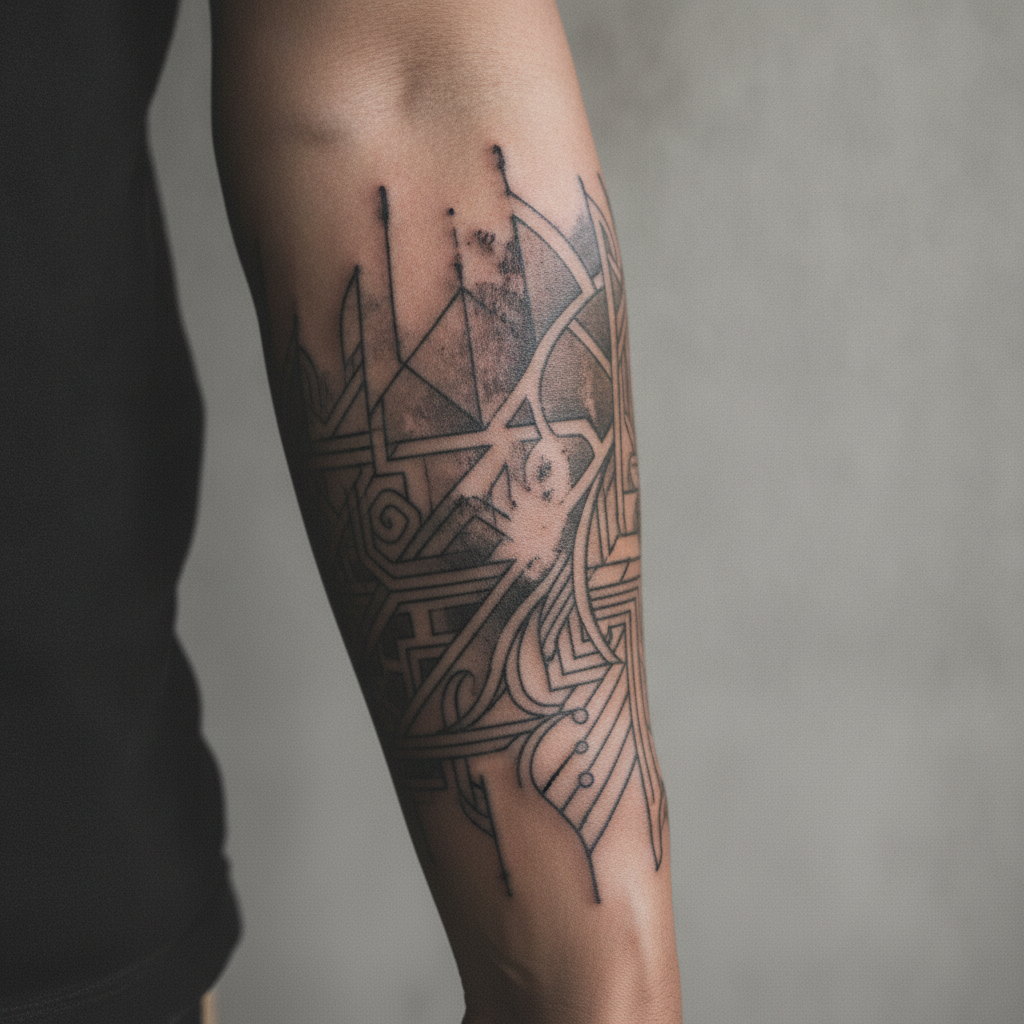
What you should see at week six:
- Solid, continuous outlines with no visible breaks in the line
- Even fill in black shading, without pale patches inside a supposedly solid area
- Consistent color saturation across the whole piece, not blotchy islands
- No raised scar tissue along the line work
- Fine details still legible at arm's length
If the piece checks all of that, you do not need a touch-up. If you can point at a specific patch that looks noticeably lighter than the surrounding area, or a line that ghosted out during peeling, that is when a touch-up earns its money.
Signs a touch-up is genuinely needed
Some issues are common and easy to fix in a single short session. Others point to a deeper problem that a touch-up will not solve on its own.
Fixable in a normal touch-up:
- A short section of line that dropped during peeling and now looks broken
- A single patch of black fill that healed lighter than the rest
- Small color gaps in a saturated area, usually on knees, elbows, hands, or feet
- Fine-line hairline breaks in a piece less than 6 months old
- A tiny detail like a highlight dot or a small letter that lifted off with a scab
Not fixable by a touch-up alone:
- Full-piece fading across a tattoo that is 5+ years old and has lived in the sun
- A blowout where ink migrated under the skin and blurred the line. See tattoo blowout causes and prevention for what actually happened there
- Raised, itchy scar lines that suggest allergy or keloid response rather than pigment loss
- Distortion from weight change stretching the skin. That is a redraw discussion, not a touch-up
Placement matters heavily. Hands, fingers, feet, and inner lips shed ink faster than any other zone because those areas turn over skin cells at high speed and take constant friction. A finger tattoo often needs a touch-up at the 3 to 6 month mark, and many artists price this expectation into the original quote or offer one free pass.
Booking, cost, and what the session looks like
Most reputable studios include one free touch-up within 3 to 6 months of the original session, provided you followed aftercare and can show up in daylight so the artist can see the piece. Outside that window you pay the shop minimum, typically $80 to $150 in the US, or the artist's hourly rate for anything over 30 minutes of work. A quick line refresh on a small piece runs 15 to 30 minutes on the chair. A larger fill correction can push to a full hour.
Bring a clear photo of the fresh piece on day one, if you have one. That gives the artist a reference for what was originally laid down versus what healed. Do not book a touch-up with a different artist unless your original artist has left the shop or the piece is genuinely damaged. Touch-ups on someone else's line work are technical, and most artists will only take them on if they can justify the risk of messing with cured ink they did not place.
Aftercare for a touch-up is the same as the original. Two weeks of ointment then lotion, no soaking, no direct sun, no gym for 5 to 7 days depending on placement. See tattoo healing timeline day by day for the full sequence. Touch-ups usually heal faster because less ink and less trauma are involved, but the rules do not change.
Long-term touch-ups: 5 years and beyond
A tattoo that is 5, 10, or 20 years old is a different conversation. The ink has migrated slightly, the skin has aged, and UV exposure has broken down pigment. A refresh on an old piece is not really a touch-up. It is a partial re-tattoo, and it takes as long as the original color pass did the first time.
Black-and-grey tattoos age better than color. Fine-line work ages the hardest. A hair-thin single-needle piece from 2020 will need attention by 2030 if it lives on a forearm that sees sun daily. Traditional bold-line color pieces can go 15 to 20 years without touching, if aftercare and sunscreen were consistent. Sunscreen is the single biggest factor in how long a tattoo holds up. Daily SPF 30 or higher on tattooed skin, once the piece is fully healed, is the highest-return move you can make. Long-term sunscreen care covers what to buy and how often to reapply.
Frequently asked
How soon after my tattoo can I get a touch-up? Wait at least 30 days, and ideally 6 to 8 weeks. Anything sooner and the skin has not fully rebuilt over the ink. You will see cloudy results and risk fresh scarring. Artists who agree to touch up at day 15 are not doing you a favor.
Is a touch-up free? Usually yes, within a set window. Most shops offer one free touch-up within 3 to 6 months if you followed aftercare. After that window, expect to pay the shop minimum for a short session, generally $80 to $150. Ask before booking so there is no confusion at the register.
Does a touch-up hurt more or less than the original? Slightly less on average. The skin is intact, there is no fresh trauma next to healed lines, and the session is shorter. Fine-line touch-ups on sensitive areas like ribs or spine still hurt, so do not expect painless work. Bring water and something to distract you.
Why did my tattoo heal patchy in one spot? Common causes are picking a scab off early, sleeping on the fresh tattoo, sweating heavily into a bandage, or an area of dry healing that cracked. See what is normal during peeling to check whether the patch you are worried about is really an issue or just healing texture that will smooth out.
Can I touch up someone else's tattoo work? Most artists will not, unless the original artist is unavailable or the original work is significantly damaged. Cured ink from another hand is unpredictable to work into, and few artists want their name attached to someone else's line quality. If you love your piece, stay with the artist who did it.
How many touch-ups is too many? More than two touch-ups on the same tattoo within a year suggests something structural. Either the aftercare failed repeatedly, the placement is high-friction and will always fade, or the piece needs to be re-thought rather than patched. At that point the honest conversation is about a redraw, not another pass.