style guides
Blackwork Tattoos: A Complete Style Guide for 2026
Blackwork tattoos: the substyles, real 2026 prices, how the ink ages at year five, and the portfolio red flags to spot before you book.
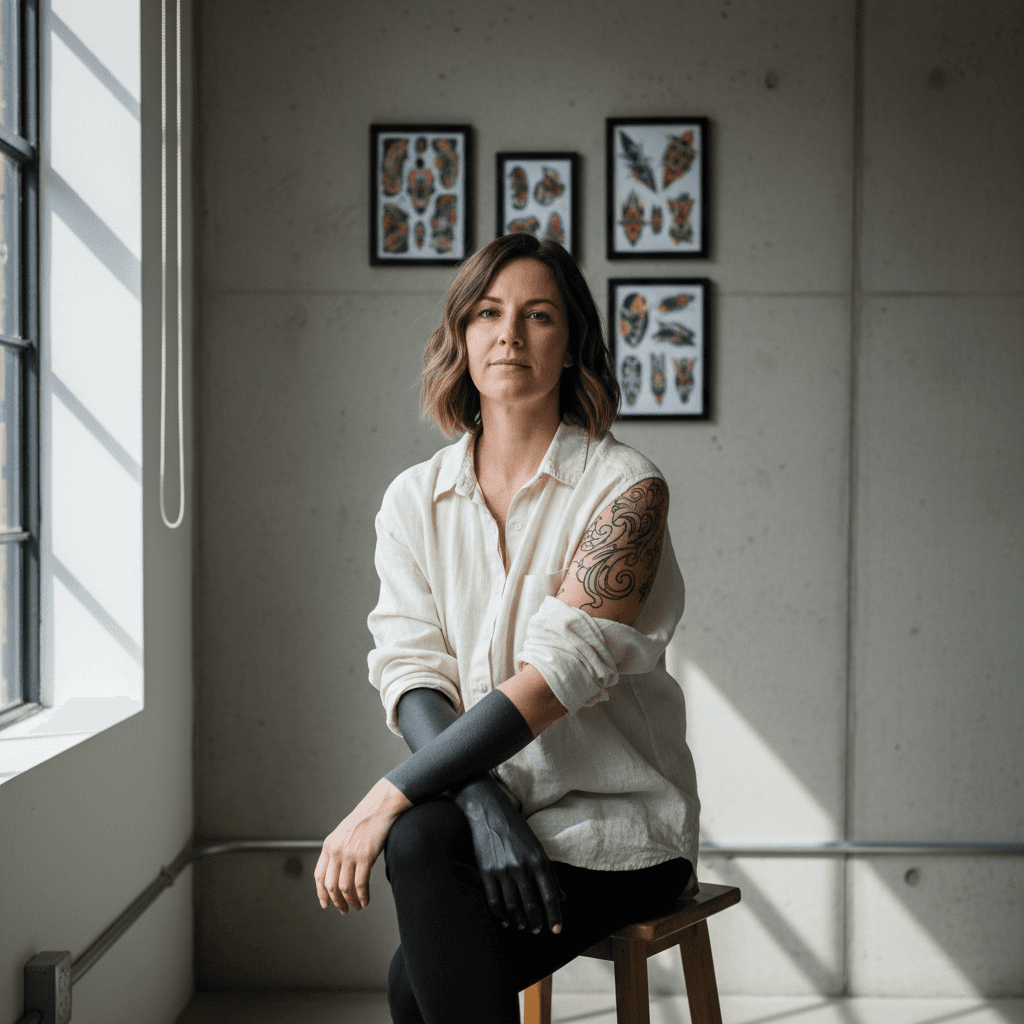
Blackwork is the loudest style on a body and the quietest on a price sheet. It uses only black ink, no grey wash, no color, only solid coverage and negative space. The result reads strong from across a room and ages better than almost anything else. This guide breaks down what counts as blackwork, the substyles you can ask for by name, what it costs, and what it looks like at year five.
What blackwork is
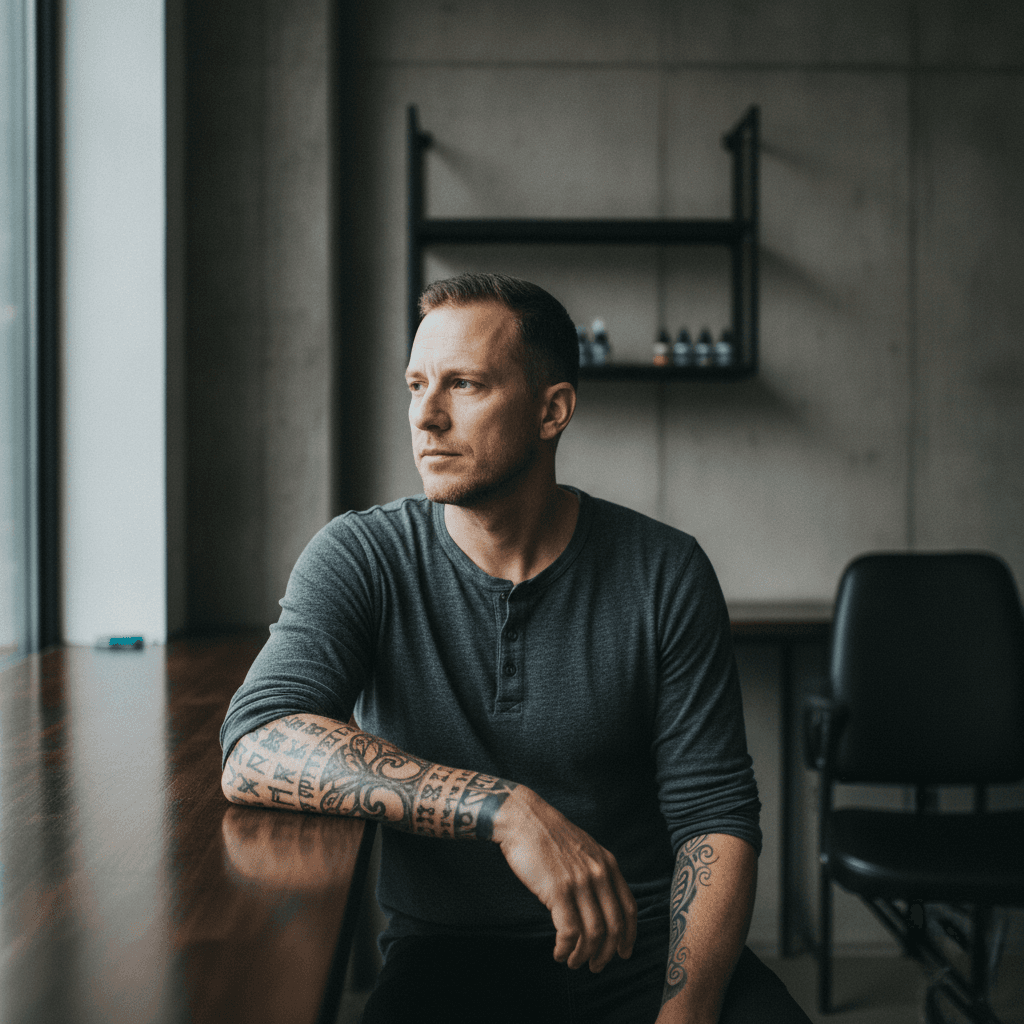
Blackwork is a tattoo style defined by one rule: solid black ink only. There is no diluted grey wash, no white highlights painted in afterward, no color anywhere in the piece. Artists pack the ink dense and flat, building entire designs out of two values: saturated black and the natural color of skin. The technique pulls from two parallel traditions, the tribal work of Polynesia and the Philippines and the heavy black detailing of European woodblock prints and etchings.
Modern blackwork sits on a spectrum. On one end you have illustrative blackwork with hatching, stippling, and brush-like flicks borrowed from ink illustration. On the other end you have solid blackout work, large unbroken fields of saturated ink that can swallow an entire forearm. Most clients land somewhere in the middle, with bold outlines, decorative fills, and pockets of negative space carrying the design.
The style demands a confident artist. There is nowhere to hide a shaky line or a thin patch when every square inch is supposed to be fully saturated black. The work that ages best comes from artists who have spent years tuning machine speed, needle depth, and pass count for this specific kind of fill.
The substyles you should know by name
Asking for "blackwork" at a consultation is like asking for "Italian food." Artists need a sharper brief. Here are the substyles you should be able to name before you book.
- Tribal blackwork: bold geometric shapes pulled from Polynesian, Marquesan, or Filipino tradition. Often follows muscle lines and contours.
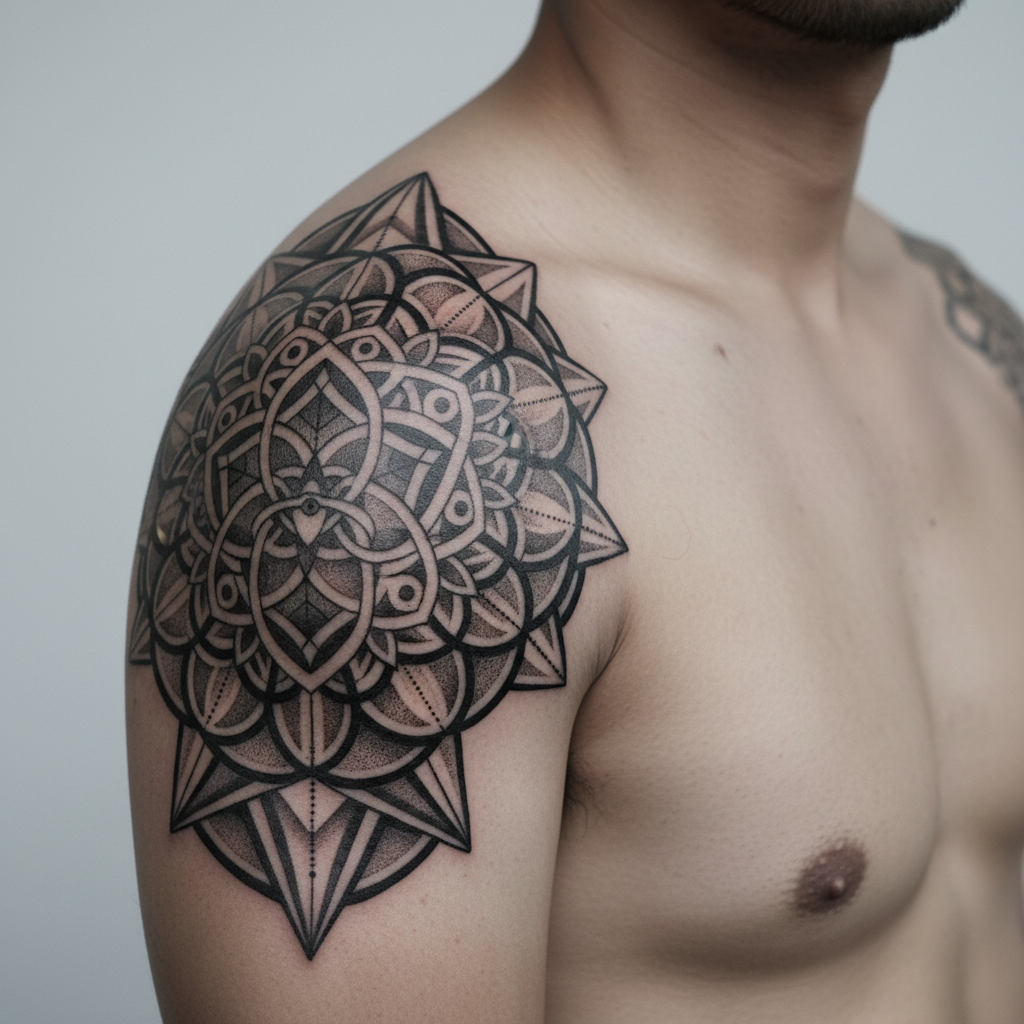
- Ornamental blackwork: mandala, lace, and mehndi-inspired patterns built from repeating decorative motifs.
- Illustrative blackwork: figurative work using hatching and stippling, often inspired by woodcut prints, etchings, or scientific illustration.
- Geometric blackwork: precise compass-and-ruler designs, sacred geometry, dotwork mandalas with mathematical symmetry.
- Solid blackout: large fields of saturated black, often used to cover existing tattoos. Aggressive look, demands an artist who can pack ink evenly across wide areas.
- Neo-tribal: modern reinterpretations of tribal motifs without the cultural specificity. Polarizing in the community but high-volume in shops.
Each substyle has a different artist talent pool. A geometric specialist can build a sacred-geometry sleeve that looks like it came off a draftsman's board, but they may not be the right call for a wild illustrative crow with hatched feathers. Match the artist to the substyle, not the other way around.
What blackwork costs in 2026
Pricing tracks size and density more than anything else. Rough math for a competent shop in a major US or Western European city this year:
- Small ornamental piece, palm-sized: $200 to $450 flat rate
- Forearm panel with mixed density: $800 to $2,200
- Half-sleeve, ornamental or geometric: $1,800 to $4,500
- Full sleeve blackwork: $4,000 to $12,000+ across multiple sessions
- Blackout chest panel or full back blackout: $3,500 to $9,000+
Two factors drive the cost up. The first is artist tier. Top blackwork specialists charge $300 to $500 per hour and run waitlists of three to six months. The second is density. A solid blackout panel takes more passes than line work and burns through ink, needles, and time. Read more on how rates get built in our tattoo pricing breakdown, and on the hourly versus flat-rate question in our hourly vs. flat-rate guide.
How blackwork ages
This is the headline reason people choose the style. Blackwork ages better than color or fine-line work by a wide margin. The reason is physics. Black ink is the most stable pigment in skin. It does not photobleach the way reds and yellows do, and the high contrast holds visual integrity even as the edges soften over a decade.
You will still see softening. A crisp blackwork line at year one becomes a slightly thicker, slightly fuzzier line at year ten. Dense fills can develop subtle banding or patchiness where the artist's pass pattern shows through, especially on the upper back and outer thigh where skin stretches with weight changes. The fix is a touch-up every five to seven years for high-visibility pieces, or none at all if you do not mind the patina. Compared to fine-line work, which often needs a touch-up at year three, blackwork is genuinely low-maintenance ink.
Sun is still the enemy. Even saturated black fades under heavy UV exposure, especially on hands, forearms, and the upper back where summer exposure adds up. Daily sunscreen on healed blackwork is non-negotiable if you want the piece to stay sharp past year ten.
Pain and session length
Solid blackwork hurts more than line work or fine-line, full stop. The needle goes over the same square inch many times to pack the ink dense, and the cumulative effect is closer to a long sunburn than a clean cut. Most clients describe the first hour as manageable, the second hour as testing, and anything past three hours as needing a break, food, and a moment to breathe.
A few placement notes. Rib panels and stomach blackout are the hardest sits in tattooing, even for clients with prior heavy work. The outer forearm, calf, and upper arm are the easiest. See our pain map by placement for a fuller breakdown.
Session length depends on the piece. Ornamental work runs three to five hours per session. Blackout panels can stretch to six or seven hours with breaks, and many artists insist on splitting them across two or three sittings to let the skin recover between fills. Healing a fully blacked-out forearm in one go is brutal on the skin and the immune system both. Most reputable artists will refuse to do it in a single session, and that is the right call.
How to choose your artist
Blackwork looks deceptively simple in photos. It is not. The artists who do it well have a portfolio that shows three specific things: clean line weight consistency over long single passes, fully saturated black fills with no scarring or patchiness, and clean negative-space transitions where black meets bare skin without ragged edges.
Red flags in a portfolio are easy to spot once you know what to look for. Patchy fills where you can see the artist's pass marks, slightly grey areas inside what should be solid black, scabbing still visible months after healing in their healed shots, and ragged edges where ink meets skin. Any of those means the artist is not packing ink properly, and your piece will look worse at year two than it did at six weeks.
Ask to see healed shots specifically. Fresh work always looks dramatic in studio lighting. Healed work taken at six months and one year tells you whether the artist's technique survives the skin's natural settling. A blackwork artist who will not show you healed photos is a blackwork artist you should not book.
Aftercare specifics for blackwork
Blackwork heals like any other tattoo for the most part, but two things differ. First, blackout panels and dense fills weep more during the first 48 hours than pure line work because more skin has been worked. Plan to change the bandage or Saniderm more often in that window, and expect noticeably more plasma on the wrap. Second, the peeling phase looks more alarming than usual. Large black flakes coming off in the shower between days four and ten is normal. Do not pick at them. The flake carries dead skin, not ink, and pulling it early can lift pigment and leave a patch.
The full timeline of normal healing stages is laid out in our tattoo healing day-by-day guide. After the first month, blackwork maintenance is the simplest in tattooing: daily moisturizer for the first two weeks, daily sunscreen on exposed skin for the life of the tattoo, and a touch-up at year five if you want the edges resharpened.
Frequently asked
Does blackwork hurt more than other styles? Yes when it involves solid fills or blackout panels. Line-heavy ornamental work hurts about the same as any other style at the same placement. The pain difference comes from how many passes the needle makes over the same skin, not from the ink itself. Pack-heavy work is cumulative pain, and the second hour always hurts more than the first.
Can blackwork cover old tattoos? Yes, and it is the most reliable cover-up option for dark or busy existing pieces. Blackout panels can swallow nearly any tattoo if the original is not too saturated with light colors. The tradeoff is that you lose the option to lighten or modify it later short of laser removal, which is harder and more expensive on solid blackout than on conventional ink. Think of a blackout cover as a permanent commitment to the new design.
How long does a blackwork sleeve take? A full sleeve runs four to eight sessions of three to six hours each, spaced two to four weeks apart for healing. Total active tattoo time is typically 20 to 40 hours depending on density. Plan on three to six months from first session to final touch-up, and longer if your artist's calendar is tight.
Will blackwork look bad on darker skin? It depends on the substyle. Solid blackout reads fine on most skin tones if the artist packs the ink dense enough to register against the underlying tone. Fine ornamental work with delicate negative-space patterns is harder to read on deeper skin and is better handled by an artist who specializes in tattooing dark skin and adjusts spacing and line weight accordingly. Ask to see their healed work on skin tones similar to yours before booking.
Should I tip my artist for a long blackwork session? Yes. Long sessions are draining for the artist too, and a tip on a $1,500 session is real money. Most clients tip 15 to 20 percent across the full project. Our tattoo tipping guide covers the edge cases for multi-session work and apprentice rates.
Can I get blackwork on my hand or face? Hand and face placements are possible, but the rules are different. Many shops will not tattoo above the collar or below the wrist unless you already have visible work elsewhere. Hands also fade faster than anywhere on the body because of constant washing and sun exposure. If you are committed, plan on a touch-up every two to three years instead of every five to seven, and budget for the maintenance up front.