aftercare
How Long to Wait Between Tattoo Sessions on the Same Piece
How long to wait between tattoo sessions on the same piece, the healing markers artists actually check, and why rushing costs you line quality.

Multi-session pieces get built in chapters. A half-sleeve, back piece, or dense chest panel takes three to eight sittings, and the gap between each one decides how the final tattoo looks. Book too close together and the skin is still remodeling underneath, which pushes ink out and softens crisp linework. Book too far apart and you lose momentum, pay more in deposits, and stall a design that should already be on your body.
The minimum window most artists want
The floor is two weeks between sessions on the same anatomical area, and most reputable artists ask for three to four. That range covers the outer skin closing, the scab and flake phase finishing, and the top layer feeling smooth to a gloved hand. Under two weeks the skin is still visibly compromised, and a fresh needle pass on tissue that has not sealed causes bleeding that dilutes pigment and slows the current session. Above four weeks the skin is comfortably ready for another pass, and many artists prefer six to eight weeks between longer sittings.
Session length changes the number. A short two-hour outline session on a forearm can be followed up in ten to fourteen days because the trauma was minor and the area small. A six-hour color-packing session on a rib panel wants a solid month. The tattooed area is not just healing on the surface, it is also settling underneath as the ink migrates to its permanent home in the dermis. Rushing that settling period makes it harder for your artist to judge saturation and shading contrast on the next visit.
Body location matters too. Skin over bone (ribs, sternum, shins, spine) heals slower and holds swelling longer than skin over muscle (thighs, biceps, calves). Hands, feet, and knees are the slowest because the skin flexes constantly and blood supply is more limited. If your next session is on knuckles or elbow ditch, add another one to two weeks beyond the standard window.
What "healed enough to tattoo over" actually looks like
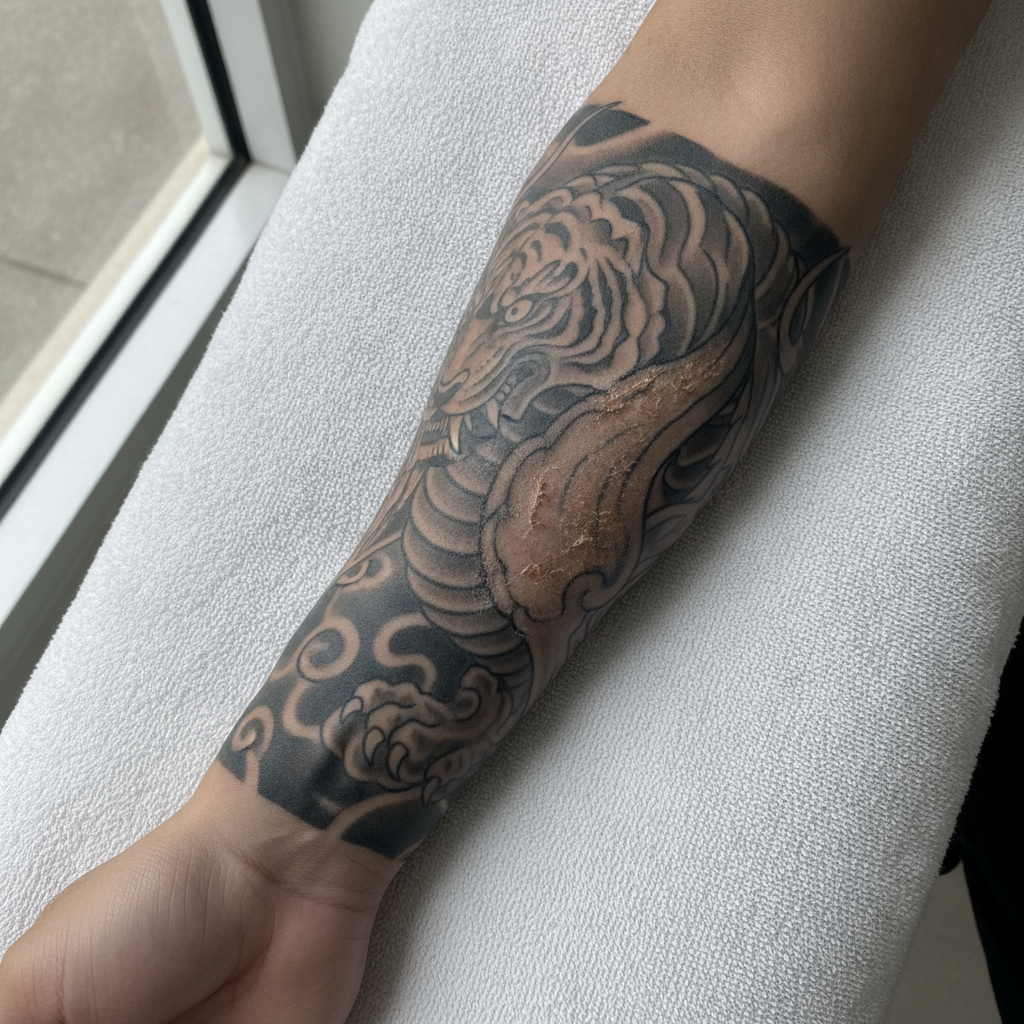
Your artist is not just counting days. They are looking at the surface and feeling the texture. When you sit down, the piece should:
- Have zero scabs, no flaking, and no shiny or waxy patches
- Match the surrounding skin in texture when you run a finger across it
- Show no redness at the edges of the previously tattooed area
- Feel dry rather than tight, itchy, or tender
- Look slightly cloudy or matte, not glossy (that final glossy layer resolves at three to four months)
Cloudy or matte skin at the four-week mark is normal and does not disqualify you from a second sitting. What disqualifies you is any lifting scab, any redness at the outline, any weeping fluid, and any active peeling. If the piece still looks wet or shiny across most of the surface, wait another week and re-check. A conscientious artist would rather push your appointment than tattoo over skin that is not ready.
Why rushing back too soon costs you line quality
There is a specific and visible cost to sitting again on under-healed skin. The dermis becomes softer and more inflamed after tattooing, and pushing a needle back through that layer within the first ten days causes two problems. First, the ink deposit becomes uneven because compromised skin holds pigment inconsistently. Second, the trauma stacks. The healing response ramps up harder the second time, which increases swelling, blowout risk, and post-session soreness by a wide margin.
You also lose contrast. If your artist tries to layer shading or add color over a section that is still cloudy from the last session, they cannot accurately judge tonal value. The area looks darker under the shine of healing than it will once fully settled. Working blind on tone means the next healed layer often looks either too dark, muddy, or thin. This is the number-one reason experienced artists refuse to shorten the gap even when a client is willing to push through the discomfort.
Blowouts (ink spreading into surrounding tissue) are also more likely on under-healed skin. Swollen tissue offers less resistance to the needle, which means ink deposits deeper than intended. On fine-line and micro work this is catastrophic, and it is one of the main reasons fine-line artists in particular insist on four-plus-week gaps. If you want your lines to stay crisp at ten years, respect the healing window.
When it is fine to go longer than usual
Life happens. Travel, illness, a busy work stretch, or a booking backlog with your artist can stretch a gap to eight, twelve, or even sixteen weeks. This is not a problem for the finished tattoo. Once a section is fully healed, waiting longer does not hurt the ink, does not fade the lines faster, and does not require re-outlining unless something specific went wrong. Your artist can pick up exactly where they left off.
The only real cost of a long gap is momentum and design continuity. If you are working with an artist on a large piece and there is a six-month break in the middle, styles can drift slightly, needle preferences may change, and the earlier work has aged a few months while the newer work is fresh. On tightly integrated pieces (full sleeves, back panels), this can create a subtle tonal difference. Most artists solve it with a light unifying pass at the final session, or by touching up the older sections during a later sitting. That work is often included in the ongoing project, but confirm with your artist before assuming.
Money is the other consideration. Some artists ask for a fresh deposit if your gap exceeds their studio policy (commonly three or six months). If you know you need a long pause, tell your artist early so they can hold or reissue your deposit rather than release your slot to another client.
Practical spacing for common projects
Different projects have different natural cadences. Use these as a starting point, then adjust based on your healing speed and your artist's schedule:
- Small piece finished in one session: No gap needed. Touch-up if required at six to eight weeks.
- Two-part piece (outline then color/shade): Three to four weeks minimum, six weeks preferred.
- Half-sleeve (three to four sessions): Four to six weeks between sittings, longer if sessions run past four hours.
- Full sleeve (six to eight sessions): Six to eight weeks between sittings on average, more space between the longest color-packing sessions.
- Back piece (six to ten sessions): Six to ten weeks between sittings. Back skin is thicker and heals slower than forearm skin.
- Rib or sternum panel: Six to eight weeks minimum. This area is unforgiving and the swelling lingers.
- Hand, foot, or knuckle work: Six to eight weeks even for small additions.
If you have chronic conditions that slow healing (diabetes, autoimmune conditions, connective tissue disorders) or if you are on medications that suppress skin renewal, add two to four weeks to any of these numbers and talk to your artist before booking. A tattoo healing timeline day by day is a useful reference for what to expect during each week between sessions, and if anything looks off during that window, review the signs of tattoo infection before your next appointment.
Frequently asked
Can I get tattooed on a different body part while another piece is still healing? Yes. Two weeks after your last session is enough to comfortably sit for a new tattoo on an unrelated area, because your body's healing resources are not directly competing. Just avoid stacking two large sessions in the same week. Your immune system prioritizes new wounds, and doubling up increases fatigue and swelling in both places.
Does the same waiting rule apply for touch-ups? Touch-ups sit on already-healed skin, so the gap after the original session is the important number. Wait six to eight weeks after the initial tattoo before booking a touch-up. That gives the ink time to fully settle, which lets your artist see exactly what needs correcting rather than reworking areas that would have healed fine on their own. A tattoo touch-up guide covers timing in more detail.
What if my artist wants to book me sooner than the healing window? Some artists work faster and are comfortable at two-week gaps for outline-only work on small areas, and that can be fine. Push back if the area is dense, large, or on slow-healing skin. You are the one living with the tattoo for the next fifty years, and the tradeoff between finishing two weeks sooner and losing crisp lines is not close.
Can I speed up healing to shorten the gap? Sleep, hydration, and clean aftercare are the levers. Skip alcohol during peak healing, do not smoke around the tattoo, keep it out of pools and direct sun, and moisturize consistently. These add up to a slightly faster and cleaner heal, but do not compress a four-week window into two. There is no shortcut past the tissue remodeling phase.
How long should I wait between sessions on colored tattoos versus black-and-grey? Color sessions cause more skin trauma because the artist is packing pigment into multiple passes over the same area. Give color pieces an extra one to two weeks compared to black-and-grey of the same size. Color pieces also tend to peel more visibly, so wait until every trace of flaking is gone before returning. Color tattoo aftercare covers what changes when pigment is packed heavily.
Is it okay to book my next session before the current one is healed? Yes, and it is smart. Good artists book weeks or months out, so scheduling your next appointment before you leave the studio locks in a slot at a realistic future date. Pick a date at least four to six weeks out and adjust if healing runs long or short.