aftercare
Tattoo Allergic Reaction: Symptoms, Causes, and What to Do
Tattoo allergic reactions can show up days or years after the session. Here is how to spot the symptoms, what causes them, and what to do next.

A tattoo allergic reaction is one of the few healing problems that does not get better with patience and Aquaphor. It is your immune system responding to a pigment your body has decided it does not like, and it can show up two days after a session or two decades later. Most of these reactions are mild and treatable at home, but a real ink allergy needs a different playbook than a normal healing tattoo. This guide covers which colors cause the most problems, how to tell a reaction from the standard scabbing-and-peeling phase, and the point where home care stops being enough.
How a tattoo allergic reaction actually works
When a tattoo machine deposits ink, the pigment particles sit in the dermis where the immune system can patrol them. In most people the body either ignores the particles or slowly transports the smallest ones to the lymph nodes. In a small subset, certain pigment components trigger a delayed hypersensitivity response, which is the same type 4 immune reaction you see with nickel jewelry or poison ivy. The reaction can be local to the tattooed area, or in rare cases it can become systemic with hives and swelling that spreads beyond the design.
Reactions split into two groups by timing. Acute reactions appear within the first 1 to 14 days and often look like an exaggerated version of normal healing. Delayed reactions can appear months or years later and tend to look like a raised, itchy, scaly patch sitting only on certain colors of the tattoo. Delayed reactions are usually triggered by sun exposure, illness, or a new medication that shifts the immune system into a more reactive state. The fact that a tattoo was fine for ten years does not mean it cannot suddenly react.
True allergies are different from irritant reactions, which are far more common. Irritant reactions come from over-moisturizing, occlusive bandages, or aggressive soaps and resolve once you change the routine. A real allergy will not resolve until the offending pigment is either removed or the immune system is suppressed with steroids. Knowing which one you are dealing with affects everything you do next.
Which inks cause the most reactions
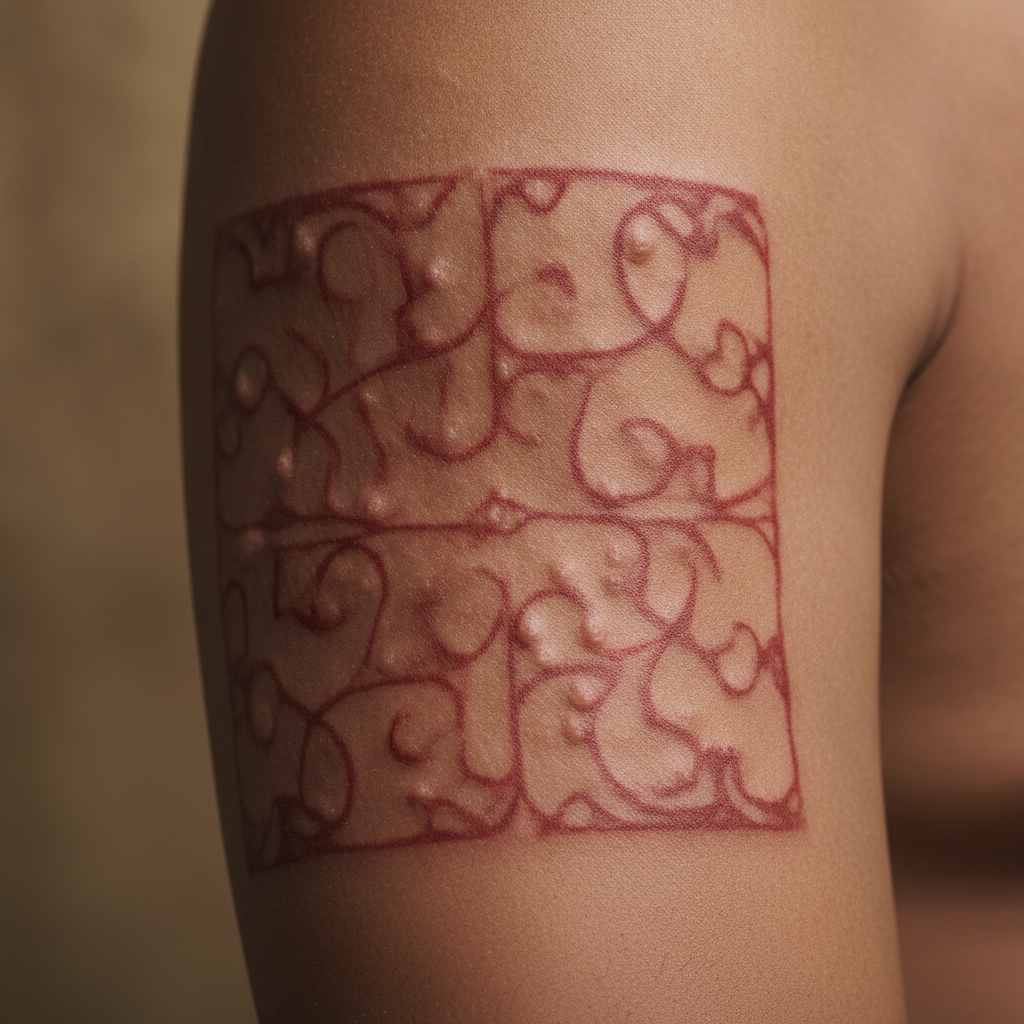
Red ink is the single biggest offender. Modern red pigments often use azo compounds or mercury sulfide derivatives, and both are known sensitizers. If you have a tattoo with red, pink, magenta, or purple sections, those are the parts most likely to itch, raise up, or scab repeatedly through the year. Coral and orange tones frequently contain the same red pigment families and behave the same way.
Yellow ink is the second most common trigger, partly because cadmium-based yellows can photo-activate. Yellow sections of a tattoo can flare up specifically after a sunny afternoon, with the reaction limited to only the yellow areas of the piece. Green inks sometimes contain chromium salts that trigger contact dermatitis in people who already react to nickel or chrome jewelry. Blue inks based on cobalt are a smaller but real risk.
Black ink is the safest pigment family by a wide margin, which is why blackwork and fine-line artists see the fewest reaction complaints. Most modern black inks use carbon-based pigments that the body tolerates well. If you have a history of skin sensitivity and you want to minimize risk on a first tattoo, a black-only design is the most conservative path. The blackwork tattoos style guide covers what black-only work can actually achieve, and the fine line tattoos style guide shows what is possible with a single black needle.
Symptoms: allergy vs. normal healing
Normal healing follows a predictable timeline. Days 1 to 3 are sore and slightly swollen with clear plasma weeping. Days 4 to 14 bring scabbing, peeling, and the famously aggressive itch phase. Days 14 to 30 finish the surface healing while the deeper layers settle. Throughout that window, redness should stay inside the tattoo lines and slowly fade, not spread outward.
An allergic reaction breaks that pattern. The clearest signs are itching that gets worse instead of better after day 7, raised welts or bumps that sit only along certain colors of the design, redness that spreads visibly past the tattoo outline, and skin that flakes in a scaly way rather than peeling in thin clear layers. A real reaction often produces a rash pattern that mirrors the tattoo shape exactly, so if you can see a perfect outline of the design raised above the surrounding skin, that is diagnostic.
The trickier presentation is a reaction that overlaps with normal healing in the first two weeks. If you are unsure, two questions help. Is the swelling and warmth limited to inside the tattoo, or is it pushing outward into healthy skin? And is the area itchy in a deep, persistent way that comes back within minutes of scratching? Spreading edges and persistent deep itch both point toward allergy rather than standard healing. Compare what you see against what tattoo peeling normally looks like and the day-by-day healing timeline before deciding which camp you are in.
What to do in the first 24 hours of a reaction
If the symptoms are mild, contained, and you caught them early, you can usually manage at home. Stop using whatever ointment you were applying, since the carrier ingredients in some healing balms can make a low-grade reaction worse. Wash the area with a fragrance-free unscented soap and pat it completely dry. Apply a thin layer of 1 percent hydrocortisone cream twice a day for no more than five days. Take an oral antihistamine like cetirizine or loratadine to calm the histamine response.
- Stop all ointments, balms, and Saniderm-style bandages immediately
- Wash gently with lukewarm water and unscented soap
- Apply 1 percent hydrocortisone cream, thin layer, twice daily
- Take an over-the-counter antihistamine for the first 48 hours
- Keep the area cool, dry, and exposed to air when possible
Do not scratch, do not apply ice directly to broken skin, and do not try to extract pigment by picking at scabs. Photograph the area in good light so you have a record if symptoms worsen. If the reaction has not visibly improved in 48 to 72 hours, or if it spreads in any direction during that window, the home phase is over.
When to see a dermatologist or emergency care
A dermatologist is the right call for any reaction that lasts longer than a week, any delayed reaction that appears months or years after the tattoo healed, and any pattern that includes scaly granuloma-like bumps along specific colors. Dermatologists can prescribe stronger topical steroids, intralesional steroid injections that target a specific raised area, and in stubborn cases, oral immunosuppressants. They can also biopsy the area to confirm whether the reaction is allergic, granulomatous, or something else entirely.
Emergency care is the right call for any reaction that includes facial swelling, tongue or lip swelling, difficulty breathing, hives that spread beyond the tattoo across other parts of the body, or fever above 101 F (38.3 C). Those are signs of either a systemic allergic response or an infection that has moved beyond the skin. A tattoo allergy can occasionally trigger anaphylaxis on rare occasions, particularly if the artist used an ink the client has reacted to before in another context.
The hardest decision is what to do with the tattoo itself. Mild reactions usually settle and let the tattoo coexist with the body. Severe or persistent reactions sometimes require laser removal of the offending color, which is its own multi-session process. Read the tattoo removal cost guide if a dermatologist suggests that path. Selective removal of only the reactive color is possible but not always clean, and the surrounding pigment can shift slightly during the process.
How to lower your risk on the next tattoo
If you have already had a reaction, the safest move is a patch test before the next session. Ask the artist to deposit a small dot of each color from the same ink brand they plan to use, in a discreet spot, and wait two to four weeks before judging the result. Reputable artists will agree to this without argument because they would rather lose a session than tattoo a piece that will reject. Bring a photo of your previous reaction so they can see which color group caused it.
Choose ink brands with full ingredient disclosure. Companies like Eternal, Dynamic, and Fusion publish their pigment compositions, which lets you and a dermatologist screen for known sensitizers before the needle starts. Avoid no-name imported inks where the pigment source is unverifiable. If you react to red, consider a design built around black, grey wash, and one carefully tested accent color rather than a full color palette. The color vs. black-and-grey cost guide covers the tradeoffs in more detail, and most of them apply to allergy risk as much as price.
Sun protection matters long-term. Many delayed reactions are triggered by UV exposure on tattoos that had been quiet for years, particularly on yellow and red sections. A daily SPF 30 sunscreen on tattooed areas reduces both photo-allergic flares and pigment fading. The tattoo sunscreen and long-term care guide goes deeper on that routine.
Frequently asked
Can I be allergic to a tattoo I have had for years? Yes, and this catches a lot of people off guard. Delayed hypersensitivity reactions can appear 1 to 20 years after the original session, often triggered by sun exposure, a new medication, pregnancy, or an immune system change. The affected area is almost always limited to one color, most often red or yellow, and the reaction typically presents as a raised, itchy, scaly patch tracing the exact pattern of that color.
Will the allergic reaction go away on its own? Mild irritant reactions usually fade within a few days once you stop the trigger. True allergic reactions to ink do not go away on their own because the pigment that caused them is still embedded in your skin. Topical or injected steroids can suppress the symptoms, but the only permanent fix is laser removal of the reactive color. Some people manage indefinitely with periodic flare control.
Can the tattoo artist do anything to prevent a reaction? A good artist will ask about jewelry allergies, prior reactions, and family history before booking. They can offer a patch test, switch to a verified-ingredient ink brand, and avoid the colors with the highest reaction rate for sensitive clients. They cannot guarantee zero risk, since reactions depend on your individual immune chemistry, but they can substantially lower it.
Is itching during healing always a sign of allergy? No. Itching is one of the most common normal healing symptoms, particularly between days 5 and 14 when the surface scabs are lifting. Normal itch is annoying but bearable and improves when you slap or cool the area. Allergic itch is deeper, more persistent, returns within minutes of scratching, and is often paired with raised lines or spreading redness. If you cannot stop thinking about it, that is the tell.
What about red ink that is just irritating, not allergic? Some people get a mild irritation from red ink that looks like an allergy but resolves cleanly within 2 to 3 weeks of switching to dry healing and dropping all ointments. If your reaction fully clears with that change and never returns, it was likely an irritant response to a balm ingredient rather than the pigment itself. A true red ink allergy persists no matter what you put on the area.
Can I get a cover-up over a reactive tattoo? Sometimes, but only after the reaction has been quiet for at least six months and only with an artist who understands the risk. Tattooing over reactive skin can re-trigger the immune response and spread the reaction. A dermatologist clearance before booking the cover-up is the safer order of operations.