aftercare
Tattoo Peeling: What's Normal and When to Worry
Tattoo peeling starts day 4 to 6 and runs through week two. Here's what's normal, what's not, and the warning signs that mean you should call a doctor.
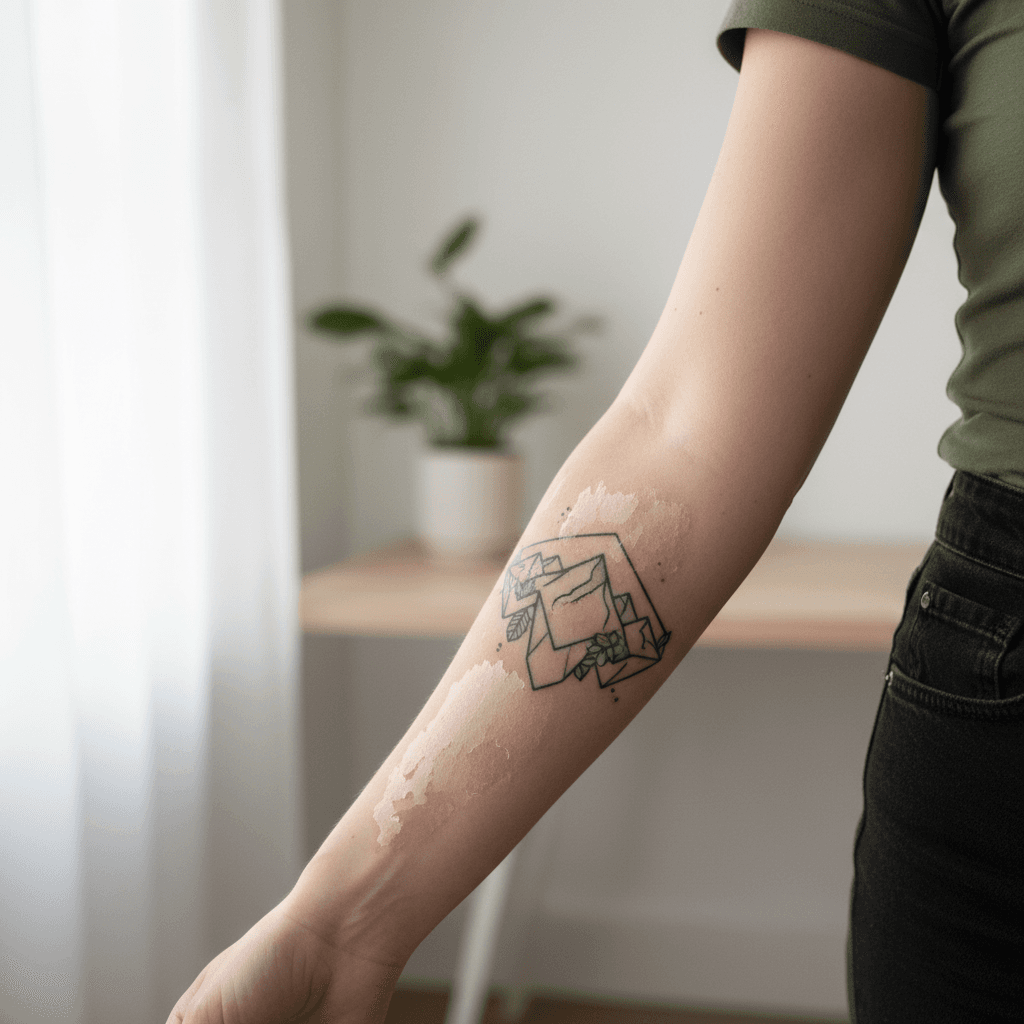
Around day five or six of a fresh tattoo, the top layer of skin starts to flake off. It looks like a tan that went too far. Chunks come away in the shower, sometimes carrying flecks of color with them. This is the part of healing where most people panic, and almost none of them need to.
Why tattoos peel in the first place
When a tattoo machine drives ink into the dermis, it has to puncture the epidermis (the outer skin layer) thousands of times to get there. That outer layer is mostly dead by the end of the session. Over the next week, your body sheds it the same way it sheds a sunburn, because mechanically that's what the wound is: a controlled abrasion with pigment trapped underneath.
The ink itself sits in the deeper dermal layer, where macrophages have already started locking it in place. So when the outer skin flakes off, you are not losing your tattoo. You are losing the protective scab layer that was sitting over it. The colors look dull and milky during this phase because there is a thin film of healing tissue between the ink and your eyes. That cloudy look is called "ink shadow," and it disappears by week three.
Peeling typically starts day 4 to 6 and runs through day 14. Larger pieces peel longer, sometimes into week three. Color tattoos often peel harder than fine line black and grey because more ink saturation means more trauma per square inch of skin. The day-by-day healing timeline lays out exactly which phase you should be in at any given point.
What normal peeling looks like
Healthy peeling is dry, papery, and flat against the skin. The flakes lift at the edges and curl up on their own. Color ink shows up on the flakes, especially red and yellow, which can make the bathroom sink look like a crime scene. This is fine. The pigment in those flakes was never going to stay in the dermis anyway. It was sitting in the epidermal layer that is now exiting your body on schedule.
You will see the tattoo look almost bruised or hazy for about a week. The contrast drops, the lines look softer, and the edges sometimes seem fuzzy. This is normal. The final crispness of your linework only shows up after week three, once the epidermis has fully regenerated. People who panic about line quality during week two are looking at a tattoo through a sheet of healing skin.
Tug on a flake and it should resist a little, then come off cleanly with no bleeding underneath. If you have to pull, leave it. Forcing a flake before it is ready rips out the new epidermis underneath and can pull pigment with it.
What is not normal: the warning signs
Most "is this normal" questions during peeling are still normal. But there are real warning signs that separate ordinary healing from a problem:
- Thick yellow or green discharge. Clear plasma is fine, colored pus is not. Plasma weeps from a fresh tattoo for the first 48 hours and dries into a thin honey-colored film. Discharge that smells, looks opaque, or keeps producing past day 4 is potentially infected.
- Heat radiating from the tattoo. A slightly warm tattoo in week one is normal because of inflammation. A tattoo that feels noticeably hotter than surrounding skin past day 4, especially with a red halo extending past the lines, needs to be seen by a doctor.
- Raised, swollen scabbing past day 10. Thin scabs are normal. Thick crusty scabs that feel stuck and refuse to flake by day 10 to 12 usually mean the tattoo was not moisturized enough, or that you healed dry. They can also signal an allergic reaction to red or yellow pigment.
- Bumps that persist after peeling ends. Small itchy bumps during peeling are histamine response. Bumps that stay after week three, especially raised welts along the lines, can be an ink allergy.
- Fever or red streaks moving away from the tattoo. See a doctor the same day. These suggest systemic infection.
If you are three days past your session and the tattoo still bleeds when you press a clean paper towel against it, that is also not normal. Mild plasma seeping is fine. Active bleeding past 48 hours is not.
What to do (and not do) while it peels
Wash twice a day with unscented soap. Mild fragrance-free liquid soap is the standard. Pat dry with a clean paper towel rather than a cloth towel, which carries laundry residue and bacteria. Apply a thin layer of unscented lotion or a healing balm. The keyword is thin. A wet, suffocated tattoo grows bacteria. A dry, cracked tattoo scabs hard and pulls ink. Most of how a tattoo looks in five years gets decided in the first 24 hours of aftercare, and the peeling stage is where bad habits show up.
The temptation to pick is brutal. A half-peeled flake hanging off your forearm is the most satisfying pull in the world, and it is also the easiest way to scar your fresh ink. Picking lifts skin that was not ready, which removes pigment with it. The result is patchy spots that show up after final heal and require a touch-up to fix. Same with scratching. The itch peaks in week two for almost everyone, and the fix is slapping or pressing the area, never dragging a nail across it. If the itch is unbearable, the full breakdown of why new tattoos itch covers what to do.
Stay out of direct sun. UV degrades fresh ink in the first 30 days more aggressively than anything else, and a peeling tattoo has zero barrier protection. No pools, no oceans, no hot tubs for at least two weeks. Submerged skin softens scabs and pulls them off prematurely, and the bacterial load in public water is significant. Showers are fine. Long baths are not.
How peeling differs by style and ink
Black and grey tattoos peel light and even. The flakes are small and the color underneath looks faded but consistent. Most heal cleanly in 10 to 14 days.
Color tattoos peel harder. The ink saturation is higher, the trauma to the skin is greater, and the healing window stretches closer to 18 to 21 days for the outer layer alone. Reds and yellows shed the most pigment in flakes because those colors do not bind to the dermis as tightly as blacks and dark greens. This is also why color tattoos are more likely to need a touch-up after first heal, particularly in highlights and tight color packing.
Bold traditional pieces with thick black outlines tend to scab thicker than fine line work. That is physics: more ink, more trauma, more wound to close. Fine line tattoos sometimes barely peel at all and can look like they skipped that stage entirely. They did not. The peeling is so thin and dry that you do not notice it.
When to call your artist vs. a doctor
Most artists will check a healing photo for free. Texting them a clear, well-lit picture on day 4, 7, and 14 is normal and welcome. They want their work to heal well.
Call your artist if a tattoo is not peeling at all by day 8, if a scab pulls off and leaves a patch of missing color, or if the ink looks like it is smudging outside the original lines. Some of these need touch-ups, which most reputable artists do for free within the first six months.
Call a doctor if you see signs of infection: heat, pus, spreading redness, fever, or red streaks moving away from the tattoo. Do not wait. Tattoo infections respond well to oral antibiotics caught early and can become serious if ignored. A small co-pay beats a hospital admission.
Frequently asked
How long does tattoo peeling last? Most tattoos peel from day 4 or 5 through day 14. Larger or heavily colored pieces can keep peeling into week three. The outer healing is done at the 2 to 3 week mark, but the dermis underneath continues to remodel for another 4 to 6 weeks before the ink fully settles.
Can I peel the flakes off myself? No. Pulling flakes that are not ready takes new skin and pigment with them. If a flake is hanging by a single thread and bothers you, you can snip the tip with clean scissors, but never tug. Let gravity, water, and time do the work.
Why does my tattoo look faded after peeling? The new epidermis growing over the tattoo is translucent during weeks 2 and 3. The pigment is fully in place underneath, but you are seeing it through a film of immature skin. Real color clarity returns by week 3 to 4. Photos taken at day 10 will not match what the tattoo actually looks like at day 30.
Is it normal to see ink in the flakes? Yes. The flakes are made of dead epidermis that carried surface ink with them. The pigment that matters is in the dermis below, where macrophages already locked it in. Color in your shower drain is not color leaving your tattoo.
Should I moisturize a peeling tattoo? Yes, but lightly. Apply unscented lotion two to three times a day, enough to make the skin feel slightly hydrated and no more. Heavy slathering traps moisture and breeds bacteria. Thin layers, washed off and reapplied, heal cleaner than thick layers left to sit.
What if my tattoo is not peeling by day 7? Some tattoos peel late, especially small fine line pieces or work done on dry winter skin. If you are past day 8 with no peeling, no scabbing, and no discomfort, the tattoo probably healed through micro-shedding you did not see. If the tattoo still looks scabbed and thick at day 10 with no flaking, call your artist.