style guides
Abstract Tattoos: Style Guide, Cost, and Design Ideas
Abstract tattoos trade recognisable subjects for shape and negative space. Here is how the style works, what it costs, and how to brief an artist.
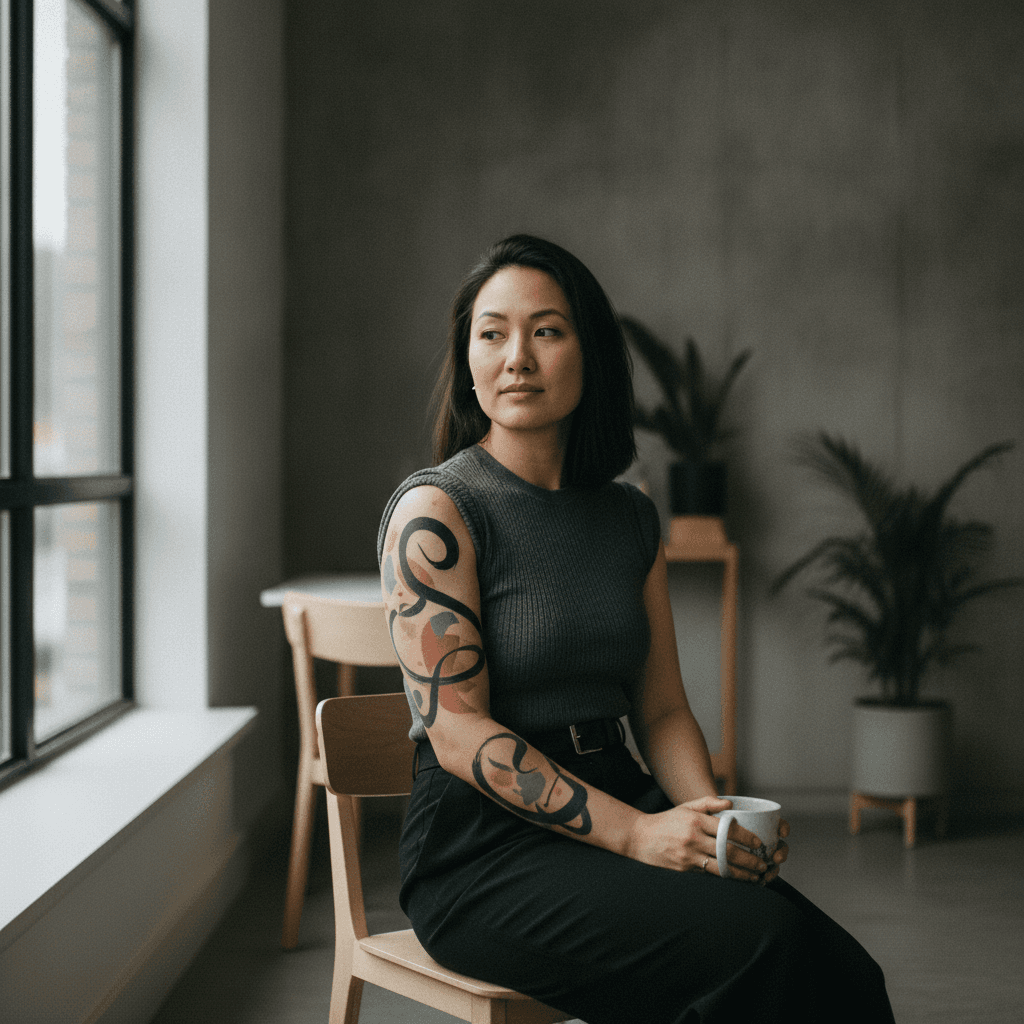
Abstract tattoos ditch the recognisable subject and lean on shape, gesture, contrast, and negative space instead. Instead of reading a tiger or a rose, your eye moves through brushstrokes, splashes, torn edges, and geometric fragments. That looseness is the appeal, but it is also what makes the style easy to get wrong. This guide breaks down the substyles, the pricing, the ageing behaviour, and how to brief an artist so the piece stays composed instead of drifting into a random mess on your arm.
What counts as an abstract tattoo
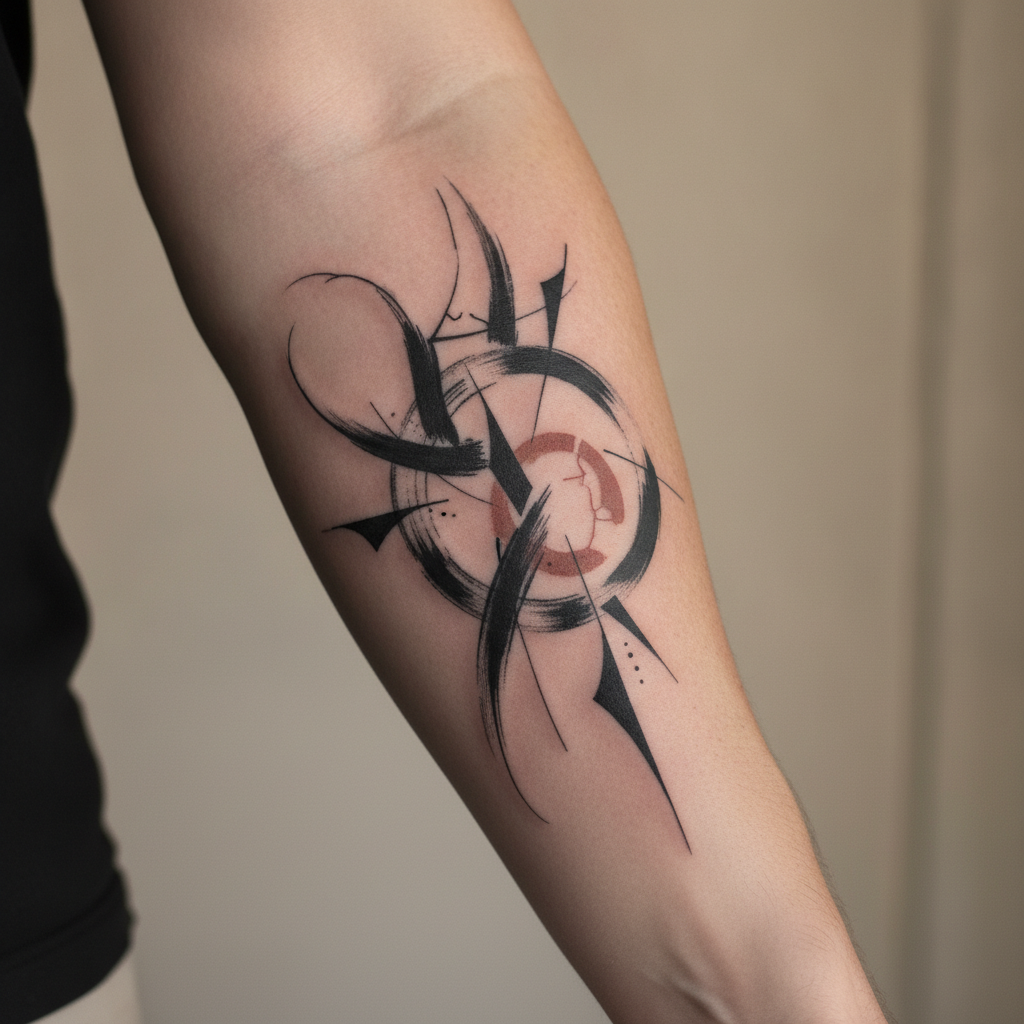
Abstract as a category is broad on purpose. The unifying trait is that the piece is non-representational, or only partially representational, and the visual weight comes from composition rather than a clear subject. In practice most abstract work falls into three substyles. Brushstroke or ink-wash pieces mimic sumi-e and calligraphy, with loose black strokes and drip marks laid down in one confident gesture. Geometric abstract combines hard-edged shapes, grids, and broken lines to create tension without depicting anything. Collage abstract layers torn paper effects, splashes of colour, typography fragments, and small figurative elements into a single composed panel, and this is where the style overlaps with trash polka.
The best abstract tattoos still obey basic design rules. There is a clear focal point, a hierarchy between heavy and light areas, and intentional negative space. When abstract work fails, it is almost always because the artist filled every square inch or because the client kept asking for "one more little thing" added on. Restraint is the whole style.
Substyles and how they age
Brushstroke abstract ages the best of the three. The strokes are typically 3 to 8 millimetres thick, packed with solid black, and they read cleanly even after 10 to 15 years of fading and skin movement. Look for artists trained in sumi-e or with a fine-art painting background, because the confidence of the stroke matters more than the machine. A wobbly brushstroke tattoo looks like a mistake, not a design choice.
Geometric abstract holds up well if the linework is clean and the composition is not too fine. Anything under 1 millimetre line weight will blur into a thicker line within five to seven years, especially on high-movement zones like the inner forearm or ribs. Ask to see the artist's healed geometric work at three years and up, not fresh-off-the-needle photos.
Collage abstract is the highest-maintenance substyle. It usually mixes solid black with colour splashes, red being the most common accent. Red and orange fade fastest of any tattoo colours, losing about 15 to 25 percent of their saturation in the first three years even with good aftercare. Expect a touch-up around year five if the colour is central to the composition. Read our tattoo fading guide before committing to a colour-heavy piece.
Placement and size
Abstract tattoos need room. Small abstract pieces under 3 inches tend to read as random marks rather than compositions, and this is the single most common regret people report on the subreddit r/tattoos. The style works best at these sizes and placements.
- Forearm panel, 5 to 8 inches long, sessions of 3 to 5 hours
- Upper arm or shoulder cap, 6 to 9 inches wide, 4 to 6 hour session
- Ribcage, 8 to 14 inches, split across two sessions
- Back piece, 10 to 20 inches, 3 to 6 sessions
- Full sleeve, 5 to 10 sessions of 4 to 6 hours each
Placement should follow the natural lines of the muscle. A brushstroke that fights the biceps curve will always look off. Good abstract artists will draw directly onto your skin with a marker for 30 to 60 minutes before starting, adjusting the composition to how you actually stand and move.
What abstract tattoos cost
Pricing follows the same hourly logic as the rest of the industry, but abstract carries a small premium because the design work is heavier and there are fewer artists who specialise in it. Expect these ranges in 2026.
- United States: $180 to $350 per hour at established studios, $400 and up for named specialists
- Western Europe: 130 to 220 euros per hour, with Berlin and Amsterdam sitting at the top of that range
- Southeast Asia: $80 to $150 per hour in Bali, Bangkok, and Ho Chi Minh City, with a handful of internationally-booked artists charging $200 and up
- Flat rate for a forearm panel: typically $800 to $2,200 depending on size and colour
- Full sleeve: $4,500 to $12,000 all in
Deposits run 20 to 30 percent of the estimated total, non-refundable, and cover the design time. Because abstract briefs are looser, expect the artist to spend 4 to 10 hours on drawing before your first session. See the tattoo deposit guide for how deposits typically apply to the final invoice.
How to brief an abstract artist
The mistake most clients make is over-briefing. You are hiring the artist for their eye, so give them a mood and a constraint, not a spec sheet. A good brief includes three to five reference images from painters or graphic designers rather than other tattoos, a clear placement and rough size, a colour rule such as "black only with one red accent", and a list of any elements you do not want. Skip the Pinterest board of 40 tattoos you like, because it will only pull the artist toward copying rather than composing.
Book a paid consultation before committing. Sixty minutes at $75 to $150 lets both of you decide if the collaboration is a fit. If the artist shows you a fully rendered digital mockup at the first meeting, that is a red flag for abstract work, because the style needs to be adjusted live on skin.
Frequently asked
Do abstract tattoos age worse than traditional? Brushstroke and heavy-black geometric abstract age about the same as American traditional, meaning they still read clearly at 20 years. Colour-heavy collage abstract fades faster, closer to a watercolour timeline, and will need touch-ups every 5 to 8 years.
Can abstract tattoos be small? They can, but under 3 inches the composition breaks down and the piece reads as a random shape. If you want small and modern, look at fine-line, single-needle, or minimalist work instead. Abstract earns its space.
How do I find a real abstract specialist? Search Instagram tags like #abstracttattoo, #brushstroketattoo, and #inkwashtattoo, then filter for artists whose feeds are at least 70 percent abstract work. Generalists who post one abstract piece among traditional and neo-traditional tattoos are usually not the right pick for a signature abstract composition.
Do abstract tattoos hurt more? Not because of the style, but because they tend to be large and cover thin-skin areas like the ribs, sternum, and inner arm. Session length is the bigger factor. Plan for 3 to 5 hour sessions with proper breaks and a real meal beforehand.
Should I get colour or stay black-only? Black-only abstract holds up longest and is the easier first commitment. If you want colour, keep it to one or two accent tones and place them where clothing shades them from the sun. That is the single biggest lever on how the piece looks in year 10.
Can I mix abstract with a portrait or figurative element? Yes, and this is exactly where collage abstract lives. Just decide in advance which element is the focal point, because if the portrait and the abstract elements compete for attention the whole piece reads as noise.