cost guides
Tattoo Deposit: How Much, When You Get It Back, and Why It Exists
Tattoo deposits run $50 to $500+ depending on session size and artist tier. Here is what the money actually buys, when you get it back, and why shops require it.

Tattoo deposits sit in a weird zone between booking fee and down payment, and the rules vary by shop. Most artists ask for $50 to $300 up front before they sketch a single line, sometimes much more for top-tier work. Knowing what the money buys you, when you get it back, and what kills a refund is the difference between a smooth booking and an expensive lesson on the artist's terms.
What a tattoo deposit actually is
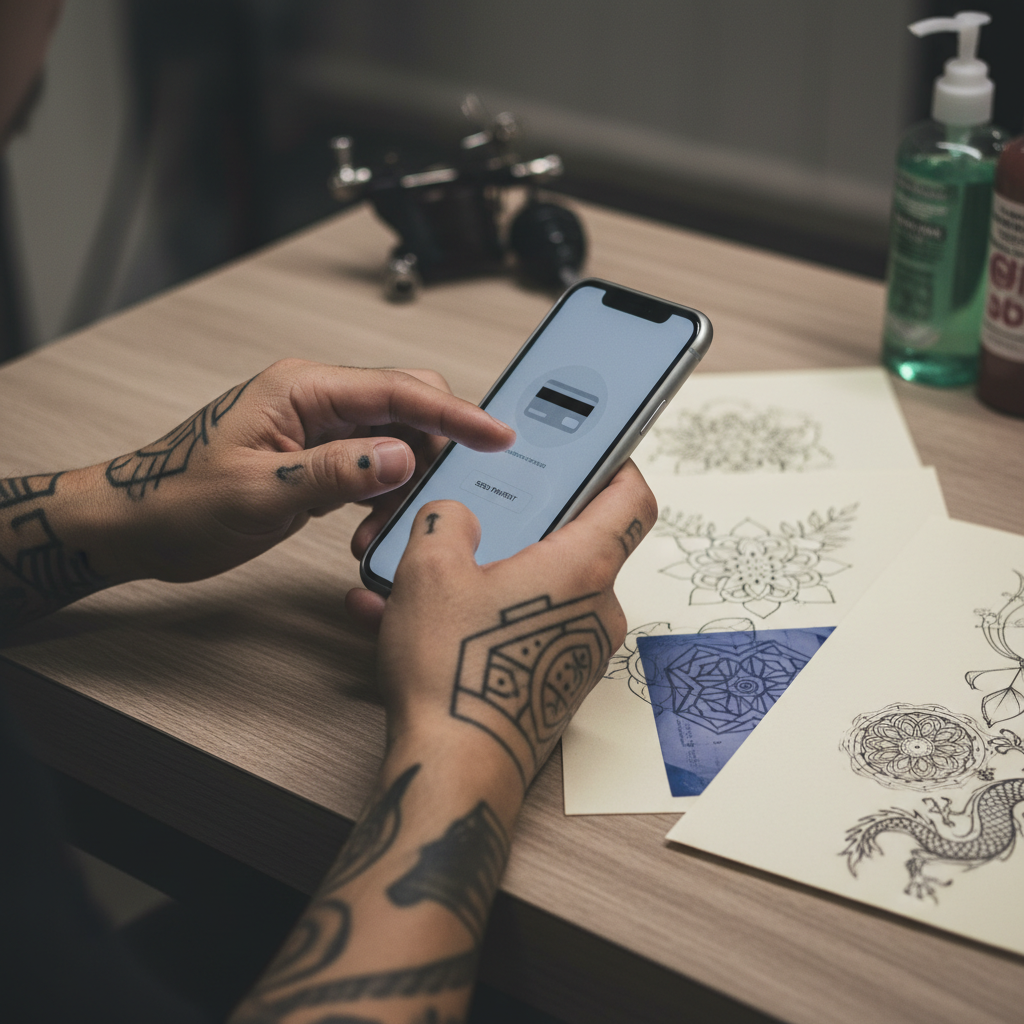
A tattoo deposit is a non-refundable payment that holds your appointment slot and pays for the design time your artist puts in before the day. It is not extra money piled on top of the tattoo price. The deposit comes off your final invoice, so a $200 deposit on a $1,400 sleeve session means you owe $1,200 at the end (plus tip). Most shops collect through Venmo, Zelle, Square, or in person at the time you confirm your date.
Custom tattoo work eats hours of unpaid drawing before you ever sit in the chair. A clean fine-line piece needs 1 to 3 hours of sketching. A full sleeve concept can take a full day. Without a deposit, that time is free labor every time a client ghosts, which happens far more than first-timers realize. The deposit converts your booking from a vague intention into a contract that protects both sides of the transaction.
How much you'll pay
Deposit amounts scale with session size, artist tier, and how booked-out the shop is. Here are the typical 2026 ranges:
- Walk-in flash or small custom: $50 to $100
- Mid-sized custom piece (a few hours): $100 to $250
- Half-sleeve or back piece: $200 to $500
- Full sleeve or multi-session work: $300 to $1,000+
- High-demand artist with a 12-month waitlist: $500 to $2,000+
Geography pushes the number up. NYC, LA, London, and Tokyo shops typically charge higher deposits than smaller markets, and any artist published in the major tattoo magazines will charge a premium to keep the booking calendar tight. Apprentices and street-shop artists may waive the deposit for walk-ins or take a flat $50 to hold a slot the next week. For context on what the deposit gets credited against, see our breakdown of hourly vs. flat-rate tattoo pricing.
Multi-session pieces often work differently. Your artist may take one deposit for the whole project, applying it only to the final session, or charge a smaller deposit per booked date. Always ask which model your artist uses so you do not end up confused at checkout when the math runs different than you expected.
When a deposit is refundable (and when it isn't)
The default in most shops is non-refundable, full stop. You forfeit the money if you no-show, cancel inside the artist's cutoff window (usually 48 to 72 hours), or reschedule more than once or twice. Some artists allow one free reschedule with 7+ days of notice, then the next move costs you a new deposit. Read the booking confirmation email line by line, because the terms vary wildly between shops and even between artists at the same shop.
There are a handful of cases where you should get your money back or have it rolled forward:
- The artist cancels on you. Full refund or roll to the next available date, your choice.
- The shop closes permanently before your appointment. Full refund.
- Documented medical emergency with reasonable notice. Most artists roll the deposit, sometimes after a short delay.
- The artist changes the price or design scope substantially from what you booked. Negotiable.
You lose the deposit in these cases:
- No-show on the day with no contact
- Cancel inside the 48 to 72 hour window
- Reschedule three or four times
- Change the design completely after the artist has already drawn it
- Decide the price is too high after the formal quote (you booked the slot, the design time was already spent)
Why shops require them
Walk-out rates for unsecured tattoo appointments run 15 to 25% in busy markets, sometimes higher around holidays. Tattooing is appointment-based work, and an empty chair is income that cannot be reclaimed. Every no-show pushes the artist's monthly budget around, especially for full-time artists who pay their own booth rent and supplies on a sliding scale. Deposits filter out tire-kickers and people who book three artists at once to compare. They also fund the design phase, which is otherwise unpaid creative labor that can run 10 to 20% of the artist's working hours in a given week.
How the deposit gets applied to your final price
At checkout, your deposit is subtracted from the total. If your half-sleeve quotes at $1,800 and you put $300 down, you owe $1,500 plus tip on the day, paid in cash, card, or whatever the shop accepts. The total before tip is what gets reduced, not the tip itself, so calculate gratuity off the original price. Our tipping guide breaks down the standard 20 to 25% range. For broader context on what drives the underlying quote, the tattoo pricing explainer walks through artist tier, placement, and design complexity.
A practical note on shorter-than-expected sessions. If the artist finishes faster than the quote and the final bill drops below the deposit amount, you usually do not get the excess back in cash. Reputable shops will roll the credit to a touch-up or future session, so confirm that policy in advance. The same logic applies if a session ends early because you tap out from pain or fatigue, which is more common than first-timers expect on long ribcage or spine work. For sizing context on bigger work, see the tattoo sleeve cost breakdown.
What changes for walk-in shops and conventions
Walk-in shops and convention booths operate on a different timeline, so the deposit logic flexes. Walk-ins are typically same-day, full payment on the chair, no deposit required, though you may pay upfront before the artist starts to lock the session length. Conventions vary by artist policy, with most accepting cash on the day for flash and requiring a deposit only for custom slots booked in advance. If you are flying in for a guest spot or destination tattoo, expect a higher deposit (often 40 to 50% of the quoted price), because the artist is blocking premium calendar time and the cancellation cost is steep.
Frequently asked
Is a tattoo deposit the same as a consultation fee? No. A consultation fee covers the in-person meeting itself, usually $30 to $75 for a 30-minute design discussion, and is not always applied to the final price. A deposit specifically holds your appointment slot and counts toward the tattoo total. Some shops bundle a free consultation into the deposit if you book on the spot.
Can I pay the deposit on the day of the tattoo? Almost never. The point of the deposit is to lock the booking before the artist starts drawing, which usually happens 2 to 6 weeks before the session. If you ask to pay on the day, the shop will most likely tell you that you have not actually been booked, only put on a tentative inquiry list.
What if my artist gets sick the day of? Your deposit rolls to the next available date at no extra cost. If the artist cancels permanently due to a closure, illness, or move to a new city, the standard practice is a full refund, though some shops will offer you a transfer to another artist on the team instead.
Do flash tattoos require a deposit? Sometimes. Walk-up flash days at conventions or shop open-house events usually skip the deposit because you sit down right then. Pre-booked flash from an artist's existing sheet typically requires a $50 to $100 deposit to hold the slot, since the artist still has to prep the stencil and block the time.
Can I transfer my deposit to a friend? Most shops say no, because the deposit is tied to your specific design, consultation, and stencil prep. A few will accommodate it as a one-time favor if the design transfers cleanly (a small piece of flash, for example), but expect to lose the money on custom work. Ask before you assume.
Why won't my artist refund my deposit if I cancel two months out? Because by the time you cancel, the artist has often already done your design work, turned down other clients for your time slot, and built the appointment into the month's income forecast. Even with months of notice, the lost income window and unused design time usually justifies the non-refundable policy. Some artists will quietly refund a portion if you cancel very early and they fill the slot fast, but that is a gift, not a right.
Will the deposit lock in the artist's quoted price? Generally yes, for the design and scope you booked. If you change the design substantially or scale up after booking, expect a new quote and possibly a top-up deposit. Lock the size, style, and placement before you pay, because changes after the fact are where surprise costs hide.