aftercare
Tattoo Fading: What Causes It and How to Prevent It
Every tattoo fades a little. Sun, skin turnover, placement, and ink type decide how fast. Here is what actually causes fading and how to slow it down.

Fading is not a defect. It is what tattoos do, because skin is a living organ that sheds, thickens, and rebuilds itself on a rolling schedule. The realistic question is not whether your ink will fade but how fast, and most of that answer sits inside decisions you make every day. This guide covers the biology, the environmental hits, the style and placement factors, and the specific habits that keep a tattoo readable ten years in.
Why tattoos fade in the first place
Ink sits in the dermis, the layer below the epidermis where cells cycle constantly. Macrophages, the immune cells that first tried to eat the ink during healing, keep nibbling at pigment particles for the rest of your life at a slow rate. When those cells die they are replaced, and each handoff drags a small amount of pigment toward the lymphatic system. A 2020 study in Cell Reports Medicine confirmed this turnover cycle in mice and correlated it to the gradual softening people see in older tattoos.
On top of that biology, the epidermis above your ink is not static either. It fully replaces itself every 40 to 56 days depending on age and body site. That surface layer scatters and diffuses the light hitting your tattoo, and as it thickens with sun exposure or age it can make ink look duller even when the pigment itself has barely moved. This is why a fresh tattoo looks so vivid in the first two weeks and then settles into its true color once the top layer normalizes.
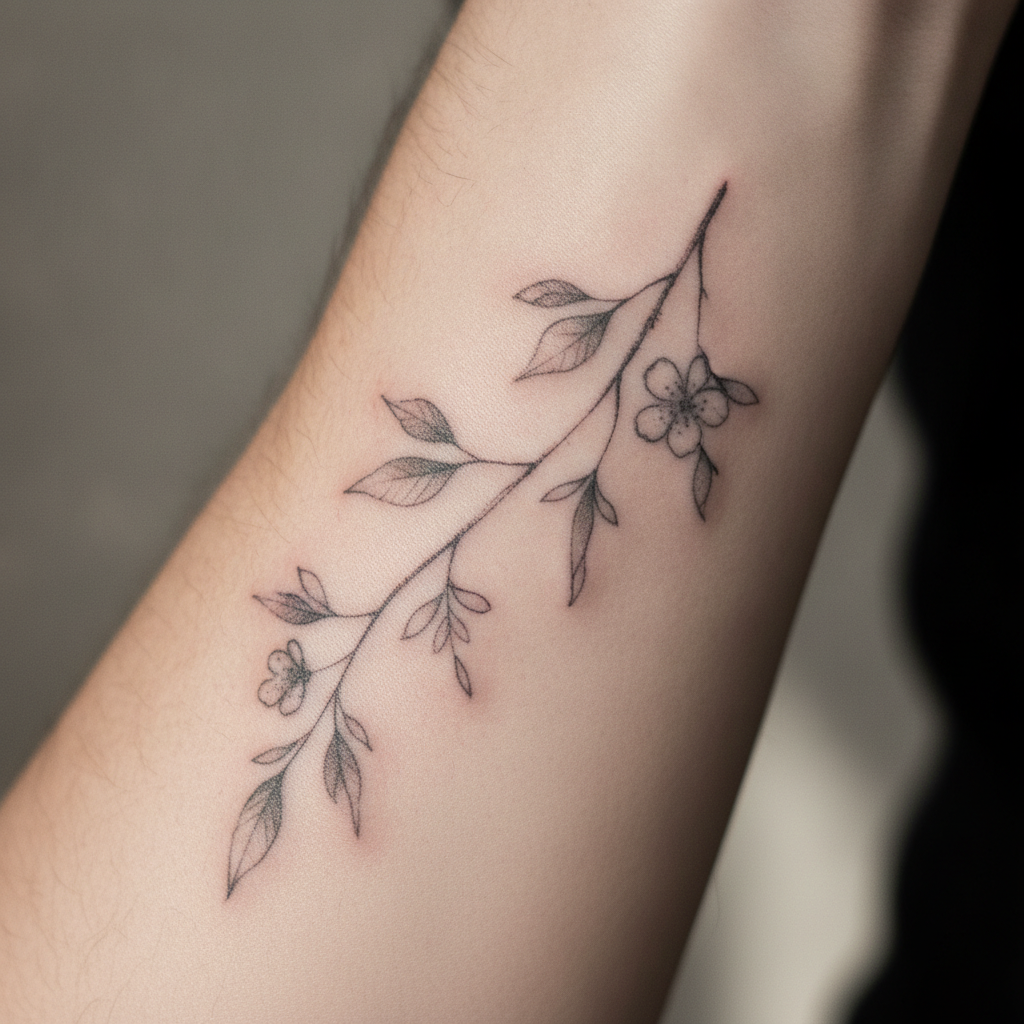
Line breakdown is a separate process. Fine lines fade faster than thick lines because the amount of pigment per square millimeter is lower, so any pigment loss shows sooner. This is a core reason fine-line tattoos need touch-ups more often than traditional work. Bold lines have redundancy built in.
Sun exposure is the single biggest fade accelerator
UV radiation breaks down tattoo pigment molecules directly and triggers the immune response that clears them. UVA penetrates deep enough to reach the dermis where your ink lives, and UVB burns the skin above it, thickening that diffusing top layer. A summer of unprotected beach days can visibly age a tattoo by a year or more, and the damage compounds.
Black ink holds up best because carbon-based pigments are stable under UV. Reds, yellows, and light blues fade fastest. Pastels and watercolor-style work take the worst hit, because those styles rely on low-saturation pigment washes that have less material to lose before the color reads as gray. If you have color work, sunscreen is not optional.
Use a broad-spectrum SPF 30 or higher on any exposed tattoo every day you will be outside more than fifteen minutes. Mineral formulas with zinc oxide sit on top of the skin and block UV physically, which some artists prefer because chemical filters can sting fresh work. Once the tattoo is fully healed, either type is fine. Reapply every two hours in direct sun.
Placement decides how much friction your tattoo takes
Some spots fade fast no matter what you do, because the skin there sheds harder, stretches more, or rubs against clothing. The worst offenders are hands, fingers, feet, and the inside of the wrist, where skin regenerates aggressively and mechanical wear is constant. Expect touch-ups on these placements every two to five years even with good care. Cost is a factor too, and our hand tattoo cost guide walks through why artists charge what they do for these zones.
Mid-durability zones include the forearm outside, calf, and upper back. These see moderate sun and friction but hold ink well for five to ten years before needing significant work. High-durability zones are the ribcage, sternum, inner bicep, and inner thigh, all areas that stay covered and see minimal sun. Tattoos here can look nearly new fifteen years in if the client did not gain or lose significant weight.
Placement also interacts with the healing phase. Joints, spots that rub against waistbands, and areas that flex constantly are more likely to lose ink during the initial healing timeline. Ink loss during healing looks the same as long-term fading and is often confused for it. If a fresh tattoo is patchy before the six-week mark, that is a heal-out issue, not fading.
Ink quality and application depth
Not all tattoo pigments are equal. Reputable brands like Dynamic, Eternal, World Famous, and Fusion use vetted pigment loads that hold up predictably. Cheaper inks, especially unbranded imports, can shift color, break down under UV faster, or migrate. Ask your artist what brand they use if you are booking a color piece and you plan to keep it sharp for decades.
Depth matters as much as brand. Ink placed too shallow ends up in the epidermis and sheds off during healing, leaving patchy work. Ink placed too deep gets pushed sideways by tissue movement and blows out into gray fuzz. A skilled artist targets the middle to lower dermis, which is where ink stays put and reads clean for the longest. Blowouts are a common cause of what looks like premature fading, and our blowout guide covers how to spot the difference.
Saturation passes are the other technical variable. A well-packed color tattoo takes multiple passes to build density, and undersaturated color reads faded from day one. If your color piece looked pale by month two, it may have been under-packed rather than genuinely faded.
The daily habits that actually preserve ink
Long-term care is boring and consistent. The single highest-leverage habit is sunscreen on any exposed tattoo, every day, forever. Second is moisturizing regularly, ideally twice a day, with a fragrance-free lotion. Hydrated skin scatters less light and shows ink truer, and it stays more flexible so pigment stays where the artist put it.
- SPF 30 or higher on exposed tattoos every day. Mineral formulas are safest for older healed work.
- Moisturize twice daily with an unscented lotion. CeraVe, Cetaphil, and Aveeno work fine.
- Skip harsh exfoliants on tattooed skin. Retinol serums, glycolic acid pads, and physical scrubs strip the top layer and dull the ink underneath.
- Stay hydrated internally. Chronically dry skin ages every tattoo faster.
- Manage weight stability. Large gains or losses stretch and slacken the skin, which distorts lines and thins packed color.
Avoid tanning beds entirely if you care about your ink. The UV intensity there is calibrated to accelerate melanin production, and it wrecks tattoo pigment on the same schedule. If you want color, self-tanner over healed tattoos is fine but skip any exfoliating primer step, and expect the tattoo to read slightly muted while the tan is on.
When to book a touch-up
A well-cared-for tattoo on a good placement can go five to ten years before it needs any touch-up work. Fine-line pieces on high-wear zones may need attention at the two-year mark. Color work on exposed skin without diligent sunscreen use might need refreshing at three to five years. Blackwork on covered skin can last fifteen years or more looking sharp.
Signs it is time include lines that have softened noticeably, color that has shifted or muted, gaps where ink did not stay, and outline breakdown that changes the shape of the design. Photograph your tattoo annually in the same light and posture, and comparing those photos side by side is the clearest signal. Our touch-up timing guide covers what to expect during a refresh session and what it costs.
Book with the original artist when possible. They have the reference notes, the ink batches, and the muscle memory for the piece. If that is not an option, bring the highest-resolution photo you have of the tattoo when it was fresh, and let the new artist match color and line weight from there.
Frequently asked
Do black-and-grey tattoos fade less than color tattoos? Yes, on average. Black and gray pigments are carbon-based and highly UV-stable, so they hold density for longer. Color pigments, especially reds, yellows, and pastels, break down faster under sun exposure and read muted sooner. A black-and-grey piece on the forearm can go a decade with only minor softening if you use sunscreen.
Can moisturizer bring back a faded tattoo? Moisturizer will not restore pigment that has moved or broken down, but it will make a dull-looking tattoo read sharper temporarily by hydrating the top layer of skin. A tattoo that looks better right after lotioning is showing you what proper daily hydration can maintain. It is not a substitute for a touch-up.
How much does a tattoo fade in the first year? Most of the perceived first-year change is the epidermis normalizing after healing rather than true fading. By month three the tattoo has settled into its long-term appearance. Real pigment loss during year one is minor if you protected the piece from the sun and healed it cleanly.
Does laser hair removal fade nearby tattoos? Yes, if the laser passes over inked skin. Laser hair removal targets pigment, and tattoo ink absorbs the energy just like hair follicles do. Always tell your provider about tattoos in the treatment area so they can shield the ink.
Will chlorine or saltwater fade my tattoo faster? Not directly on healed tattoos, though frequent pool time can dry out skin, which makes ink read duller. The bigger fade risk during beach or pool sessions is sun exposure, not the water itself. Rinse and moisturize after swimming.
Is fading covered by a touch-up warranty? Most artists offer a free or discounted touch-up for the first six to twelve months to correct heal-out issues, not long-term fading. After that window, touch-ups are billed at the artist's minimum charge or hourly rate. Ask about the specific policy before you book.