cost guides
Why Are Tattoos So Expensive? The Real Cost Breakdown
Tattoos cost $150 to $300 per hour for a reason. Here is the honest breakdown of artist time, shop overhead, supplies, and skill premium that sets the price.
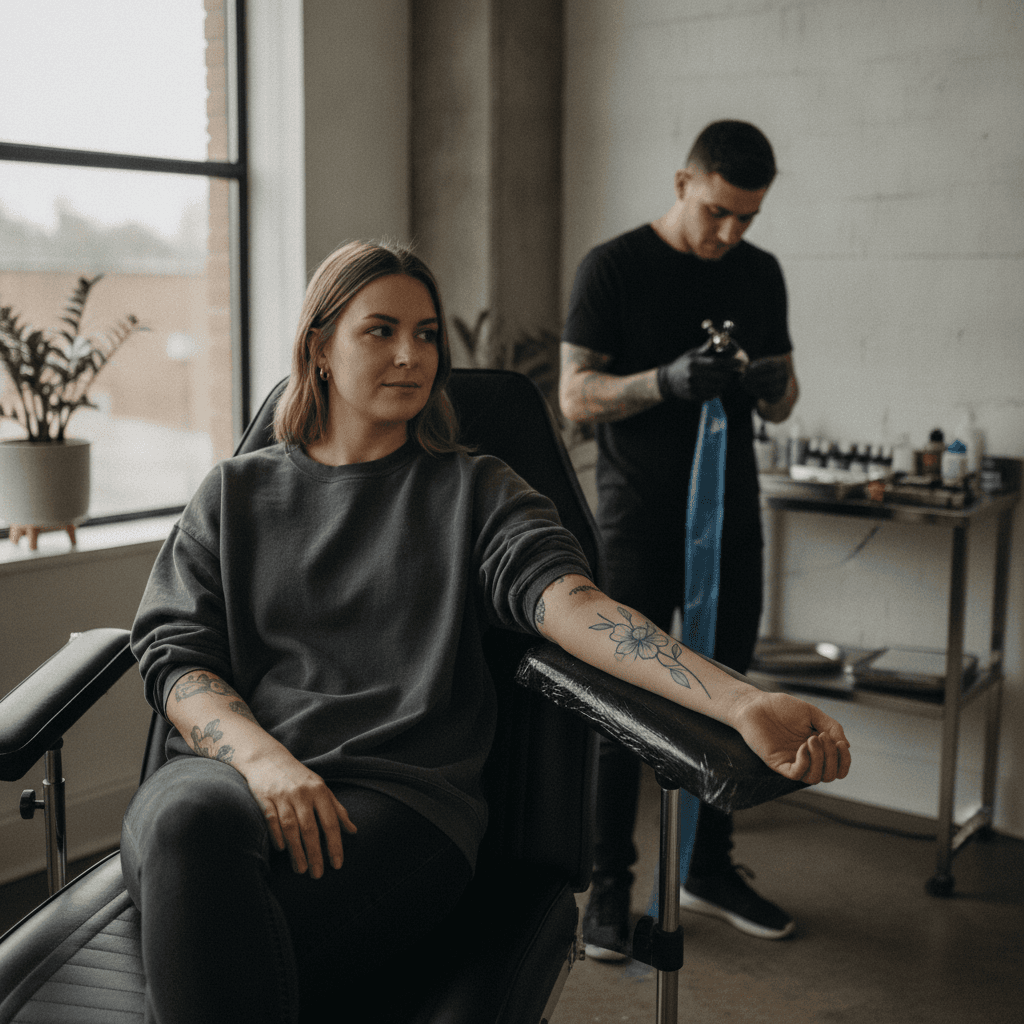
Walk into any reputable studio in a major city and the hourly rate quoted will land somewhere between $150 and $300, with senior artists in New York, London, and Tokyo charging $400 to $600. New clients see the number and flinch. The price is not arbitrary and it is not a markup on cheap labor. It reflects a specific stack of costs that most people never see until they run the math themselves.
The artist's hourly rate is not their take-home pay
A tattooer charging $200 per hour is not pocketing $200 per hour. Most artists work as independent contractors renting a chair inside a shop. Standard splits run 30 to 50 percent to the studio, which means an artist on a 60/40 split at $200 per hour keeps $120 gross before any other deduction. From that $120, they cover their own supplies for the session, self-employment tax at roughly 15.3 percent in the US, health insurance, retirement savings, and equipment replacement. The realistic take-home on a $200 hourly rate lands closer to $60 to $80 per hour once every cost is subtracted. That is skilled trade money, not luxury money. See our hourly vs flat-rate tattoo pricing breakdown for how sessions get billed in practice.
Artists also do not bill for every hour they work. Consultations run 30 to 60 minutes and are usually free or credited toward the deposit. Custom design time on a half-sleeve can eat 4 to 10 hours of unbilled drawing before the client ever returns for ink. A booked artist doing 25 hours of tattooing per week is often working 45 to 55 hours total once design, admin, cleaning, and client comms are included.
Shop overhead is heavier than it looks
The 30 to 50 percent that goes to the studio pays for a long list of fixed costs. Commercial rent in a walkable retail spot runs $3,000 to $12,000 per month depending on city. Liability and malpractice insurance for a tattoo shop starts around $1,200 per year per artist and climbs fast in litigious markets. Autoclave sterilization equipment costs $3,000 to $8,000 up front and requires quarterly biological indicator testing. Health department permits, bloodborne pathogen certification renewals, and business licensing add several hundred to several thousand per year.
Utilities and consumables also stack up. Studios burn through medical-grade disinfectants, barrier films, and disposable trays every single day. A busy shop with four artists spends $2,000 to $5,000 per month just on cleaning and barrier supplies before a single needle goes in.
Single-use supplies cost more than you would guess
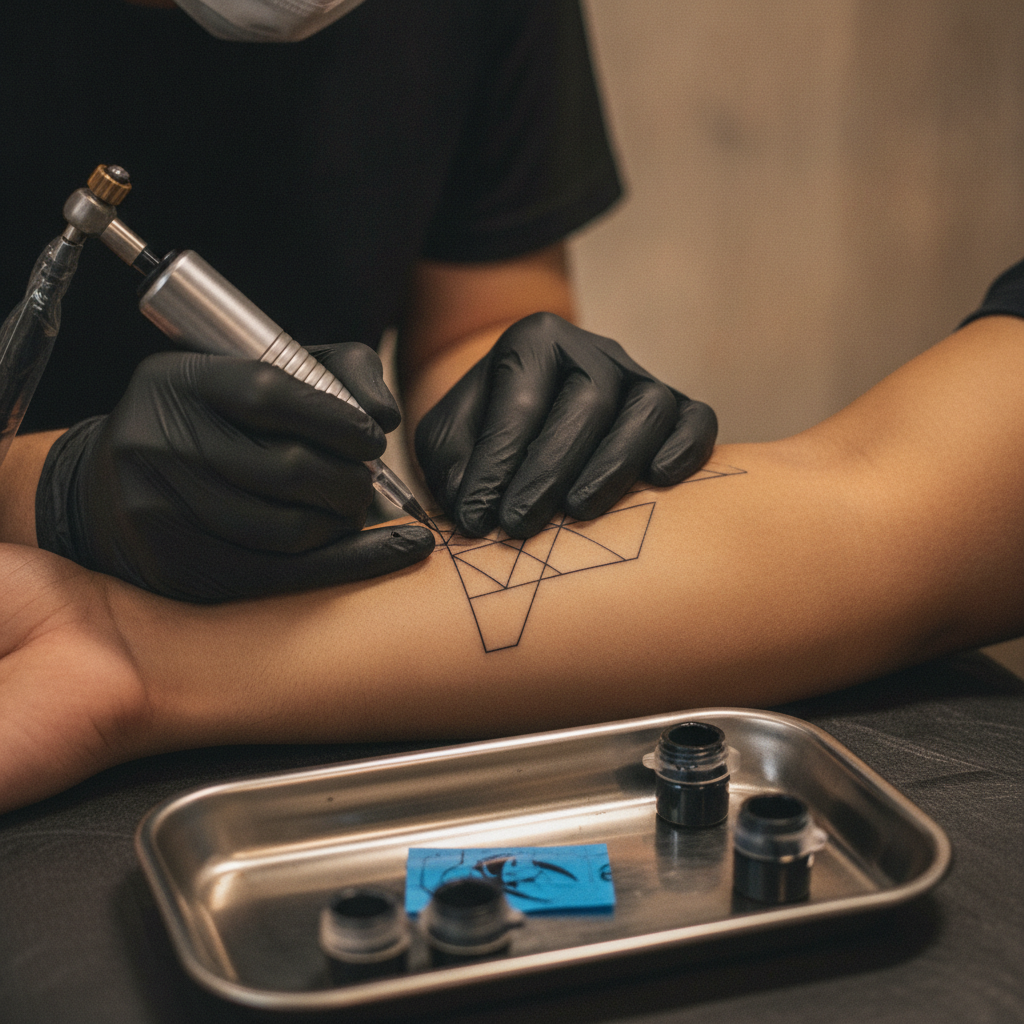
Every needle cartridge used in a modern rotary machine is disposable and gets discarded after one client. Quality cartridges from brands like Cheyenne, Kwadron, and Bishop run $1.50 to $4.00 each. A full sleeve session might burn through 15 to 25 cartridges depending on line work, shading, and color packing. Ink is thrown out at the end of every session because it was mixed and used with a specific client. High-quality inks from Eternal, Fusion, Solid, and World Famous cost $8 to $25 per bottle, and a color-heavy session can waste $30 to $60 worth of ink that never touches the skin again.
Add gloves, razors, green soap, distilled water, ink cups, tongue depressors, paper towels, transfer paper, thermal printer sheets, medical tape, and Saniderm for aftercare. The per-session supply cost for a 4-hour appointment lands between $40 and $90. That is real money coming out of the artist's cut before anything else.
Skill and training are what you are really paying for
Machine time is only part of the price. The person holding the machine has spent 2 to 5 years apprenticing without meaningful income, then another 5 to 15 years developing the specific technical vocabulary that lets them execute clean line work, smooth black-and-grey gradients, or saturated color that will still look sharp 20 years from now. Bad line weight, poor needle depth, or ink under-saturation shows up two years later as a blowout or a faded mess. That is why the tattoo cost by artist experience level gap between an apprentice and a booked senior artist is often 4x or 5x for the same design.
Style specialization also drives price. A realism specialist who does 40 photorealistic portraits a year commands $300 to $500 per hour because that skill is rare and the failure rate for amateurs is close to 100 percent. A portrait tattoo cost at that tier is not a rip-off, it is a hedge against a permanent bad tattoo.
Shop minimums and deposits protect the artist's time
Most studios enforce a shop minimum of $80 to $200 regardless of how small the design is. That covers setup, breakdown, sterilization, and single-use supplies for pieces that would otherwise be unprofitable. Deposits of $50 to $300 lock in the appointment and get applied to the final bill. If a client no-shows or cancels last minute, that deposit compensates the artist for the booked slot that could have gone to someone on the waiting list. Learn how deposits work in our tattoo deposit guide.
What actually justifies the price
Here is the honest short list of what your money buys:
- 5 to 15 years of technical skill development that keeps your line work clean and your color saturated for decades
- Single-use sterile supplies replaced for every client, no exceptions in a legit shop
- Shop overhead including rent, insurance, autoclave, and health department compliance
- Unbilled design, consult, and admin time that can equal the tattooing hours
- Self-employment costs that eat 30 to 40 percent of the artist's gross before take-home
Frequently asked
Why do some artists charge $150 per hour and others $500? Experience, portfolio strength, style specialization, and city all move the rate. A $150 per hour artist in a mid-size US city might be a 3-year veteran doing solid traditional work. A $500 per hour artist in New York is usually a 15-plus year specialist with a 6-month waitlist and international clients. The higher rate reflects scarcity and predictable execution on high-risk designs.
Can I find a good tattoo for cheap? Yes, but with limits. Flash tattoos and shop minimums at reputable studios start around $80 to $150 and produce clean small pieces. What you cannot get cheaply is a large custom piece with technical demand. Anything under $80 per hour at a walk-in shop should raise questions about sterilization standards and experience level.
Is tipping expected on top of the hourly rate? Yes, 20 to 25 percent is standard in the US and Canada. Tipping is less common in continental Europe and parts of Asia, but a $20 to $50 tip on a longer session is always appreciated. See our tipping guide for full norms by region.
Why is the deposit non-refundable? Because the artist blocked out 2 to 6 hours of billable time and spent unbilled hours on the custom design. If you cancel, that slot cannot be filled on short notice, and the design work cannot be re-sold to another client. The non-refundable structure is standard across the industry for that reason.
Do bigger tattoos get cheaper per square inch? Sometimes yes. Many artists switch from hourly to a flat day rate of $1,000 to $2,000 for full-day sessions, which lowers the effective hourly rate. Full sleeves and back pieces are often quoted as project totals rather than by the hour once the design is finalized.
Why does the price go up if I ask for changes on the day? Same-day design changes force the artist to redraw the stencil, reprint, and reset supplies, which eats 30 to 60 minutes of unbilled time. Some artists absorb small tweaks. Larger changes get billed at the hourly rate or require rebooking.