Bali vs UK Tattoo Cost 2026: Real Savings for British Travellers
Bali tattoo prices run 60-70 percent below UK rates in 2026. Here is the honest Bali vs UK cost breakdown by district, size, and all-in travel budget.
By Peachy Editorial · · 8 min read
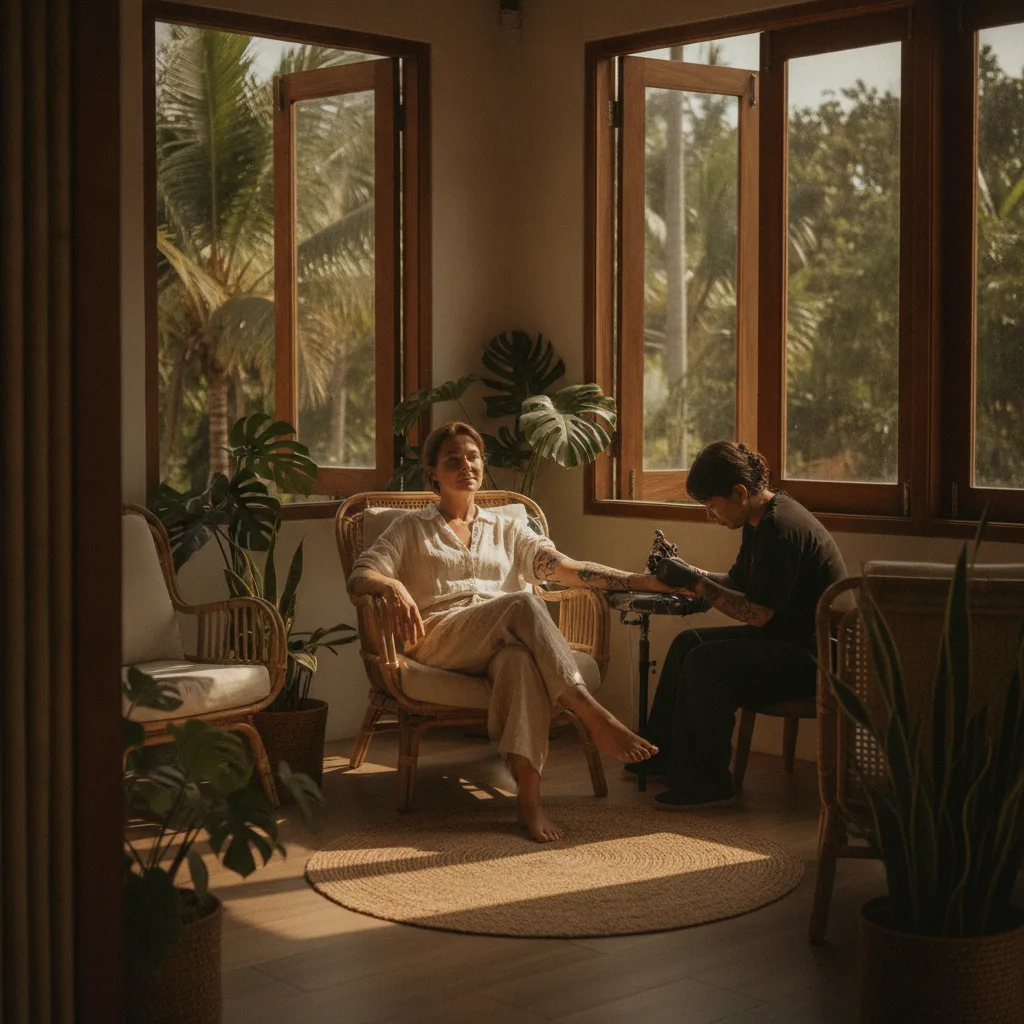
Bali tattoo cost sits roughly 60 to 75 percent below what the same piece runs in the UK, and the gap only widens once you move out of London. A fine-line wrist piece that quotes £180 in Shoreditch will book for IDR 1.2M (about £60) with a reputable Canggu studio. A full sleeve priced at £3,500 in Manchester tends to land around IDR 22M (about £1,100) in Seminyak. Those numbers are not clickbait, they are the live 2026 rates we track across the island. The question worth asking before you book: is the savings worth a flight, a tropical healing window, and the research it takes to find a clean studio.
This guide compares Bali and UK tattoo pricing by district, by size, and by what each pound actually buys you. It covers how to read a Bali quote, where the "cheap" studios will cost you more, and when flying out really is the smarter route for British travellers.
Headline numbers: what you pay in Bali vs the UK
The simplest way to frame the gap is per hour. Top-tier Canggu and Seminyak artists sit at IDR 1.2M to 2M per hour, which converts to roughly £60 to £100 at November 2026 rates. Senior UK artists in London charge £150 to £250 per hour. Even regional UK studios in Bristol, Leeds, or Glasgow typically open at £80 to £150 per hour.
For small pieces the gap looks like this. A sub-5cm fine-line tattoo books for IDR 800K to 1.5M in Bali, about £40 to £75. In the UK the same piece runs £80 to £180 depending on where you sit and who holds the machine. For a medium 10 to 15cm piece you are comparing IDR 2M to 4M (£100 to £200) with UK prices of £250 to £600. For a full sleeve the arithmetic swings hardest. Bali: IDR 15M to 35M, roughly £750 to £1,750. UK: £2,000 to £5,000, with London routinely north of that.
| Piece | Bali (IDR / GBP) | UK (GBP) | Rough saving | |---|---|---|---| | Small fine-line (<5cm) | IDR 800K–1.5M / £40–£75 | £80–£180 | 50–65% | | Medium (10–15cm) | IDR 2M–4M / £100–£200 | £250–£600 | 60–70% | | Half sleeve | IDR 6M–12M / £300–£600 | £900–£2,000 | 65–70% | | Full sleeve | IDR 15M–35M / £750–£1,750 | £2,000–£5,000 | 60–70% | | Hourly top-tier | IDR 1.2M–2M / £60–£100 | £150–£250 | 55–65% |
Rates assume November 2026 figures and £1 ≈ IDR 20,000. Expect 3 to 5 percent drift either way. Big London studios and guest artists from the US can push rates higher. See our Bali tattoo cost by district breakdown for how Canggu, Ubud, Seminyak and Kuta compare against each other before you add the UK number into the mix.
Why Bali is cheaper (and where the saving really comes from)
Three forces drive the discount. The first is overhead. A studio rent in Canggu is a fraction of a Shoreditch or Soho lease. Staff wages, equipment duty and insurance all run lower. The second is ink cost. Most reputable Bali studios use the same brands as London artists (Eternal, Dynamic, Fusion), but import duty is lower and bulk ordering is normal because a busy Canggu studio burns through far more ink per month than the average UK private room. The third is competition. Canggu alone has more than 60 active tattoo studios within a 4km stretch. Prices have to compete with each other.
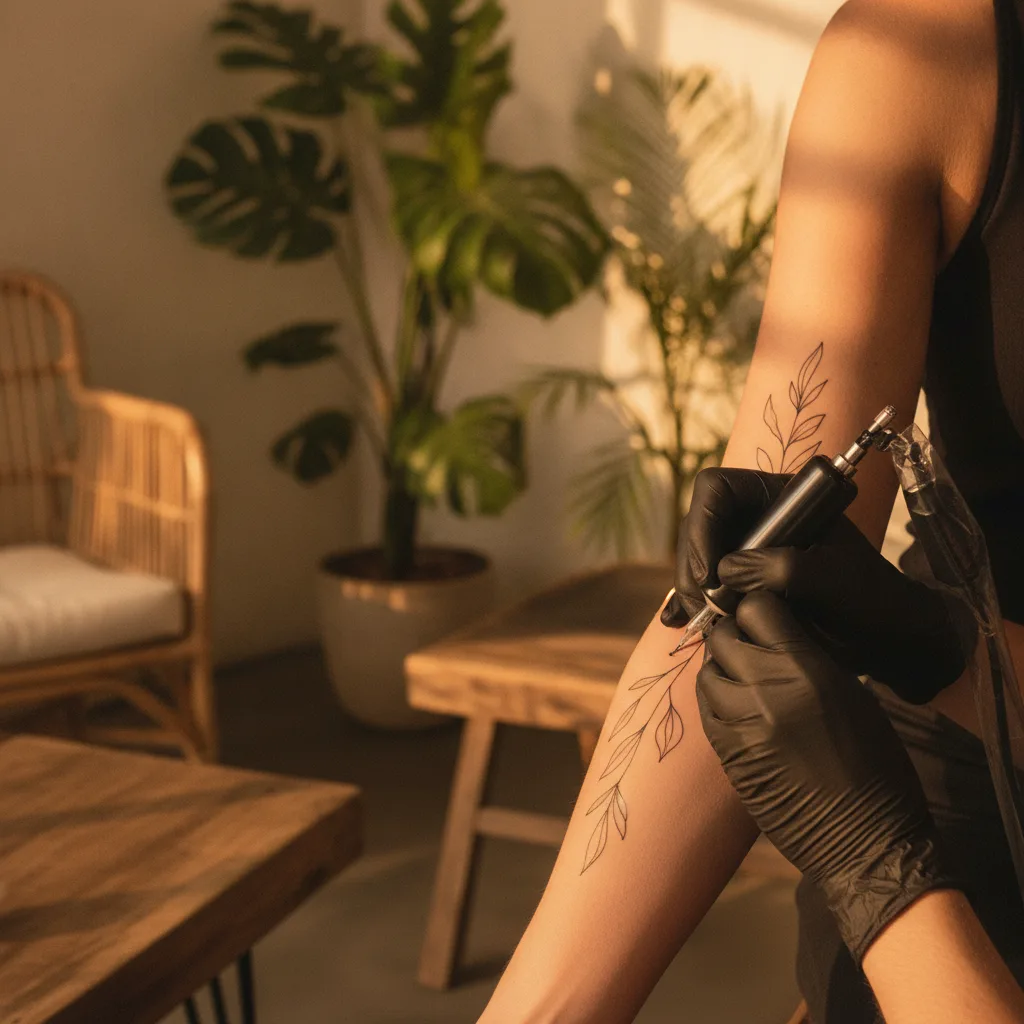
What you are not saving on is skill. The top Canggu and Seminyak artists train at UK or European conventions, attend the same workshops as Soho fine-line specialists, and often guest-spot back in London or Berlin. The portfolio bar at a legit studio like Djiwa in Canggu or Blessed in Seminyak is as high as anything you would find at a mid-tier UK private studio. The ones you want to avoid are the cheap Kuta walk-ins charging IDR 400K to 800K (£20 to £40), where hygiene is inconsistent and the ink brand may not be traceable. That is where the savings trap hides. Saving £80 to pay for a blowout you then fix for £400 back in Leeds is not a saving.
Where the saving shrinks: hidden costs for British travellers
The sticker price is only half of what you spend. For a fair comparison, add these to your Bali budget.
- Flights: London to Denpasar round-trip in 2026 is running £650 to £1,100 depending on month and airline. Shoulder season (April to June, September to October) is cheapest.
- Accommodation: 7 to 10 nights in Canggu or Seminyak at a decent guesthouse is £35 to £70 per night, so £250 to £700 for the stay.
- Deposits: Most Bali studios take IDR 500K to 2M as a deposit (£25 to £100), fully deducted from the final price. See our Bali tattoo tipping and deposit guide before you wire anything.
- Tips: Bali tipping is lighter than UK norms. IDR 100K to 500K (£5 to £25) on a session is typical and appreciated.
- Insurance: Trip insurance that covers skin procedures. Standard travel policies often exclude elective tattoos, so check the wording.
For a single small piece the all-in cost of a Bali trip usually only pencils out if you were already travelling. For a half sleeve or full sleeve, the pure tattoo saving alone (£1,000 to £3,000) covers flights and stay with room left over. That is where the Bali-trip-as-tattoo-trip genuinely makes sense for UK budgets.
When flying to Bali actually makes sense
A clean rule of thumb: if your UK quote is under £400, do it at home. The flight, the week off work, and the healing in 32-degree humidity are not worth £100 to £200 of savings. If your UK quote is £1,500 or more, Bali starts to pay for itself even once you add flights and a 7-day stay. A £3,500 London full sleeve for example becomes a £1,700 Bali total (£1,000 for the ink, £700 for flights and accommodation), with the heal happening during a surf trip rather than a scratch-free office fortnight. That is the maths worth running on paper, honestly, before you book.
The other factor is availability. Senior London fine-line specialists book 4 to 9 months out. Reputable Canggu and Ubud artists more typically book 4 to 12 weeks out, with a handful of guest spots and cancellations opening up every week. If you want a specific artist and your UK waitlist is a year, Bali becomes a timing play as much as a price one.
How to pay and avoid the Bali price traps
Bali studios will quote in IDR. Expect to pay in cash (IDR), by bank transfer in advance, or by card with a 2 to 4 percent surcharge. Always confirm the ink brand, needle policy (single-use, opened in front of you), and whether the studio uses a separate station per client. The real red flag is any studio quoting in USD only to foreign tourists but IDR to locals at a lower rate. That is an upcharge, not a market rate.
For a safer booking process, review our take on whether to book your Bali tattoo ahead or walk in and our first-tattoo-in-Bali guide if this is also your first piece. Avoid anyone asking for 100 percent upfront by Western Union. Standard practice is a 10 to 20 percent deposit by bank transfer or PayPal, with the balance settled at the studio.
Healing in Bali vs healing in the UK
The one place where the UK genuinely wins is healing conditions. A fresh tattoo in a 10-degree London autumn under a hoodie heals cleaner than one in 32-degree Canggu humidity at the end of a surf session. Sweat, saltwater, chlorine, and sun are all working against you in Bali for the first 2 to 3 weeks. You can do it, but you have to plan the trip around it. No ocean day one through seven, no direct sun on the piece for three weeks, and proper air conditioning in your room for the first few nights. The tattoo aftercare in tropical heat and humidity guide has the real timeline.
For practical NHS-aligned general wound care guidance, see the NHS page on how to care for a new tattoo. It is UK-written, medically reviewed, and worth reading before you book.
Frequently asked
Is getting a tattoo in Bali actually safe for British travellers?
Yes if you book with an established studio that uses single-use needles, traceable ink brands, and a separate hygienic station. The cheapest Kuta walk-ins are where the risk sits, not the mid-to-premium Canggu, Seminyak, and Ubud studios. Book ahead, check portfolios on Instagram, and look for written hygiene policies on the studio site.
How much will a sleeve cost me in Bali compared to the UK?
A full sleeve in Bali runs IDR 15M to 35M (£750 to £1,750) depending on detail, colour, and artist tier. The same piece in the UK sits at £2,000 to £5,000, with London routinely at the top of that range. The Bali saving on a sleeve, after flights and a 10-day stay, is usually £800 to £2,500.
Will my tattoo heal properly in Bali's climate?
It will, if you plan the first week carefully. Avoid the ocean for seven to ten days, keep the piece out of direct sun for three weeks, sleep in air conditioning, and switch to lighter aftercare balms rather than heavy occlusive ointments after day three. Humidity actually helps the early scab phase if your room is clean and cool.
Can I fly home with a fresh tattoo?
Yes, with a sensible timeline. Most artists recommend at least three to five days of healing before a long-haul flight so the piece is past the open-weep phase. Our flying home after a fresh Bali tattoo guide covers compression, cabin dryness, and what to pack.
What currency should I pay in?
Indonesian rupiah, in cash or by local bank transfer. Card surcharges run 2 to 4 percent. Any studio quoting only in USD for tourists is upcharging. The honest ones display their rate card in IDR with an optional GBP or USD estimate alongside.
Is tipping expected in Bali tattoo studios?
Tipping is appreciated but lighter than UK norms. IDR 100K to 500K (£5 to £25) at the end of a session is standard. Larger pieces or multi-session work warrants a larger tip on the final appointment.
Keep reading
- Cost Guides
Bali Sleeve Tattoo Cost 2026: Full, Half, Leg by District
Real 2026 Bali sleeve tattoo cost by district and session: half sleeve from IDR 8M, full arm from IDR 18M, leg from IDR 22M. Honest ranges, no fluff.
- Cost Guides
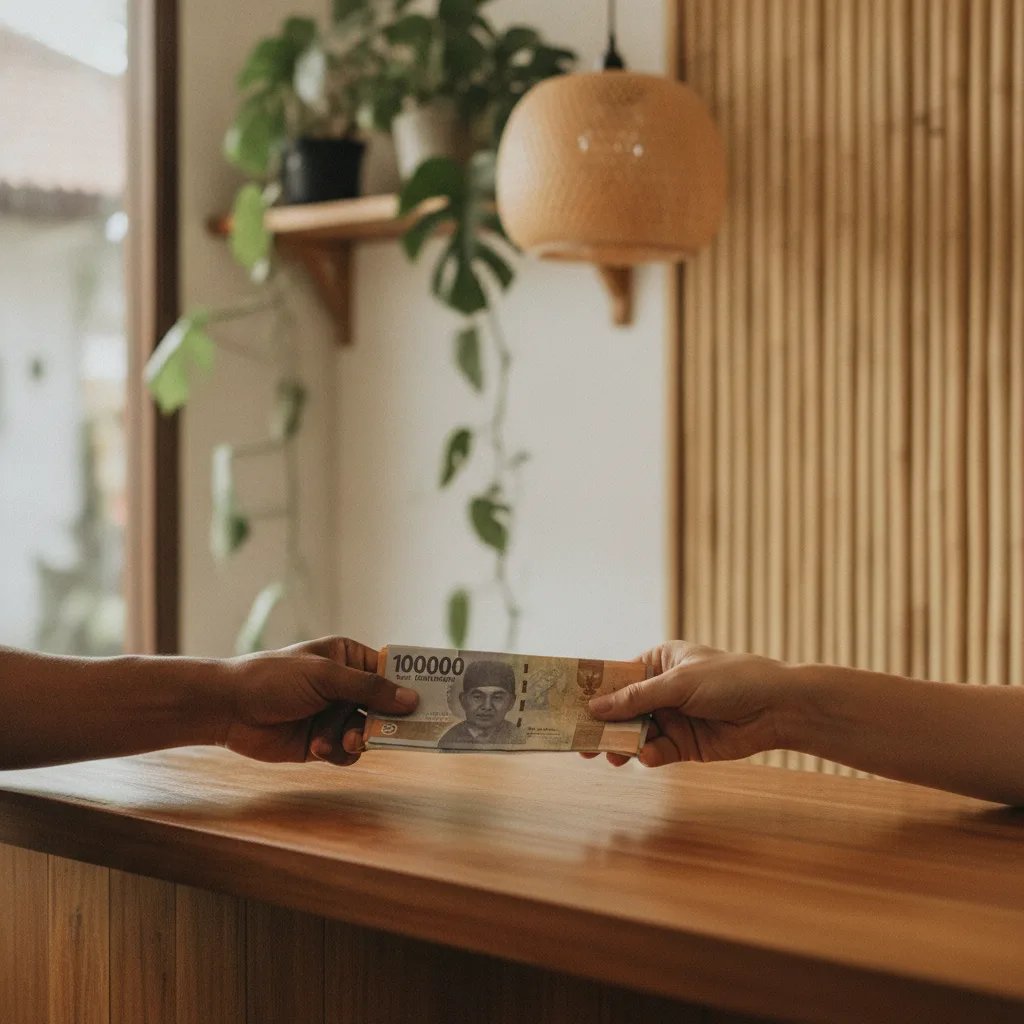
Tipping Tattoo Artists in Bali: Deposits & Cash Etiquette (2026)
How much to tip a tattoo artist in Bali, what deposits are normal, and why Canggu and Ubud studios still prefer cash in rupiah for the balance.
- Cost Guides

Bali Tattoo Cost 2026: Canggu vs Ubud vs Seminyak Prices
A 2026 price guide to getting a tattoo in Bali, with real IDR and USD rates for Canggu, Ubud, Seminyak and Kuta, and how they compare to home.