design ideas
Thigh Tattoo Ideas: Placement, Pain, and Design Angles
Thigh tattoos give you canvas size without exposure. Here is how placement, pain, and design scale change what you should actually get.
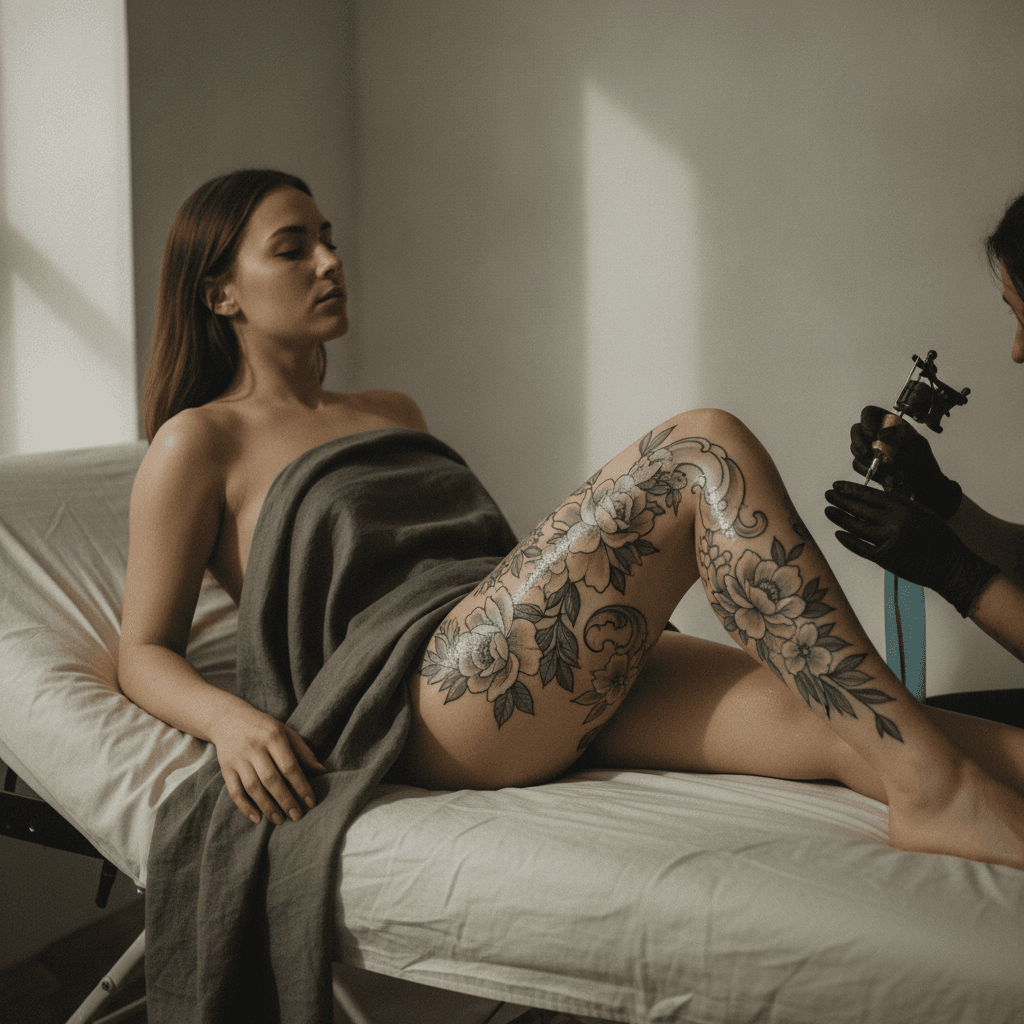
The thigh is one of the few spots on the body where you can get something genuinely large without committing to constant visibility. You get around 12 to 16 inches of usable vertical canvas on a typical adult thigh, which rivals a full back panel or a sleeve but with soft, forgiving skin underneath. That changes what designs actually work there, how long sessions run, and how much the needle hurts depending on which face of the thigh you pick.
Why the thigh is a different canvas than an arm
A thigh is not just a bigger forearm. The skin stretches in multiple directions as you walk, sit, and bend at the hip, so linework needs to be laid down with that movement in mind. Artists working on thighs usually plan compositions that follow the long axis of the leg, because a design oriented sideways will distort more over time as the quadriceps and hamstrings cycle through contraction. The fat layer underneath is also thicker than on most other large placements, which means ink saturates slightly differently and healing tends to be smoother than on a shin or ribcage piece.
The practical upside is that you can fit a full narrative scene or a dense ornamental pattern without resorting to the micro-realism tricks you would need on a forearm. A single thigh panel can hold a 10-inch koi, a seated portrait, or a florals-and-snake composition with full negative space breathing room. If you want size without the social cost of hand or neck ink, this is the placement that gets you there, and it pairs well with longer-term plans like extending into a full leg sleeve later. For style context, our blackwork style guide and neo-traditional style guide both cover approaches that scale well on this canvas.
Pain, honestly, by thigh region
Thigh pain is region-specific and the ranking matters when you are picking placement. On a rough 1 to 10 scale where a forearm sits around a 4 and a ribcage sits around an 8:
- Outer thigh: 3 to 4. Thick muscle, buffered by fat, low nerve density. Most forgiving spot on the entire body for a first large piece.
- Front thigh (quad): 4 to 5. Still comfortable but closer to the kneecap pain climbs sharply.
- Back thigh (hamstring): 5 to 6. Softer skin, more nerve branches, and awkward positioning for long sessions.
- Inner thigh: 7 to 8. Thin skin, dense nerves near the groin, and the top third near the crease is the hardest zone on the leg.
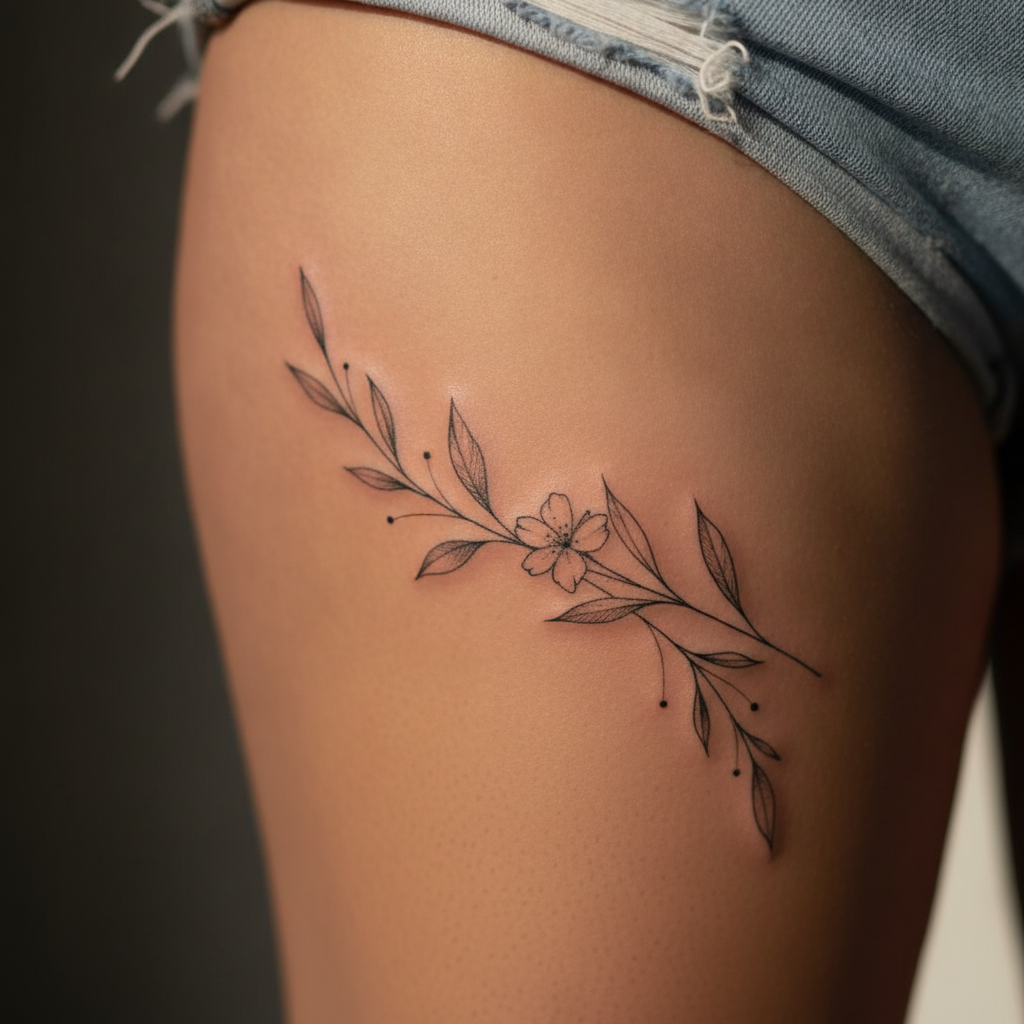
The pain difference between outer and inner thigh is dramatic enough that a lot of artists quietly recommend first-timers start on the outer face and only migrate inward on a second sitting once they know how their body handles the needle. If you have a low pain tolerance and want a large piece, the outer thigh is where you should put it. If you want the design hidden under shorts most of the time, the inner thigh gives you that but you will pay for it in session comfort.
Design angles that actually fit the shape of a thigh
Thighs are long, slightly tapered rectangles with a curved outer face and a flat inner face. Compositions that respect that geometry age better and photograph better. Four angles that consistently work:
- Vertical narrative scenes: a figure or object stacked top-to-bottom, like a geisha with trailing kimono, a snake coiled around a sword, or a tall botanical arrangement reading from hip to above the knee. This is the single most popular angle for Japanese irezumi thigh pieces and the one with the longest track record of aging well.
- Ornamental symmetry panels: mandala or filigree patterns centered on the outer thigh, framed by negative space. These look sharp fresh but need an artist who can commit to clean linework, since any wobble in symmetry becomes obvious at full scale. The mandala style guide covers composition rules that apply directly here.
- Floral and botanical bouquets: peonies, roses, chrysanthemums, or wildflower arrangements that wrap slightly around the outer edge. The curve of the thigh makes bouquets feel three-dimensional in a way flat placements cannot replicate.
- Portraits and large single-subject realism: a lion, a tiger, a human face, or a mythological figure rendered at near life-size. These demand an artist with portrait realism experience, usually in the $200 to $350 per hour tier, and they typically eat 15 to 25 hours across multiple sessions.
Watercolor and abstract pieces also live on thighs well because the extra skin surface lets color washes bleed into negative space without crowding. If you are considering color, our watercolor style guide walks through longevity concerns that apply more to thigh placement than most people realize.
Session count and realistic timeline
A full outer-thigh piece in color realism or Japanese irezumi style typically runs 15 to 25 hours of needle time, which translates to 3 to 5 sessions of 4 to 6 hours each. Blackwork or ornamental compositions at the same scale can finish faster, often in 10 to 15 hours, because there is less color packing to do. Fine-line botanical pieces at thigh scale usually land between 6 and 10 hours total, done across 2 to 3 sittings.
Space sessions at least 2 weeks apart, and 3 to 4 weeks apart if the sessions run past 5 hours each. The thigh heals faster than ribs or hands but still needs the full inflammatory phase to resolve before the artist opens new skin next to healing skin. Trying to compress a thigh piece into back-to-back weekends is one of the most common ways thigh tattoos end up with blown-out linework or uneven saturation, since the skin never fully resets between hits.
Clothing, visibility, and real-world practicality
Thigh placement sits mostly under shorts and skirts in daily life, which is why it has become the go-to spot for people who want a large tattoo but keep a corporate job or deal with family who would react badly to visible ink. The upper third of the thigh is covered by nearly all shorts, the middle third stays visible with mid-length shorts, and the bottom third shows with almost anything above knee length.
This matters because it directly affects how a design should be composed. If you want visibility year-round, anchor the strongest focal point of the composition in the lower third near the knee. If you want a hidden piece, let the strongest focal point live in the upper third where only beachwear or short shorts will reveal it. A design laid out with no visibility strategy often ends up with its most interesting element permanently hidden under clothing, which people regret more often than they regret the ink itself.
Frequently asked
How much does a full thigh tattoo cost? Expect $1,500 to $4,500 for a full outer-thigh panel from a mid-tier artist charging $150 to $250 per hour, scaling up to $6,000 or more for a top-tier portrait realism or Japanese piece from an artist in the $250 to $400 per hour bracket. Flat-rate pricing for large thigh pieces is less common than hourly, but some artists quote a project fee once they see the sketch.
Does an inner thigh tattoo fade faster than other placements? Yes, slightly. Inner thigh skin rubs against the opposite leg constantly during walking, and that friction over years can soften fine detail. Expect to need a touch-up on inner thigh pieces around year 5 to 7, whereas outer thigh work often holds for a decade with no touch-up needed if sun exposure is kept down.
Can I sit normally after a thigh tattoo session? Not comfortably for the first 48 hours. Fresh thigh ink is tender when the skin folds at the hip crease during sitting, and tight pants will stick to the healing surface. Most people take at least one full day off a desk job after a long thigh session and switch to loose shorts or a long skirt for the first week of healing.
Is the thigh a good first tattoo placement? For a small to medium design, yes. For a full large-scale piece as a first tattoo, less so, because sitting through a 4-hour session on virgin skin is a different experience than the same session on skin that has been tattooed before. Many artists will suggest a smaller test piece first so you know how your body reacts before committing to a 20-hour project.
Will a thigh tattoo stretch if I gain or lose weight? Modest changes of 10 to 15 pounds generally will not visibly distort a thigh piece, especially one placed on the outer thigh where muscle fills the shape. Larger weight swings, pregnancy, or significant muscle gain can stretch linework and spread color, with the inner and front thigh being the most vulnerable zones. Finished pieces hold up better than fresh ones, since mature ink has fully settled into the dermis.
What about healing differences between color and blackwork thigh pieces? Color packing produces more inflammation per square inch than blackwork, so a color thigh session often feels sorer for longer and weeps lymph fluid for 2 to 3 days instead of 1. Blackwork heals cleaner but requires more careful aftercare to prevent scabs from pulling and leaving patchy saturation. Both benefit from the same core aftercare routine, with the color piece just needing more patience.