style guides
Watercolor Tattoos: Style Guide, Longevity & Real Costs
Watercolor tattoos look like brushstrokes on skin, but they age differently than traditional work. Here's how the style works, what it costs, and how to make it last.

Watercolor tattoos try to do something tattoos were never designed to do: imitate paint on paper. The result, when it works, looks like a brush dragged pigment across skin and let it bleed at the edges. The risk, when it does not work, is faded color in five years and a piece that reads as a smudge. This guide covers how the style actually works, what separates a good watercolor artist from a bad one, what the pricing looks like in 2026, and how to keep the color saturated for the long haul.
What makes a tattoo "watercolor"
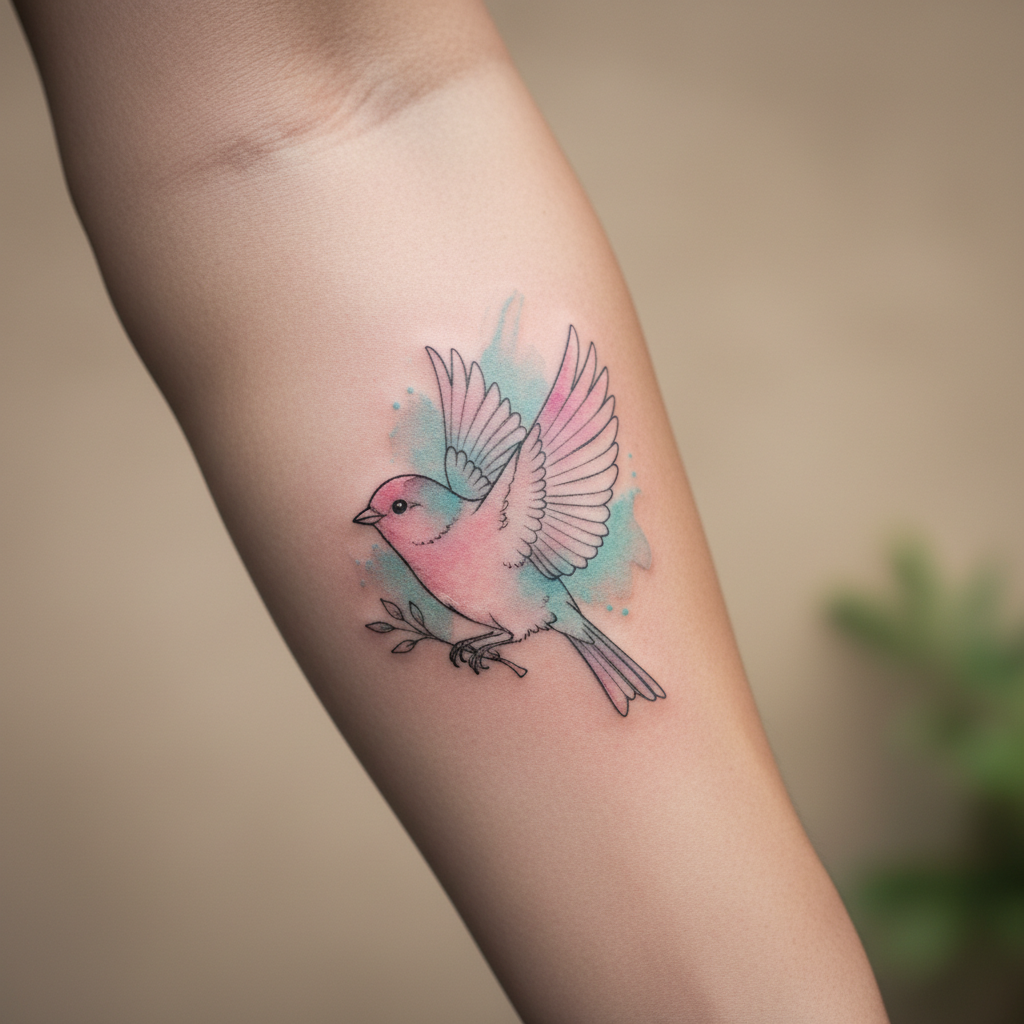
Watercolor is a finishing style more than a single technique. The defining marks are soft pigment washes, splatter, drip lines, and color that fades into untouched skin instead of stopping at a hard outline. Artists build that look by layering diluted ink with shallower needle depth, working wet on wet, and using whip shading to feather the edges. The needles are usually round shaders and magnums rather than the tight liners used in fine-line work.
The style splits into two camps. Pure watercolor abandons the black outline entirely and relies on color shapes to carry the image. Hybrid watercolor uses a fine black line drawing as the anchor and treats the color as a wash around it. The hybrid version is what most reputable artists recommend, and the reason is purely practical. A black ink outline is the single biggest factor in how a color tattoo reads twenty years later, and we will come back to that.
How the technique actually works on skin
Tattoo ink sits in the dermis, the second layer of skin. Watercolor washes are placed there with less ink density per pass than a solid-fill tattoo, which is what creates the translucent look. The tradeoff is that thinner ink deposits move more, fade faster under sun exposure, and can shift in tone as the body breaks down pigment over years.
Good watercolor artists compensate in three ways. They pack a slightly higher concentration of pigment than you would think for the effect, knowing roughly 20 to 30 percent will be lost during healing. They choose colors that hold their density well over time, leaning on saturated reds, deep blues, and warm yellows rather than pale lavenders or mint greens that go grey fast. And they place the splatter and drip elements over more solid color shapes so the negative-space mimicry of paint still reads when the lighter washes soften.
The longevity problem nobody warns you about
This is the part most watercolor blog posts skip. Color tattoos fade faster than black-and-grey because the pigment particles are larger and more reactive to UV light. Watercolor tattoos, with their thinner application, fade faster than standard color work. A pure watercolor piece without any black anchoring can lose noticeable vibrancy within three to five years and can read as a blurry stain by year ten.
You can fight this on three fronts. The first is the outline question. A hybrid watercolor with a thin black ink skeleton will still read as the original image even after the color washes soften, because your eye follows the line. The second is placement. Areas with low sun exposure and less friction keep color longer. Inner upper arm, inner thigh, back, and ribs hold pigment better than hands, feet, forearms, and shins. The third is sun discipline, which we cover in our tattoo sunscreen guide. SPF 50 over color tattoos is not optional if you want them to age well.
Touch-ups are the unsexy truth of owning a watercolor piece. Plan on one refresh between year four and year six, and another by year ten. A refresh on a small watercolor piece runs roughly the same as a small new tattoo, $80 to $200, and our touch-up cost guide breaks down what to expect for larger work.
Pricing in 2026
Watercolor pricing tracks general color tattoo rates but skews slightly higher because the technique is specialized and the artists who do it well are harder to find. Typical ranges in major US, EU, and Australian cities:
- Small piece, 2 to 4 inches, single session: $200 to $450
- Medium piece, forearm or shoulder, 4 to 8 inches: $500 to $1,200
- Large piece, half sleeve or back panel: $1,500 to $4,000 across multiple sessions
- Hourly rate for established watercolor specialists: $180 to $350 per hour
Geography matters more than you would think. Bangkok and Bali artists who travel the European convention circuit can do exceptional watercolor for half the New York or London price. For a fuller picture of how location, artist tier, and size all stack, see our tattoo pricing breakdown. If you are deciding between bold color and a quieter black-and-grey equivalent, the color vs. black-and-grey cost comparison covers the price gap directly.
Picking the right artist
Watercolor is the style where artist selection matters most, because the technical floor is low and the technical ceiling is very high. A mediocre traditional tattoo is still readable. A mediocre watercolor tattoo is a mess. Before you book:
- Look at healed photos, not fresh shots. Fresh color tattoos always pop. The real question is what the piece looked like at the six-month and two-year mark.
- Scroll for variety. An artist who only posts identical splash designs may have one trick. You want range across subjects and color palettes.
- Check whether they outline. If their portfolio is entirely outline-free pieces, ask how their three-year-old work is holding up. Some artists do excellent pure watercolor; many do not.
- Ask about pigment brands. Reputable studios use Eternal, Fusion, World Famous, or Solid Ink for color work. Off-brand pigments fade unpredictably.
A consultation should feel like a working session, not a sales pitch. The artist should ask about your skin tone, sun exposure habits, and whether you understand the maintenance commitment.
Healing differences from black-and-grey
Watercolor heals like other color work but the visible fading during peeling can be alarming if you are not warned. You will see noticeable color loss in week two as the top layer sheds. This is normal. The pigment beneath is settling, and the final tone shows around week four to six. Our healing timeline guide walks through what each stage should look like.
Three watercolor-specific aftercare notes:
- Avoid soaking the piece for the first three weeks. Color tattoos held in water during the scab phase can wash out small detail areas.
- Skip exfoliants for at least two months. The pale wash areas are sitting shallower than solid color and are easier to disturb.
- Use a fragrance-free lotion that does not include alpha hydroxy acids or retinol anywhere near the healing tattoo.
The reality of watercolor: you are buying a beautiful tattoo and a maintenance contract. If you commit to the upkeep, the style ages gracefully. If you skip the sunscreen and the touch-ups, it will look like a bruise within a decade.
Best subjects and placements
Watercolor lends itself to organic subjects: florals, animals, abstract bursts, galaxies, jellyfish, hummingbirds, and landscape silhouettes. It does not lend itself to lettering, geometric precision, or anything that requires crisp edges. Architecture, machinery, and portraiture all struggle in this style.
For placement, the four spots that hold watercolor best are the inner upper arm, the back, the ribs, and the upper thigh. These areas see less daily sun and less friction from clothing. Forearms and calves are workable if you are committed to sunscreen. Hands, feet, fingers, and necks are the worst options for any color work and especially for watercolor.
Frequently asked
Do watercolor tattoos actually fade faster than other tattoos?
Yes, on average. They use thinner ink application and often skip the black outlines that anchor a tattoo visually as colors soften. A well-done hybrid watercolor with a fine black skeleton and a good aftercare routine can age comparably to standard color work. A pure watercolor in a sunny placement will fade faster.
Should I get a watercolor tattoo as my first tattoo?
Generally no, unless you have already researched specific artists and committed to long-term maintenance. The style demands a strong artist and ongoing upkeep, and a first tattoo is usually better as a simpler black-and-grey piece while you learn how your skin holds ink.
How long does a watercolor tattoo session take?
A small piece around 3 inches takes about 1.5 to 3 hours. A medium piece runs 4 to 6 hours, often split across two sessions if the color load is heavy. Large pieces are always multi-session work and a half sleeve usually needs 3 to 5 sittings.
Can I cover an old black tattoo with watercolor?
Rarely with good results. Watercolor relies on translucency and the underlying skin tone showing through, so dark ink underneath will dominate the new washes. A cover-up usually needs solid color or black work to hide the old piece, not the lightness of watercolor.
Do watercolor tattoos hurt more than regular tattoos?
Pain levels are about the same as comparable color work. The needles are similar and the shading sessions tend to be longer, which can make a watercolor sitting feel more tiring than a quick outline session even at equivalent pain intensity.
What pigments hold color the longest in watercolor pieces?
Saturated reds, deep cobalt and ultramarine blues, warm yellows, and ochres age best. Pale lavenders, mint greens, soft pinks, and white highlights fade fastest and are the first areas to need touching up.