Surfing After a Bali Tattoo: Ocean, Pool & Reef Timing (2026)
When you can actually paddle back out at Berawa, Padang or Uluwatu after a fresh Bali tattoo, plus the pool, reef and humidity rules nobody tells surf tourists.
By Peachy Editorial · · 8 min read

If you got inked in Canggu on Monday and your board is already waxed for a Tuesday dawnie, you need to sit this one out. Fresh tattoos and Bali's waters do not mix, and the honest surf timing sits around three to four weeks after your session before you paddle back into Berawa, Padang, or Uluwatu. The Bali twist (warm bacteria-rich water, live reef sitting under half the breaks, scooter commutes in grime, and the ambient humidity that keeps a tattoo weeping longer than it would at home) stretches healing timelines that would be routine in Sydney or Lisbon. This guide gives you the ocean rules, pool rules, reef risk, and the honest rework of your trip if you booked a surf week and a tattoo appointment in the same seven days.
Why Bali water is the worst time to heal a tattoo
A fresh tattoo is an open wound for the first 10 to 14 days. The outer skin layer is punctured thousands of times per minute by the machine, and surface closure only completes once the scab peels, usually by day 14 on a smaller piece and day 21 on anything medium or larger. Full dermal healing runs to around six weeks. During that first two-week window, anything that touches the tattoo brings whatever it was carrying straight into your bloodstream, which is why the Mayo Clinic tattoo guidance names submerging the area in pools, hot tubs, lakes, and the sea as the single biggest infection risk after a session.
Bali water carries a specific loadout the generic surf-after-tattoo advice does not cover. The Indian Ocean around Kuta, Seminyak, Canggu, and Uluwatu sits at 27 to 29 degrees Celsius year-round, which is almost exactly the temperature bacteria prefer for replication. Run-off from the Tukad Mati into the Canggu lineup carries agricultural and sewage traces during the wet season (November to March). Reef cuts are routine at Uluwatu, Padang Padang, and Impossibles on a mid-to-low tide, and a reef scrape over a healing tattoo turns a cosmetic problem into a wound-care problem in one wave. Even on the clean side of the dry season, salt water softens scabs, pulls them off early, and lifts pigment with them. That is how blowouts and patchy heals happen on holiday ink.
Ocean, pool, and reef: the actual timeline
Here is the schedule you want to hold yourself to, regardless of how good the forecast looks on Magicseaweed.
- Days 0 to 14: no ocean, no pool, no villa plunge pool, no outdoor shower splashback. Rinse the tattoo under clean tap water twice a day as covered in how to wash a new tattoo, pat dry, apply a thin layer of unscented lotion.
- Days 14 to 21: scab has flaked, surface looks shiny and tight. Short clean-pool swim is tolerable if the piece is small, fine-line, and sits on a non-flexing area. Still skip the ocean.
- Days 21 to 28: ocean paddling is the first green light, ideally off the reef (Nusa Dua inside the bay, Sanur on a mid tide, Berawa beachbreak on a clean small day).
- Day 28 onwards: reef breaks, longer sessions, duck-diving. Apply reef-safe sunscreen once the tattoo looks fully matte and smooth.
Pools in Bali are a separate problem. Villa pools are often under-chlorinated and share a filter with the one a dozen guests used that week. Chlorine itself is also an ink enemy: it accelerates fading of saturated blacks and bright reds over long-term exposure. The relationship between chlorinated water and fresh ink is covered in more depth in swimming after a new tattoo; the Bali-specific rule is that your villa pool is not safer than the ocean, it is just quieter.
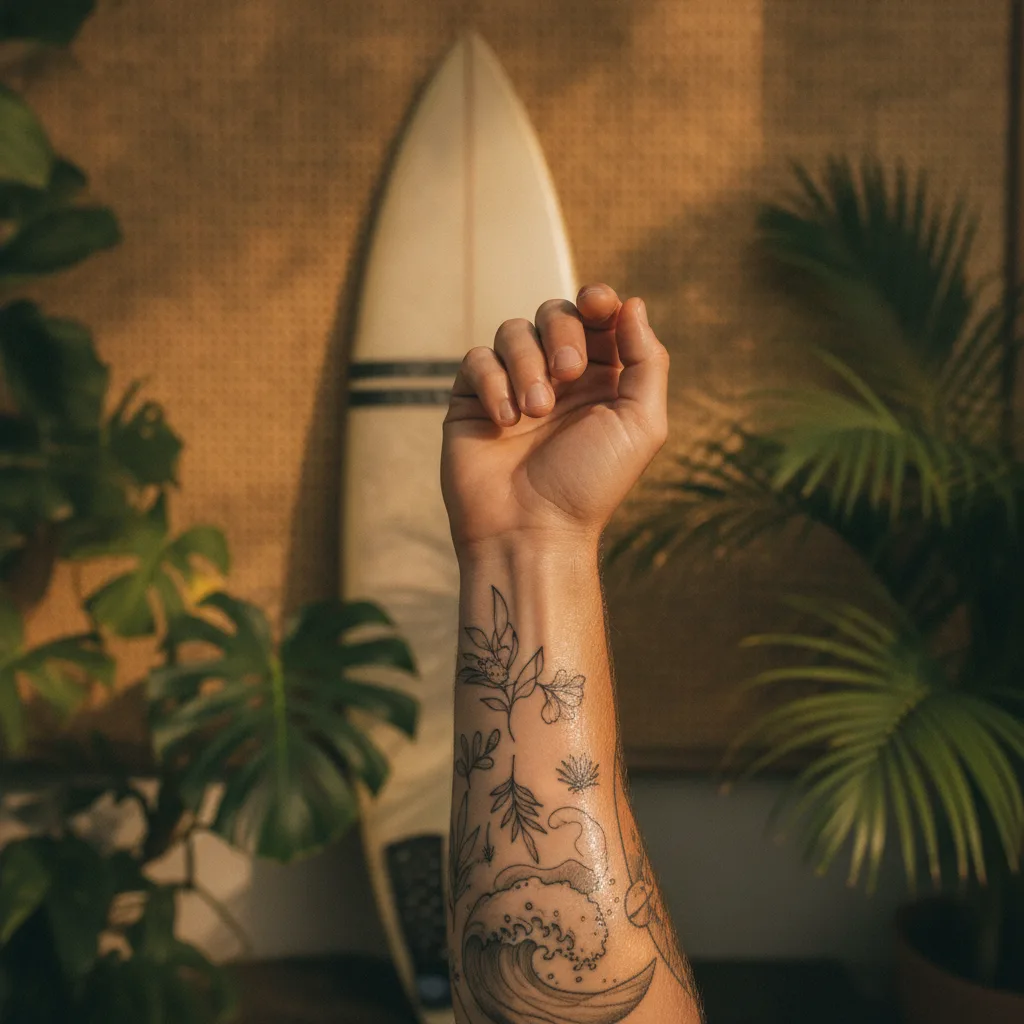
Reef risk deserves its own flag. A small reef cut on healthy skin heals in a week with Betadine from any Indomaret or Guardian pharmacy. A reef cut across a healing tattoo bleeds into the tattoo, disrupts pigment, and sets up a mixed wound that often needs oral antibiotics from a Siloam or BIMC clinic. If you must surf during weeks three and four, stay on sand-bottom breaks (Berawa, Echo on a bigger tide, Keramas on a mellow day), and stay out of the water the moment the piece feels tight, hot, or starts weeping fresh plasma.
Humidity, scooters, and the Bali heat variable
Bali's humidity sits between 75 and 90 percent most of the year, and that single factor extends every stage of surface healing by two to four days compared to a dry climate. The outer skin stays damp, lotion absorbs slower, and a scab forms in a more rubbery state that is easier to catch on a bedsheet or a rashie seam. The full climate adjustment, including when to switch from ointment to lotion and how to layer coverage in the first week, lives in tattoo aftercare for humid climates.
Scooter commutes are the second variable nobody warns you about. Riding a Scoopy from Pererenan to Berawa in the morning sun with a fresh tattoo under a tank top exposes the piece to road dust, exhaust soot, and direct UV for 15 to 25 minutes per trip. In the first 10 days this is a meaningful infection source. Wear a loose long-sleeve cotton top over the tattoo for every ride, even if it is 32 degrees out. Do not wrap it in cling film for scooter trips, you will trap sweat against the wound.
Heat itself swells the skin around a fresh tattoo for the first 48 hours, which can distort line work on tight placements like wrists and ankles. Keep the limb elevated when you can during those first two days, skip the daybeds at La Brisa for forearm or hand pieces specifically, and keep an air-conditioned room available for the first three nights of sleep.
Flying home partway through healing
If you booked a 10-day Bali trip and got tattooed on day 2, you are flying home around day 8, before the ocean window opens anyway. The flight itself is fine by day 8 if you keep it clean, hydrated, and loose-covered, and the full rules sit in flying home with a fresh tattoo. What catches people out is the stop in Singapore or Kuala Lumpur on the way home: those airport layovers run hot, dry, and dirty, and a scab can crack during the walk between Terminal 2 and Terminal 3. Pack a small tube of lotion in your hand luggage, reapply every four to five hours during the transit, and skip the airport pool at Changi for this trip.
If you flew specifically for the ink (the price arbitrage is real and covered in Bali tattoo cost 2026), consider extending your stay or coming back. A 10-day trip only gets you to the scab-off point. The ocean reward and the clean touch-up window both sit past the three-week mark, which is a second-trip problem. Repeat tattoo tourists tend to schedule a second Bali week six to eight weeks after the session, which also works for a touch-up with the original artist.
Smaller, faster, safer: how to design around a surf trip
If the surf trip is non-negotiable, there are three design choices that keep more water in your week.
- Go small. A fine-line piece under 5cm (IDR 800K to 1.5M, roughly USD 55 to 100) surface-heals in 8 to 10 days, which brings the pool green light forward to day 10 and the ocean green light to day 17. A sleeve or back piece will cost you the entire month.
- Choose placement that doesn't flex. Upper arm, outer forearm, calf, and upper back heal faster and tolerate a loose rashie better than ribcage, inner thigh, hand, or foot placements.
- Book the tattoo on day 1. Every day you delay the session is a day you lose off the back of your trip. Day 1 in, day 15 ocean, day 21 reef works for most two-and-a-half-week stays.
Frequently asked
Can I surf one week after getting a tattoo in Bali?
No. The tattoo is still shedding its scab at day 7 to 10 and salt water will pull pigment with it. On top of that, Bali's ocean temperature and reef bacteria make a one-week ocean session the single highest-risk choice available. Wait until day 21 minimum, day 28 for reef breaks.
Is a villa pool safer than the ocean for a fresh tattoo?
Not meaningfully. Villa pools are often under-chlorinated and shared, and chlorine fades fresh ink even in clean pools. Treat pools and ocean the same way: nothing before day 14, cautious short dips between day 14 and 21, free access after day 21.
What if I cut the tattoo on reef at Uluwatu while it's healing?
Get out, rinse with clean fresh water, apply Betadine (available at any Indomaret or Guardian), keep the area dry, and watch for spreading redness or heat over the next 48 hours. If any of those appear, go to BIMC Nusa Dua or Siloam Denpasar. Reef cuts across healing ink often need oral antibiotics.
Does the humid Bali climate actually slow healing or is that overblown?
It genuinely slows surface healing by two to four days compared to a dry climate. Scabs stay softer for longer and lotion absorbs more slowly. Plan your ocean return date around a longer surface-heal window, not the generic two-week advice written for Northern Hemisphere clinics.
Can I use regular reef-safe sunscreen on a healing tattoo?
Not in the first three weeks. Sunscreen chemicals irritate open or freshly closed skin. From week four, mineral zinc-based reef-safe formulas are safe and are the long-term tool for keeping your Bali piece from fading. The long-term UV strategy is in tattoo sunscreen and long-term care.
What happens if I ignore all this and surf anyway?
Best case, patchy fading and a blurry edge that needs a touch-up in six weeks. Mid case, a surface infection that clears with Betadine and five days out of the water. Worst case, a staph or vibrio infection that needs oral antibiotics, pulls you out of the water for a month, and leaves scar tissue the tattoo can never be laid back over cleanly. The month of restraint is cheaper than every other outcome.
Keep reading
- Aftercare
Sweating After a New Tattoo: Risks, Rules, Recovery
Sweating on a fresh tattoo in the first two weeks can soften scabs, carry bacteria, and lift ink. Here is what to do and when.
- Aftercare
Ibuprofen After a Tattoo: What's Safe and What Slows Healing
Ibuprofen thins blood and can push ink out of a fresh tattoo. Here's what to take for pain and swelling without stalling your heal.
- Aftercare
Tattoo Pimples and Breakouts: What's Normal During Healing
Tiny pimples on a healing tattoo usually mean clogged pores from heavy ointment, not infection. Here's how to tell the difference and clear them safely.