cost guides
Hand Tattoo Cost: What to Pay in 2026 (Size, Style, Artist)
Hand tattoo cost in 2026: real price ranges, why hands cost more than you'd expect, and how to budget for a piece that lasts past year three.

A hand tattoo looks cheap on paper. Small surface, short session, done in an hour. That math falls apart the moment you walk into a reputable studio. Hand work is one of the most technical placements an artist can take on, and the pricing reflects the risk, the refusal rate, and the touch-up cycle every hand piece needs. This guide breaks down what you should expect to pay in 2026, where the money goes, and how to budget for a piece that holds up past year three.
Typical price ranges for hand tattoos
Small minimalist designs on the back of the hand start at around $150 to $300 in most North American and European cities. A simple line drawing, a single word, or a small geometric symbol falls in this bracket. That number already accounts for the studio minimum, which most reputable shops set between $100 and $200 regardless of how quickly the piece comes together. For more on how studios decide that floor, see our explainer on the tattoo minimum charge.
Mid-sized hand pieces with shading, ornamental detail, or finger work usually run $300 to $700. Once you add full coverage across the back of the hand or wrap onto the fingers, you are looking at $600 to $1,200 for a single session, and most artists need two sessions to finish the piece cleanly. Full hand and finger projects from a mid-tier specialist now sit at $1,500 to $2,500 all-in, including touch-ups.
Hourly rates for artists who take hand work range from $150 to $300 per hour in 2026. Highly booked specialists in major cities like Los Angeles, London, or Berlin charge $350 to $500 per hour. If you want a fixed quote instead of an hourly rate, ask up front. The choice between hourly and flat-rate billing changes how risk gets distributed, and we cover the tradeoffs in hourly vs. flat-rate tattoo pricing.
Why hands cost more than you'd expect
Hands are the hardest part of the body to tattoo well. The skin is thin, the underlying muscle moves constantly, and the dermis sits on top of bone and tendons rather than fat. That combination makes the ink behave unpredictably. Lines that look crisp on day one can soften within six months because the skin on the back of the hand sheds and regenerates faster than skin on the arm or back. Artists know this going in, which is why hand quotes include the expected touch-ups upfront.
The refusal rate is also part of the math. Many reputable shops decline hand tattoos for first-time clients entirely, and others will only ink hands if you already have substantial visible work elsewhere. The artists who do take hand commissions price for the experience and the reputation risk. A blown-out hand piece sits in someone's Instagram feed forever, so the better artists charge accordingly and turn down work that does not meet their criteria.
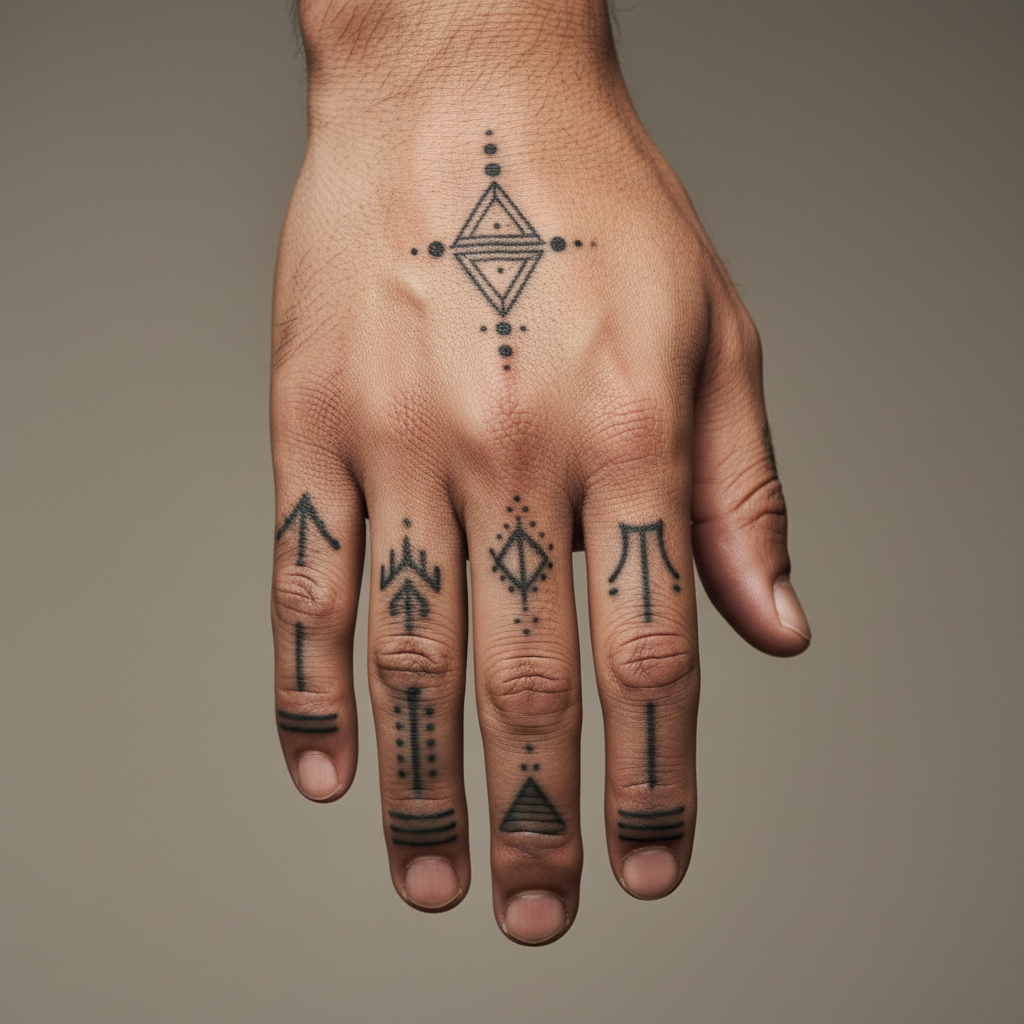
Size, placement, and style: what drives the bill
Three variables move the price more than anything else. The first is exact placement. The back of the hand below the knuckles is the most forgiving surface, the fingers and knuckles are the hardest, and the palm and side of the hand are nearly impossible to keep clean past year one. Pricing scales with that difficulty. A piece that covers the back of the hand might run $400 to $700, while extending that same design to wrap the knuckles and fingers adds $300 to $600 on top.
The second variable is style. Bold blackwork holds the best on hands because thick lines and solid black saturation survive the fast skin turnover. A traditional or blackwork design in this size range usually books at the lower end of the price band. Fine-line work, dotwork, and any piece with subtle grey washes costs more because the artist has to work slower, layer the saturation carefully, and almost guarantee a touch-up. Expect a 20 to 40 percent premium on fine-line hand work compared to bold blackwork of the same size.
The third variable is the artist's tier. A junior artist with two or three years of hand experience might charge $150 per hour. A senior specialist whose Instagram is full of clean five-year-old hand pieces will charge $300 to $500 per hour and require a multi-month wait. The price gap is real, and the work that lasts is also real. Cheap hand work fails faster, and the cost of fixing a blown-out hand piece can exceed the original price two or three times over.
Hidden costs: touch-ups, deposits, and tipping
Every hand tattoo budget needs three line items beyond the session itself. The first is the touch-up. Most reputable artists include one free touch-up within six to twelve months, but a second or third visit is on you. Plan for $100 to $250 per touch-up depending on the scope. The full breakdown lives in the tattoo touch-up cost guide.
The second is the deposit. Hand work almost always requires a $100 to $300 non-refundable deposit to lock the appointment, and that deposit usually comes off the final price. Skip the appointment and you forfeit it. Reschedule with less than 48 hours notice and most shops keep it too. Our tattoo deposit guide covers the etiquette in depth.
The third is the tip. Hand work takes mental energy beyond the chair time, and a 20 to 25 percent tip on a difficult hand piece is standard in North America. On a $600 hand tattoo, that adds $120 to $150. Tipping norms vary by region and we cover the full picture in how much to tip your tattoo artist.
Saving money without compromising the work
There are smart ways to bring hand-tattoo costs down without ending up with a piece you regret. The cleanest move is to keep the design bold and simple. A single symbol, a heavy line drawing, or a word in solid blackwork costs less and lasts longer than a delicate fine-line piece. You get more years of clean work per dollar.
The second move is to book during studio slow seasons. Many shops in the northern hemisphere see slower bookings from January through March, and some artists offer 10 to 20 percent off hand work during those months to keep their books full. Ask politely. The worst answer is no.
The third move is to choose a mid-tier artist with strong hand-specific portfolio depth instead of a top-tier artist whose general portfolio looks better. The mid-tier specialist who has done 200 hand pieces will probably outperform the celebrity artist who has done 30, and the price gap can be three to four times.
- Avoid online cheap quotes from artists who do not show healed hand work in their portfolio. Fresh photos hide everything.
- Walk away from any quote that does not include at least one touch-up. The artist is either inexperienced or planning to charge you twice.
- If a shop offers to tattoo your palm, ask how often they do it. The honest answer should be "rarely, and we tell you it will fade."
Frequently asked
Will a tattoo shop refuse to tattoo my hands? Many will, especially if you have no other visible tattoos. The industry calls these placements "job stoppers" because they can affect employment, and reputable artists screen for that conversation. If you are turned away, ask for the artist's reasoning and consider whether you want the piece enough to seek out a specialist who will take the work.
How often do hand tattoos need touching up? Most hand pieces need a touch-up at six to twelve months after the initial session, and again at the three to five year mark. Fingers and knuckles need the most maintenance because the skin folds and rubs constantly. Palm tattoos rarely hold past two years no matter how well they are done.
Are finger tattoos cheaper than back-of-hand tattoos? Per square inch, no. Finger work is more difficult than back-of-hand work because the surface curves, the skin is thinner, and the lines have to be placed with extreme precision. A small finger design might cost the same as a much larger back-of-hand piece for the same amount of artist time.
Should I budget extra for healing supplies? Yes. Plan for $30 to $60 in aftercare basics including fragrance-free soap, a second-skin bandage if your artist recommends one, and a quality unscented moisturizer. Hand pieces heal faster than most placements but they also get used constantly, which means proper aftercare matters more.
Does the cost change if I want color? Color hand tattoos cost roughly 20 to 30 percent more than black-and-grey or blackwork of the same size. The longer session time and the higher touch-up frequency drive the premium. Color also fades faster on hands than on most placements, so the long-term cost of ownership ends up higher.