aftercare
Tattoo Aftercare With Pets at Home: Rules to Follow
Living with cats or dogs during tattoo healing adds real infection risk. Here is how to protect a fresh tattoo from fur, dander, and licks.

A fresh tattoo is an open wound for roughly 10 to 14 days, and a house with pets is one of the dirtier environments that wound will heal in. Fur, dander, dried saliva, and pet-tracked dust all land on bedding, sofas, and the person wearing the new tattoo. None of that is a reason to skip the appointment. It just means the aftercare plan has to account for the animals already living there.
Why pets raise infection risk
A tattooed area breaks the skin barrier across the entire design, which means every square inch is a potential entry point for bacteria during the first 48 to 72 hours. Pet mouths carry Pasteurella multocida and Capnocytophaga canimorsus, both of which can trigger cellulitis in a healing wound. Cat scratches are shallow but drag whatever is on the claw into the dermis. Dog licks deposit a wet film of bacteria directly onto the ink. Even brief contact matters because the fibrin layer that forms over a tattoo in the first day is not a sealed barrier, it is permeable to liquids and small particles.
Fur and dander are a secondary problem. A hair that gets trapped under a Saniderm wrap for four days creates a localized moist pocket where bacteria concentrate. Short-haired breeds shed less visibly but drop more microscopic dander, which is actually worse under an occlusive bandage. Long-haired breeds leave obvious strands that are easier to spot and remove before wrapping or dressing.
A healthy immune system handles small exposures. The problem is additive exposure across 10 days of healing, especially on areas that touch bedding and furniture during sleep.
The first 24 hours: zero pet contact
Keep the fresh wrap on for whatever duration your artist specified, usually 2 to 24 hours for plastic wrap or 3 to 5 days for Saniderm. During that initial window, no pet should be allowed to touch, lick, sniff, or sleep against the tattooed area. This is the easiest rule to enforce and the one that prevents the worst early infections.
Practical setup for day one:
- Change into clean cotton clothing before coming home from the studio
- Shut the bedroom door at bedtime and sleep without the pet on the bed
- Wash hands before and after any pet interaction, even brief
- Keep the tattooed limb or torso section covered with loose clean fabric when sitting on shared furniture
If the tattoo is on a hand, forearm, or any area used to pet or feed an animal, assign those tasks to someone else for the first two days. A single lick on a day-one tattoo is enough to require checking for infection signs later in the week.
Days 2 to 7: the peeling and itching phase
The scab is thin and the itch is constant between days 3 and 7. This is the window where most pet-related damage happens, because people are tired of being careful and the animal has stopped treating the person as fragile. A dog that bumps the leg with its head, a cat that kneads a forearm, a parrot that climbs an arm, all of these can lift a healing scab and introduce bacteria at the same time.
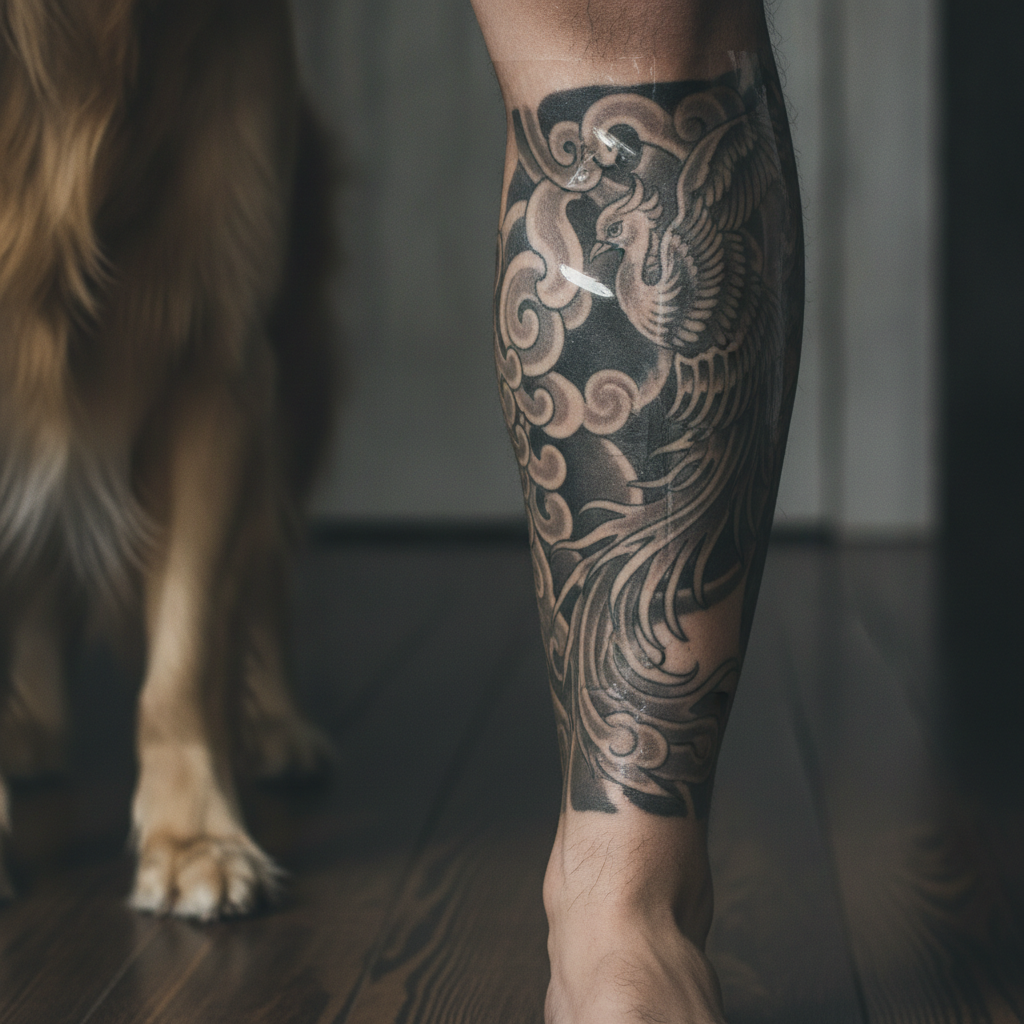
Keep the tattoo covered with loose clothing or a breathable medical dressing when the animal is in the same room awake. Second-skin films like Saniderm work well here because they provide a true physical barrier. If you are dry healing without any film after the initial wrap comes off, a soft cotton sleeve or loose t-shirt is the minimum. Gauze taped down works but tends to lift fur, which then sticks to the tape adhesive and gets dragged across the healing surface when removed.
Grooming schedule matters more than people realize during this week. Brush the pet in a different room from where you spend most of your time and vacuum high-traffic surfaces every other day. A HEPA vacuum cuts airborne dander significantly, which is the difference between a clean healing environment and one that leaves a dusty film on exposed skin by evening.
Sleeping arrangements
Pets that sleep on the bed are the single biggest infection vector during healing. Eight hours of body contact across unwashed bedding, with an animal that has been outside or using a litter box, is exactly the exposure to avoid on a wound this fresh. Change the setup for the full two weeks even if it feels extreme.
Options that work:
- Pet sleeps in a crate or separate room for 10 to 14 days
- Pet stays on the bed but a clean cotton sheet is placed over the tattooed side as a barrier, changed daily
- The person sleeps in a different position so the tattoo is on the opposite side from the pet
- A soft sleeve or wrap is worn to bed over the tattoo
Wash sheets and pillowcases every 2 to 3 days instead of weekly during this period. Sleeping with a new tattoo is already a challenge for positioning. Pets make it harder, and the fix is physical separation, not hoping the animal remembers to be gentle.
Pet licks: what to do if it happens
A single quick lick on an intact Saniderm film is a non-event. Wipe the area with clean water and leave the film in place. A lick on skin that is scabbing or peeling is more serious. Wash the area immediately with a mild fragrance-free soap, pat dry with a clean paper towel, and apply a thin layer of fragrance-free lotion or healing ointment. Monitor for 48 hours.
Signs that require a doctor rather than a wait-and-see approach include spreading redness beyond the tattoo outline, a hot feeling when the surrounding skin is touched, pus that is yellow or green rather than clear plasma, fever over 100.4F, or red streaks moving away from the tattoo toward the heart. Any of those within 72 hours of a known pet contact is a reason to call a clinic the same day.
Most incidents heal fine. The risk is low but real, and the cost of waiting on a cellulitis infection is far higher than the cost of one urgent care visit.
Grooming and litter boxes during healing
Hands and forearms do the most pet-related work in a house, which makes those placements the hardest to protect. If a new tattoo is in that area, delegate grooming and litter duties for the full two weeks or wear long disposable gloves pulled over the forearm when doing them. Cleaning a litter box without gloves and then relying on handwashing is not sufficient when the forearm is healing, because splashes and dust reach above the wrist.
Dog walking is usually fine as long as the tattoo is on an area the leash does not rub. A leg tattoo plus a dog that pulls can mean a leash catching the healing skin, which is both painful and a direct contamination route. Switch to a hands-free waist leash or have someone else walk the dog for a week if the placement overlaps the usual leash path.
Frequently asked
Can I get a tattoo if I have cats or dogs?
Yes. Millions of tattooed people live with pets without issues. The precautions in this guide are about reducing exposure during the 10 to 14 day healing window, not about avoiding tattoos as a pet owner. After the tattoo is fully healed, pet contact is a non-issue.
How do I keep my cat off a new tattoo at night?
A closed bedroom door is the only reliable method. Deterrent sprays and training work during the day but not when the person is asleep. Set up a separate sleeping area for the cat with its own bed and food nearby for the two-week period, then reintroduce the previous arrangement.
Is Saniderm safe to wear around pets?
Yes, and it is one of the better options for pet owners. The transparent film gives a real physical barrier against licks and claws for the first 3 to 5 days, which covers the highest-risk early healing window. Check the seal edges daily because fur caught at the edge can lift the adhesive. See the Saniderm aftercare guide for application details.
What if my dog licks a day-one tattoo?
Rinse the area immediately with clean lukewarm water and mild unscented soap, pat dry, apply a thin healing ointment, and rewrap if the tattoo was wrapped. Watch closely for 72 hours for the infection signs listed above. A single lick rarely causes infection on a healthy adult, but same-day action matters.
Can pet hair stuck to a healing tattoo cause problems?
A single hair sitting on top of a dry healing tattoo can be rinsed off during the next wash and is unlikely to cause harm. A hair trapped under a Saniderm film for days can create a moist pocket of bacteria and should prompt a bandage change if visible. When reapplying, clean the skin thoroughly and inspect for other fur before resealing.
When is it safe to let a pet sleep on the bed again?
Around day 14 for most tattoos, when the surface is fully closed and the peeling has stopped. Larger or deeper work from a long session can take 21 days to reach that point. Wait until there is no sensitivity to touch and no visible scabbing before reintroducing shared sleep space.