aftercare
Dry Healing a Tattoo: When Skipping Lotion Heals Better
Dry healing a tattoo means skipping lotion after the first wash. Here is when it works, when it backfires, and how it compares to lotion and Saniderm.
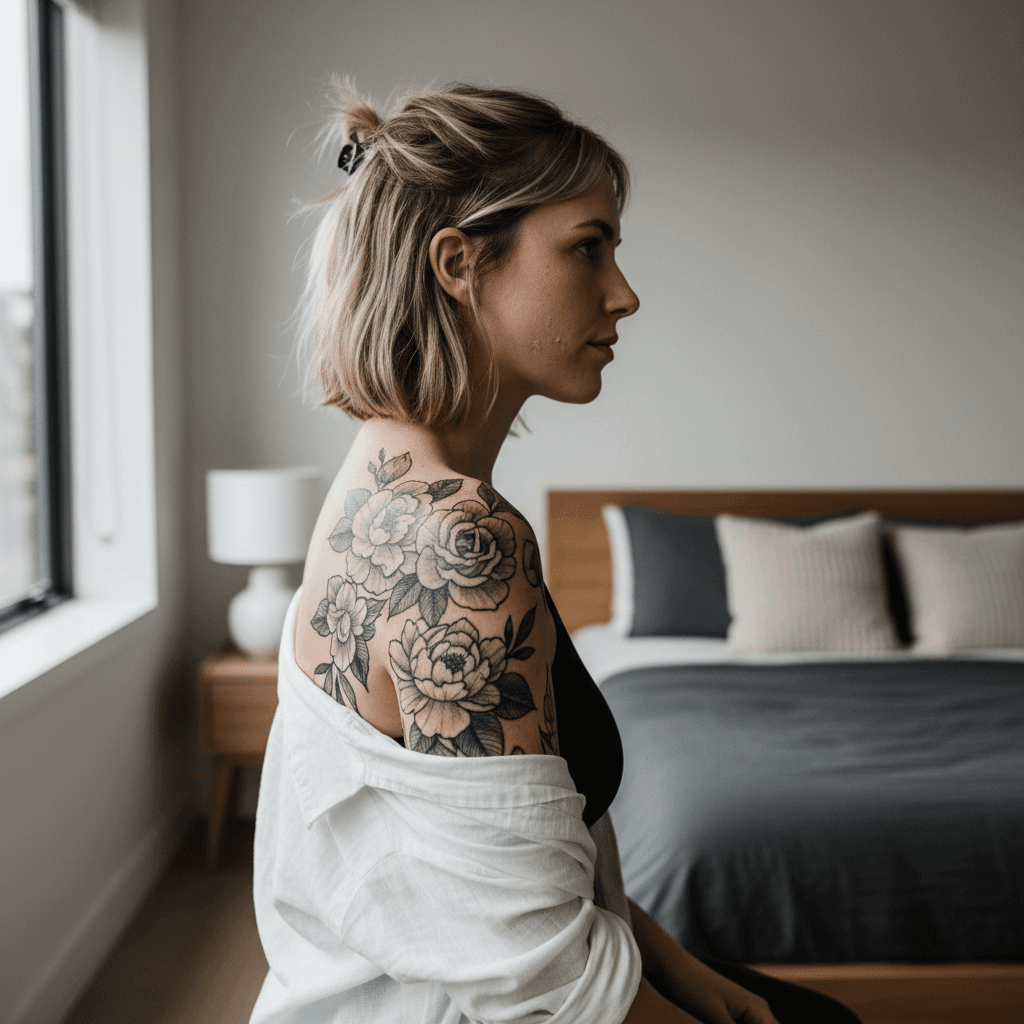
Dry healing a tattoo means closing the wound without lotion, balm, or any aftercare film after the first wash. It has a loyal following among traditional artists who think modern aftercare is over-engineered, and a vocal opposition from dermatologists who think skipping moisturizer is a bad idea. This guide covers how dry healing works in practice, who it fits, where it goes wrong, and how it compares to lotion healing and the Saniderm method on the metrics that matter.
What dry healing means
Dry healing is not a complete absence of care. You still wash the tattoo every 8 to 12 hours with fragrance-free antibacterial soap, pat it dry with a clean paper towel, and protect it from sun, friction, and submersion. The single difference from standard aftercare is that you skip every form of topical product after the wash. No A&D, no Aquaphor, no fragrance-free body lotion, no specialty tattoo balm. The skin closes itself with whatever moisture it produces internally, plus ambient humidity.
The method goes by other names too. Some artists call it air healing, water-only healing, or wet-to-dry healing. The mechanics are the same. The wound stays exposed to air, scabs form thicker and more visibly than they do under moisturizer, and the total surface heal usually takes a week longer than a lotion-managed piece. For the full sequence of what to expect, our tattoo healing timeline covers the day-by-day baseline that dry healing modifies.
Why some artists swear by it
The strongest argument for dry healing is that it eliminates a major source of healing failure. Over-moisturizing is the most common aftercare mistake we see, and it causes ink lifting, bubbling, and scab maceration. When you apply lotion three or four times a day instead of two, the tattoo never gets to form a stable surface, and small flecks of pigment can be pulled out with the product. Dry healing makes this failure mode impossible by design.
A second argument is allergy avoidance. Roughly 1 in 50 people develop a contact reaction to common tattoo balms, especially products containing lanolin, vitamin E oil, or fragrance. Cutting topical product cuts that risk to zero. The third argument is cost. A two-week tube of fragrance-free tattoo lotion runs $8 to $20, while dry healing costs whatever your soap costs. Over a sleeve session schedule that adds up.
Where dry healing tends to fail
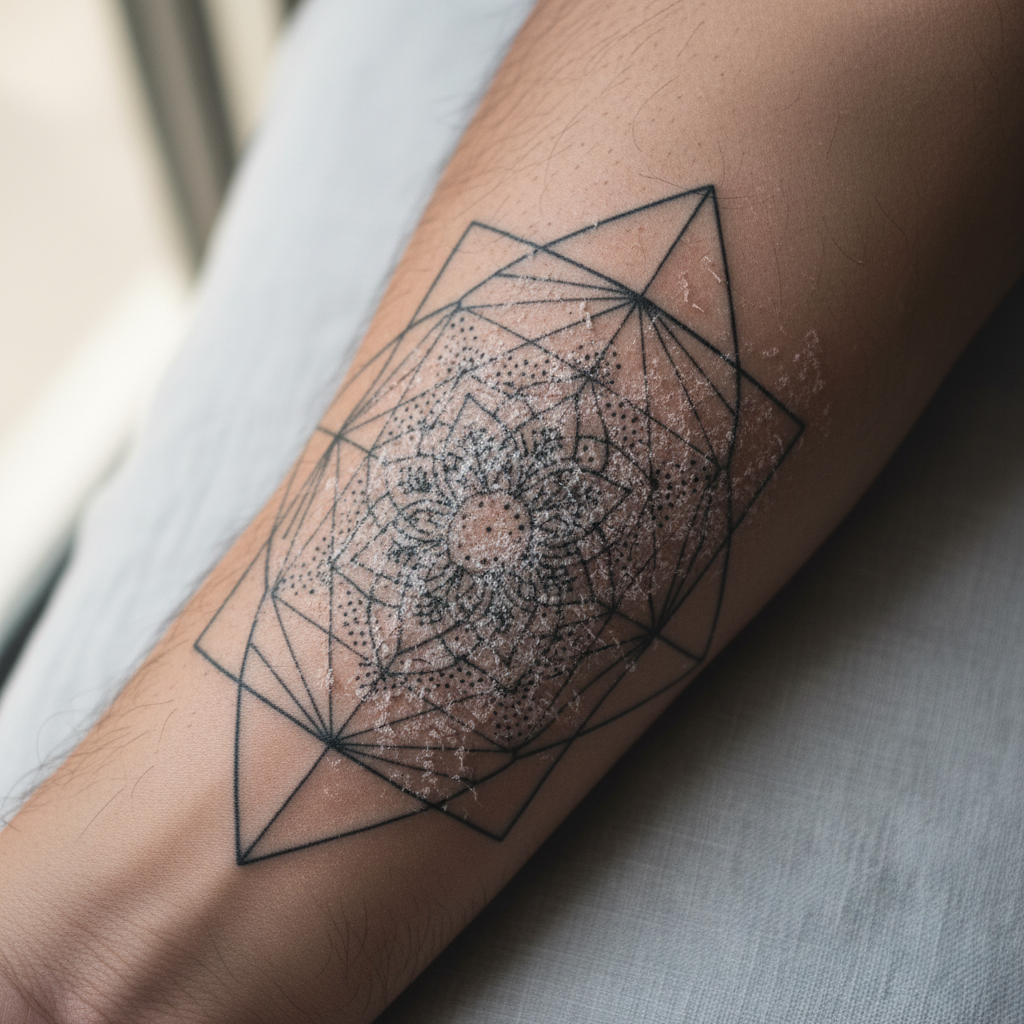
Dry healing struggles in three predictable conditions. The first is low humidity environments. If your indoor air sits below 35 percent relative humidity, common in winter heating or in any AC-heavy room, scabs form thick and brittle. Brittle scabs crack across flex points like the elbow, knee, and inner wrist, and cracks bleed and can pull pigment with them.
The second failure mode is heavy color packing. Saturated traditional and neo-traditional pieces deposit ink in dense layers that need stable, moist conditions to settle. Dry healing a color back piece in a dry climate often leads to patchy color and a touch-up appointment. Black line work, dotwork, and single-needle pieces tolerate dry healing far better because the pigment volume per square centimeter is lower.
The third is user error. Dry healing demands more discipline than lotion healing, not less. You have to wash on a strict schedule, never sleep on the tattoo, never let clothing rub the surface, and accept that the visible scab phase looks worse than a moisturized heal. Most people who try dry healing and complain about it have been doing intermittent dry healing, which is worse than committing to either method.
How to dry heal correctly
Wash the tattoo for the first time within 4 to 6 hours of leaving the studio. Use lukewarm water and a fragrance-free antibacterial soap with clean hands, no washcloth, no loofah. Lather, rinse, and pat dry with a fresh paper towel. From that point, wash every 8 to 12 hours for the first 5 days, then twice a day until the surface has fully closed. The same wash discipline drives the first 24 hours of any aftercare method, but dry healing leans on it harder.
- Keep the room between 40 and 60 percent humidity if possible.
- Sleep on the opposite side of your body, with the tattoo exposed to air, not pressed into a pillow or sheet.
- Wear loose cotton clothing only. Avoid wool, polyester, and anything tight.
- No swimming, hot tubs, baths, saunas, or sea water for at least 21 days.
- No direct sunlight on the healing surface for the full healing window. Once fully healed, apply SPF 30+ every time.
Do not pick scabs. Scab loss is a passive process that happens between days 10 and 18. Picking even small flakes pulls live pigment with them and creates patchy spots that need touch-ups. If a scab catches on clothing, you have started the process wrong. Loose clothing solves that.
Dry healing by style and placement
Blackwork and dotwork pieces dry heal cleanly because there is no color packing to protect and the surface tension on solid black areas is uniform. Fine-line and single-needle work also tolerate dry healing well because needle penetration is shallow and ink deposit per area is low. These are the pieces where the strongest dry healing testimonials come from.
Realism, neo-traditional, watercolor, and anything with extensive color packing usually heals better under light lotion or Saniderm. Pigment in those styles sits deeper in the dermis and a stable moist environment helps it set without lifting. If you have a mixed piece, like a fine-line outline with color fill, ask your artist whether to dry heal the outlined areas and lotion-heal the saturated ones. Some studios will split the protocol on the same tattoo for that reason.
Placement matters as much as style. Rib, chest, and outer thigh tattoos heal cleanly under dry healing because they flex less. Elbow ditches, knees, hands, and the inner wrist crack more often under dry healing, and a light lotion application on flex points only is a reasonable compromise.
When to switch back to lotion or Saniderm
Dry healing is not a commitment. If you see thick yellow scabs that hurt to flex, deep cracks that bleed when you move, or persistent painful tightness past day 7, switch that section to a thin layer of fragrance-free lotion twice a day until the area calms down. That is not failure, it is response. The goal is a healed tattoo, not a methodology win.
True warning signs are different from rough healing. Spreading redness past the tattoo edges, hot skin to the touch, yellow or green pus, fever, or red streaks moving away from the tattoo are signs of tattoo infection, not a dry healing problem. Stop home care and see a doctor. Healthy dry healing looks rough but is not painful and does not spread.
Frequently asked
Is dry healing safer than using lotion? Not by default. Fragrance-free lotion applied in a thin layer twice a day is the most studied standard and works for almost everyone. Dry healing is safer than over-moisturizing with scented body lotion or thick petroleum products, but it is more demanding than lotion healing, not less.
How long does dry healing take versus lotion? Lotion healing usually reaches full surface closure in 14 to 21 days. Dry healing typically runs 21 to 28 days because thicker scab formation takes longer to slough off naturally. Deep dermal healing still takes the full 4 to 6 weeks either way, regardless of method.
Does dry healing produce sharper lines? There is no clinical evidence that dry healing sharpens lines in a properly healed tattoo. Most anecdotes that claim sharper lines are comparing dry healing to over-moisturized healing, which is a real difference. Compared to a correctly executed lotion routine, the line difference is negligible.
Can I dry heal a colored tattoo? You can, but color-packed sections lose more ink during dry healing than line work does. If you have a saturated traditional piece, light lotion healing protects pigment retention better. Our color tattoo aftercare post covers the protocol for heavy color pieces.
What if my dry-healed tattoo starts cracking? Apply a thin layer of fragrance-free lotion to the cracked section only, twice a day, for 3 to 5 days. Cracking means the scab dried past what the underlying tissue can flex with. Switching that section to moist healing temporarily lets the crack close without further ink loss. Resume dry healing the rest of the piece if it looks fine.
Should I use Saniderm instead? Saniderm and dry healing are opposite philosophies. Saniderm locks moisture in for 5 to 7 days, dry healing lets the tattoo air out. Both work for the right person. Saniderm is lower effort and reduces visible scabbing. Dry healing demands strict hygiene and patience.