aftercare
Tattoo Aftercare in Summer Heat: Sweat, Sun, and Chafing Rules
Summer heat is the hardest season for a fresh tattoo. Here is how to manage sweat, sun, and chafing across the first three weeks without wrecking your ink.
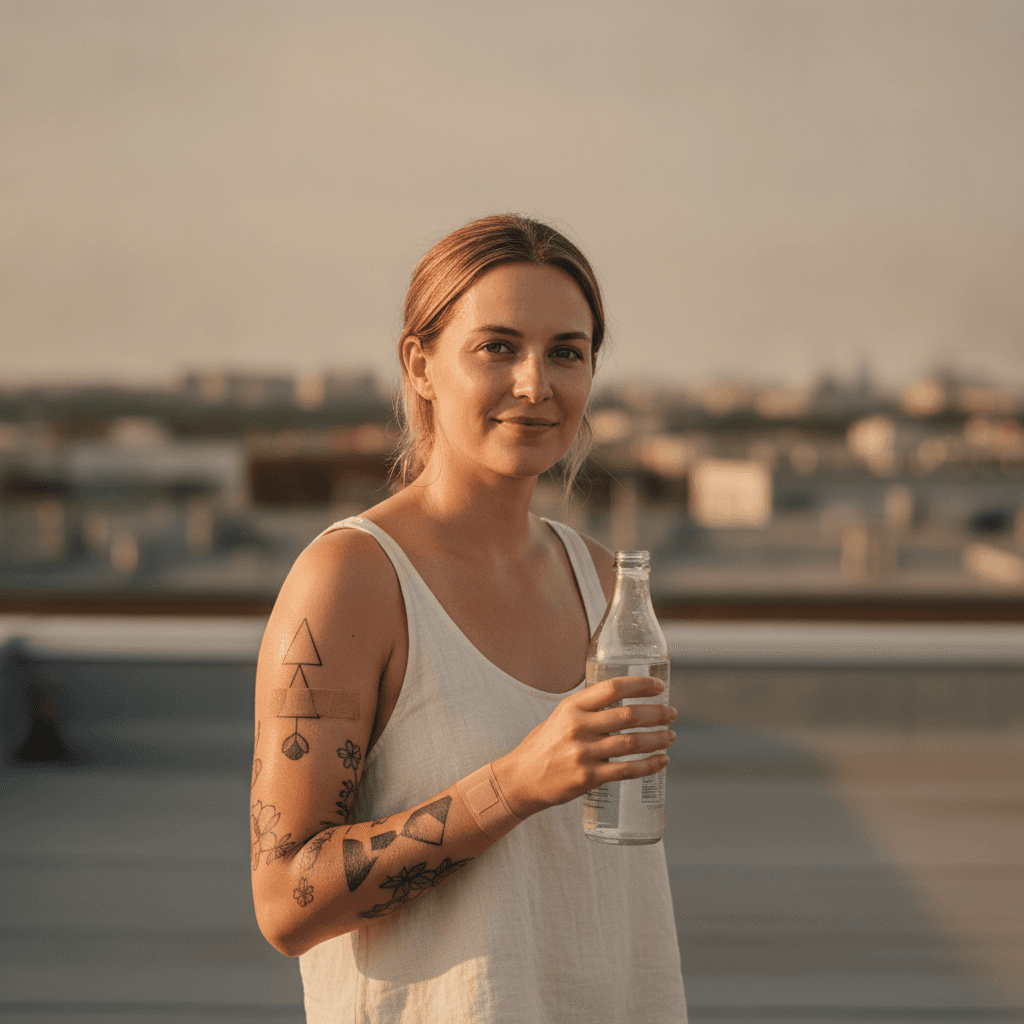
Summer is the worst season to heal a tattoo, and it is also when most people book them. Heat plus sweat plus UV plus sunscreen plus chlorine is a four-front war on fresh ink, and the standard aftercare sheet your artist handed you assumes none of that is happening. This guide breaks the healing window into phases and tells you exactly what changes when the forecast is 90 degrees and humid.
Why summer heat hurts a fresh tattoo more than any other weather
A fresh tattoo is an open wound roughly 1 to 2 millimeters deep. Heat dilates blood vessels, which increases plasma leakage and prolongs the weeping stage from 24 hours to 48 or even 72. Sweat is not sterile, and salt sitting on broken skin softens scabs prematurely, which pulls pigment with it when the scab lifts. UV radiation degrades fresh ink at the dermal level, and a single serious sunburn on a healing tattoo can bleach lines by 20 to 40 percent permanently. Add friction from clothing sticking to damp skin and you get the summer trifecta: slow healing, patchy pigment, and a higher blowout risk.
The other summer problem is behavioral. People book beach trips, pool days, and outdoor weddings and then try to heal a tattoo through it. If you cannot postpone the trip, at least postpone the tattoo. Two weeks of flexibility on the appointment saves you a $200 to $500 touch-up later.
The first 48 hours in hot weather
The wrap comes off between 2 and 24 hours depending on whether your artist used cling film or a medical adhesive like Saniderm. In summer, err on the shorter end for cling film because trapped heat plus plasma is a bacterial party. Saniderm can stay on for 3 to 5 days even in heat, but check daily for pooling fluid larger than a quarter, which means you need to remove and replace it.
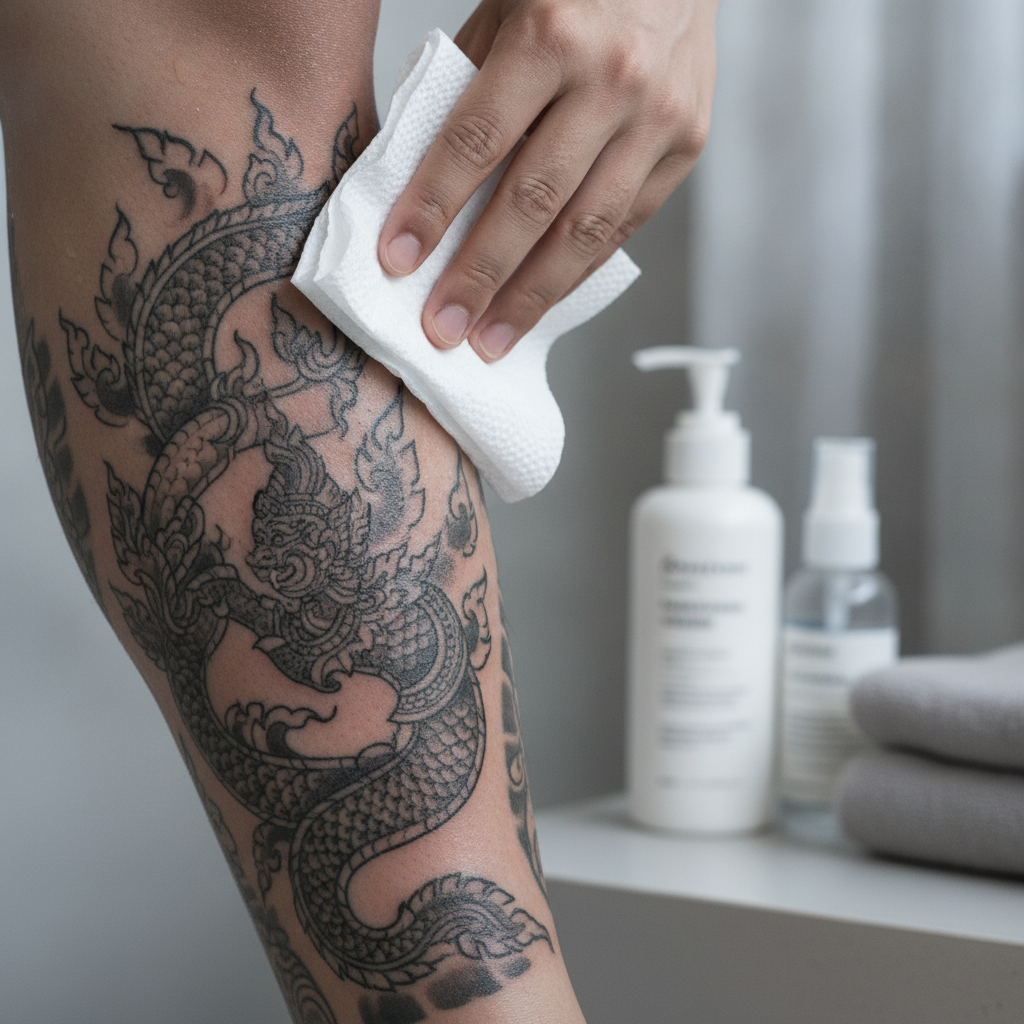
Wash with lukewarm, not cold, water and a fragrance-free soap like Dr. Bronner's Baby Unscented or Cetaphil Gentle. Cold water constricts pores and traps debris. Pat dry with a clean paper towel. Never a shared bath towel in summer, which is a mildew reservoir. Apply a paper-thin layer of Aquaphor or a dedicated healing balm like Hustle Butter, then let the skin breathe.
Sleep with the AC set to 68 to 70 degrees for the first three nights if possible. A cool bedroom drops your baseline sweat rate by roughly half and makes a real difference in how well the first 24 hours go. Cotton sheets only, changed the morning after your session.
Sweat management from day 3 through day 14
Once the initial weeping stops, sweat becomes the daily enemy. The rule is simple: rinse within 30 minutes of any real sweat, whether that is a walk to the train, a grocery run, or a moderate workout. Salt crystals from dried sweat abrade forming scabs and pull ink. A lukewarm rinse and a fresh paper-towel pat, no soap needed unless the skin is visibly dirty, resets the surface.
Skip these activities entirely for the first 14 days:
- Hot yoga, saunas, and steam rooms
- Long outdoor runs above 80 degrees
- Any pool, hot tub, ocean, lake, or river
- Wearing tight synthetic athleticwear over the tattoo
- Sleeping without AC or a strong fan
Light indoor cardio is fine by day 5 if you rinse after. For a full breakdown of when to lift again, read our working out after a new tattoo guide. If your job has you outdoors in the sun, use loose UPF 50 clothing over the tattoo, never sunscreen, until day 14 minimum.
Sun and sunscreen: the hard rule
No sunscreen on a healing tattoo for the first 14 days. Full stop. Sunscreen active ingredients, especially chemical filters like avobenzone and oxybenzone, are designed to penetrate skin and can trigger reactions on broken tissue that read as an allergic response. Mineral filters like zinc oxide are safer but still occlude the skin more than a healing wound wants.
The workaround is physical coverage. A long-sleeve UPF 50 sun shirt, a wide-brim hat for shoulder or upper-back pieces, or a lightweight linen wrap for a leg tattoo all block 95 to 98 percent of UV without touching the skin. From day 15 onward, apply a mineral SPF 30 or higher whenever the tattoo will see direct sun, and keep applying it forever. UV is the single largest cause of long-term fading, and a tattoo treated with religious sunscreen for the first year holds saturation 2 to 3 times longer than one that is not, which is covered more fully in our long-term sunscreen guide.
Chafing, clothing, and body placement in humid weather
Placement matters enormously in summer. A ribcage or inner-bicep tattoo will chafe against itself and against clothing constantly, which stretches healing from 3 to 4 weeks. If you have flexibility on placement, forearms, calves, and outer shoulders heal fastest in hot weather because they get airflow and rarely touch fabric aggressively.
For placements that will touch clothing, choose loose 100 percent cotton or linen. Silk feels nice but traps sweat against the skin. Athleisure fabrics with polyester and spandex are the worst option because they wick sweat back and forth across the healing surface. Waistbands, bra bands, and sock cuffs are pigment thieves: if your tattoo sits under one of these lines, expect uneven healing and budget for a touch-up. A soft cotton bandage over the friction zone for the first 5 to 7 days reduces that risk substantially.
Signs summer heat is causing a problem
Some inflammation is normal. What is not normal, and requires action, includes:
- Weeping that continues past day 4
- A red halo extending more than an inch beyond the tattoo outline
- Pus that is yellow or green rather than clear
- A fever above 100.4 degrees
- Streaking red lines radiating from the tattoo
- Deep itching accompanied by hives or blistering
The first two often mean heat and sweat have irritated the site and you need to cool down, rest, and apply less product. The last four are potential infection markers, and you should see a doctor within 24 hours. Read the full checklist on signs of tattoo infection if anything feels off.
Frequently asked
Can I get a tattoo in July if I have a beach trip in August? Only if the trip is more than 3 weeks after the session, and even then you should plan on covering the piece with UPF clothing for the entire trip and skipping the ocean. If the trip is less than 3 weeks out, reschedule the tattoo. The math on a $500 tattoo plus a $200 touch-up plus faded ink for life does not work.
How do I sleep if my bedroom is 85 degrees? Cotton pajamas, a fan blowing across but not directly on the tattoo, and a fresh paper towel placed lightly over the tattoo to absorb sweat overnight. Replace the paper towel if you wake up in the night. Avoid sheet-to-skin contact directly on the tattoo for the first week, which our sleeping with a new tattoo guide covers in detail.
Is it OK to use a cold pack on a hot, swollen tattoo? Yes, briefly. A clean cold pack wrapped in a paper towel, applied for 10 minutes at a time with 30 minutes between rounds, reduces swelling without damaging the skin. Never apply ice directly, and never for longer than 10 minutes at a stretch. If swelling continues past day 3, that is a signal to see your artist.
Can I use antiperspirant near a fresh armpit or upper-arm tattoo? No antiperspirant within 4 inches of a healing tattoo for the first 14 days. Aluminum compounds and fragrances are irritants, and armpit tattoos already have the worst sweat exposure on the body. Use a scent-free baby powder on surrounding skin to reduce chafing instead.
What if I have to work outdoors in construction or landscaping? Take a full week off if you can. If you cannot, request assignments that keep the tattoo shaded, wear UPF 50 sleeves, rinse and re-moisturize on every break, and expect healing to take 4 to 5 weeks instead of 2 to 3. Budget for a touch-up at the 8 to 10 week mark.
Does humidity help or hurt healing? Both. Humidity keeps the skin from drying out too aggressively, which reduces cracking, but it also slows the evaporation of sweat and delays scab formation. Aim for indoor humidity around 40 to 50 percent using AC or a dehumidifier during the first two weeks. For climate-specific care in the tropics, see our humid climate aftercare guide.