design ideas
Botanical Tattoo Ideas: Florals, Leaves, and Vines
Botanical tattoos, from single-stem florals to trailing vines and full sleeves, are the most versatile design category. Here is how to plan one that ages well.

Botanical tattoos have quietly become the most requested design category in modern studios, and it is easy to see why. A wildflower stem, a fern frond, or a trailing vine can sit on almost any part of the body, work in almost any style, and carry personal meaning without needing an explanation. This guide walks through the design choices that separate a botanical piece that still looks crisp at ten years from one that turns into a green smudge.
Why botanicals age better than most design categories
Plants are forgiving subjects. Organic shapes tolerate a small amount of ink migration in a way that rigid geometry and typography do not. A vine that softens by fifteen percent still reads as a vine. A geometric mandala that softens by the same amount starts to look muddy along the interior grid. That structural forgiveness is the main reason botanical work fills so much of the fine-line tattoo portfolio at almost every studio.
The second reason is layering flexibility. Botanical elements act like connective tissue between other imagery, which is why a single stem often turns into a half sleeve two years later. Leaves and vines route around scars, wrap joints, and fill the negative space between larger set pieces without demanding their own composition. That makes them a low-risk entry point for a first tattoo and a high-utility filler for a mature collector building toward a full sleeve.
Choosing the right botanical for your skin and placement
Not every plant reads well at every size. A rose with tight petal separation needs room. On a two-inch wrist tattoo the petals collapse into a dark blob within five years as the fine interior lines spread. Peonies, dahlias, and chrysanthemums have the same problem. If you want a detailed flower, plan for at least four inches of skin in the placement dimension, and choose a spot with stable skin like the outer forearm, calf, or upper back.
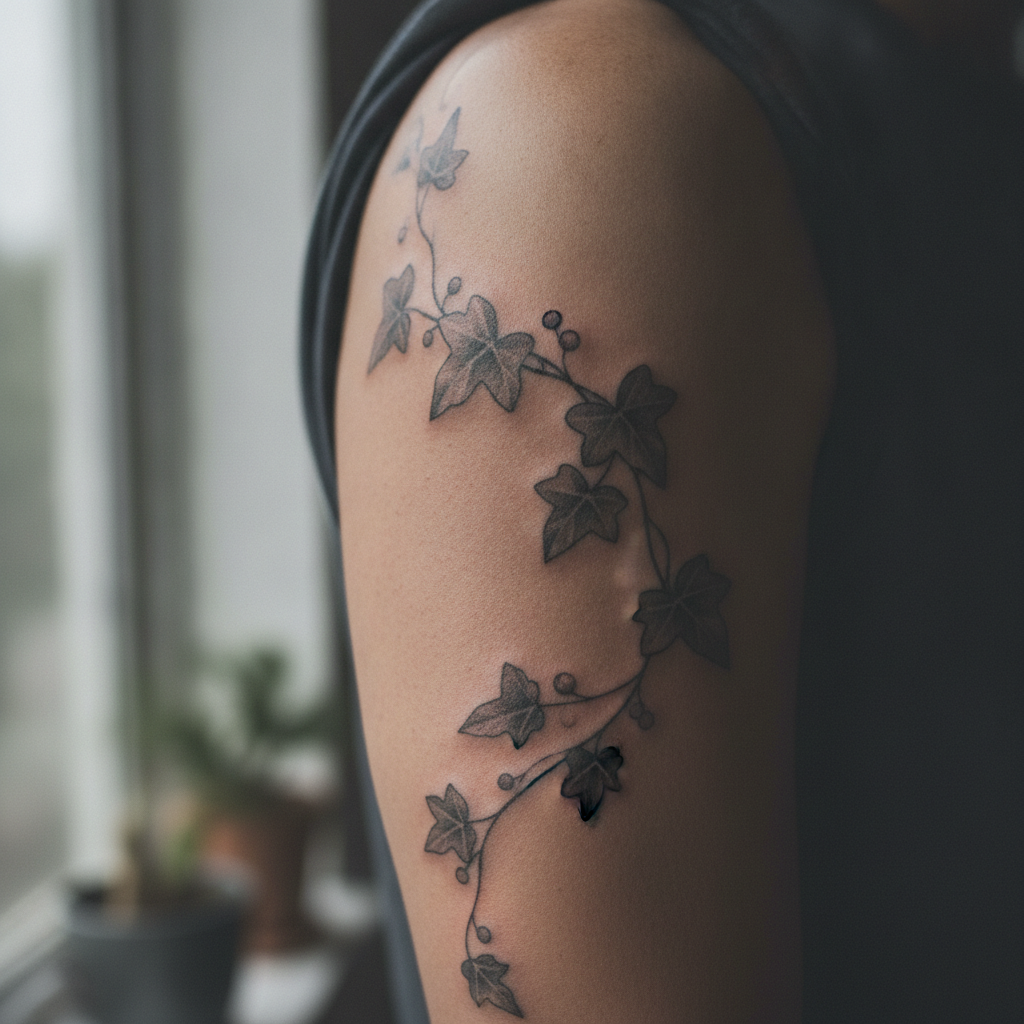
Fine-stemmed wildflowers, single-line herbs, ferns, and small clusters of berries scale down cleanly. These are the pieces that work on the wrist, ankle, behind the ear, or along the ribs. Vines are a special case: they can technically stretch to any length, but if the leaves attached to the vine are smaller than the width of your fingernail, plan on a touch-up around year five to sharpen the interior detail.
- Micro botanicals (under 2 inches): single stems, sprigs of lavender or rosemary, three-berry clusters, single small leaves
- Small botanicals (2–4 inches): wildflower bunches, single narrow-petal flowers like daisies or lilies of the valley, short vine sections
- Medium botanicals (4–8 inches): roses, peonies, sunflowers, hydrangea heads, monstera leaves, palm fronds
- Large botanicals (8+ inches): botanical panels, wrap-around vines, full floral sleeves, back-piece bouquets
Style options that fit botanical work
Fine-line is the default association, but it is not the only choice, and for some placements it is not the best one. Fine-line botanicals use single-needle or three-round-liner setups, keep line weight consistent, and lean on negative space instead of shading. They read beautifully at year one. At year ten on thin skin they can lose about twenty percent of interior detail. If you love the fine-line look but want longer-term crispness, ask your artist about a hybrid where the outer silhouette uses a slightly thicker liner and only the interior veins stay hair-thin.
Black-and-grey botanicals give you a fuller tonal range with soft grey washes across petals and leaves. They handle skin aging better than fine-line and let you build depth without color. Traditional and neo-traditional florals go the opposite direction with bold outlines, saturated color, and simplified shapes. These are the pieces that look almost identical at year twenty because the heavy line does the work. If you want a rose that will still punch across a room in your fifties, the neo-traditional rose is the safe answer.
Watercolor botanicals look stunning in fresh photos but require the most honesty from your artist about aging. Colored splashes without a black anchor fade unevenly and often need a touch-up at the five-year mark. If you are set on the watercolor look, ask for a subtle black line skeleton underneath. It preserves the composition when the color softens.
Placement ideas that actually work
Certain placements have earned their reputation with botanical work because the anatomy cooperates. The inner forearm gives you a long, flat canvas that reads well from your own eye line, which matters more than most first-timers expect. A single stem or a short vine here becomes something you notice ten times a day. The outer bicep and shoulder cap accept larger florals and take shading beautifully because the skin is thick and stable.
The spine is a favorite for long vertical vines and stem compositions because it draws the eye down the length of the back without needing to fill the whole surface. Ribs and side-body work for trailing floral sections but come with more pain and slower healing, which affects color retention. Ankles and calves handle small clusters or wrapping bands well, though shoes and socks slow healing during the first two weeks.
- High-visibility, high-detail: inner forearm, outer forearm, upper thigh, shoulder cap
- Statement placements: spine, full back, chest, ribcage
- Subtle, easy to hide: behind ear, nape, ankle, inner bicep, hip
- Avoid or minimize: fingers and hands for detailed florals (heavy fading), tops of feet for anything under three inches
Meaning, personalization, and avoiding cliché
Botanicals carry personal meaning more naturally than most imagery. Birth-month flowers, plants tied to a hometown, herbs from a family kitchen, or the flora of a country that shaped you all translate cleanly into design. The mistake most first-timers make is choosing a flower purely off a symbolism list from a search result. A daisy you actually grew up seeing in a backyard will always beat a lotus you picked because a website called it spiritual.
If you want your botanical to feel personal without being obvious, ask your artist to reference a real photograph instead of stock tattoo flash. A rose drawn from a specific photograph of a specific rose will have anatomy that flash roses never do: petal counts that make sense, leaf serration in the right places, and a stem that bends the way real stems bend. That is what separates a botanical tattoo that looks custom from one that looks like a template.
Cost and session planning
Botanical pricing follows the same drivers as any custom work: artist tier, complexity, size, and location. A small fine-line sprig from a mid-tier artist typically runs $150–$300 as a flat rate. A medium single-flower piece with shading falls in the $400–$800 range across one session of two to four hours. Trailing vine work is priced by session hour because the length varies, expect $150–$350 per hour depending on studio. A full botanical sleeve typically takes four to seven sessions and lands between $3,000 and $9,000. See the full sleeve cost breakdown for how session counts stack up.
Botanical designs are one of the few categories where paying more for a senior artist pays back visibly. Petal shading, leaf-vein spacing, and organic line weight are technical skills that separate careers.
Frequently asked
How long do fine-line botanical tattoos last? A fine-line botanical from a skilled artist holds crisp for five to seven years before subtle softening starts. At the ten-year mark most fine-line florals need a light touch-up on interior details like leaf veins and petal edges. The outer silhouette usually holds much longer, often twenty years or more without intervention.
Should I get my botanical in color or black-and-grey? Black-and-grey ages more predictably and reads well across every skin tone. Color, especially soft pinks, yellows, and pastels, requires more upkeep and can fade unevenly on tan or medium-deep skin. If you want color and low maintenance, pick a design where the color sits inside a black line skeleton rather than as freestanding watercolor washes.
Do vines really connect other tattoos well? Yes, and this is one of the reasons botanicals are so common in collector portfolios. A vine is a flexible connector that lets you route between separately-designed pieces without forcing every element into one theme. Most artists who do botanical work will happily design a vine layer specifically to bridge existing tattoos.
Which flowers should I avoid on small tattoos? Anything with tight, layered petal geometry: roses under two inches, peonies under three inches, chrysanthemums at any small size, and detailed hibiscus. These lose interior definition as ink spreads. Stick to wildflowers, single-petal-count flowers like daisies and lilies, or stylized versions of layered flowers where the petal count is simplified.
How painful are botanical tattoo placements? Pain follows placement, not the design. A large peony on the outer thigh hurts less than a tiny sprig on the ribs. The most-loved botanical placements (inner forearm, outer bicep, calf, upper back) are all in the low-to-medium pain range. Ribs, sternum, spine, and inner bicep are high-pain regardless of design.
Can I start small and expand a botanical into a sleeve later? This is exactly how most botanical sleeves get built. Start with one central floral or a short vine, then add companion pieces over the following years. Talk to your artist upfront about your long-term intention so the first piece is positioned to allow expansion in the right direction.