aftercare
Traveling With a Fresh Tattoo: Aftercare That Holds Up
Fresh tattoo and a plane ticket? Here is how to handle wrap, washing, sun, and hotel water without wrecking the heal.
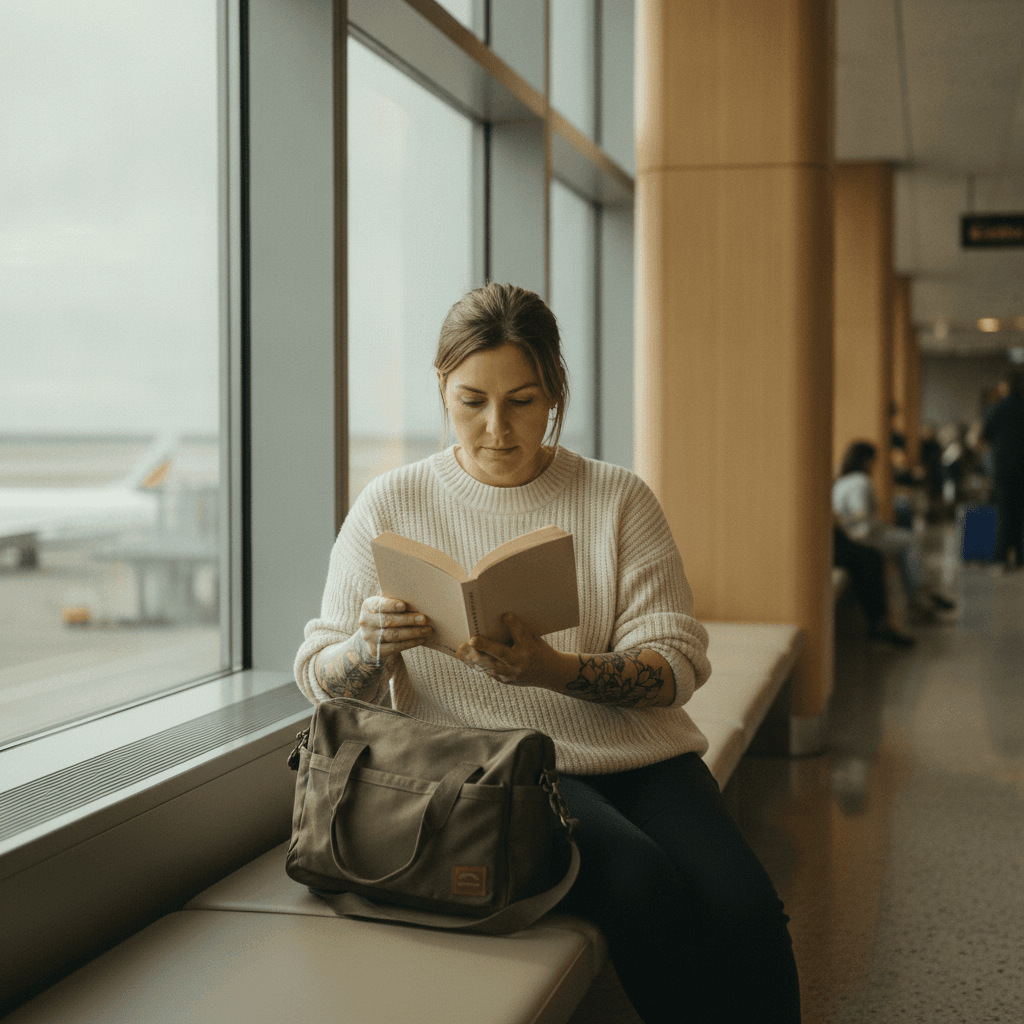
Getting inked before a trip sounds romantic until you are sitting in seat 24B with a weeping forearm and no clue when you can shower. A fresh tattoo is an open wound for roughly the first 48 hours and a healing one for the next two to three weeks, and every part of travel poking at that timeline needs a plan. This guide walks through the actual decisions: when to wrap, how to wash in a hotel bathroom, what to do on the plane, and which parts of your itinerary you should quietly move.
Time the tattoo around the trip, not the trip around the tattoo
The best aftercare decision happens before the needle touches skin. If you can, book your session at least 10 to 14 days before you fly, which lets the surface heal, the scabs shed, and the deeper skin start knitting before airport recycled air and hotel soap enter the picture. Anything under 7 days out and you are traveling through the messiest phase, which is the peeling, itching, and plasma-leaking window that hates being trapped under clothes.
If the trip is non-negotiable and the session is already booked, ask your artist to keep the piece smaller, shallower, or in a spot your clothing does not rub. A wrist or calf piece heals under travel conditions far better than a full ribcage session or a foot tattoo you will shove into a sneaker for a 12-hour transit. Bigger pieces bleed longer, weep more, and need more washes per day, none of which pairs well with hostel plumbing.
Also confirm the artist's aftercare protocol in writing before you leave. Second-skin adhesive bandages like Saniderm, Recovery Derm Shield, or Tegaderm are the travel standard because they let you skip open-air washing during transit. If your artist prefers dry healing or a traditional wash-and-lotion routine, you need that information locked in, since you cannot text them from a plane at 35,000 feet asking whether it is okay that your wrap is full of fluid.
Master the second-skin wrap before you fly
Second-skin film is the single most useful travel tool for a fresh tattoo, and using it correctly is where most people fail. A first wrap usually stays on for 12 to 24 hours and fills with a mix of plasma, blood, and lymph fluid that looks alarming but is normal. The second wrap, applied after a proper wash, can stay on for 3 to 5 days depending on brand and how much your tattoo weeps. That second wrap is what carries you through a flight day.
Apply a fresh piece 30 to 60 minutes before you leave for the airport, not right before boarding. The skin needs to be clean, fully dry, and free of lotion, and the film needs at least half an hour to seal properly against sweat and clothing friction. Trim the film so it extends about one inch past the tattoo on every side. Corners lift first, so round them slightly with clean scissors.
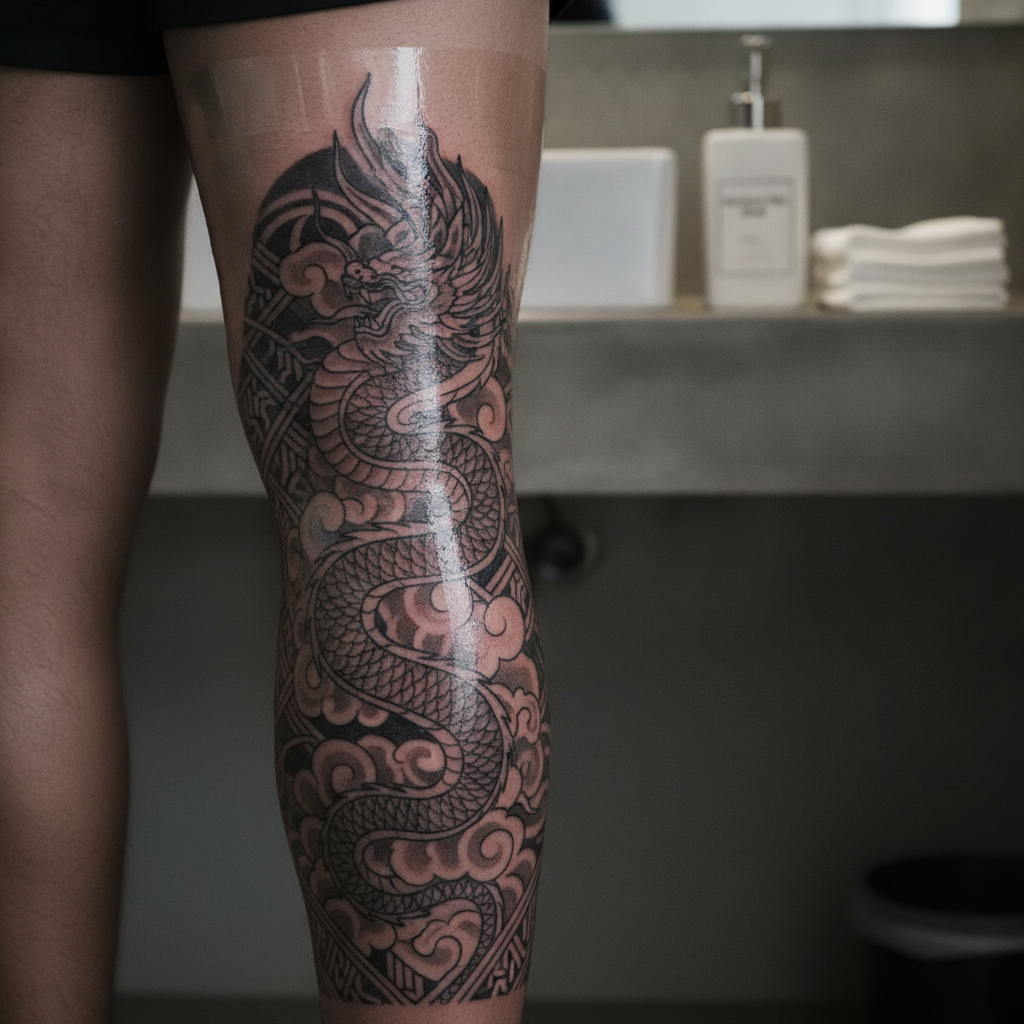
If the wrap starts leaking mid-flight, do not peel it off in an airplane bathroom. Cabin lavatories are one of the least sanitary places you will encounter that week. Cover the leak with a clean paper towel, press gently, and change the wrap once you reach your hotel or a clean private bathroom at your destination. Pack two spare pre-cut pieces in a resealable bag inside your carry-on, plus a small pair of scissors in checked luggage if you need larger cuts.
Handle the hotel bathroom like a healing station
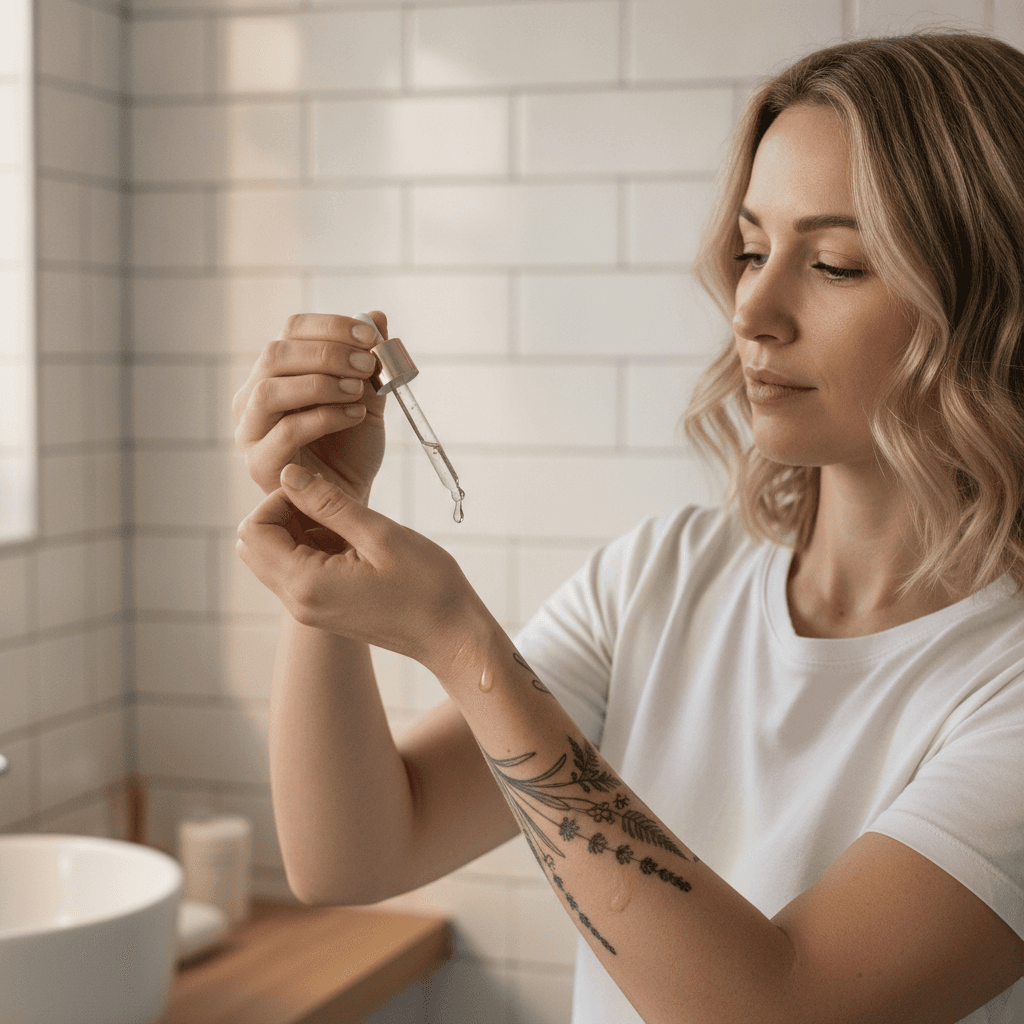
Hotel water is fine for washing a tattoo in most developed countries, but the products around the sink usually are not. Skip the complimentary bar soap, hand soap, and body wash, since scented and antibacterial formulas dry the skin and irritate healing ink. Pack a travel-size bottle of fragrance-free liquid soap such as Dr. Bronner's Baby Unscented, CeraVe Hydrating Cleanser, or Cetaphil Gentle Skin Cleanser. A 3-ounce bottle covers most trips and clears TSA.
Wash the tattoo twice a day for the first week, once in the morning and once at night. Use lukewarm water only, since hot water opens pores and pulls ink. Work the soap in with clean fingertips for about 30 seconds, rinse until the skin no longer feels slick, and pat dry with a clean paper towel rather than the hotel bath towel. Hotel towels are laundered in industrial detergent, reused between guests in ways you cannot verify, and covered in lint that sticks to healing skin. For a full breakdown of the first-day routine, our tattoo aftercare first 24 hours guide covers what to do before you leave for the airport.
After drying, apply a thin layer of fragrance-free lotion like Aquaphor for the first 3 days, then switch to a lighter lotion such as Lubriderm Fragrance Free or Aveeno Daily Moisturizing. If you are following the when to switch ointment to lotion timing while traveling, err on the earlier side since heavy ointments plus hotel-room heat can trap sweat and cause bubbling.
Deal with sun, water, and heat like they are the enemy
Sun is the single biggest threat to a fresh tattoo, and vacation itineraries almost always involve too much of it. UV exposure on unhealed ink fades colors, breaks down linework, and can trigger a raised, itchy reaction that looks like an allergic response but is really just sun damage. For the first two weeks, keep the tattoo fully covered whenever you are outside. Loose long sleeves, a wide-brim hat if the piece is on your neck, and a tightly woven fabric like linen or bamboo all work better than sunscreen, which should not touch a healing tattoo at all.
Water bodies are equally off-limits. That means:
- No ocean, lake, river, or pool swimming for at least 2 weeks, ideally 3
- No hot tubs, saunas, steam rooms, onsen, or thermal baths for 4 weeks
- No long baths, since submerging the tattoo softens scabs and pulls ink
- Quick showers only, with the tattoo angled away from the direct spray
Chlorine, salt water, and bacteria-rich lakes all cause different problems, but the outcome is the same: an infected or patchy tattoo. If you booked a beach trip specifically to swim, your options are wearing a rash guard and accepting you cannot get in the water, or postponing the tattoo. Our full breakdown on swimming after a new tattoo covers the exact healing markers to look for before you can safely get back in.
Heat matters too. Tropical humidity slows healing because sweat sits on the skin and softens forming skin. If your trip lands in Bangkok, Bali, or the Caribbean during the wet season, plan for extra washes, more time in air conditioning, and looser clothing than usual. Our tattoo aftercare humid climate guide has more on heat-specific adjustments.
Pack a travel aftercare kit
A fresh-tattoo travel kit fits in a quart-size resealable bag and prevents 90% of the mistakes people make on the road. Pack:
- 3-ounce fragrance-free liquid soap
- Travel-size fragrance-free lotion (2 to 4 ounces)
- Small tube of Aquaphor or A+D Ointment for days 1 to 3
- Two to four pre-cut pieces of second-skin adhesive film
- Small pack of unscented paper towels or clean gauze
- Loose cotton bandana or scarf for sun cover
- Small pair of nail scissors (checked luggage)
- Copy of your artist's written aftercare instructions
Add a fragrance-free hand sanitizer for washing your hands before touching the tattoo. Skip the antibiotic ointments like Neosporin, which are not recommended for tattoos and can pull color from the ink. If you cross international borders, put liquids in the outer pocket of your carry-on so you can pull them for security without unpacking around your tattoo.
Frequently asked
Can I fly with a tattoo that is less than 24 hours old? You can, but it is not ideal. The first 24 hours are when the tattoo weeps the most, and airplane cabins are dry, cramped, and full of shared surfaces. If you must fly that soon, keep the fresh wrap from the studio on for the entire flight, do not touch it, and change to a fresh second-skin piece immediately after checking into your accommodation.
Is TSA going to make me unwrap my tattoo? Almost never. Second-skin film is clear and does not trigger scanners. If you are pulled aside for a pat-down, tell the officer you have a fresh tattoo covered with a medical bandage and they will avoid the area or use a hand wand instead. Do not offer to remove the wrap yourself.
What if my tattoo starts weeping through my clothes on the plane? Cover the area with clean paper towels from the lavatory, press gently through your sleeve without lifting the wrap, and wait until you land to change it. Weeping through clothing during the first 48 hours is normal and does not mean the tattoo is infected. Watch for infection signs like fever, streaking redness, or thick yellow discharge, which are different from clear plasma leaking.
Can I use hotel body lotion if I forgot mine? No. Hotel lotions are almost always scented, contain alcohol, and use ingredients that irritate healing skin. If you truly forgot yours, buy fragrance-free lotion at any pharmacy or convenience store at your destination. In a pinch, plain refined coconut oil from a grocery store works for one or two applications, but it is not a long-term substitute.
Is it safe to get a tattoo abroad and then fly home? It can be, but do your homework. Reputable studios in Bangkok, Tokyo, London, Amsterdam, and most major cities meet or exceed North American hygiene standards. Ask to see the studio's sterilization setup, watch the artist open sealed needles in front of you, and skip any shop that will not show you their autoclave logs. Give the tattoo at least 3 days of healing at your destination before flying home if you can.
Should I take antibiotics as a precaution before traveling? No. Do not take antibiotics without a prescription for a specific infection, and no reputable artist will tell you otherwise. If you develop actual signs of infection during your trip, such as spreading redness, fever, or pus, see a local doctor immediately rather than self-medicating. For a full list of warning signs, our signs of tattoo infection guide covers what needs medical attention versus what is normal healing.