aftercare
Swimming After a New Tattoo: Safe Timelines and Risks
How long to stay out of the pool, ocean, hot tub, and shower after a new tattoo, plus the real risks of jumping in early.
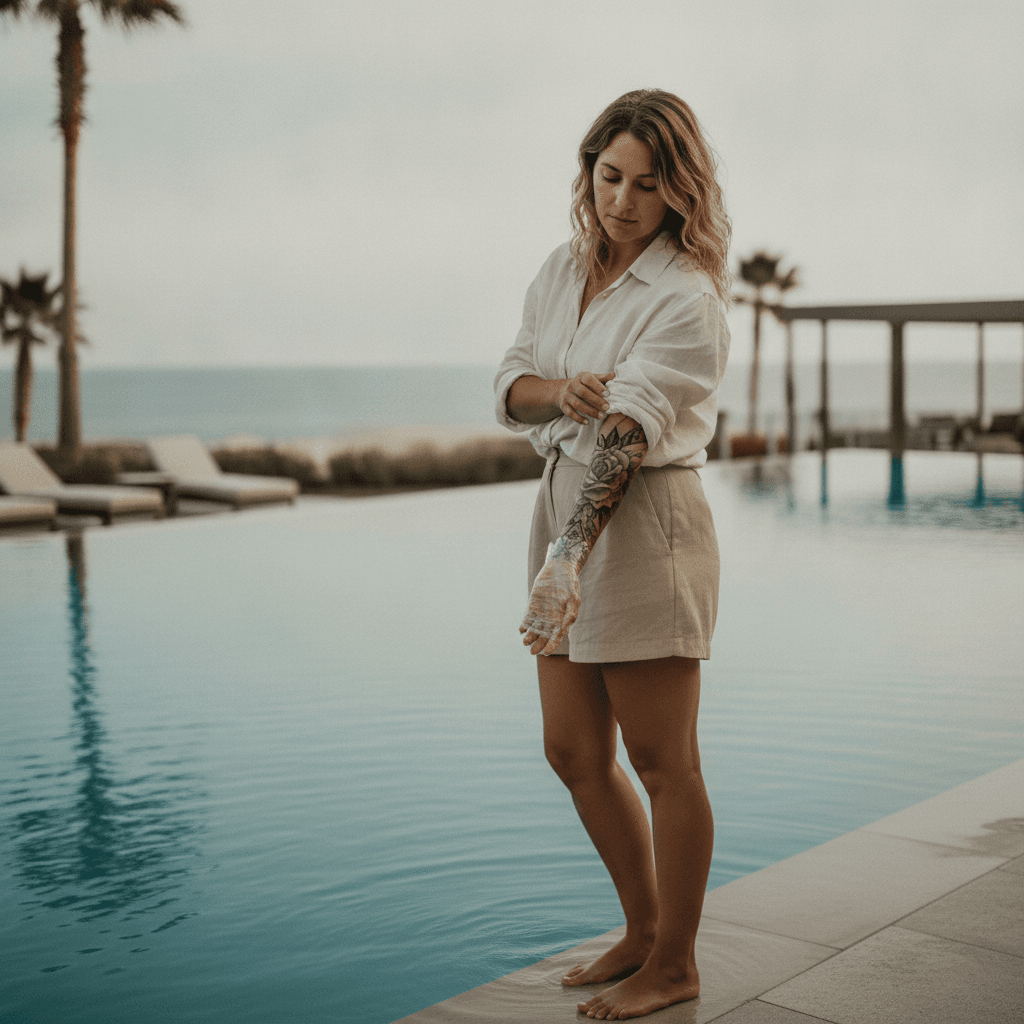
Getting a tattoo right before a beach trip or pool party is one of the most common aftercare regrets in the studio. The rule that artists repeat is simple: no submerging a fresh tattoo for at least two weeks, and closer to four for full-color or large pieces. The reasons behind that timeline are specific, and once you understand what water actually does to an open wound on day three versus day fourteen, the wait stops feeling arbitrary.
Why a fresh tattoo and water do not mix
A new tattoo is an open wound. The needle has punctured the epidermis thousands of times per minute and deposited pigment into the dermis below, leaving behind a surface that looks healed but functions like a scrape. For the first 48 to 72 hours, plasma and lymph fluid are still seeping out, and the skin barrier is essentially absent. Submerging that surface in any standing water introduces three problems at once: bacteria, chemical irritation, and oversaturation of the healing tissue.
Pools are the worst offender people underestimate. Chlorine is a harsh oxidizer that strips the delicate forming skin and can bleach the top layer of fresh ink, leaving a washed-out final result. Saltwater feels gentler but pulls fluid out of the wound through osmosis and contains far more bacteria than people expect, especially near shore. Freshwater lakes and rivers carry the highest infection risk of the three because of stagnant bacterial loads, runoff, and parasites like cryptosporidium that thrive in warm water. Hot tubs combine all of the above with temperatures that accelerate bacterial growth.
The honest timeline by water type
Different water sources demand different waiting periods, and most studios undershoot the conservative numbers because clients push back. Here are the ranges that actually protect the work:
- Showers (running, brief): safe within 24 hours, keep it under 5 minutes, lukewarm only
- Pools (chlorinated): wait 2 to 3 weeks minimum, 4 weeks for color or large pieces
- Ocean: wait 3 to 4 weeks, longer if there is any visible scabbing
- Lakes, rivers, hot tubs: wait 4 to 6 weeks, full healing strongly preferred
- Baths and soaking: wait 3 weeks, no exceptions for sore-muscle excuses
The pattern is that anything stagnant or chemically treated needs longer. The tattoo does not need to look healed on the surface. It needs to be healed in the deeper dermal layer where the pigment lives, and that takes a full four weeks for the average piece.
What actually happens if you swim too early
The damage is not always immediate or visible. Three things tend to go wrong, sometimes in combination. First, ink loss: when the top layer of skin is still rebuilding, pigment that has not fully settled into the dermis can leach out, leaving patchy or faded areas that require a touch-up. Second, color shift: chlorine and saltwater can oxidize fresh pigment, particularly reds and yellows, turning vibrant work dull within a single afternoon. Third, infection: warm wet skin in a public pool is exactly the environment Staphylococcus and Pseudomonas need to colonize the wound.
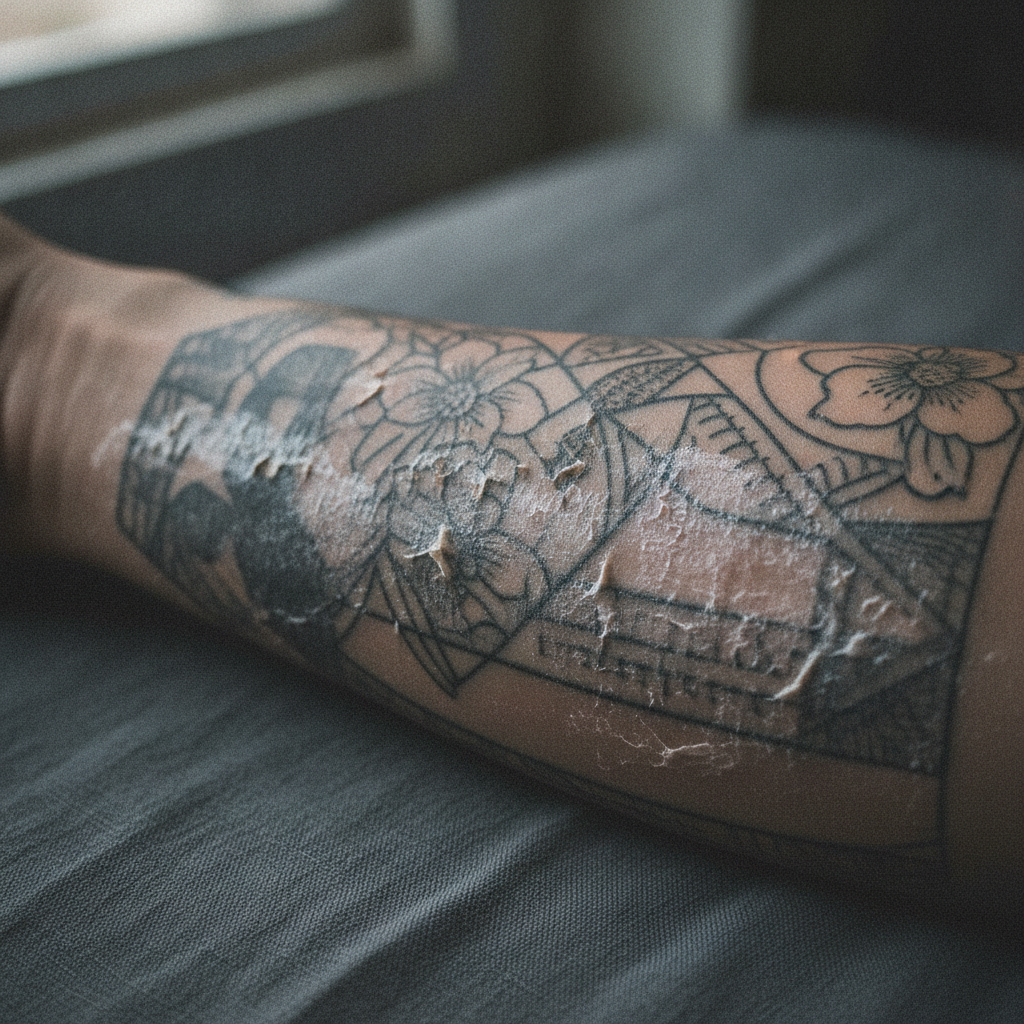
Infections from early swimming tend to show up 48 to 96 hours later. Look for spreading redness past the tattoo borders, warmth, pus that is yellow or green rather than the clear plasma of normal healing, and any fever or swollen lymph nodes nearby. Mild bacterial contamination clears with topical care and time. A full infection means antibiotics and almost always a touch-up once the skin recovers, because infected healing destroys ink retention.
What to do if you have already gotten wet
Accidents happen. A surprise rainstorm, a kid splashing in the pool, a forgotten dive into the ocean on a vacation. The response depends on how long the exposure lasted. For a quick splash or a few seconds of rain, rinse the tattoo immediately with clean lukewarm water and unscented soap, pat dry with a clean paper towel, and apply a thin layer of your usual aftercare. Skip moisturizer for the next few hours so the skin can fully dry out.
For a longer dunk, a swim of more than a minute, or any submersion in a hot tub or lake, treat it as a contamination event. Rinse thoroughly within the hour, watch for signs of infection over the next four days, and accept that you may need a touch-up. Do not panic or scrub aggressively. The damage, if any, is already done and harsh cleaning makes it worse. If redness spreads or pus develops, see a doctor rather than your tattoo artist, because antibiotics are the actual fix.
Protective film and the Saniderm question
Adhesive medical films like Saniderm, Tegaderm, and Recovery Derm Shield are waterproof barriers that can technically let you shower without rinsing the tattoo directly. They are not a swimming workaround. The film is designed to handle 5 to 10 minute showers, not 30 minutes of submerged movement, and the edges lift when soaked. Once the seal breaks, pool or ocean water gets trapped against the wound and stews there for the rest of your swim, which is worse than no film at all. If you must shower for longer than usual, a fresh layer of Saniderm gives you a margin of safety, but planning a beach day around it is wishful thinking. For more on second-skin film use, see our Saniderm aftercare guide.
Planning tattoos around travel and summer
The simplest fix is timing. Book sessions at least four weeks before any trip that involves water, and longer for large or color-heavy work. If you are already committed to a vacation, ask your artist about a smaller test piece in a covered placement instead of the dream forearm sleeve you wanted. Hand and foot tattoos are particularly bad choices before beach trips because they swell, peel aggressively, and live in placements that are nearly impossible to keep dry. For background on how healing differs by placement, our healing timeline day by day breaks down what to expect at each stage.
Tropical climates add another wrinkle. Humidity slows the scabbing and peeling process, and constant sweat creates the same oversaturation problem as a short swim. Our humid climate aftercare guide covers the adjustments worth making if you are healing somewhere hot and wet. The general principle holds: water is not your friend until week four.
Frequently asked
Can I shower the day I get tattooed? A brief lukewarm shower 12 to 24 hours after the session is fine, and most artists recommend rinsing off plasma and excess ointment by then. Keep it under 5 minutes, avoid direct stream on the tattoo, and use unscented gentle soap. No baths, no soaking, no hot water.
How long until I can swim in the ocean after a new tattoo? Three to four weeks for most tattoos, longer for full-color or large pieces. The ocean carries more bacteria than people assume, and saltwater pulls fluid out of healing skin through osmosis. Wait until all scabbing has fully fallen off and the surface looks matte rather than shiny.
Is chlorine worse than saltwater for a healing tattoo? Chlorine is more chemically damaging to fresh pigment and can visibly fade the top layer. Saltwater is more biologically contaminated near shore and pulls more fluid out of the wound. Both are bad in the first three weeks. Pools edge out as the worse option because the chemical damage is permanent without a touch-up.
Can I cover my tattoo with plastic wrap and swim? No. Plastic wrap is not a sterile barrier, traps sweat and bacteria against the wound, and lifts within minutes of movement in water. Medical-grade adhesive films like Saniderm are also not designed for submersion. There is no reliable way to swim with a fresh tattoo. Wait the timeline.
What if I see pus after swimming with a new tattoo? Clear or slightly cloudy fluid is normal plasma weep. Thick yellow or green pus, spreading redness past the tattoo edges, warmth, or fever are signs of infection. See a doctor rather than the tattoo studio. Bacterial infections need antibiotics, and treating it early protects both your health and the ink retention.
Do small tattoos heal faster and let me swim sooner? Slightly, but not by as much as people hope. A small fine-line piece may surface-heal in 10 to 14 days, but the dermal layer where the pigment sits still needs three to four weeks. Smaller tattoos have less margin for error too, so visible damage from early swimming shows up more dramatically on tiny pieces.