cost guides
Traditional Tattoo Cost: What You'll Actually Pay in 2026
A clear breakdown of traditional tattoo cost by size, artist tier, and shop location, with real 2026 price ranges and what drives the number up or down.
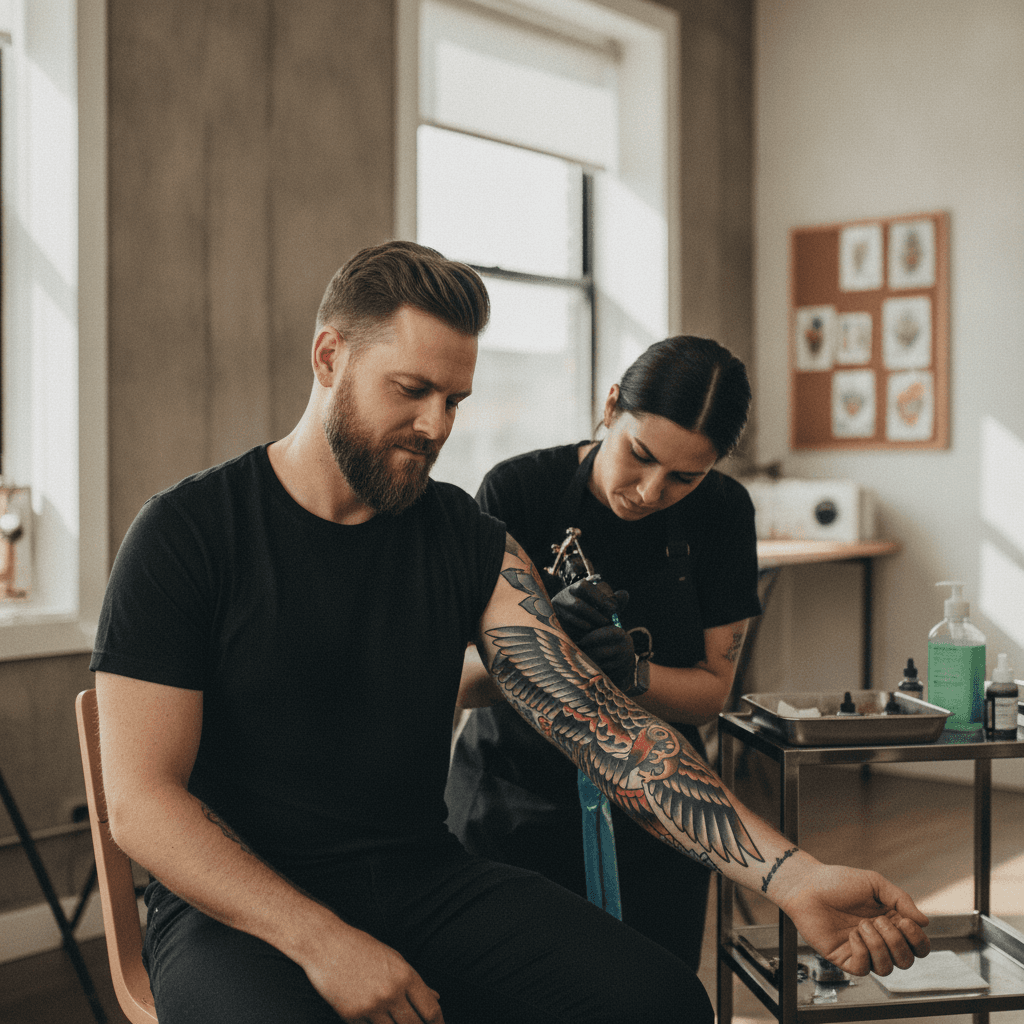
American traditional is one of the cheapest custom tattoo styles to book, and one of the most consistent in price across shops. The bold outlines, limited color palette, and repeatable flash library keep session times shorter than photorealism or fine-line work of the same physical size. If you are pricing out your first old-school piece in 2026, expect real numbers between a $120 shop minimum for a tiny flash swallow and $3,500 for a full custom half-sleeve packed with roses, daggers, and banners.
This guide breaks down what you will actually pay, why the range is so wide, and where to spend versus save. Numbers below reflect United States street-shop pricing in mid-2026, with notes on European and Southeast Asian rates where they diverge meaningfully.
Hourly rates for traditional work
Most traditional artists charge by the hour once a piece runs longer than about 90 minutes. The hourly rate is the single biggest cost lever, and it tracks artist tenure and portfolio strength more than city cost of living.
Typical 2026 hourly rates for American traditional:
- Apprentice or first-year artist: $80 to $120 per hour
- Mid-career artist, 3 to 8 years in: $150 to $220 per hour
- Established name with a waiting list: $250 to $400 per hour
- Convention-circuit or magazine-published artist: $400 to $600 per hour
Traditional is a style where the mid-career tier gives you almost everything the top tier does. The line weights, color saturation, and design vocabulary are standardized, so a competent journeyman produces work that photographs nearly identically to a headliner's for a fraction of the rate. Where the top tier earns their premium is in composition on larger pieces, ability to design around body curves, and color longevity through smart ink layering.
Bangkok, Berlin, and Mexico City all sit roughly 30 to 50 percent below United States rates for the same experience tier. London, Sydney, and Los Angeles run 20 to 40 percent above. If you are traveling for tattoo work, pricing in Bali gives a useful comparison point for the Southeast Asian market.
Flat rates for small flash pieces
Anything under about 3 inches is usually flat-rated. Flash sheets, the pre-drawn designs hanging on shop walls or posted on the artist's Instagram, exist specifically for this pricing tier. You pick a design, the artist quotes a fixed number, and you walk out an hour later.
Common 2026 flat rates:
- Tiny flash, under 2 inches (swallow, heart, dagger): $120 to $200
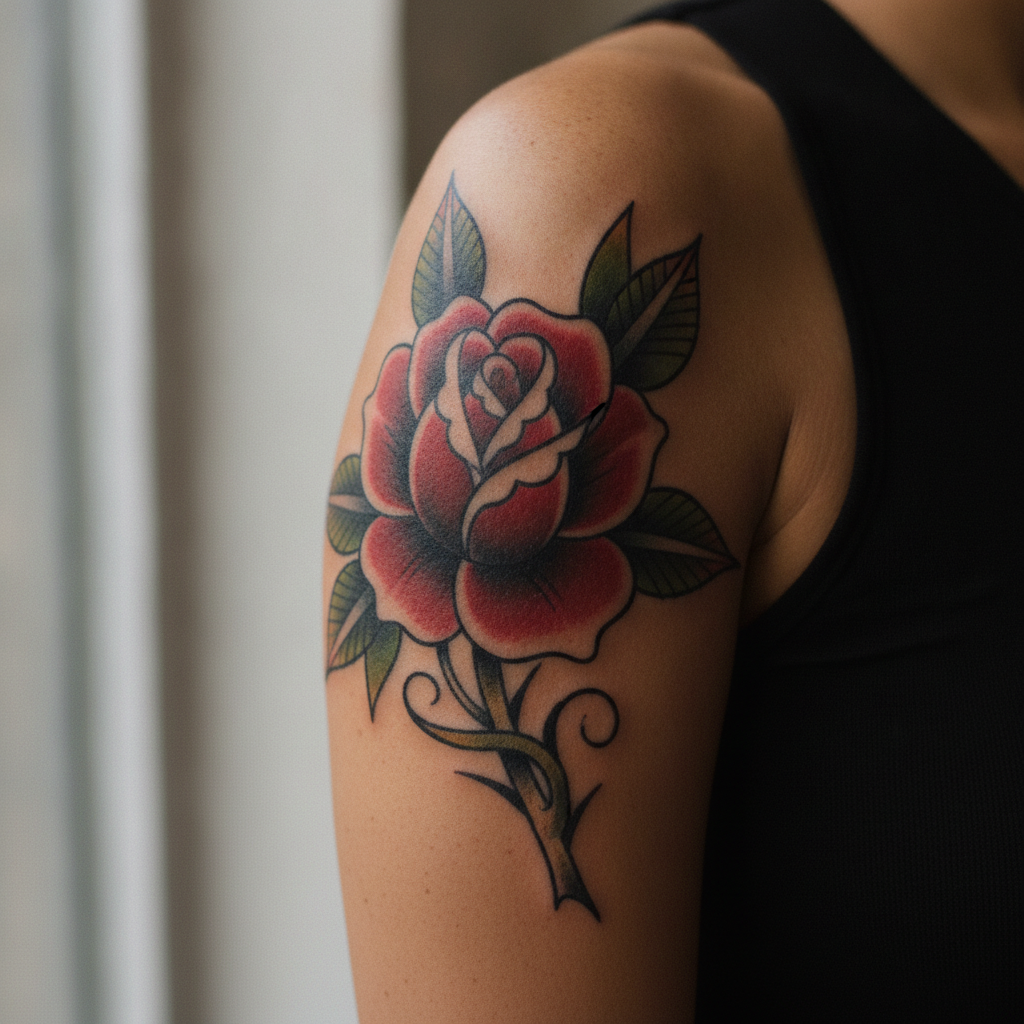
- Small flash, 2 to 3 inches (rose, panther head, anchor): $180 to $300
- Medium flash, 3 to 5 inches (eagle, ship, pin-up bust): $300 to $500
Shop minimums have crept up in the last two years. A $120 to $150 minimum is now standard in most United States cities, up from $80 to $100 in 2022. This is partly ink and needle cost inflation, and partly artists refusing to set up the machine for anything less. If you want a truly tiny piece, budget the minimum regardless of how small the design is.
What drives the price up
Four factors move a traditional tattoo quote up. Understanding them lets you predict cost before you email the shop.
Placement matters more than most people expect. Ribs, sternum, hands, feet, and inner biceps all take longer because the skin moves, stretches, or hurts enough to force breaks. A rose on the outer forearm might take 90 minutes. The same rose on the ribs runs closer to 3 hours because the artist works in shorter passes. Read our pain chart if you want to see which placements consistently extend session time.
Custom design work adds a design fee. Most artists charge $50 to $200 for a custom drawing on top of the tattoo itself, and some roll it into the deposit. If you bring reference images and want something modified from an existing flash, expect to pay less than a from-scratch custom. If you want a fully original piece with reference sketches and revisions, budget the higher end.
Color count and saturation drive session length. Traditional uses a restricted palette (red, yellow, green, blue, sometimes purple, plus black), but heavy solid packing takes real time. A line-only traditional swallow is 30 minutes of tattooing. The same swallow with fully packed color and shading is 75 to 90 minutes. Multiply by hourly rate and the difference is real.
Coverage size scales roughly linearly with cost, but not perfectly. A half-sleeve does not cost exactly twice a quarter-sleeve because the artist reuses design elements and works more efficiently at scale. Expect a quarter-sleeve at $600 to $1,200, a half-sleeve at $1,400 to $2,800, and a full sleeve at $2,800 to $6,000 depending on artist tier and session count.
Deposits, tips, and hidden costs
The quoted rate is not the total. Three additional line items belong in your budget.
Deposits run $100 to $300 and are almost always non-refundable. They come off your final total on the day of the appointment. If you cancel with less than 48 hours notice or no-show, you lose the deposit and have to put down another before rebooking. See our full deposit guide for how the math works across shops.
Tipping is expected at 20 to 25 percent of the tattoo cost, not the session hours. On a $400 flash rose you tip $80 to $100. On a $2,000 half-sleeve completion you tip $400 to $500. Established artists at the top tier sometimes signal that tips are not required, but the standard remains unless stated otherwise. Our tipping breakdown covers the current etiquette.
Aftercare supplies add $30 to $80 for the first two weeks. A tub of Aquaphor or a specialty tattoo balm, fragrance-free soap, and Saniderm bandaging cover most of it. Second-pass touch-ups on solid color are usually free within 6 months and cost the shop minimum after that.
Custom vs flash: where the money goes
Flash exists because it saves the artist design time, which saves you money. A well-executed traditional flash piece on skin is indistinguishable from a custom piece to almost everyone who is not a tattooer, and it costs 30 to 60 percent less for the same physical size.
Custom is worth the premium in two cases. First, when you want a specific narrative or personal element (a portrait pet, a specific ship, a family symbol) that no flash sheet will contain. Second, when the piece needs to work around existing tattoos, scars, or body curves that require original composition. For a first traditional piece, especially anything on a flat placement like the outer forearm or calf, picking from the artist's flash library is almost always the better value.
FAQ
Is American traditional cheaper than fine-line? Yes, usually 20 to 40 percent cheaper at the same physical size, because line weights are thicker and shading passes are simpler. A fine-line rose that takes 3 hours might be a 90-minute traditional rose at the same shop. Both look excellent when done well, and traditional holds up longer with less touch-up work.
How much should I budget for a full traditional sleeve? Plan for $3,500 to $6,500 across 6 to 10 sessions with a mid-career artist, or $6,000 to $12,000 with a top-tier name. Sleeves are almost always sessioned out over 6 to 12 months rather than done in one push, so you can spread the cost.
Do traditional tattoos cost more because of the color? Slightly, but less than you would expect. Color ink costs the shop more than black, but the real cost driver is session time for packing solid color. A color-vs-black-and-grey cost breakdown is worth reading if you are torn between the two.
Are convention prices better or worse than shop prices? Convention pricing is usually 10 to 20 percent above the artist's home shop rate because of the booth fee and travel cost. What you get is access to artists who would otherwise have a 6 to 12 month wait. Fair trade if the artist is on your list.
Can I negotiate the quoted rate? No, and asking almost always damages the relationship. What you can do is ask about smaller versions of the design, flash alternatives, or scheduling on a slower day if the shop offers a promotional rate. Never haggle at the counter.
What is the cheapest way to get a real traditional piece? Book a flash walk-in day at a reputable shop, usually a Friday or Saturday. Many traditional shops run $100 to $200 flash specials on set designs, first-come first-served. You get shop-quality work, real needles, real ink, no design fee, and no deposit friction.