cost guides
Glow-in-the-Dark Tattoo Cost: What UV-Reactive Ink Really Costs
Glow-in-the-dark tattoo cost sits 30 to 60 percent above standard black ink work. Here is what UV-reactive ink actually costs and why.

Glow-in-the-dark tattoos cost more than their regular counterparts, and the gap is wider than most first-timers expect. A small UV-reactive piece that would run $120 in standard black ink often lands between $180 and $240 once a specialty ink is involved. This guide breaks down the real pricing by size, placement, and ink brand, and explains what you are actually paying for when an artist agrees to work with UV-reactive pigment.
Why UV-reactive tattoos cost 30 to 60 percent more
The headline markup on glow-in-the-dark work comes from three stacked costs. Specialty ink is the first. A 1-ounce bottle of Skin Candy UV or Crazyhorse Blacklight ink retails for $18 to $35, roughly double the per-ounce price of a shop's house black. Studios that stock multiple UV colors often pass that cost through directly as a $25 to $50 flat materials upcharge per session, visible on your invoice as "specialty ink" or "UV supplement."
The second cost is time. UV-reactive pigments are thinner and less saturated than carbon-based black. Artists usually need two passes to lay in a line that would take one pass in black, and shading in UV demands slower, more deliberate packing. A design that an experienced artist could finish in 90 minutes in black ink regularly stretches to 2 or 2.5 hours in UV. At typical US hourly rates of $150 to $250, that extra hour is $150 to $250 added to the ticket on its own.
The third is the skill premium. Many artists refuse UV work entirely because the ink behaves differently and the healed result is harder to predict. The artists who do take it on tend to be mid-career or senior, which means their base rate is already in the upper half of their shop's range. A junior artist on the schedule at $120 per hour will not be the one tattooing your blacklight piece. Expect to book with someone charging $180 to $300 per hour even for a small design.
Price ranges by size
Specialty ink does not change the fundamentals of how tattoos are priced, but it does shift every tier upward. Compared to a standard small tattoo cost guide, UV versions sit a full tier above on most price sheets.
- Tiny single-element design, under 2 inches: $150 to $300
- Small design with simple linework, 2 to 4 inches: $250 to $500
- Medium piece with shading, 4 to 6 inches: $450 to $900
- Larger half-sleeve-adjacent UV accents layered over black ink: $800 to $1,800
- Full UV-only sleeve, rare and typically multi-session: $3,500 to $6,500
Those ranges assume a US shop in a mid-to-large metro. Rural shops run 15 to 25 percent cheaper. Shops in New York, Los Angeles, and San Francisco often sit 20 percent above the top of each range. Overseas, prices compress sharply. In Bali, a small UV piece from a reputable studio runs $90 to $160, which is one of the few scenarios where traveling for a tattoo makes financial sense even after airfare if you were going anyway.
Pure UV versus UV layered over black ink
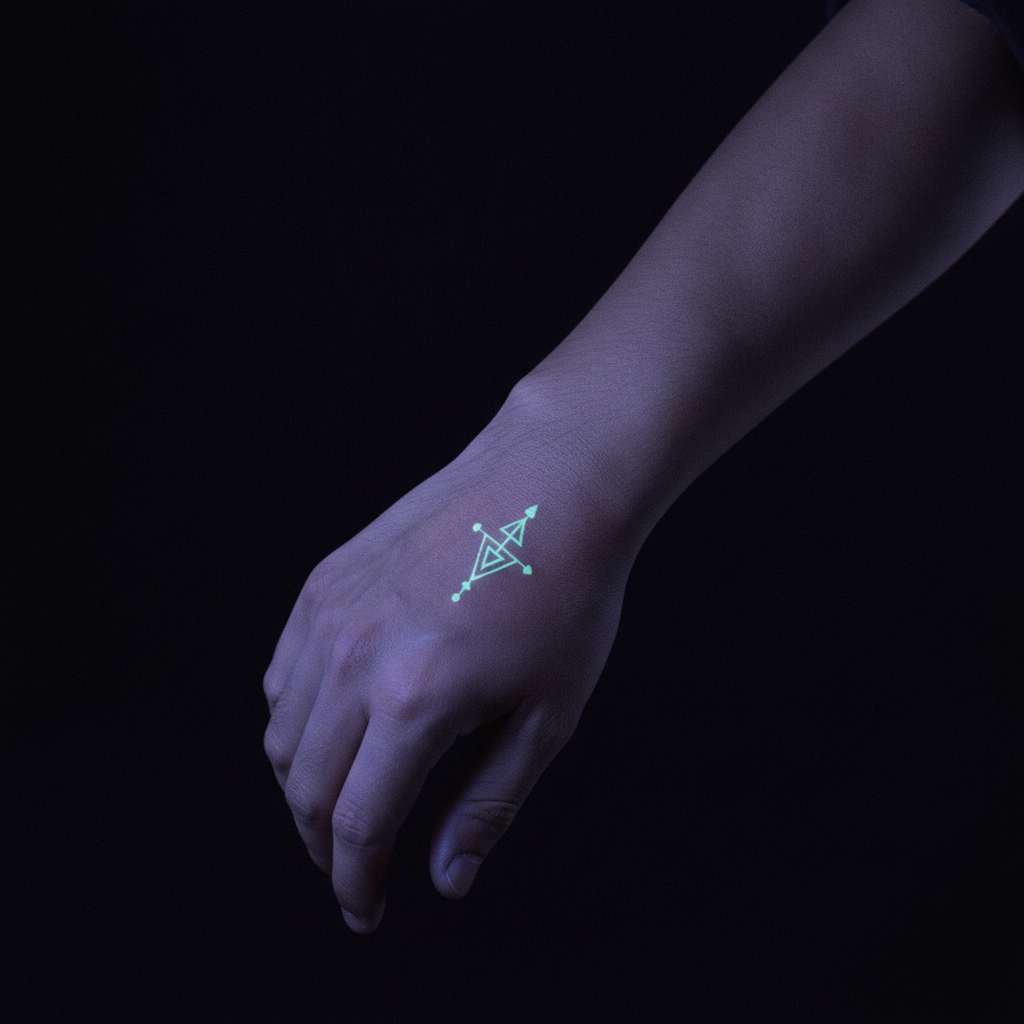
Pricing diverges meaningfully based on which approach you choose, and this is where most clients miscalculate their budget. A pure UV tattoo, meaning one visible only under blacklight and nearly invisible in daylight, costs more per square inch than a hybrid piece. The ink is finicky, the artist cannot easily see what they just laid down, and most studios will quote a flat per-session rate rather than hourly because the time overhead is hard to predict.
Hybrid work, where black linework or shading provides the daytime structure and UV ink accents hidden details that only appear under blacklight, is more popular and marginally cheaper in effective cost per visual effect. You pay the standard rate for the black portion plus a $40 to $80 specialty supplement for the UV accents. A 3-inch hybrid piece commonly totals $280 to $450. For readers comparing to standard work, see our color vs black and grey tattoo cost breakdown, which uses the same framework.
Pure UV pieces also fade faster. Most clients see noticeable glow degradation at the 3 to 5 year mark and often need a touch-up by year 7. Build that into your lifetime cost. A $400 pure UV tattoo with two touch-ups at $150 each over a decade effectively costs $700, versus $450 for a comparable black-ink piece that holds without intervention.
What drives the quote beyond size
A few factors push UV pricing up or down inside the ranges above. Placement is the biggest. Thin skin areas like the inner wrist, inner bicep, and ribs charge a 15 to 25 percent premium for UV because the ink needs even more careful packing to stay bright. Thicker skin on the outer forearm or calf accepts UV ink more cooperatively and sits at the standard rate.
Ink brand matters. Studios using Skin Candy, Crazyhorse, or Steve's Portrait Blacklight pass through about $25 to $40 per session in materials. Shops using the newer Solid Ink Glow line, which runs $45 per bottle but packs brighter, charge $50 to $70. A handful of boutique studios import unregulated European UV inks and price those sessions at a flat premium regardless of size, often starting at $400 for anything bigger than a quarter.
Finally, the artist's willingness to warranty the result shifts the price. Artists who guarantee a free touch-up within 90 days typically charge 10 percent more upfront. For UV work specifically that guarantee is worth paying for, because healed UV ink often looks patchy under blacklight even when the artist did everything right. If you want to understand the broader pricing structure your artist is working from, our guide to tattoo pricing explained covers the same cost components in detail.
Hidden costs most clients miss
Three line items regularly surprise clients and inflate the final bill by 10 to 20 percent. The first is the consultation fee. UV work almost always requires an in-person consult because the artist needs to assess your skin tone under blacklight. Fair, cool-toned skin shows UV ink brightly. Darker and warmer skin tones often need custom color mixing, and some pigments barely show at all. Consultations run $50 to $100 and are usually credited toward the final tattoo only if you book within 30 days.
The second is the deposit. Specialty-ink shops often require a larger deposit, typically $100 to $200 rather than the standard $50 to $75, because they are blocking out longer appointment windows and ordering materials. Our tattoo deposit guide explains how deposits work in general, but assume the higher end for UV bookings.
The third is the test patch. Reputable artists working with UV ink will insist on a small test tattoo, often a 1-inch design on your inner forearm, done 2 to 4 weeks before the main session so they can see how your skin heals the pigment. That test patch is a full session with its own minimum charge, usually $120 to $200.
Safety and regulation notes that affect price
UV-reactive ink sits in a gray zone with the FDA. Older inks containing phosphorus caused serious allergic reactions and are no longer sold by reputable manufacturers, but a few studios still work with imported stock that has not been through modern safety testing. Those studios tend to charge less, often 30 to 40 percent below mainstream pricing, and the discount is not worth it.
Current-generation UV inks from US and EU manufacturers use a different pigment base and have a cleaner safety record, but no UV ink is officially FDA-approved for tattoo use. Studios that stock these inks carry higher insurance premiums, which is quietly baked into their rates. A good artist will show you the ink bottles, confirm the brand, and provide a batch number on request. If they refuse, walk away. The $50 you save is not worth skipping on an ink you cannot verify.
Frequently asked
Why do glow-in-the-dark tattoos cost more than regular ones? Specialty ink is roughly double the per-ounce price of standard black, the application takes 30 to 50 percent longer because UV pigment is thin and needs multiple passes, and only mid-career or senior artists tend to take the work on. Those three factors stack to produce a 30 to 60 percent markup.
Do glow-in-the-dark tattoos fade faster? Pure UV tattoos typically fade noticeably at 3 to 5 years and often need a touch-up by year 7. Hybrid pieces with black linework and UV accents fade at roughly the same rate as the black portion, around 10 to 15 years before significant touch-up is needed. Factor at least one touch-up at $150 to $250 into the lifetime cost of a pure UV piece.
Is UV-reactive tattoo ink FDA approved? No. No tattoo ink is officially FDA approved for cosmetic use, and UV-reactive pigments sit in a particularly uncertain regulatory position. Current-generation inks from reputable US and EU manufacturers have a reasonable safety record, but studios using cheap imported stock pose a real reaction risk. Ask to see the ink bottle and batch number before your session.
Can you get a UV tattoo over an existing black tattoo? Yes, and it is actually one of the more popular use cases. Adding UV accents to an existing black piece runs $100 to $400 depending on how much ink you want to add, and the healed result is usually brighter than a pure UV tattoo because the black ink underneath provides visual anchor points under blacklight.
Why do UV tattoos require a test patch? Skin chemistry affects how UV ink heals in ways that are hard to predict from photos alone. A 1-inch test patch 2 to 4 weeks before the main session shows the artist how your skin holds the pigment and whether the color stays vibrant through healing. The test adds $120 to $200 to the project but prevents expensive mistakes on a larger design.
Is it worth paying extra for UV ink? If you want the specific effect of a design that glows under blacklight and is subtle in daylight, UV ink is the only way to get it, so the premium is just the cost of entry. If you are mainly drawn to the novelty, a hybrid design with small UV accents layered into black linework gives you most of the visual payoff at a much lower lifetime cost.