style guides
Ignorant Style Tattoos: A Complete Style Guide
Ignorant style tattoos ditch technical polish for wobbly linework, crude figures, and punk energy. Here is how the style works and what it costs.

Ignorant style tattoos look like they were drawn with the wrong hand on purpose. Wobbly outlines, crude figures, faces with mismatched eyes, and jokes that would look at home on a bathroom stall. The style rejects the technical polish that defines most of modern tattooing, and that rejection is the whole point. If you have been scrolling through fine-line florals and realism portraits and feeling nothing, this is probably the corner of the tattoo world you have been looking for.
Where ignorant style comes from
The style was born in the mid-2010s Paris graffiti scene, and one name shows up in every honest history of it: Fuzi Uvtpk. He came out of the tram-tagging crews of the 90s and started tattooing his graffiti characters with the same energy he used on train windows. No shading, no smooth curves, no attempt to make the figures look right. The word "ignorant" here is not an insult. It is a deliberate rejection of the rules that art school and tattoo apprenticeships try to install.
That origin matters when you sit down for one. The style is not a hand-poke revival, and it is not the same thing as trash polka or crude flash. It carries a specific attitude that comes from graffiti, punk, and skate culture. Artists who work in this style tend to talk about it like a subgenre with its own ethics, not a shortcut for people who cannot draw. The best ignorant style artists are usually excellent draftspeople who have chosen to strip their work down.
You can see the graffiti DNA in the compositions. Characters often float without a background, get placed at odd angles, and ignore the anatomy of the body part underneath. A drunk cat might sit sideways on your calf because that is how it looked good on the sketch. This is closer to a tag on a wall than to a traditional flash sheet, and it reads that way on skin.
What defines the look
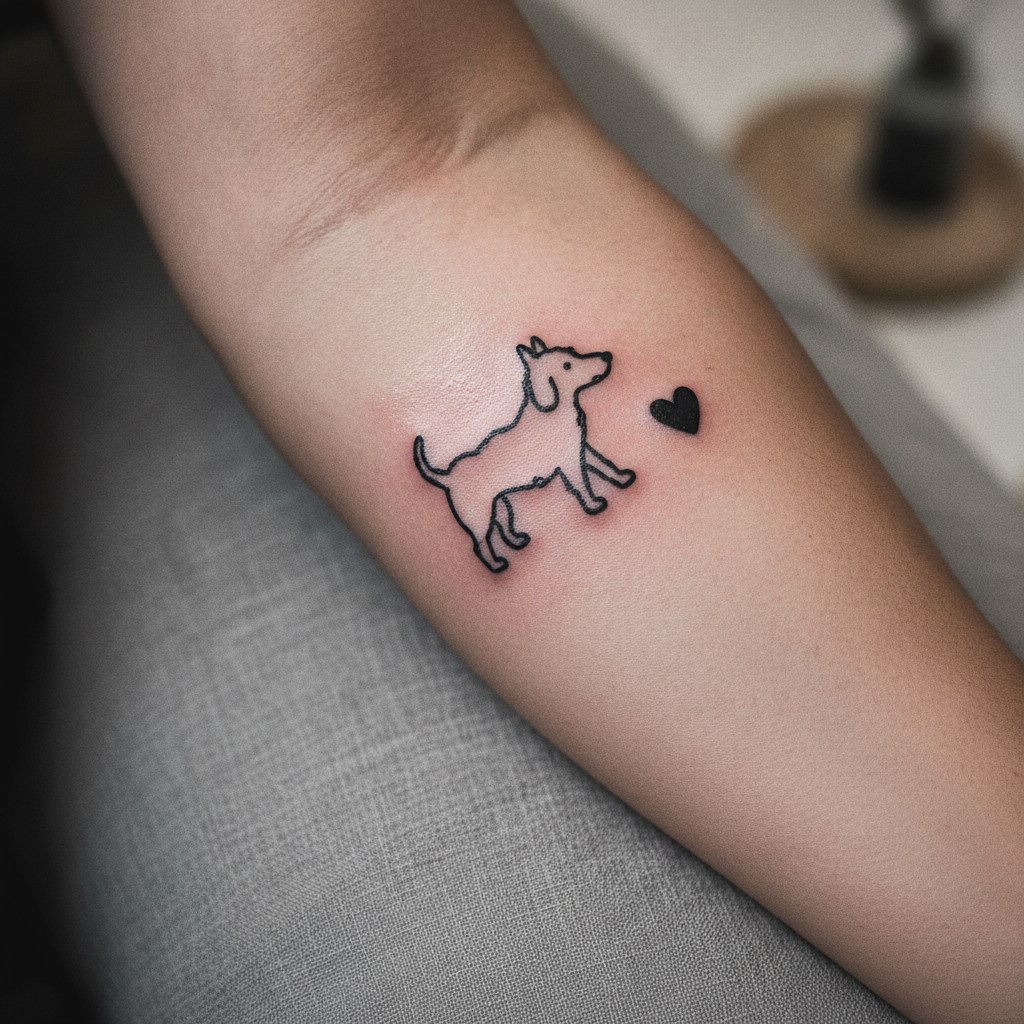
The core visual traits are consistent across artists. Solid black ink, single-needle or 3RL liner work, deliberately shaky lines, no shading, no color, no fine detail, and figures that feel like they were drawn in ten seconds. Backgrounds are almost never used. The white space of the skin is treated as part of the composition, which is why ignorant style pieces often look striking even when they are tiny.
Common motifs include smiling faces with uneven eyes, crude animals, hearts, daggers, bottles, cigarettes, text scrawls, dice, and lo-fi remixes of pop culture icons. Text is usually in a shaky handwritten script rather than a clean typographic hand. If you see a well-executed traditional swallow, that is not ignorant style. If you see a swallow that looks like a five-year-old drew it while still committing to the punchline, that is ignorant style. Related aesthetics worth exploring are covered in our handpoke style guide and sketchwork style guide, both of which share a raw, anti-technical mood without being the same thing.
The line quality is the tell. In fine-line work, artists chase perfectly consistent 0.25mm strokes. In ignorant style, artists intentionally break up the line, let the machine wobble, and lean into the human hand. A steady line inside an ignorant-style piece would look wrong. That intentional imperfection is a skill in itself, and it takes practice to fake casual convincingly.
Choosing an artist
Not every tattooer can do this style well. Many technically strong artists produce ignorant style pieces that look neutered, too polished, or awkward in a way the client did not want. Look at an artist's flash sheets and their Instagram grid rather than just individual pieces. You want to see a consistent visual language, recurring characters, and evidence that they draw this way in their sketchbooks and not just on request.
Red flags include artists who post one crude piece surrounded by twenty realism portraits, artists who charge premium realism rates for a two-minute drawing without a real portfolio to justify it, and studios that market ignorant style as a beginner option. This is a specialist aesthetic, not a discount pathway. Some of the best-known names in the style, like Fuzi in Paris, Bad Trip Tattoo in Berlin, and various tattooers in the Bushwick scene, have year-long waitlists because their signature is hard to imitate.
Bring reference images to consultation, but present them as vibe references rather than "draw this on me" requests. Most ignorant style artists prefer to translate your idea into their own hand, and pushing for a literal copy defeats the purpose of the style. A good artist will ask what feeling you are chasing and where on the body you want it, and then produce a rough sketch that already looks halfway done.
What it costs
Pricing in this style is often flat-rate rather than hourly, and it can be counterintuitive. A quick ignorant style piece takes 15 to 30 minutes of tattoo time but can carry a $200 to $400 minimum in a mid-tier US studio. The rate is paying for the artist's design sense and their name, not the labor. Compared to a full-day realism session, this feels cheap. Compared to a similarly sized traditional flash piece, it can feel steep.
Rough ranges by market:
- Small ignorant style tattoo, palm-sized, in a US mid-tier studio: $200 to $400
- Same piece in a top-tier NYC, LA, or Berlin studio: $300 to $600
- Small piece in Bangkok, Bali, or Mexico City: $80 to $180
- Medium piece, forearm-scale, established artist: $500 to $1,200
- Guest-spot piece by a name artist on a limited tour: often flat $500+ regardless of size
Broader city-level comparisons live in our tattoo pricing explained guide and specific placement pricing sits in our forearm tattoo cost guide. Deposits of $50 to $150 are standard, and most artists in this style do not haggle. Walk-in flash days from ignorant style artists can be a good entry point because the pieces are pre-drawn and priced lower.
How the style ages
Ignorant style ages better than fine-line and worse than traditional. Solid black lines with no shading are exactly the kind of tattoo that stays legible for decades. There is no color to fade, no gradient work to muddy, and no thin detail work to blur. What you get at ten years looks close to what you got on day one.
The catch is that ignorant style lines are usually thin. A 3RL liner packed with enough ink to last is standard, but poorly weighted lines can spread and lose their character over time. Artists who understand the style pack the line heavier than it looks so that the wobble stays intentional rather than turning into blowout. Ask specifically about line weight during consultation. A good ignorant style artist will explain this without prompting.
"The lines look loose, but they need to be built to survive twenty years of skin turnover. Otherwise you end up with a blob where a joke used to be."
Sun exposure is your main long-term enemy, same as with any black-ink work. Regular SPF on the piece extends its life significantly. More detail on that lives in our tattoo sunscreen long-term care post.
Healing quirks
Because ignorant style pieces are usually small and use minimal ink saturation, they heal faster than heavier work. Expect a full surface heal in 10 to 14 days and full dermal healing at 4 to 6 weeks. Scabbing is minimal, and peeling is usually light. The most common complication is that the deliberate wobble in the lines can look like a healing artifact during weeks two and three, which panics first-timers.
If you are new to tattoos, do not touch up an ignorant style piece before the 6-week mark. Lines that look uneven at day 20 usually settle by day 45. Following a standard healing protocol from day one avoids most problems. Our tattoo healing timeline day by day guide walks through what to expect at each stage. The wobble is the design, not a mistake, and any reputable artist will tell you the same.
Frequently asked
Is ignorant style a good choice for a first tattoo?
It can be, if you understand the aesthetic and choose an artist who genuinely works in the style. It is not a good choice if you think "ignorant" means "easy" or "cheap". The commitment is to the look, not to a lower barrier to entry. First-timers who want a small piece and appreciate the punk energy of the style tend to be very happy with the result.
Can I combine ignorant style with other styles?
Mixing rarely works well. The style depends on internal consistency, and putting a crude ignorant character next to a fine-line floral usually looks like two unrelated tattoos rather than a cohesive piece. If you want to combine styles, do it across separate tattoos on the same body rather than inside one composition.
How long does an ignorant style tattoo take?
Small pieces take 15 to 45 minutes of tattoo time. Medium forearm-scale pieces take 60 to 90 minutes. Even large ignorant style compositions rarely require multi-session work because there is no shading or color to pack. This is one of the few tattoo styles where the actual needle time is short relative to the visual impact.
Will an ignorant style tattoo be taken seriously in a professional setting?
It depends on placement and your industry. A crude smiley face on your neck reads differently in a law firm than in a design studio. The style tends to skew punk and irreverent, which is part of the appeal for the people who want it. Choose placement based on your actual life rather than the version of your life you had five years ago.
Do ignorant style tattoos hurt less because they are quick?
Short sessions do reduce cumulative pain, but the pain per minute is the same as any other lining work. Placement matters more than style. Ribs, sternum, and hands hurt regardless of what you are getting. See our tattoo pain chart for a spot-by-spot breakdown.
Are hand-poke ignorant style tattoos a thing?
Yes, and they are increasingly common. Hand-poke naturally produces the kind of shaky line that suits the style, and many ignorant style artists offer both machine and stick-and-poke options. Aftercare for hand-poke is slightly different. Our stick and poke tattoo aftercare guide covers what changes.