style guides
Handpoke Tattoos Style Guide: Stick and Poke Done Right
Handpoke tattoos trade the machine for a single needle and steady hand. Here's how stick and poke actually works, what it costs, and how it heals.
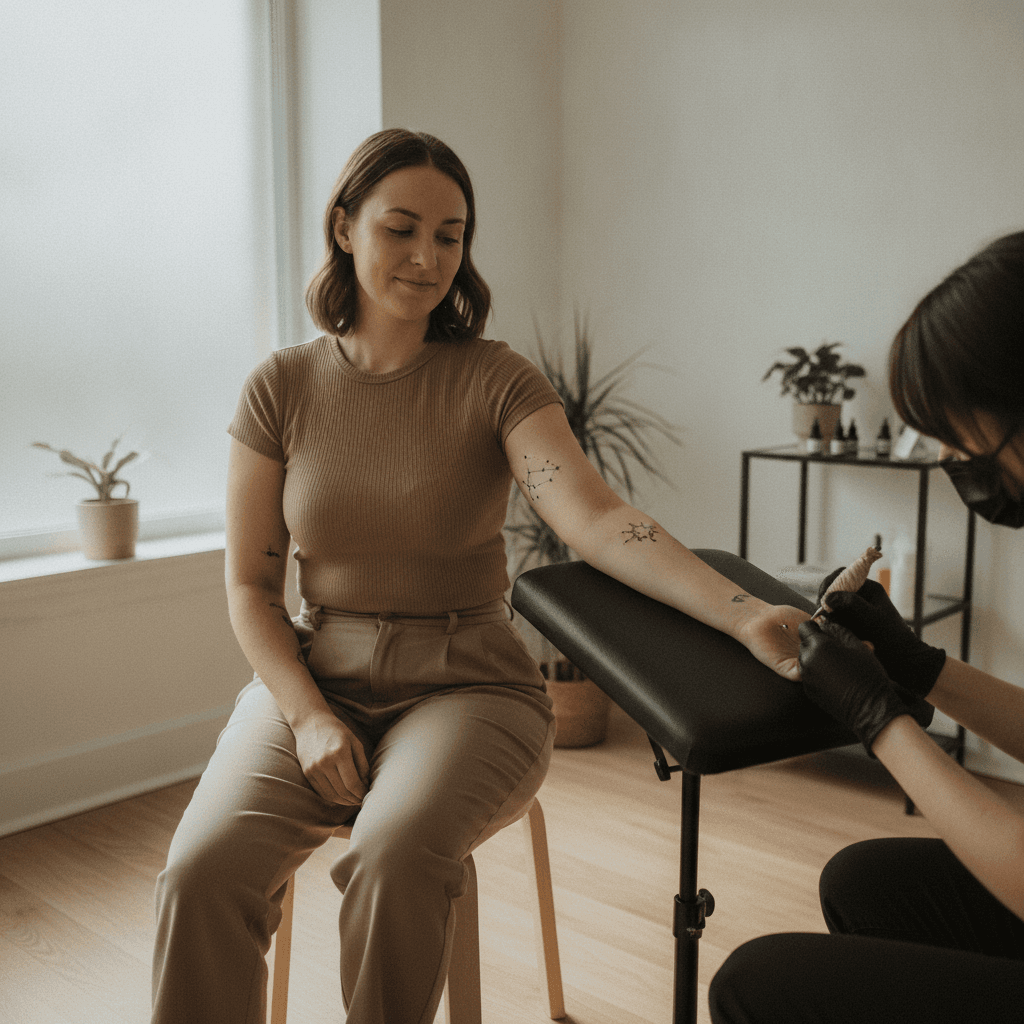
Handpoke tattoos, also called stick and poke, are made one dot at a time with a single needle held in the artist's hand. There is no coil buzz, no rotary hum, and no power supply. The style has moved a long way from prison and kitchen table origins into legitimate studios in Berlin, Tokyo, Melbourne, and Brooklyn where trained artists charge machine rates for the work. If you are considering your first handpoke or comparing it to a machine piece, this guide covers the technique, the visual signature, the pricing, and how the ink actually behaves in your skin over the next five years.
What handpoke actually is
Handpoke is a tattooing technique, not a design style. The artist attaches a sterile tattoo needle to a rigid handle, dips it in ink, and pokes the pigment into the dermis one puncture at a time. Standard needles are the same cartridges used in machine work, most often a single round liner (1RL) or a tight three-round liner (3RL) for slightly thicker lines. Session pace is slow. A machine artist covers three to four square inches an hour on outlines. A handpoke artist covers one to two square inches an hour on the same design, so a piece that takes ninety minutes on a coil can run three hours by hand.
The pigment sits in the dermis the same way it does with a machine, which is why healed handpoke work is permanent and not a temporary tattoo. The difference is trauma. Each poke is a single controlled puncture rather than the 80 to 150 punctures per second a rotary delivers, so the surrounding tissue takes less collateral damage. Healing is usually faster and less scabby, and clients report noticeably less pain during the session for small pieces. Larger handpoke work, three hours and up, becomes its own kind of endurance because the sensation is a persistent sharp tap rather than the vibrating drone people learn to tune out on a machine.
The visual signature on skin
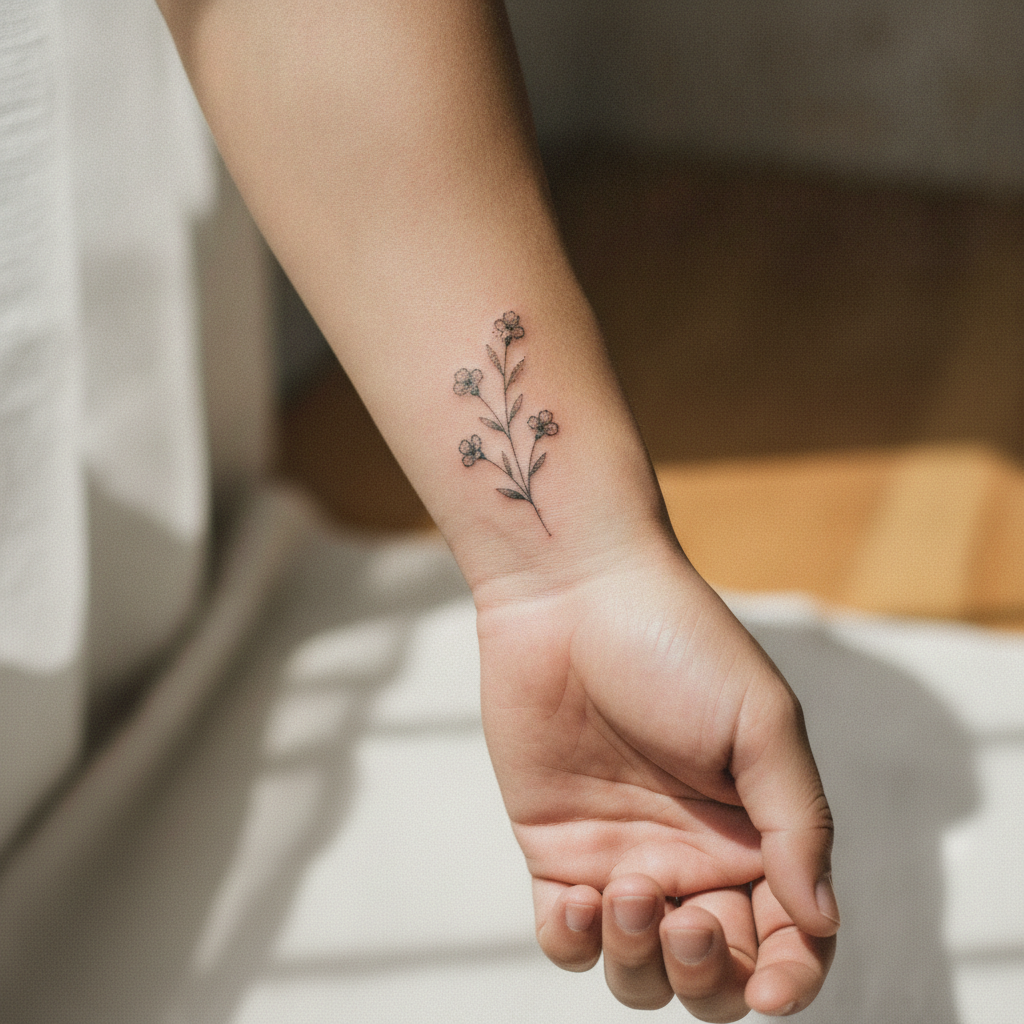
Handpoke has a look you can spot across a room once you know what to watch for. Lines carry a subtle texture because they are built from stacked dots rather than drawn in a continuous pass, and even the tightest handpoke line reads softer than a crisp machine line at close range. Shading is almost always dotwork or stippling because gray wash is difficult to lay down cleanly by hand. The overall impression is quieter and more organic, which is why the style dominates botanical, celestial, and minimalist ornamental work.
The technique struggles with anything that demands a long unbroken line or heavy solid black fill. A machine can pack black into a one-inch square in ten minutes. A handpoke artist doing the same fill would need forty minutes and the result would still likely show minor unevenness under harsh light. This is why you rarely see traditional Americana, blackwork panels, or bold neo-traditional work done by hand. The style leans into its own strengths: delicate florals, small script, single-line drawings, symbols, and any design where a slightly imperfect artisan quality reads as intentional rather than sloppy.
What handpoke costs
A common myth is that handpoke should be cheap because there is no machine involved. In reality, legitimate studio handpoke costs about the same as machine work per finished piece because the artist bills for time, not for equipment, and handpoke takes longer per square inch. Expect $80 to $150 for a shop minimum piece the size of a coin, $200 to $400 for a small forearm or ankle piece, and $600 to $1,200 for a hand-sized botanical or ornamental design that runs three to four hours. Rates vary by city. New York, London, and Tokyo studios usually charge $200 to $300 per hour for booked handpoke artists. Smaller markets sit in the $120 to $180 per hour range.
Guest-artist tours push the ceiling higher. Well-known handpoke artists who travel between studios often book six months out and charge flat rates of $400 to $800 for a two-hour slot regardless of design size. If you want a specific artist rather than just the technique, budget for the wait list and the premium. For a broader breakdown of how sessions get priced, see tattoo pricing explained, and for typical shop minimums check tattoo minimum charge.
Healing and how it ages
Handpoke healing runs faster than machine healing for a piece of the same size. Because the skin took fewer punctures overall, most clients see scabs peel by day five instead of day seven, and the healed look settles in around week three rather than week four to six. Aftercare is identical to machine work. Wash twice a day with fragrance-free soap, moisturize with an unscented lotion once the initial weep stops, keep it out of direct sun, and skip pools, saunas, and gym contact for two weeks. The full protocol lives in the tattoo aftercare first 24 hours guide.
Long-term aging is where handpoke gets misunderstood. The style does not fade faster than machine work when done at proper depth. It does look softer over time because the dots that build each line spread microscopically as skin cell turnover moves ink around, so a five-year-old handpoke line reads slightly fuzzier than a five-year-old machine line. Fine handpoke work, especially small script and micro-botanicals, will need a touch-up around year four to seven to keep the edges sharp. Ornamental dotwork tends to age well because the visual language already tolerates some softening. If you want the crispest possible line quality for decades, machine fine-line is the better choice. If you want a piece that ages like a good print rather than a photograph, handpoke is the correct call.
How to vet a handpoke artist
The handpoke world has more self-taught artists than machine tattooing does, which is both the appeal and the risk. A qualified handpoke artist runs the same setup a licensed machine artist runs: single-use sterile needles from a sealed pouch opened in front of you, nitrile gloves, disposable ink caps, an autoclaved or single-use grip, and barrier film on every surface the artist will touch. If any of that is missing, walk out. The technique is safe when the sterile chain is intact and dangerous when it is not.
- Ask to see healed work photos, not just fresh shots. Fresh handpoke always looks crisp. The tell is how it settles at three months and one year.
- Confirm the studio is licensed by your local health department and the artist has bloodborne pathogen certification.
- Book a paid consultation for anything larger than a hand-sized piece. A real handpoke artist will refuse to do a three-hour first session on a walk-in basis.
- Bring reference images that show the exact line weight and dot density you want. Handpoke artists have wildly different signatures.
"The needle is doing the work. My job is to be consistent for three hours straight." — common answer from touring handpoke artists when asked about technique.
Frequently asked
Is handpoke less painful than machine tattooing? Usually yes for small pieces, no for large ones. A single poke feels less intense than a vibrating machine pass, so under an hour handpoke tends to feel gentler. Past two hours the persistent sharp sensation becomes its own kind of hard, and many clients report machine work is easier to sit through on longer sessions.
Can I get a large handpoke piece like a sleeve? Technically yes, but it requires many long sessions. A half sleeve done entirely by hand is typically eight to twelve two-hour sessions spread over six months. Most large-scale handpoke artists will suggest breaking the design into standalone pieces rather than one continuous panel.
Is stick and poke done at home safe? No. Home stick and poke uses non-sterile needles, unregulated ink, and no cross-contamination protocol, which creates real infection and bloodborne disease risk. The technique is only safe in a licensed studio with a professional sterile setup. Getting the same design done properly in a shop usually costs under $200 for a small piece, which is cheap insurance.
Will a handpoke tattoo fade faster than machine work? No, when done at proper dermal depth. Faded handpoke almost always means the artist did not get the pigment deep enough, which is a technique problem not a stick and poke problem. Properly placed handpoke ink stays put for decades and ages the same way machine ink does, just with a slightly softer visual signature.
Do handpoke tattoos work in color? Yes, but most artists specialize in single-color black or dark brown work. Color handpoke exists and looks great on watercolor-adjacent botanicals, but it takes significantly longer per square inch than black work because each color requires its own needle and ink cap. Expect color handpoke to price 30 to 50 percent above equivalent black handpoke.
How do I care for a fresh handpoke tattoo differently than machine work? You do not. Aftercare is identical. The only practical difference is that handpoke pieces usually finish weeping and scabbing a couple of days sooner, so you may switch from ointment to lotion slightly earlier. When to make that switch is covered in when to switch ointment to lotion tattoo.