style guides
Sketchwork Tattoos: Style Guide, Cost, and What to Expect
Sketchwork tattoos keep the loose energy of a pencil drawing on skin. Here is how the style works, what it costs, and how it ages.
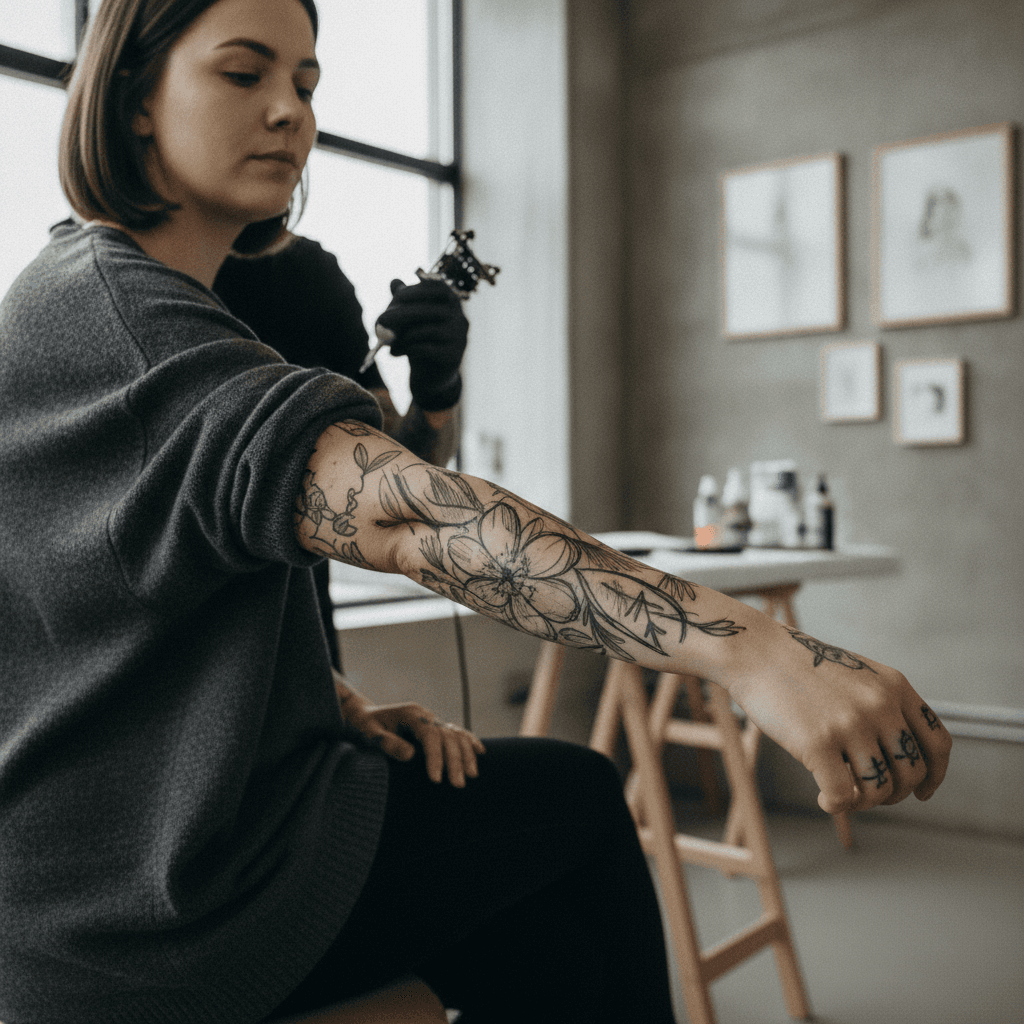
Sketchwork is the tattoo style that keeps the pencil in the drawing. Instead of clean, closed outlines and polished fills, the artist leaves visible construction lines, cross-hatching, and the kind of "unfinished" edges you would see in a sketchbook study. It reads as art on skin rather than a graphic decal, and that is exactly why it has quietly become one of the most requested looks in modern studios.
This guide covers what defines sketchwork as a distinct style, how it compares to fine-line and blackwork, what artists actually charge, which placements hold up best, and what to expect when a sketchwork piece heals.
What defines sketchwork as a style
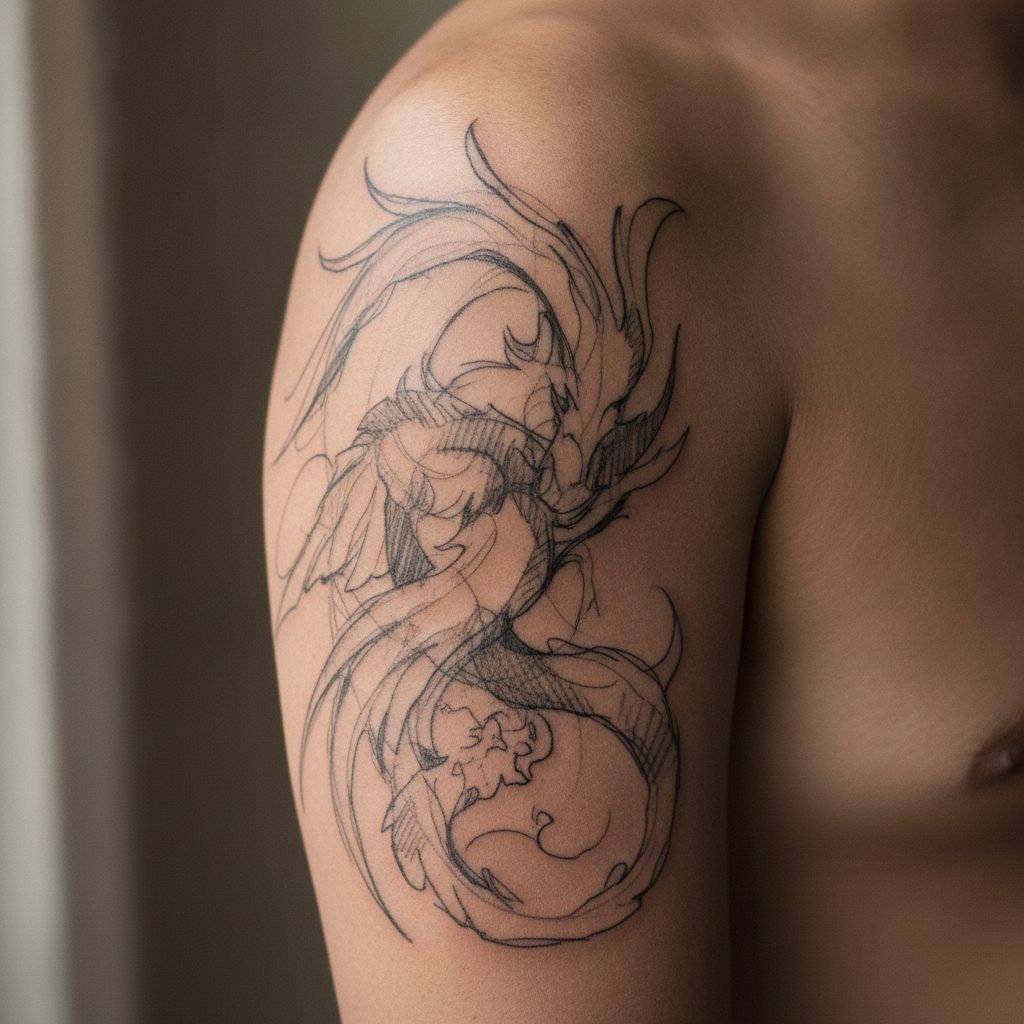
Sketchwork tattoos borrow their visual language from pencil and charcoal drawings. The core traits are open linework instead of closed shapes, layered strokes that repeat and cross rather than sit as one clean contour, and intentional gaps between marks that let skin show through. Shading is done with cross-hatching, stippling, or loose scribbles rather than solid packed black or smooth grey wash. The finished piece looks like a page torn out of a working sketchbook, not a rendered illustration.
Most sketchwork sits in black ink, though some artists mix in a single accent color to imitate a highlighter or a swipe of watercolor. The style is closely related to illustrative tattooing but distinct in one important way. An illustrative tattoo usually resolves into a finished picture. A sketchwork tattoo intentionally does not resolve, and the "process" marks are part of the design language.
Because so much of the effect comes from restraint, sketchwork is one of the styles where the artist matters more than the reference. A tight technical tattooer can make a sketchwork rose look fussy and closed. A looser hand can make the same subject feel alive.
Sketchwork vs fine-line vs blackwork
Sketchwork sits between fine-line and illustrative in visual weight but has a very different intent. Fine-line prioritizes a single clean contour with minimal shading. Sketchwork prioritizes the appearance of many lines searching for the right one. Fine-line reads as delicate and jewelry-like. Sketchwork reads as raw and expressive.
Against blackwork, the comparison is almost the opposite. Blackwork depends on solid saturated fills and hard graphic contrast. Sketchwork depends on airy negative space and broken texture. A blackwork piece looks strongest when the fills are perfectly packed. A sketchwork piece looks strongest when the fills are deliberately incomplete.
The practical takeaway when picking a style. If you want longevity and boldness on the skin, go blackwork. If you want elegance and precision, go fine-line. If you want something that feels drawn rather than printed, sketchwork is the honest answer.
Needle setups and technique
Sketchwork is usually built with small round liner groupings, most often 3RL or 5RL, and a small round shader like a 7RS for the hatching passes. Some artists work single-needle for the tightest hatch marks, then switch to a 5RL for structural lines and a small mag like a 7M1 for any looser wash areas. Machines are almost always modern rotaries running low voltage for a soft line, since the whole style depends on lines that look tentative rather than aggressive.
Ink is standard black, thinned in some cases for a lighter grey pass on secondary hatching. Reputable artists lean on brands like Fusion, Solid Ink, or Dynamic Black. Grey wash sets from World Famous or Kuro Sumi show up when the artist wants to build depth with a second value rather than pure black.
Session time depends heavily on how much visible hatching the design carries. A palm-sized sketchwork animal typically takes three to five hours in one sitting. An A5-sized composition with dense cross-hatching can push into two sessions of four hours each. The style is faster than heavy blackwork of the same size but slower than a pure fine-line piece because every hatched area is many individual passes rather than one packed fill.
What sketchwork tattoos cost
Sketchwork pricing follows the same structure as any custom modern style. Most artists in the United States charge $150 to $250 per hour, with well-known sketchwork specialists in New York, Los Angeles, London, and Berlin charging $250 to $400 per hour. Studio minimums for a small sketchwork piece typically fall between $150 and $200. For a full breakdown of how shops set their rates, see the tattoo pricing explained guide.
Rough pricing you can expect for a sketchwork piece.
- Small sketchwork motif, 2 to 3 inches, one to two hours: $200 to $500
- Palm-sized subject with hatching, three to five hours: $500 to $1,200
- Forearm-length composition, one full session of six to eight hours: $1,000 to $2,500
- Half-sleeve sketchwork build with a full concept, two to three sessions: $2,000 to $5,000
Custom design fees, deposits, and travel surcharges for guest artists apply on top. If you are booking a well-known sketchwork name on a guest spot, expect a non-refundable deposit of $100 to $300 and a firm minimum on the day.
Placement and longevity
Sketchwork ages differently than a solid-fill tattoo because so much of the design depends on thin, isolated marks. Those individual hatch lines can soften and bleed slightly over five to ten years, which some collectors actually prefer because the piece drifts even closer to a real pencil drawing. That said, placement matters more here than in almost any other style.
The best long-term placements for sketchwork are areas with stable skin and low friction. Outer upper arm, outer forearm, thigh, calf, and upper back all hold sketchwork cleanly for a decade or more with normal aftercare and consistent sunscreen. Ribs and sternum work visually but tend to blur faster because of stretch. Hands, fingers, and feet are the worst choice for sketchwork specifically. The looseness of the linework combined with heavy friction and constant washing turns a crisp hatch into a smudge within two to three years.
If you want a heavily hatched sketchwork piece and you know you want it to stay readable for fifteen-plus years, ask your artist to leave the darkest structural lines slightly heavier than the reference. Those anchor lines will carry the design even if the finest scribbles soften.
Healing a sketchwork tattoo
Healing is roughly the same as any modern black-ink piece, but a few quirks are worth knowing. Because sketchwork lines are thin and often layered, the scab pattern can look more textured during days three to seven. That crusty patchwork appearance is normal and does not mean lines are dropping out. Do not pick, and do not exfoliate. Follow the standard tattoo healing timeline day by day for expectations at each stage.
Two aftercare notes are specific to this style. First, moisturize sparingly. Over-lotioning a heavily hatched piece can cause the fine cross-hatch lines to look muddy for the first week because the film of lotion pools between marks. A pea-sized amount two or three times a day is enough. Second, avoid heavy sun exposure for the first three months, then use SPF 30 or higher on the piece for life. Fine hatched lines fade under UV faster than solid fills, and consistent sunscreen is what preserves the drawn quality long term.
Expect the final settled look at around eight weeks. If any anchor lines dropped out, a single free touch-up appointment is standard practice at most studios within three months of the original session.
Frequently asked
Is sketchwork good for a first tattoo? Yes, if the piece is small to medium and placed somewhere stable like the outer forearm or upper arm. Sketchwork is not more painful than any other black-ink style at the same placement. The main first-timer consideration is picking an artist who actually specializes in the style, since sketchwork done by a fine-line artist can look tentative rather than intentional.
Does sketchwork cost more than fine-line? Usually a bit more per piece. Fine-line finishes faster because the design resolves into one clean pass. Sketchwork carries more hatching time, so a same-sized piece often runs one to three hours longer, which shows up in the final price.
Can sketchwork be done in color? It can, and some artists add a single accent color to imitate a marker or watercolor swipe. Full-color sketchwork is rare because color pigments cover the drawn texture that makes the style work. If you want color, ask for a single accent rather than fully colored fills.
How long does a sketchwork tattoo take to heal? Surface healing takes two to three weeks. Full deep healing takes about six to eight weeks. The textured scab appearance during week one can look alarming but is normal for hatched styles. Do not exfoliate or pick.
Will sketchwork blur over time? Yes, slightly, and that is part of the style's charm for many collectors. Thin hatch lines soften over five to ten years, giving the piece the look of a real aged drawing. Solid anchor lines and good sun protection keep the composition readable long term.
How do I find a real sketchwork artist? Search portfolios for pieces where the linework is intentionally open and hatched, not just fine-line pieces mislabeled as sketchwork. A real specialist's feed will show consistent scribble and hatch language across many subjects, not just one trendy design.