aftercare
Ibuprofen After a Tattoo: What's Safe and What Slows Healing
Ibuprofen thins blood and can push ink out of a fresh tattoo. Here's what to take for pain and swelling without stalling your heal.

A fresh tattoo throbs. By hour six most people are reaching for whatever's in the medicine cabinet, and the default grab is usually ibuprofen. That's the wrong first choice. Ibuprofen, aspirin, and naproxen all thin the blood, and in the first 24 to 48 hours after a tattoo that means slower clotting, more plasma weep, and in some cases ink loss as the skin struggles to seal. This guide walks through what's actually safe to take, when the rules relax, and how to manage pain and swelling without compromising the piece you just paid for.
Why ibuprofen is a problem on day one
Ibuprofen, aspirin, naproxen, and the rest of the NSAID family work by blocking prostaglandins, which also happen to be part of how your blood clots. A tattoo is a controlled wound. The needle punctures the skin somewhere between 50 and 3,000 times per second during the session, and the hours after you leave the studio are when the body is trying to form a fibrin seal across the surface and start the healing cascade. Thin that blood and you get three predictable problems: longer bleeding, more weeping, and visible ink loss as plasma pushes pigment back out through unsealed microchannels.
Studies on perioperative NSAID use consistently show increased bruising and prolonged bleeding time, and tattoo artists see the same pattern anecdotally. If a client takes 400 mg of ibuprofen before a session, the artist usually knows within the first fifteen minutes because the skin bleeds more than it should and the ink refuses to sit. The same mechanism applies after. Taking NSAIDs in the first 48 hours of healing increases weeping, delays the scab, and in heavily shaded or saturated color areas can produce patchy spots that need a touch-up. The pain feels better. The tattoo looks worse.
What's actually safe to take
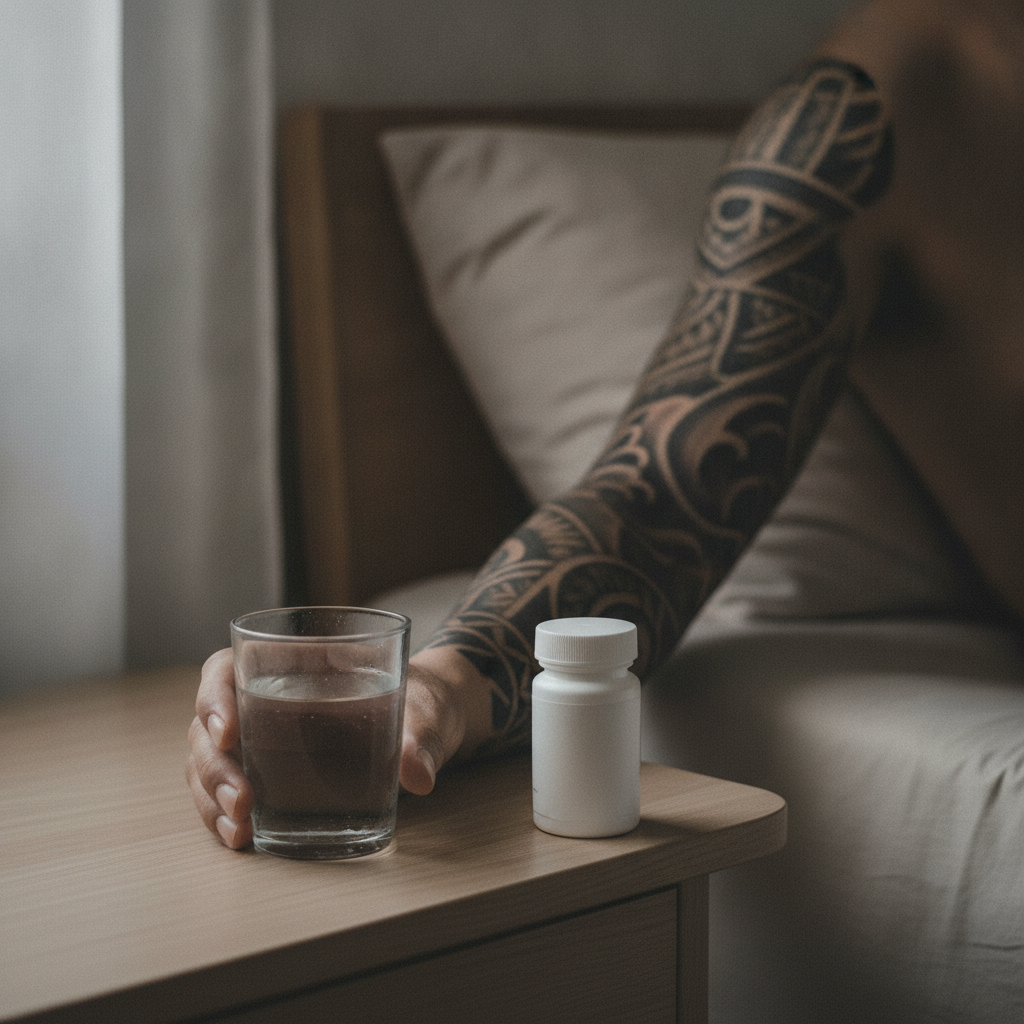
Acetaminophen, sold as Tylenol in the US and paracetamol everywhere else, is the standard recommendation for tattoo pain. It controls pain through a different pathway and does not affect clotting or inflammation at the wound site. For a standard adult the dose is 500 to 1,000 mg every six hours, with a hard ceiling of 4,000 mg in 24 hours. Most people get real relief at 650 to 1,000 mg per dose. If you drink alcohol regularly or have any liver history, cap yourself at 2,000 mg per day and talk to your doctor before dosing on a schedule.
A few other options are also fine. Topical numbing creams used before the session (lidocaine 4 to 5 percent) do not carry over into healing. CBD creams and topical arnica are popular, do no harm, and have thin evidence of helping with bruising. Simple cold packs applied over the bandage, not directly on fresh skin, bring down swelling in the first 24 hours without touching the clotting system at all. Rest, elevation, and water do more than most people give them credit for.
- Safe from hour one: acetaminophen, cold packs over the bandage, elevation, hydration
- Avoid for 48 hours: ibuprofen, aspirin, naproxen, diclofenac, any NSAID
- Avoid entirely in week one: alcohol, which also thins blood and dehydrates skin
- Fine after 48 to 72 hours: a single ibuprofen dose for a specific flare, if acetaminophen isn't cutting it
When the NSAID rule relaxes
The 48 hour window is the strict one. By day three the fibrin seal is set, the initial weeping is done, and ibuprofen stops being able to push ink out because there's no open channel for it to exploit. From day three onward, if you have a specific pain flare, a swollen joint area that's genuinely bothering you, or a bad sleep night, a single 400 mg dose of ibuprofen is reasonable. It will not undo your healing.
Large pieces that run multiple sessions change the math. If you did a six hour sitting on your ribs and the surrounding tissue is still inflamed on day four, ibuprofen helps the swelling in a way acetaminophen cannot. Just avoid a daily schedule of NSAIDs across the full heal, because reduced inflammation also means slower collagen turnover, and chronic low-grade NSAID use during wound healing has been linked to weaker scar formation in surgical literature. For a full breakdown of what the first two days actually feel like and what to expect hour by hour, see our tattoo aftercare for the first 24 hours and the fuller day-by-day healing timeline.
Managing swelling without pills
Swelling peaks around hour 36 to 48 and tends to be worst on tattoos below the heart. Feet, ankles, calves, and hands puff up more because gravity pools fluid at the wound. The simplest fix is elevation. Prop the limb above heart level for 20 minute stretches throughout the day. Cold packs wrapped in a thin towel, applied over the saran wrap or Saniderm, bring down swelling fast without wetting the tattoo. Keep each cold application to 10 to 15 minutes and leave at least 30 minutes between rounds.
Hydration is the lever most people underuse. Plasma is mostly water, and if you're dehydrated your body weeps more and heals slower. Aim for 3 liters of water on days one and two if you can tolerate it, and cut alcohol entirely for the first week. Sleep matters more than any pill. Growth hormone released during deep sleep is directly involved in skin repair, and most of the real healing happens overnight. Protect your sleep by sleeping on the opposite side, using a clean pillowcase, and taking your acetaminophen dose an hour before bed if the throb is keeping you up. Sleeping with a new tattoo has specific positioning tips by placement.
Painkillers and anesthetics during the session
A separate question that comes up a lot: can you take anything before the session to make it hurt less. The honest answer is mostly no. Topical numbing creams in the lidocaine 4 to 5 percent range do work, applied under occlusion 60 to 90 minutes before the session, but they wear off after the first hour and the back half of a long session hits full strength. Oral painkillers taken before a session are a bad trade. Acetaminophen does almost nothing for the kind of pain a tattoo produces, and ibuprofen or aspirin will cause the bleeding problem described above. Alcohol is the worst option, and most artists will refuse to tattoo you if they smell it on your breath. Eat a real meal, sleep well the night before, and bring sugar for the second hour. For a deeper breakdown of session pricing and session length tradeoffs, see our tattoo pricing explained guide.
One tattoo artist survey from a UK industry publication found that 73 percent of visibly bloody sessions could be traced to pre-session NSAID use or alcohol the night before.
When pain means something is wrong
Most tattoo pain follows a predictable curve. Sharp during the session, hot and throbbing for 24 hours, aching for two to three more days, then intermittent itching through the peel. Pain that gets worse after day three, pain that comes with spreading redness, pain with a fever, or pain with yellow or green discharge is not normal and no painkiller is the right answer. That's a developing infection, and you need to see a doctor within 24 hours. Our full signs of tattoo infection guide breaks down what to watch for and when urgent care is the move.
Allergic reactions can also present as pain and swelling, usually around specific colors (red and yellow pigments are the most common culprits). If the swelling is confined to one color band of the tattoo rather than the whole piece, or if raised bumpy skin develops only in colored areas, that's a pigment reaction and painkillers will not solve it. A short course of oral antihistamines sometimes helps, but a dermatologist visit is the right call.
Frequently asked
Can I take Tylenol and ibuprofen together after a tattoo? After the 48 hour window, yes, acetaminophen and ibuprofen use different pain pathways and are often alternated for stronger pain control. Inside the first 48 hours, stick to acetaminophen alone. The combination offers no benefit over acetaminophen alone during the critical clotting window and still carries the full NSAID bleeding risk.
What about aspirin for pain after a tattoo? Aspirin is the strongest blood thinner in the common OTC lineup and the worst choice in the first week. Even a single 325 mg dose affects platelet function for 7 to 10 days. If you take low-dose aspirin daily for a prescribed cardiac reason, do not stop without talking to your doctor, but tell your tattoo artist in advance so they can plan for more weeping during the session.
Is naproxen (Aleve) better than ibuprofen for tattoo pain? No. Naproxen is also an NSAID and carries the same bleeding risk. It lasts longer in the system (10 to 12 hours per dose versus 4 to 6 for ibuprofen), which actually makes it worse for the first 48 hours because you cannot time it around the critical window.
Can I use CBD oil or topical arnica for tattoo pain and swelling? Topical CBD creams and arnica gels are safe to use on healed skin around the tattoo and some people report they help with bruising and ache. Do not apply either directly on the open wound in the first few days. Both are fine from day four onward on skin surrounding the tattoo, not on top of it.
How long until a tattoo stops hurting completely? Most tattoos stop being actively painful by day three or four. A dull ache can linger through the end of week one, especially on ribs, feet, and anywhere over bone. Itching replaces pain by day five to seven and is a sign the peel is starting. If you are still in serious pain at day five, something is wrong and you need to check for infection or allergic reaction.
Does drinking water really help with tattoo pain? Yes, more than people expect. Dehydration thickens plasma, slows healing, and makes nerve endings fire more. Three liters of water on day one and two meaningfully reduces throbbing for most people. It's the cheapest intervention available and the one most undercooked by people reaching for pills first.