cost guides
Finger Tattoo Cost: What You Pay and Why They Fade
Finger tattoo cost runs $80 to $300 for most simple designs, but the real price is paid in fade rate and touch-ups. Here is what to expect.

Finger tattoos almost always cost more than the size suggests. A design the width of a postage stamp will still trigger a shop minimum, and the skin on your fingers behaves so differently from a forearm that many artists charge a premium just to take the job. Expect to pay $80 to $300 for a simple single-finger piece, $200 to $500 for matching pairs across both hands, and to budget a touch-up within twelve to eighteen months no matter what you spend up front.
What a finger tattoo actually costs in 2026
Most reputable shops in the US, UK, and Australia price finger tattoos at the shop minimum, which sits between $80 and $200 depending on the city. In New York, Los Angeles, London, and Sydney the floor is closer to $150 to $250 because rent and licensing push every job upward. A single word in fine-line script, a small symbol on the side of one finger, or a tiny line drawing on the knuckle will all land at minimum, even though the ink itself takes ten to twenty minutes to lay down. You are paying for the setup, the consultation, the sterilization, and the artist's time slot, not the ink count.
Larger or more detailed pieces move off minimum quickly. A full-finger band, a small ornamental ring design that wraps around, or a knuckle set across four fingers will run $200 to $500 because the artist needs to map the design to the curve of the finger and work around tendons and joints. Across both hands for a coordinated set, $400 to $800 is normal at mid-tier shops, and $800 to $1,500 at established studios with two-month waitlists. Color finger tattoos cost roughly 20 to 30 percent more than black-and-grey because the artist knows they will be retouching the color work sooner.
Why fingers fade faster than anywhere else
The skin on your fingers is structurally different from the rest of your body, and this is the single biggest factor in finger tattoo pricing. The epidermis on the sides and tops of fingers turns over every two to four weeks, much faster than the four-to-six-week cycle on forearms or backs. Your hands also see more UV exposure, more friction, more soap, more dish water, and more sanitizer than any other part of your body. All of that physical and chemical stress pushes ink particles up and out of the skin, where they break down or get sloughed off entirely.
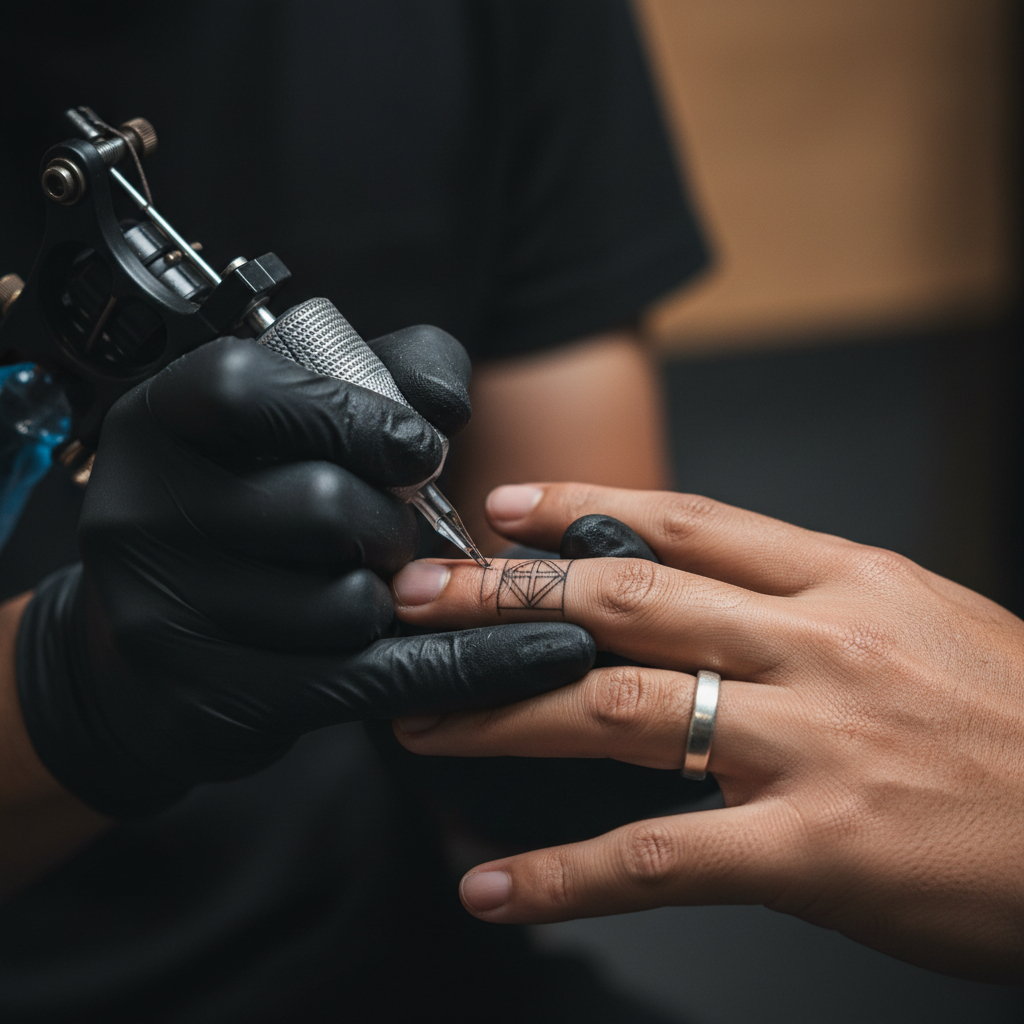
Palm-side and finger-pad tattoos fade fastest of all. The thick stratum corneum on the palm side regenerates aggressively and rejects ink in a matter of weeks. Many experienced artists refuse palm and finger-pad work entirely because the result will look smudged or gone within three to six months and clients tend to blame the artist regardless. If you want a design on the inside or pad of your finger, expect either a flat refusal or a clear policy that no free touch-ups are offered. Read our piece on how long tattoos last by placement for a fuller comparison.
The touch-up math nobody mentions
The sticker price is only part of the cost. Plan on at least one touch-up within the first year and another within three years, and possibly more if you work with your hands. A first touch-up at the same shop is often free within 30 to 90 days, which only covers settling issues like minor patchiness from healing. A real touch-up at month six or month twelve is a separate appointment that runs $50 to $150 in addition to the shop minimum if any new linework is needed. Over a five-year period, a $150 finger tattoo can easily cost $400 to $600 total.
- First-year touch-up (settling): often free if within 30 to 90 days
- 6 to 12 month touch-up (genuine fade): $50 to $150 plus minimum
- Annual maintenance after year two: $80 to $200 per session
- Full re-line at year three to four: $150 to $350
If you are not willing to budget for that ongoing work, finger tattoos are not the right placement for you. Choose a wrist, an inner forearm, or an upper-arm spot instead. Our first tattoo placement guide covers the placements that age the best.
Why some artists charge a premium and others won't take the job
Finger tattoos are technically demanding in a way that surprises clients who assume small means easy. The skin is thin, taut, and uneven, with constant micro-movement from tendon shift. Lines blur quickly if the needle goes too deep, and the ink drops out within weeks if it goes too shallow. The window for correct depth on a finger is roughly half what it is on a forearm. Artists who specialize in fine-line and micro work charge $20 to $50 above their normal rate for finger jobs because the failure rate is higher and the reputation risk if a client posts a faded result is real.
Plenty of well-known artists refuse finger work entirely or only take it for established clients. If you are turned away, it is not a personal rejection. It is a quality control decision. Shops that take walk-ins for $60 finger tattoos exist, and the work usually fades to a grey smudge inside a year. The cheap option is not actually cheap once you factor in the rework or the cover-up.
A faded finger tattoo is not a sign the artist failed. It is the default outcome for that placement, and pricing that ignores this is dishonest.
What changes the price most
Three variables move finger tattoo cost more than anything else: the design complexity, the city, and the artist's tier. A single small symbol at a $120 shop minimum in a mid-sized US city looks nothing like the same piece at a $300 minimum in central London, and a piece by an artist with a two-month waitlist will run two to three times the price of the same piece by a junior artist at the same studio. Color, white ink, and any kind of fine shading also push the price up because each adds passes and increases the touch-up commitment.
A few specifics worth pricing in before booking:
- Inside of finger or palm side: many shops decline. If accepted, expect $150 to $250 with no touch-up guarantee.
- Ring-finger band: $150 to $400 depending on detail and whether it wraps fully.
- Knuckle lettering across four fingers: $300 to $700, often split across two sessions.
- Matching couple finger tattoos: $200 to $500 for the pair, plus separate touch-up budgets for each person.
- White ink on fingers: usually refused. If accepted, expect rapid fade and no warranty.
For broader pricing context, our tattoo pricing explainer breaks down the structure of hourly versus flat-rate work.
Frequently asked
Why is a tiny finger tattoo so expensive? Shop minimums exist because every job has fixed setup costs: a fresh needle, ink, gloves, station prep, consultation time, and the booked slot. A 15-minute tattoo blocks the same slot as a 90-minute one when it comes to room turnover and sterilization, so shops cannot afford to price by size alone.
Will my finger tattoo really fade that fast? Most do. Black-and-grey linework on the top or side of a finger holds reasonably well for two to four years before needing a touch-up. Palm-side, finger-pad, and white ink fade within months. Color sits between those extremes. If a tight, dark result matters to you long-term, plan and budget for ongoing work.
Is it cheaper to get matching finger tattoos with a partner at the same appointment? Sometimes. Some shops bundle paired finger work at 1.5 times the single price rather than double, especially if the design is identical. Always ask up front, and confirm both people get the same artist. Splitting the work across two artists for time savings usually voids the discount.
Can I get a finger tattoo as my first tattoo? Technically yes, but most experienced artists will advise against it. Fingers heal awkwardly, fade visibly, and give a new client a frustrating first experience. A wrist, inner forearm, or shoulder gives a much more representative result. If you are set on a finger placement, our first tattoo prep checklist is worth a read.
Does insurance or a deposit work differently for finger tattoos? Deposits work the same as any other booking and usually run $50 to $100 against the final price. What is different is the touch-up policy. Many shops will not warranty finger work the way they warranty forearm or shoulder work because the failure rate is placement-driven, not artist-driven. Read your shop's policy in writing before booking.