aftercare
Tattoo Aftercare for Sensitive and Eczema-Prone Skin
Sensitive and eczema-prone skin needs a stricter tattoo aftercare routine. Here is the fragrance-free, low-friction plan that keeps lines crisp and flare-ups quiet.
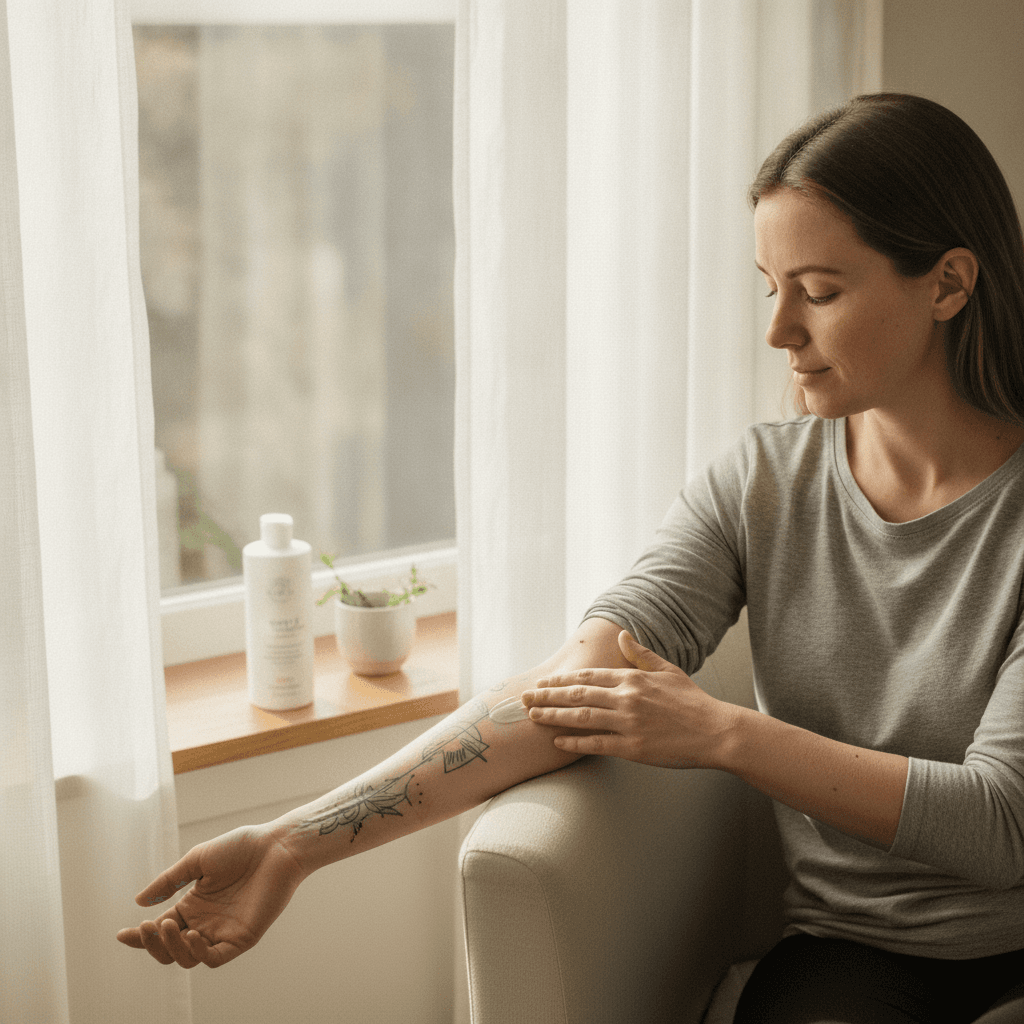
Sensitive and eczema-prone skin reacts to things most people never notice. Fragrance, lanolin, a slightly rough bandage, a hot shower. A fresh tattoo is already a controlled wound, so stacking that on top of reactive skin changes the aftercare math. The goal is simple. Keep the piece clean, keep the barrier calm, and avoid every trigger that would turn healing into a flare.
Why reactive skin heals a tattoo differently
Eczema, atopic dermatitis, and general sensitive skin all share a weaker skin barrier. The outer layer loses water faster, lets irritants in more easily, and reacts with redness, itching, or small weeping patches. A tattoo injures the epidermis and upper dermis in a controlled grid of needle passes, which forces the barrier to rebuild while it is already compromised. On calm skin that process runs for 10 to 14 days on the surface and up to a month underneath. On reactive skin you can see visible healing stretch to 3 or 4 weeks and the itch phase hit harder around days 5 through 10.
The practical consequence is that your margin for error shrinks. A fragranced lotion that only mildly annoys a friend will give you a rash that lifts ink while scabs form. Soap with sulfates can strip the barrier enough to turn a healing tattoo cloudy in the first week. Sweat trapped under a sticky second-skin bandage can trigger contact dermatitis around the piece in under 48 hours. None of these ruin a tattoo on its own, but on your skin they stack fast.
Pre-session prep that pays off later
Reactive skin benefits from a quiet two weeks before the appointment. Keep the area moisturized with your usual fragrance-free routine, do not try a new product in that window, and avoid shaving the area roughly in the 48 hours before you sit down. Micro-cuts raise flare risk. If you are mid-flare on the planned placement, reschedule. Tattooing active eczema is a bad idea even if the artist is willing, because the inflamed skin heals unpredictably and the lines can migrate.
Tell your artist about your skin before you book. Ask what bandage system they use. Many studios default to Saniderm, Tegaderm, or a generic medical adhesive film, and the adhesive is the single most common reactive-skin trigger in the first week. A good artist will swap to a traditional cling-wrap-and-tape wrap for a few hours only, or send you home with no second-skin at all and clear washing instructions. You can also patch-test the film they use on your inner forearm 48 hours before the session.
- Patch-test the bandage adhesive 48 hours ahead on reactive skin.
- Stop retinoids and exfoliating acids on and near the placement for a week.
- Hydrate normally in the days before. Hydrated skin takes ink more evenly.
- Bring your own fragrance-free soap and balm to the appointment.
The first 48 hours
The initial wrap stays on for the window your artist specifies. For traditional cling wrap that is 2 to 4 hours. For medical film it is usually 24 hours, sometimes stretched to a few days, but reactive skin should pull early. If you feel burning, itching along the adhesive edge, or see redness that extends past the tattoo outline, remove the film in the shower under lukewarm running water. Do not peel it off dry. The pull on sensitized skin can trigger a histamine response and leave you itching for days.
Wash with a fragrance-free, sulfate-free liquid cleanser. Cetaphil Gentle Skin Cleanser, Vanicream Gentle Facial Cleanser, and CeraVe Hydrating Cleanser all work. Avoid bar soaps with sodium tallowate, Dove sensitive bars included, because the surfactant residue clings to reactive skin. Pat the area with a clean paper towel. Air-dry for 10 minutes. Apply a thin layer of a plain petrolatum product like plain Vaseline or Aquaphor only if you tolerate lanolin. If you have ever reacted to Aquaphor before, skip it and use plain white petrolatum instead.
Days 3 to 14: the itch phase
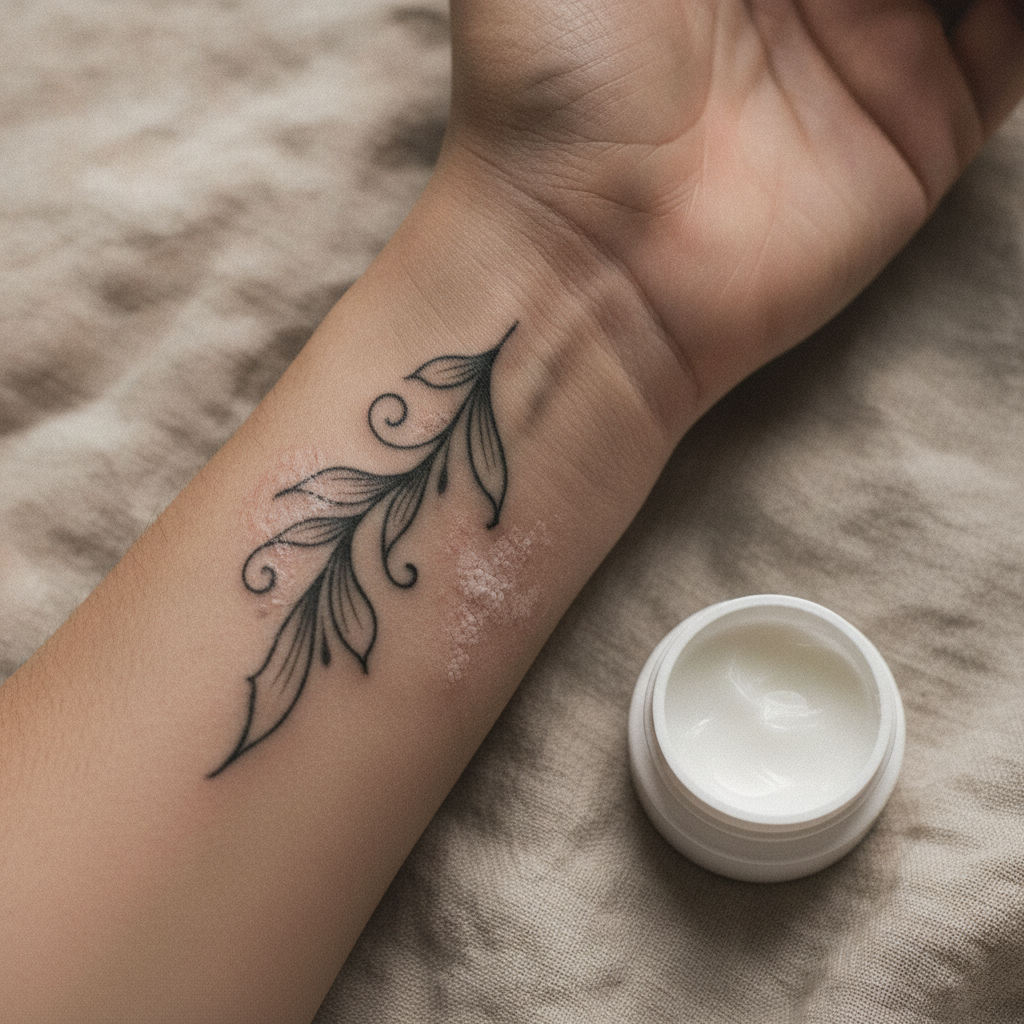
This is the hardest window for reactive skin. The tattoo starts to flake and the surrounding area often itches more than the piece itself. Switch from petrolatum to a fragrance-free, dye-free, lanolin-free lotion once the surface is no longer weeping, usually day 3 or 4. Vanicream Moisturizing Cream, La Roche-Posay Lipikar Baume AP+M, Avene Cicalfate+, and Eucerin Advanced Repair are reliable picks. Apply thinly, 3 to 4 times a day. Thick layers trap heat and sweat, which is a direct eczema trigger.
Do not scratch. Pat, slap gently, or press a cold damp paper towel over the itchy area for 20 seconds. If the itch is driving you to the edge, an oral antihistamine like cetirizine or loratadine is safe and takes the edge off without touching the tattoo. Topical hydrocortisone 1% is a last resort, used sparingly on the skin around the tattoo but never on the tattoo itself, because steroids can slow healing and affect pigment settlement in the first two weeks. If you need hydrocortisone for more than 3 days, call your dermatologist. Peeling at this stage is normal and does not mean the piece is lifting.
Signals a flare has started
Reactive skin gives you warning signs before a full flare. Learn them and act early. Early intervention is the difference between a 2-day calm-down and a 2-week derailment.
- Spreading redness that extends more than 1 cm past the tattoo outline.
- Fine bumpy texture around the piece that was not there yesterday.
- Itch that is worse at night and in a wider ring than the tattoo itself.
- Weeping that returns after day 4, especially clear or yellow fluid outside the tattoo lines.
- Burning sensation under the bandage or under a fresh lotion application.
If you see two or more of these, stop the current product immediately. Rinse the area with cool water, pat dry, and leave the skin bare for 2 hours. Reapply plain petrolatum only. Watch for 24 hours. If the signs calm, resume aftercare with a different lotion. If they intensify, add fever, or spread as streaks away from the tattoo, that crosses into possible infection and needs a same-day medical opinion. Infection and allergic reaction can look similar on day 5, and a nurse or dermatologist can tell them apart in 5 minutes.
Long-term care once healed
Reactive skin keeps the tattoo looking better for longer if you commit to two habits. First, daily moisturizing of the placement with your usual fragrance-free routine. A hydrated barrier scatters light less, which keeps blacks reading dark and color reading saturated. Second, SPF 30 or higher on every exposed tattoo on every sunny day, year-round. Mineral sunscreens with zinc oxide are the safest option for sensitive skin and the kindest to healed ink. Long-term sun protection is the single biggest factor in how a tattoo ages on any skin type, and it matters more when your skin flares and remodels unevenly.
Expect occasional eczema flares on or near old tattoos for years after the piece is healed. This is normal and does not usually damage the ink. Treat the flare the way you treat it anywhere else, with your prescription or over-the-counter protocol, and avoid picking at the raised, itchy skin over the tattoo. If a flare keeps recurring on the exact tattoo placement, mention it to your dermatologist. Rarely, people develop a delayed allergic reaction to a specific pigment, most often red or yellow, and that is a conversation worth having with a specialist rather than a tattoo artist.
Frequently asked
Can I get tattooed if I have eczema? Yes, as long as the placement is clear of active eczema and you are not mid-flare on the day. Pick a season when your skin tends to be calmer, often late spring or early fall for most eczema patterns. Tell the artist about your condition and your usual triggers before you book.
Is Aquaphor safe for sensitive skin aftercare? It is safe for most people, but Aquaphor contains lanolin, which is a known contact allergen. If you have reacted to lanolin before, use plain white petrolatum instead. Both do the same job of sealing moisture into healing skin.
What should I avoid putting on a healing tattoo with reactive skin? Fragranced lotions, essential oils, coconut oil on the tattoo itself, A+D ointment with fragrance, Neosporin, and anything marketed as a tattoo balm that lists more than 6 ingredients. The ingredient-list rule is a reliable shortcut. Fewer ingredients, fewer chances to react.
Can I take a bath during healing if I have eczema? Avoid soaking the fresh tattoo for the full 2 to 3 weeks of surface healing. If baths are part of your eczema routine, keep the tattoo out of the water or cover the placement loosely with cling wrap. Short, lukewarm showers are fine from day 2 onward.
When should I call a doctor instead of my artist? Call a doctor if you have a fever, spreading red streaks away from the tattoo, pus, or a rash that is getting worse 24 hours after you stopped the suspect product. Tattoo artists are experts on tattoos, not on skin disease. A dermatologist or urgent care clinician is the right call when a reaction overlaps with a possible infection.
Does eczema affect how a tattoo ages? Mildly. Repeated flares in the exact area can thicken the skin slightly over years, which can soften very fine lines on micro-realism or single-needle work. For bolder styles the effect is barely noticeable. Keeping flares controlled with your normal eczema routine is the main lever for how the tattoo ages.