aftercare
Tanning After a Tattoo: Sun, Beds, and Color Fade
Tanning after a tattoo can blister fresh ink and fade healed pieces by 30 percent or more. Here is when sun, beds, and SPF actually become safe.
Tanning after a tattoo is one of the fastest ways to wreck a piece you just paid for. Fresh ink sits in skin that is essentially an open wound, and UV light hits it like a heat lamp on wet paint. Even fully healed tattoos lose sharpness and color depth every season they go unprotected. This guide walks through the actual healing timeline, what the sun and a tanning bed do differently, and the SPF habits that keep a piece looking new at year ten.
Why fresh tattoos and UV do not mix
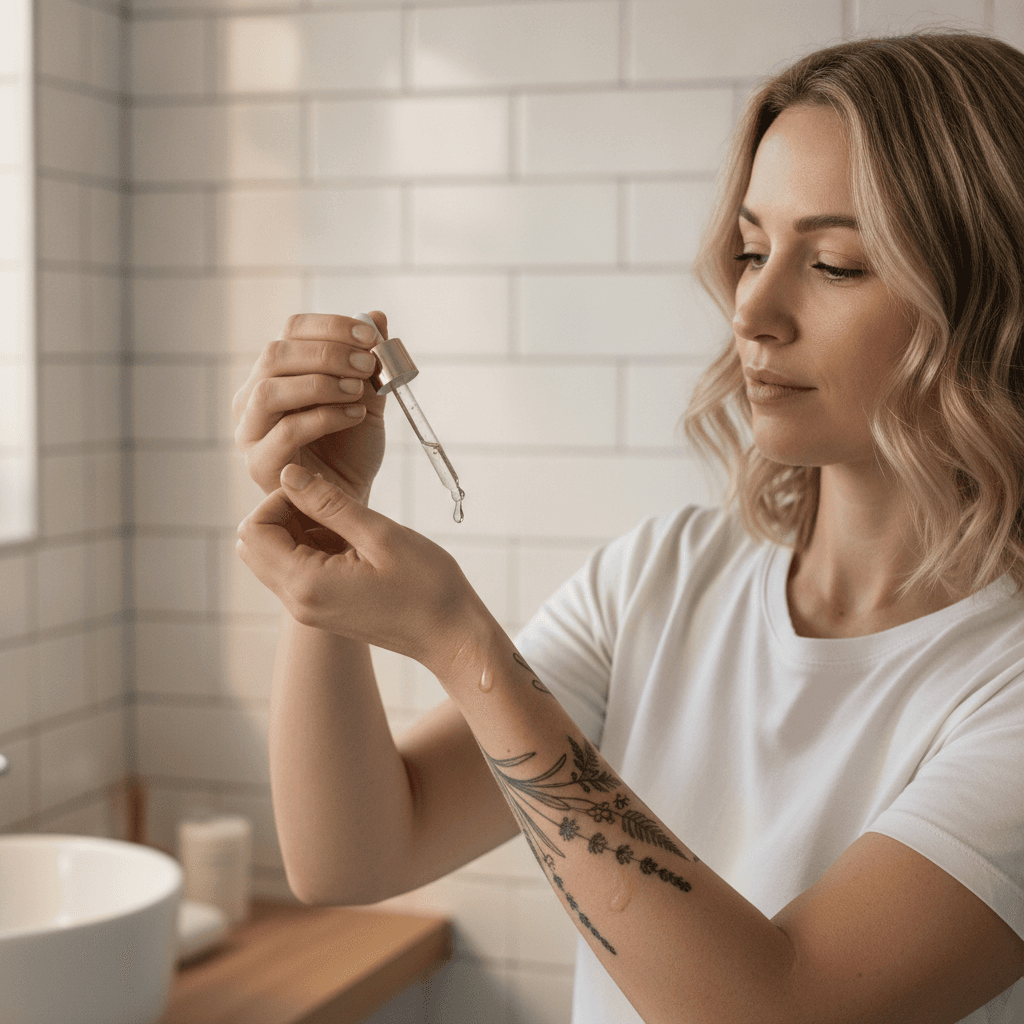
A new tattoo is a controlled wound roughly 1 to 2 millimeters deep, with pigment suspended in the dermis and a damaged epidermis trying to seal over the top. UV-A penetrates through that thin healing layer and breaks down ink particles before the skin has any chance to lock them in place. UV-B burns the surface, which forces extra peeling, scabbing, and pigment loss as the body sheds compromised cells. The result is a tattoo that looks blotchy, washed out, and patchy within weeks instead of years.
Sunburn on a fresh tattoo is also genuinely dangerous, not just cosmetic. The skin is already inflamed and immune-active from the trauma of needles, so a burn on top stacks two inflammation responses and can trigger blistering, plasma weeping, and a real risk of infection. Artists routinely see clients come back from a beach trip with second-degree burns over a healing piece and no salvageable line work. A serious burn here often means a cover-up or partial removal later, both of which cost more than the original tattoo.
Heat alone is part of the problem. UV warms the skin and dilates the capillaries that are still trying to clot under the new ink. That extra blood flow flushes pigment particles out before the dermal fibroblasts can wall them off, which is the same reason artists warn against hot tubs and saunas for the first month. Cool, dry, shaded skin heals cleanly. Hot, sweaty, sun-exposed skin does not.
The real timeline: when can you tan again
Days 1 through 14 are the no-go window. The tattoo is scabbing, flaking, and rebuilding its top layer, and direct sun on it during this stretch will fade and distort the design. If you absolutely have to be outside, cover the area with loose cotton clothing, not sunscreen. SPF does not belong on broken skin and can clog healing pores or trigger contact reactions to ingredients like avobenzone or oxybenzone.
Days 14 through 28 are the transition window. The top layer has usually closed over and the surface looks matte and slightly shiny, but the deeper dermis is still remodeling. Brief, incidental sun exposure with SPF 50 mineral sunscreen is generally fine, but a full beach day or a tanning session is not. Most artists tell clients to treat this stretch like extended healing and stay out of direct UV when possible. If you check the healing milestones and the tattoo is still flaking or shiny, it is not ready for sun.
After roughly week 4 to 6, depending on placement and skin type, the tattoo is considered surface-healed and you can tan around it with proper SPF. The deeper layers can take 3 to 6 months to fully settle, so even at this stage UV will pull pigment out faster than it would on a year-old piece. The safest rule is simple: until the tattoo looks identical wet and dry, with no shine and no roughness, treat it like it is still healing.
Tanning beds are worse than the beach
Beach sun delivers a mix of UV-A, UV-B, and infrared spread across hours, with breaks for shade and water. A tanning bed delivers a concentrated 95 percent UV-A blast directly onto skin in 10 to 20 minutes, which is exactly the wavelength that breaks down tattoo ink the fastest. Indoor bulbs typically run UV intensity 3 to 6 times stronger than midday sun, and the bed presses the lamps within centimeters of the tattoo with no airflow to cool the skin.
Fresh tattoos in a tanning bed almost always end with visible fading, blurred edges, and uneven color in the first session. Healed tattoos do better but still lose vibrancy noticeably faster than they would in normal sun. Color pieces, white highlights, and pastel work suffer the most. Yellow and red pigments degrade first, then blues and greens, and finally blacks slowly turn a dull blue-grey.
If a tanning bed is non-negotiable, full opaque coverage over the tattoo is the only acceptable approach. That means a fabric patch, athletic tape over zinc oxide, or a dedicated UV-blocking sticker, not just regular sunscreen. Even then, repeated sessions over years will dull the surrounding skin contrast and make the tattoo look less crisp by comparison. Most experienced artists will quietly tell you that regular tanning-bed users and sharp color tattoos do not coexist for long.
Long-term sun habits for healed tattoos
A fully healed tattoo loses roughly 1 to 5 percent of pigment density per year under normal sun exposure, and 10 to 20 percent per year for someone who tans aggressively without SPF. Over a decade, that is the difference between a piece that still reads cleanly and one that needs a touch-up session. Daily mineral SPF 30 on exposed tattoos is the single highest-ROI habit for tattoo longevity, and it costs a few dollars a month.
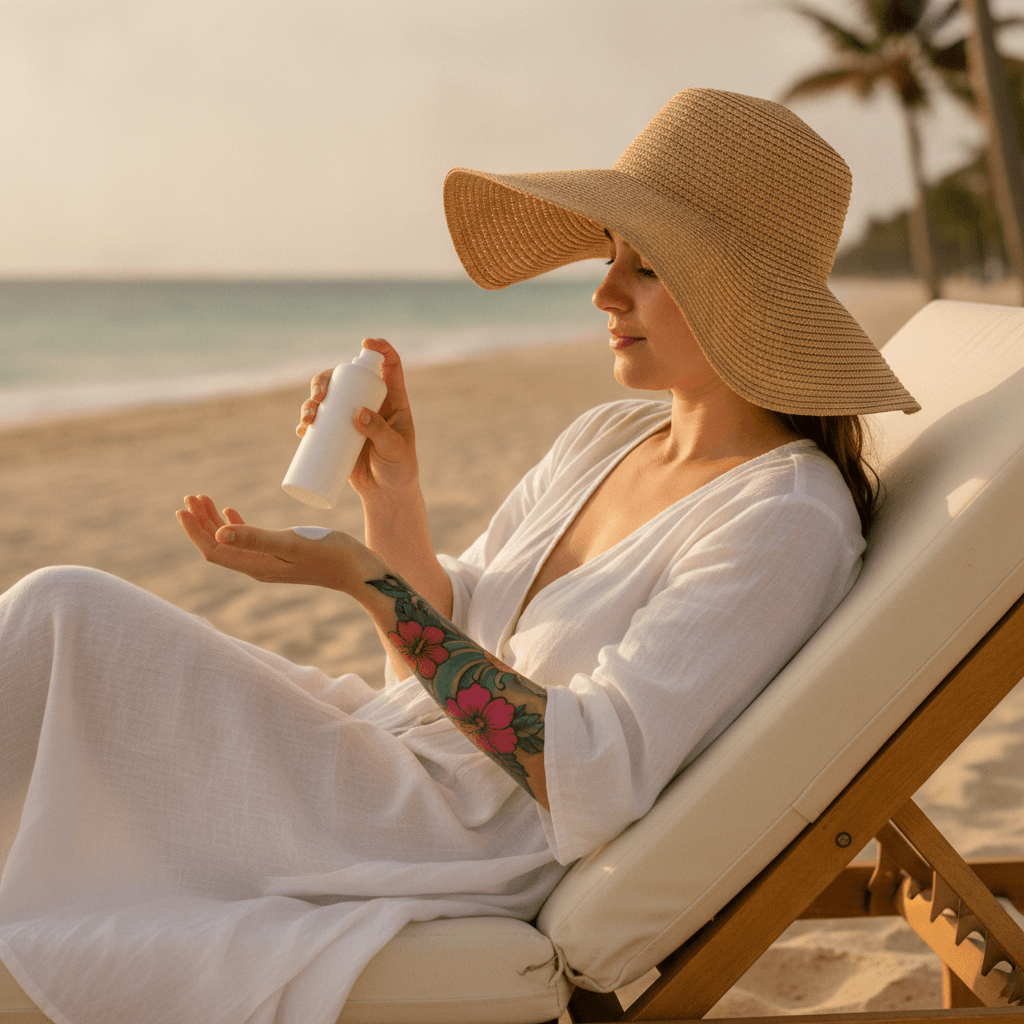
Mineral sunscreens with zinc oxide or titanium dioxide sit on the surface and reflect UV, which is gentler on the ink than chemical filters that absorb light and convert it to heat. For beach or pool days, SPF 50 reapplied every 90 minutes is the realistic standard. Spray sunscreens are convenient but typically apply 30 to 50 percent thinner than lotion, so they need an extra coat or a follow-up rub-in to hit their rated SPF.
- Use SPF 30 mineral daily on any visible tattoo, even in winter or on cloudy days
- Upgrade to SPF 50 for beach, pool, or any session over 30 minutes outdoors
- Reapply every 80 to 90 minutes when sweating, swimming, or toweling off
- Pick zinc-based formulas for color and fine-line pieces
- Wear UPF 50 rash guards or long sleeves on multi-hour sun days
- Avoid tanning beds entirely on healed tattoos you want to last
A 2018 dermatology study tracking tattoo pigment loss over 5 years found that consistent SPF use preserved roughly 70 percent more color density compared to unprotected pieces in the same age and skin-type bracket.
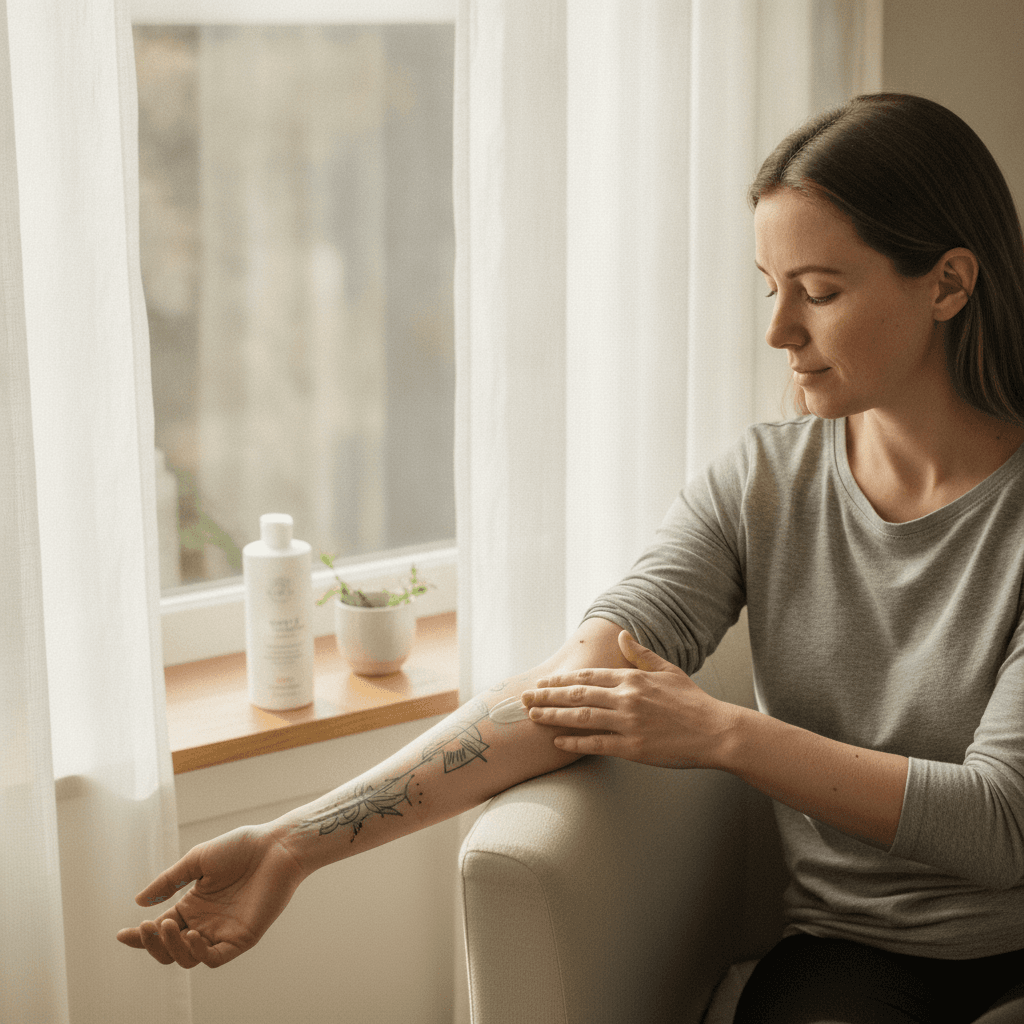
Self-tanners are a much safer alternative if you want color on your skin without UV damage. DHA-based lotions and mousses stain only the outer epidermis, which sheds every 28 days, so they do not reach the dermal layer where the tattoo lives. They are safe over fully healed tattoos and will not fade or shift the ink. Avoid them on tattoos under 4 weeks old, since the unhealed skin can absorb DHA unevenly and leave streaks across the design.
Special cases: color, white ink, and dark skin tones
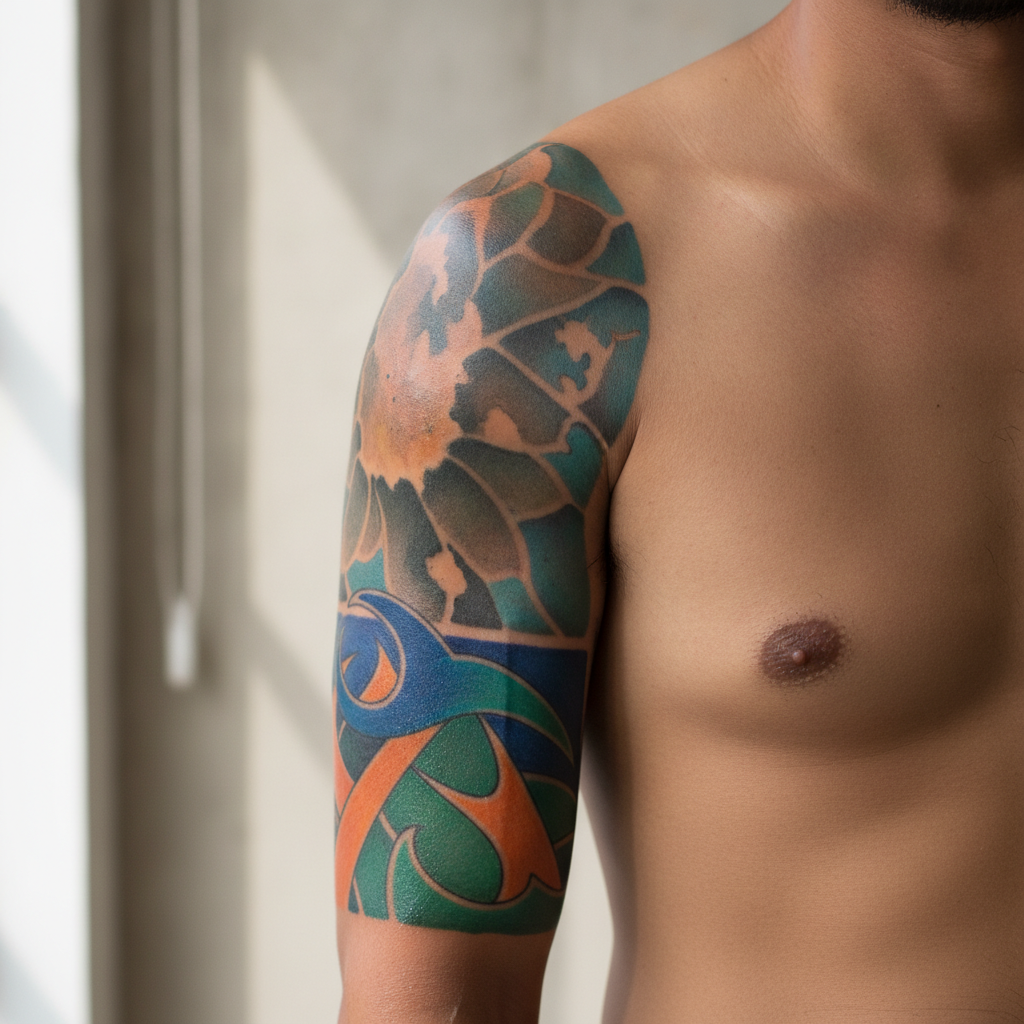
Color tattoos are the most UV-sensitive. Reds, oranges, and yellows use the smallest pigment molecules, which break down fastest in sunlight, and white highlights effectively disappear after sustained sun exposure. If you have a color piece and live somewhere sunny, SPF is not optional. Most artists recommend touch-ups every 5 to 8 years on heavily exposed color work, versus 10 to 15 years on protected color or black-and-grey.
White ink tattoos and white highlights inside larger pieces are essentially titanium dioxide pigment, which is the same compound used in mineral sunscreen. Ironically, that means white ink is more UV-stable than red or yellow, but it yellows and dulls quickly when exposed to body oils, sweat, and repeated sun. Keep white-heavy designs out of tanning beds entirely and use SPF 50 outdoors.
Darker skin tones offer some natural protection through melanin, but tattoos on melanin-rich skin still fade under UV and are often harder to touch up because the pigment contrast is more delicate. Black-and-grey work on dark skin holds up well over decades with SPF use. Color work is more challenging because the skin tone shifts the perceived hue of healing ink, and sun exposure amplifies that shift over time.
Frequently asked
Can I tan with a covered tattoo?
Yes, if the cover is opaque and stays in place through the whole session. Athletic tape, a thick fabric patch, or a UV-blocking sticker over the tattoo will let the rest of your skin tan normally while protecting the ink. Regular sunscreen alone is not enough on a fresh tattoo and is not opaque enough to fully block UV on a healed one in a tanning bed.
How long after my tattoo can I go to the beach?
A minimum of 2 weeks for incidental sun with the tattoo fully covered by clothing, and 4 to 6 weeks before applying SPF directly and exposing it to sunlight. For an all-day beach trip, wait the full 6 weeks and bring a UPF 50 shirt for extra protection. Beach trips in the first month almost always cost color and sharpness later.
Does sunscreen actually prevent tattoo fading?
Yes, and the effect is significant. Studies of tattoo pigment longevity consistently show that protected tattoos retain 60 to 75 percent more color density at the 5 to 10 year mark compared to unprotected pieces. SPF will not stop all fading, but it slows the rate dramatically and pushes touch-ups years further out.
Can I use spray tan on a new tattoo?
Wait at least 4 weeks before spray tanning over a fresh tattoo. DHA does not damage healed ink, but it can stain unhealed skin unevenly and leave permanent-looking streaks across the design until it fully exfoliates. On fully healed tattoos, spray tan is safe and a much smarter choice than UV tanning for long-term tattoo preservation.
What if my tattoo got sunburned during healing?
Cool the area with a clean damp cloth, take an anti-inflammatory like ibuprofen, and skip sunscreen and ointments until the burn calms down. If you see blistering, plasma weeping, or signs of infection, call your artist or a dermatologist within 24 hours. Most sunburned tattoos will need a touch-up after full healing, so save your artist contact and plan for it once the area is back to normal.
Do tanning beds void a tattoo warranty or touch-up policy?
Many artists explicitly exclude sun and tanning-bed damage from free touch-up policies, since UV fading is preventable. Read the studio policy before booking, and assume that any visible tan-bed fading will be charged at full hourly or flat rate to fix. The cost of a touch-up almost always exceeds what a yearly bottle of mineral SPF would have cost.