aftercare
How to Tell When Your Tattoo Is Fully Healed
A practical guide to knowing when your tattoo is fully healed, with the visual cues, timing windows, and tests artists actually use.
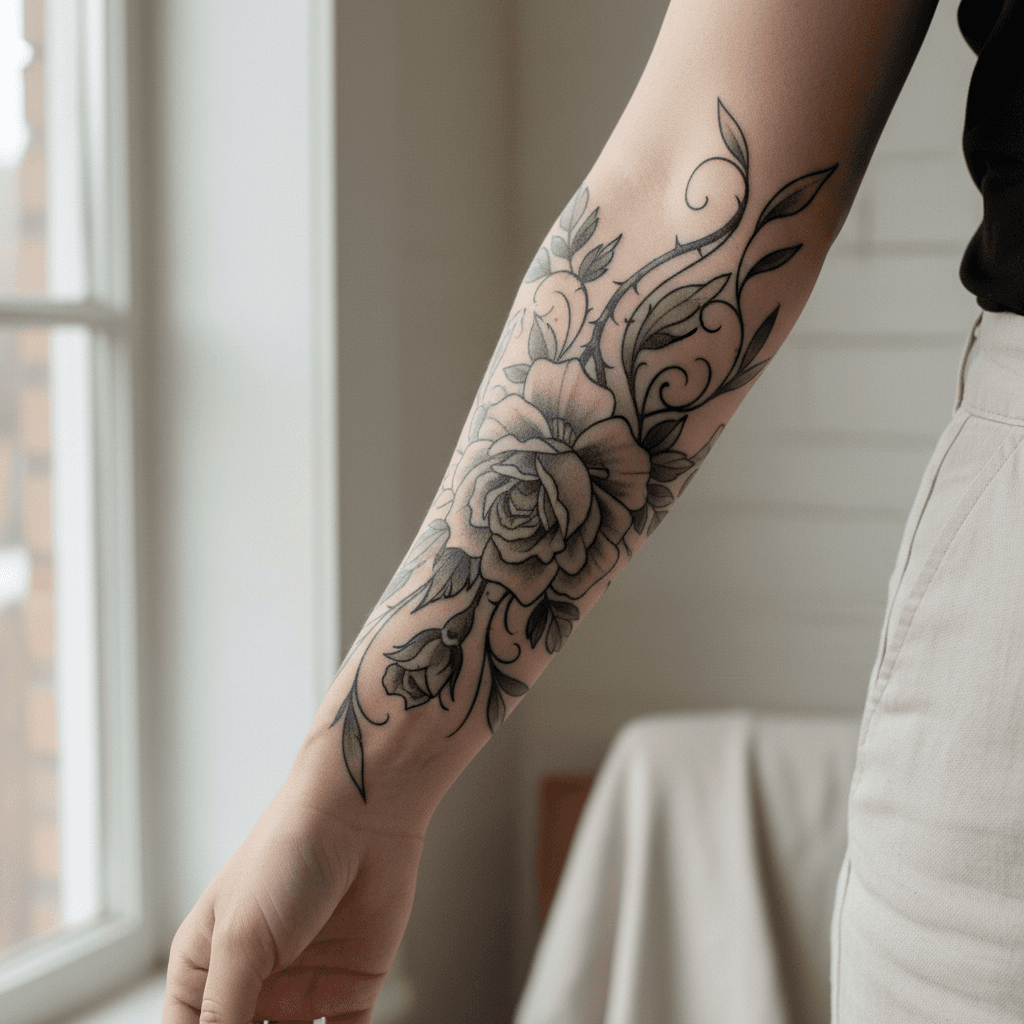
Most people assume a tattoo is healed the moment it stops peeling. That milestone happens around day 14, but the skin underneath is still rebuilding for weeks after the surface looks normal. Knowing the difference matters because it changes when you can sunbathe, swim in chlorinated pools, sit for a touch-up, or lift heavy without risking ink loss. This guide walks through the visual cues, the timing windows, and the simple tests tattoo artists use to confirm full healing.
The two healing layers nobody explains
A tattoo heals on two clocks. The epidermis, the outer skin layer, scabs and sheds in roughly 2 to 3 weeks. The dermis, where the ink actually lives, takes 4 to 6 months to finish its repair cycle. During that longer dermal phase, collagen is still rebuilding around the pigment, blood vessels are still settling, and the skin barrier is still patching microscopic gaps from the needle work. Most aftercare advice covers only the first window because that is when infection risk peaks and when scabs can pull pigment out.
The practical effect of the two-clock model is that a tattoo can look completely healed at 3 weeks and still be vulnerable underneath. A chlorinated pool, a long sunburn, or aggressive exfoliation at week 4 can fade pigment that would have stayed sharp if you waited until week 8. Artists who care about long-term ink retention will tell you to treat the first two months as the real healing window, not the first two weeks. For a full day-by-day breakdown of what to expect in the epidermal phase, see our healing timeline guide.
Visual signs your tattoo is fully healed
The clearest sign is texture. Run a fingertip across the tattoo and across an untouched patch of skin nearby. Fully healed skin feels identical on both. If the tattoo feels raised, slightly rough, or slick in a way the surrounding skin does not, you are not done. Slight elevation can persist for up to 6 weeks on dense color work, and that is normal, but it should taper, not stay flat.
Color is the second cue. A healed tattoo sits at the saturation it will keep long term. The milky, slightly hazy look of weeks 2 through 4, sometimes called the "milky skin" phase, is caused by a fresh layer of epidermis still maturing over the pigment. Once that fades and the lines look as crisp as the day you got the tattoo, the surface is done. Black-and-grey work tends to reach final clarity faster than heavy color packing.
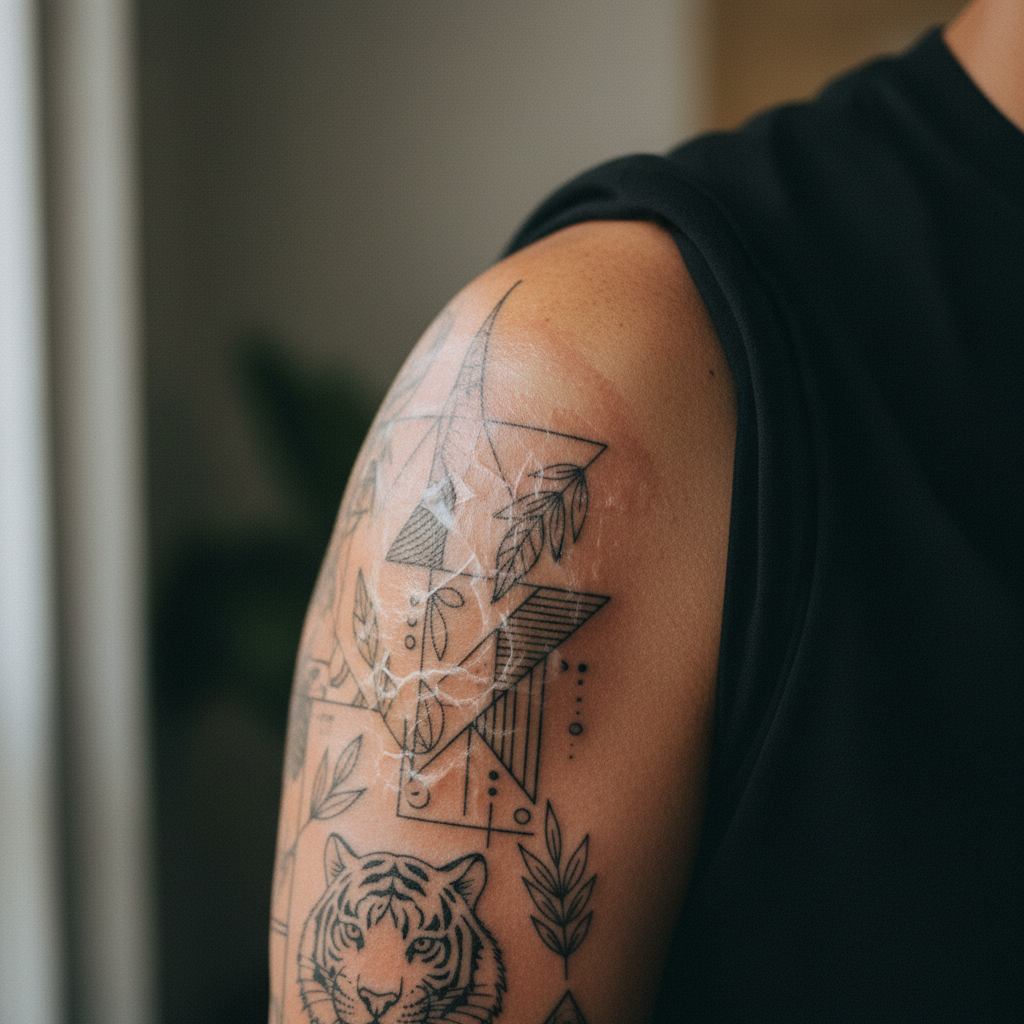
The third cue is itch and sensitivity. A tattoo that still itches at random, gets warm under hot water, or stings when you apply unscented lotion is still in active repair. Full healing means the area responds to touch, temperature, and product the same way the rest of your skin does. If a year-old tattoo still flares up in the sun, that is a separate issue worth flagging to a dermatologist.
Timing windows by tattoo type
Healing time scales with how much skin trauma the artist created. The denser the work and the more passes the needle made, the longer the dermis takes to settle. Rough ranges to plan around:
- Fine-line single-needle work: surface healed in 10 to 14 days, dermis settled in 6 to 8 weeks
- Standard black-and-grey with shading: surface healed in 14 to 21 days, dermis settled in 8 to 12 weeks
- Heavy color packing or saturated traditional work: surface healed in 21 to 28 days, dermis settled in 3 to 5 months
- Large back pieces or full sleeves done in one long session: add 2 to 4 weeks to the longest range above
- Cover-ups, which require denser pigment layered over older ink: 4 to 6 months for full settlement
Body location matters too. Tattoos over high-movement areas like elbows, knees, and ribs heal slower than flat, low-friction areas like the outer thigh or upper back. Hands, fingers, and feet are the slowest of all because the skin sheds faster and the constant flexing disrupts the dermal repair.
Practical tests artists use
The pinch test is the simplest. Once peeling is fully done, gently pinch the tattooed skin between thumb and forefinger and compare the give and snapback to the skin next to it. Equal pliability means the dermis has rebuilt its elasticity. If the tattooed patch feels stiffer or thicker, it is still healing.
The water test is the second. After a hot shower, a fully healed tattoo shows no raised lines or puffiness when you step out. Lines that swell slightly under heat are a sign the dermal vasculature is still adapting. This is a clear "wait another two weeks before booking a touch-up" signal because tattooing into still-inflamed skin produces patchy uptake.
The product test is the third. Apply a small amount of an active skincare product you normally use, like a retinol or an acid toner, on a tiny corner of the tattoo. If it stings, burns, or turns the area red, the skin barrier is not done. Healed tattoos tolerate the same products as the rest of your face or body.
Signs that look like trouble but are not
A slight color shift toward the end of the surface heal is normal. Most tattoos look about 20 percent darker at days 5 to 8 because of the scab and shedding layer sitting over the ink, then settle to true color by week 3. People who do not know this often panic and over-moisturize, which can actually slow healing.
Tiny raised dots along the outline at week 4 or 5 are usually trapped pinpoint scabs from where ink was packed densely. They flake off on their own and do not need intervention. A persistent itch that comes and goes through the first two months is a normal repair signal, not an allergy, unless it is paired with hives or visible rash.
Roughly 60 percent of "is my tattoo ruined" questions to aftercare lines turn out to be a tattoo in mid-heal that looks worse than it will end up. Patience usually wins.
Red flags that mean it is not healed and needs attention
Some signs are not part of normal healing. If any of these show up past week 3, get the tattoo looked at:
- Persistent redness extending more than a centimeter beyond the tattoo edge
- Yellow or green discharge, or any wet patch that returns after cleaning
- Raised, warm, painful lines that follow the tattoo outline
- A rash that does not fade after switching to fragrance-free lotion
- Sharp pigment loss in defined patches, which can mean a localized infection or an immune reaction
Lines that blur or thicken without other symptoms are usually a blowout rather than an infection, but they still mean the tattoo will not finish settling the way you expected. Document any concerning sign with a photo in natural light and send it to your artist before you treat anything on your own.
When you can finally do the things you have been avoiding
The activities that get gated during healing have different unlock points. Showering normally returns at day 3 to 5. Light workouts return at week 2. Direct sun exposure should wait until at least week 8 for color work and week 6 for black-and-grey, and even then sunscreen is mandatory for life if you want the tattoo to age well. For long-term sun strategy and product picks, our guide on tattoo sunscreen and long-term care covers the specifics.
Swimming is the most commonly rushed milestone. Chlorinated pools, lakes, and ocean water all carry infection risk and pigment-leaching potential until the dermis is sealed. A safe window is 6 weeks for fine-line, 8 weeks for shaded black-and-grey, and 10 to 12 weeks for heavy color. Touch-up appointments should be scheduled at the 8 to 12 week mark for most styles, not before, so the artist is working into stable skin.
Frequently asked
How long does a tattoo really take to heal fully?
The surface heals in 2 to 3 weeks, but the dermis where the pigment sits takes 4 to 6 months to fully repair. The 2 to 3 month mark is when most tattoos are safe for sun, pools, and touch-ups. Plan around the longer window if you care about how the ink ages.
Why does my tattoo still look shiny weeks after peeling?
The shiny phase is the new layer of epidermis that has not yet matured to match the surrounding skin texture. It usually fades by week 4 or 5. If shine persists past 8 weeks paired with itch or sensitivity, the skin barrier is still rebuilding and you should hold off on actives and exfoliants.
Can I get a touch-up at 4 weeks if my tattoo looks healed?
Most artists will refuse. The dermis is still inflamed and pigment uptake is unreliable. Booking a touch-up at 8 to 12 weeks gives the artist stable skin to work with and produces a cleaner final result. Rushing the touch-up often means a second touch-up later.
Is it normal for my tattoo to itch months later?
A mild, occasional itch through the first 2 months is normal as collagen rebuilds. Itch that comes back months or years later, especially with heat, sun, or specific foods, can signal a pigment sensitivity. Red and yellow inks cause the most delayed reactions. Get it checked if it persists more than a few days.
Do color tattoos take longer to heal than black-and-grey?
Yes. Color work requires more passes to pack pigment densely, which creates more skin trauma and a longer dermal repair cycle. Expect 3 to 5 months for full settlement on saturated color, compared to 8 to 12 weeks for standard black-and-grey of the same size.
When can I exfoliate over a healed tattoo?
Mild chemical exfoliants like lactic acid are usually fine after week 8 for black-and-grey and week 12 for color. Physical scrubs are riskier and should wait until at least month 4 because they can dull surface clarity. Always patch test on a small section first and stop if there is any sting.