aftercare
Flying After a New Tattoo: What You Need to Know
Flying after a new tattoo is usually safe, but dry cabin air, swelling, and rough wrap choices can stall healing. Here is what to plan.
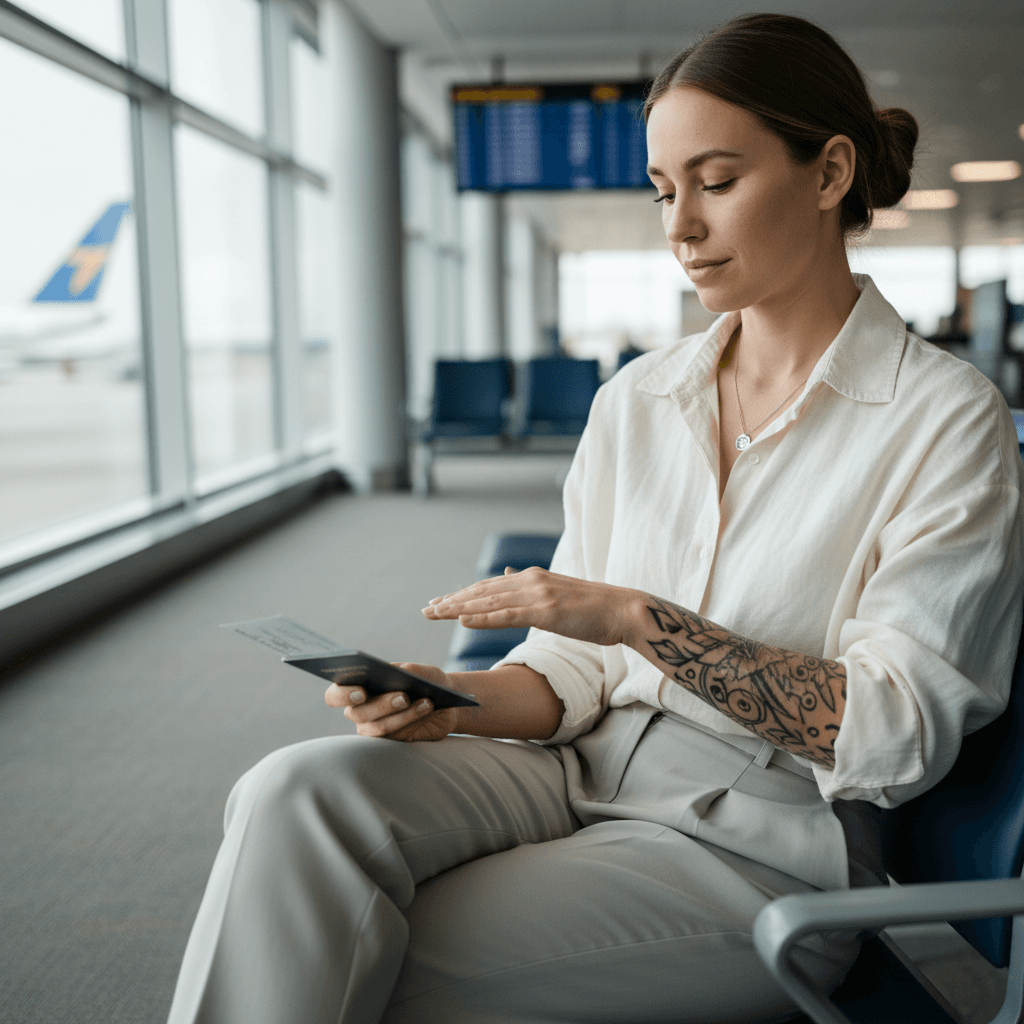
You booked the trip months ago, then you booked the tattoo, and now the two are stacked on top of each other. The good news is that flying with a fresh tattoo is not dangerous in itself. The catch is that an airplane cabin is one of the driest environments your skin will ever sit in, and a healing tattoo is essentially an open wound that wants moisture, airflow, and time. This guide covers when it is safe to fly, what altitude actually does to a fresh piece, and how to land without a swollen, scabbing mess.
How soon can you fly after getting tattooed
There is no medical rule that bans flying right after a tattoo, but most artists prefer you wait at least 48 hours before a long-haul flight. The reason is simple. The first two days are when plasma and blood are still weeping out of the skin, swelling is at its peak, and the wrap you leave the shop with is doing real work. A short domestic hop of one or two hours within 24 hours is usually fine if the piece is small and on a non-pressure area. A 10-hour international flight on day one with a full sleeve is a different conversation, and you will arrive with a tattoo that looks angrier than it should.
If the tattoo is on your foot, ankle, or lower leg, the wait matters even more. Cabin pressure changes and sitting still for hours cause fluid to pool in the lower body, and a fresh lower-leg tattoo can swell visibly. Two to three days of upright healing first will save you a lot of grief. For pieces on the torso, arms, or back, the bar is lower, and most people fly the next day without issue as long as they prep the wrap properly. Read our day-by-day tattoo healing timeline to see where your piece will be on the day you fly.
What flying actually does to a healing tattoo
Cabin humidity sits between 10 and 20 percent on most commercial flights, which is drier than the Sahara. Healing tattoos lose moisture fast in that environment, which speeds up scabbing and can make the peeling phase rougher than it needs to be. Dry skin pulls at fresh scabs, and pulled scabs pull ink with them. That is the mechanism behind most flight-related patchy spots in fresh work.
Air pressure changes are usually a non-issue for the tattoo itself. What does matter is fluid retention. Long flights cause mild swelling in the extremities, and a tattoo that already has inflammatory swelling underneath will look puffier on landing. There is also the question of contact. Airplane armrests, seatbacks, headrests, and tray tables are not clean surfaces. A fresh tattoo brushing against a shared armrest for six hours is a real infection risk, not a hypothetical one. Know the signs of tattoo infection before you board so you can spot a problem early.
How to prep your tattoo before the airport
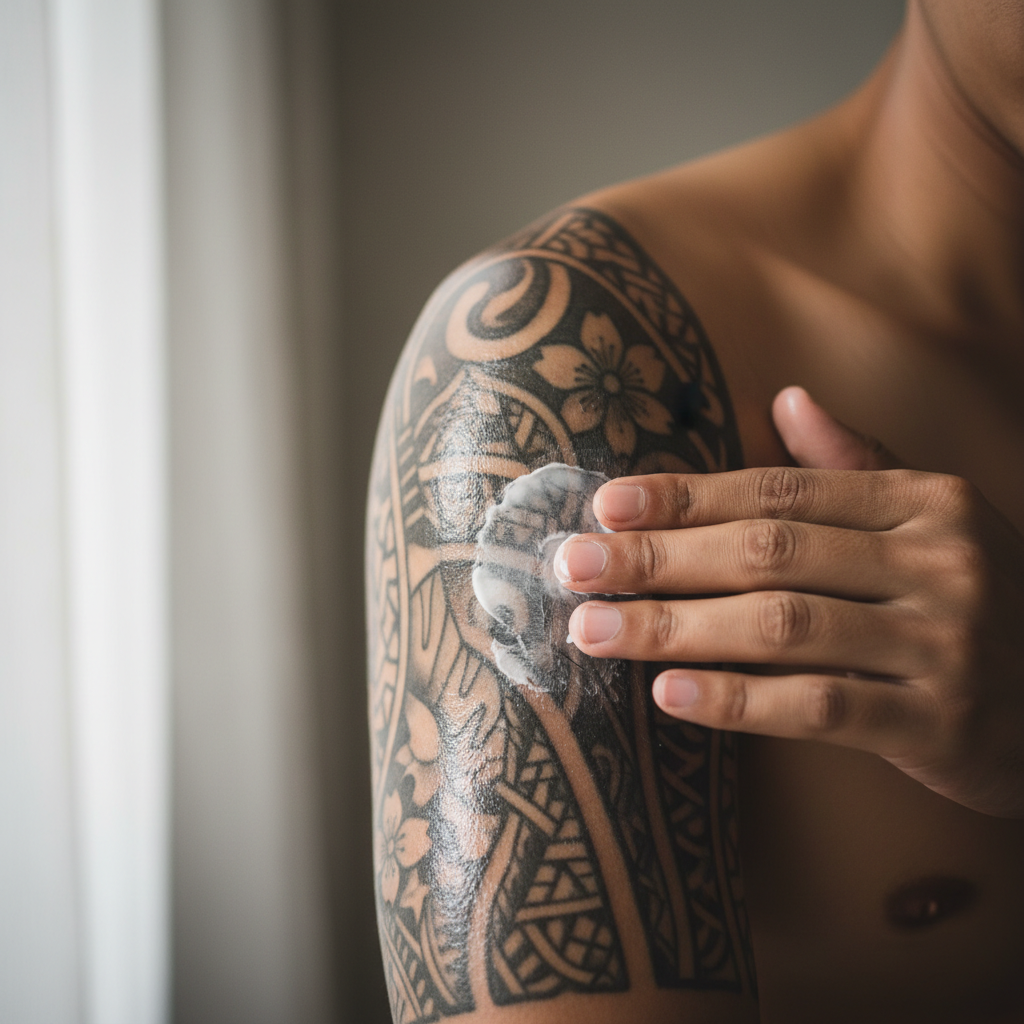
The single best move before a flight is wrapping the piece in a second-skin film like Saniderm, Recovery Derm Shield, or Tegaderm. These breathable adhesive films seal the tattoo against airport surfaces, hold in moisture, and let you forget about it for the duration of the flight. Apply a fresh sheet two to three hours before you leave for the airport, after a clean wash and a thin layer of moisture. Our Saniderm aftercare guide walks through the application step by step.
If you do not have second-skin film, the backup is a clean cotton layer under loose clothing, plus a small tube of fragrance-free moisturizer in your carry-on. Cling film is acceptable for short flights but not for long-haul. It traps bacteria against the skin if left on for more than two hours and creates a swampy environment that healing tattoos hate. Pack the moisturizer in a clear bag under 100 milliliters so security does not throw it away, and bring a small unscented soap bar or wipes for a quick wash before reapplication. The best lotion for a new tattoo post covers what to put in your travel kit.
Wear loose clothing over the tattoo. Soft cotton, oversized cuts, and zero seams over the piece. Tight straps, waistbands across a fresh hip tattoo, or a bra band over a fresh ribcage piece will rub for the entire flight and leave you with friction damage. If you are flying with a leg tattoo, request an aisle seat so you can stand and walk every hour without climbing over neighbors.
In-flight care: what to do at 35,000 feet
If you wrapped with second-skin film, the move is to leave it alone. Do not pick at edges, do not check the tattoo every hour, and do not peel it off mid-flight to look. The film is doing its job. The only reason to remove it early is if fluid has pooled visibly and started leaking past the edges, which is rare past the first 24 hours.
If you went the cotton-and-lotion route, reapply moisturizer once every three to four hours. Wash your hands first, use a small dab, rub it in fully so the skin is not greasy, and re-cover. Hydrate aggressively from the inside too. Drink water steadily through the flight, skip the inflight cocktails for one trip, and skip caffeine if you can. Both alcohol and caffeine dehydrate you, and dehydrated skin heals slower. The general rule against drinking alcohol after a new tattoo applies double in a dry cabin.
A few practical moves that help:
- Bring a clean scarf or hoodie to drape between your tattoo and the seat or armrest
- Use the overhead vent for airflow, not air conditioning blasting straight on the wrap
- Walk to the bathroom and back every 60 to 90 minutes if you can
- Keep your hands clean and avoid touching the tattoo at all
Landing in a hot or humid destination
Landing in Bangkok, Bali, or anywhere tropical introduces a different problem. Heat plus humidity plus sweat under a film wrap can create a breeding ground for bacteria, and that is when infections start. Once you land and check into a hotel, unwrap, wash gently with lukewarm water and a fragrance-free soap, pat dry with a clean towel, and let the skin air out for at least an hour before deciding whether to rewrap.
Skip the beach, the pool, and the ocean for at least two weeks regardless of what your wrap is doing. Saltwater stings, pool chlorine bleaches fresh ink, and ocean bacteria are not your friend on day three. See our piece on when you can swim with a new tattoo for the full timeline. Tropical humidity does have one upside, which is that the cabin-air problem reverses on the ground and your tattoo will stop drying out the moment you land somewhere humid. Just keep it out of direct sun, since UV on fresh ink is the single fastest way to fade a brand new piece.
Frequently asked
Will airport security or the TSA scanner damage my tattoo?
No. The body scanners at airport security use millimeter-wave technology that does not affect skin, ink, or healing in any measurable way. You can walk through with a fresh tattoo without any issue. The bigger risk at security is having to remove a jacket or rolling up a sleeve and brushing the piece against a bin or belt, so plan your outfit to keep the tattoo covered without needing to expose it.
Can I fly the same day I get tattooed?
You can, but it is not ideal. The first 24 hours involve active weeping, the most swelling, and the most discomfort. If the flight is short and the tattoo is small, you will be fine. If the flight is long and the tattoo is large or on a leg, push the flight to at least 48 hours later if you can change it. Same-day long-haul flights are where most aftercare problems start.
Should I tell the flight crew about my tattoo?
There is no need to declare it. Crew members do not need to know, and there are no airline rules against flying with fresh tattoos. The exception is if you are bleeding through your clothes, which would only happen with a very fresh large piece and a wrap failure. In that case, just ask for paper towels and excuse yourself to the bathroom to clean up.
Will the cabin pressure cause my tattoo to bleed more?
Not in any meaningful way. Cabin pressure changes are gradual and do not push enough force to make a healing tattoo bleed. What you might see is slight swelling that looks like more bleeding through the wrap, but it is usually just plasma weep that would have happened on the ground anyway. If you see actual fresh red blood pooling under the wrap on day two or later, that is worth getting checked when you land.
What if my tattoo gets infected during travel?
Travel infections are real and worth taking seriously. Signs include spreading redness past the tattoo outline, hot skin around the piece, pus that is not clear plasma, and fever. Get to a clinic same-day, do not wait for it to clear up on its own, and bring a photo of what the tattoo looked like fresh so the doctor can compare. Antibiotics for tattoo infections are common and resolve most cases quickly when caught early.
Can I get a new tattoo while traveling and then fly home with it?
This is the trickiest version of the question, since you are stacking a new tattoo, a long flight, and unfamiliar aftercare products. If you are getting tattooed abroad, schedule it for at least 48 hours before your return flight, ask the artist for a second-skin wrap that lasts three to five days, and pack travel-friendly aftercare. The advantage is that you skip the immediate weeping phase before you board, which is when most flight problems happen.