style guides
Polynesian Tattoos Style Guide: Motifs, Meaning, and Cost
Polynesian tattoos combine dense black geometry with symbols that carry real cultural weight. Here's how the style reads, what it costs, and what to ask an artist before you book.
Polynesian tattooing is one of the oldest continuously practiced ink traditions on the planet, with roots reaching back roughly two thousand years across Samoa, Tonga, Tahiti, the Marquesas, Hawaii, and Aotearoa (New Zealand). The word "tattoo" itself came into English from the Tahitian tatau, brought back by Captain Cook's crew in 1769. If you are considering a piece in this style, you are stepping into a visual language with grammar, dialects, and rules that developed long before electric machines existed.
This guide walks through what Polynesian tattoos actually look like on skin, how the regional styles differ, which motifs mean what, what a session runs, and the cultural questions worth thinking through before you book.
What defines the Polynesian style visually
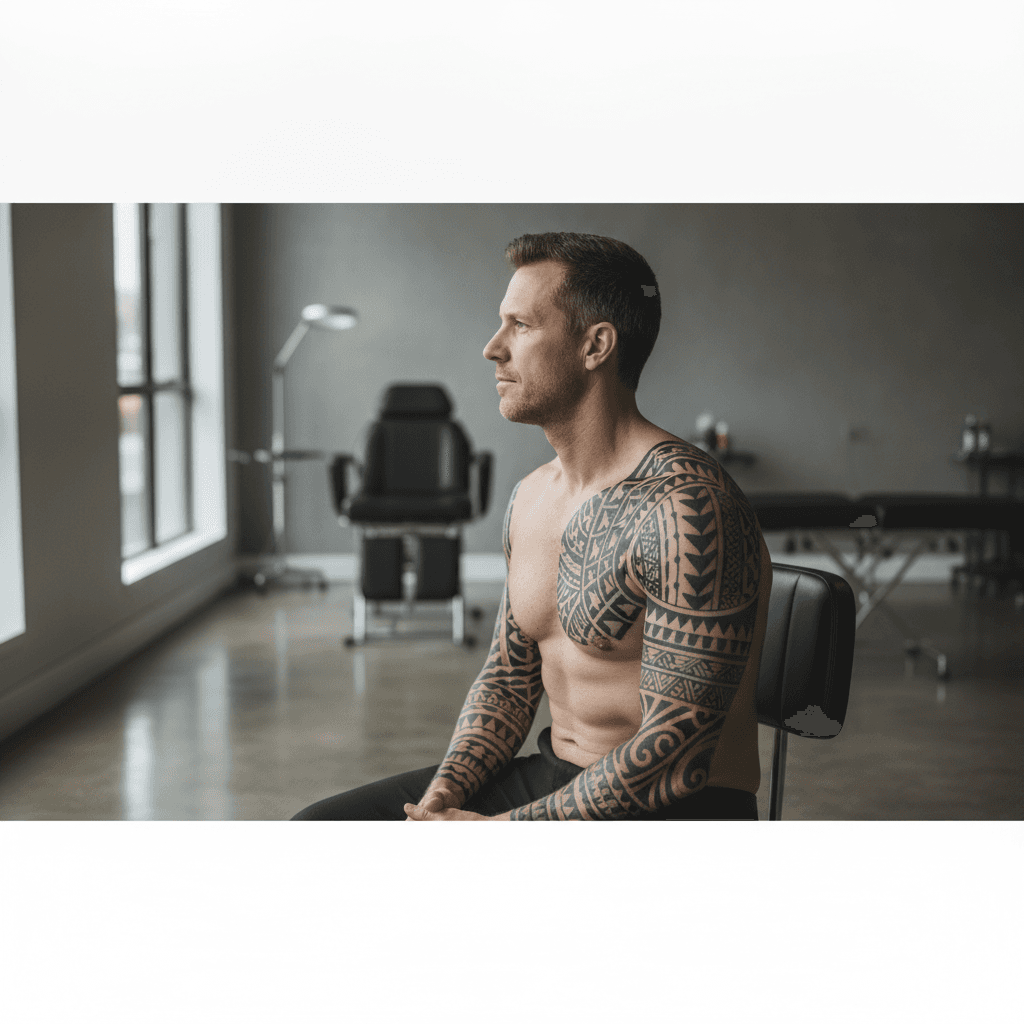
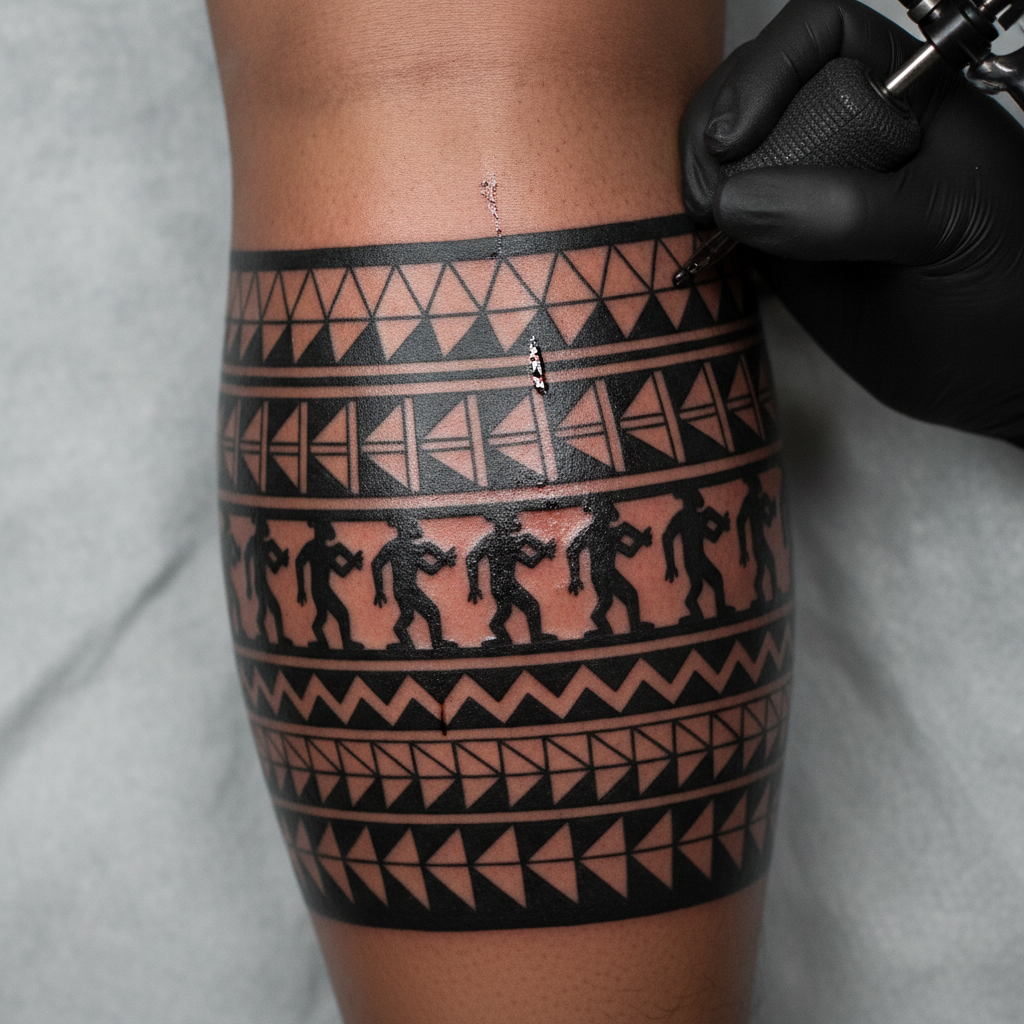
Polynesian tattoos are almost exclusively solid black ink laid in dense geometric patterns. There is no shading in the Western sense, no color, and rarely any grey wash. The impact comes from the interplay between packed black fields and negative space, where the skin itself becomes part of the composition. Motifs are built from repeated geometric primitives: triangles, chevrons, straight and curved lines, spirals, and stylized figures.
Line weight is heavy and deliberate. A finished Polynesian piece often has more black on it than untouched skin, and the borders are typically hard edged with no soft transitions. Traditional practitioners used bone or boar-tusk combs dipped in ink and tapped into the skin with a mallet, a process called tatau in Samoa. Modern artists work with electric machines but preserve the visual language, and a small number still offer hand-tapped work using sterilized modern equivalents of the traditional tools.
Placement follows the contours of the body. A well-designed Polynesian sleeve wraps the deltoid, flows through the bicep and triceps, and terminates cleanly at the wrist. Chest and back panels are common, as are full-leg pieces called pe'a (Samoan male body tattoo) or malu (Samoan female thigh tattoo). Small standalone Polynesian tattoos exist but the style genuinely shines at scale.
Regional dialects: Samoan, Maori, Marquesan, Hawaiian
Calling something "Polynesian" is a bit like calling a piece "European." The umbrella covers distinct regional traditions that a knowledgeable artist can tell apart at a glance.
Samoan tatau uses dense parallel line work, spearheads (tao), and centipede motifs (atualoa). The traditional male pe'a covers from waist to knees in a single unbroken composition and takes several weeks of daily sessions to complete. Samoan work leans on straight lines, right angles, and rhythmic banding.
Marquesan tattooing, from the islands north of Tahiti, is the most figure-heavy of the regional styles. Enata (stylized human figures), tiki faces, and geometric compressions of animals and canoes fill the compositions. Marquesan work often looks more pictographic than pure geometry.
Maori ta moko is a distinct tradition from Aotearoa and uses flowing spiral forms called koru, based on the unfurling silver-fern frond. Facial moko is deeply tied to whakapapa (genealogy) and is generally not something outsiders are tattooed with. The body equivalent, kirituhi, is Maori-inspired work created for non-Maori clients and is considered a respectful alternative.
Hawaiian kakau historically featured triangular bands, turtle motifs (honu), and mixed straight-line and curved geometric patterns. The tradition was heavily suppressed by 19th-century missionaries and is currently in active revival, with a small group of practitioners restoring both the visual language and the hand-tapping technique.
What the symbols actually mean
Every motif in a traditional Polynesian composition carries meaning, and a well-designed piece reads like a sentence about the wearer. Ocean waves represent life, change, and the sea as a source of sustenance. Spearheads and shark teeth (niho mano) signify courage, adaptability, and protection. The turtle is one of the most universal symbols across the region, representing family, longevity, and safe navigation.
Enata figures often represent people, ancestors, or specific relationships, and their arrangement across the body tells a story about who the wearer belongs to. Tiki faces are guardian figures. The sun symbolizes eternity, leadership, and brilliance. Fish hooks (makau) represent prosperity, strength, and respect for the sea.
A good Polynesian artist will spend a full consultation, sometimes two, working out which symbols apply to your life. They will ask about your family, your work, where you are from, and what the piece is meant to commemorate. This is not decoration by the square inch, and treating it that way tends to produce weak, generic work that reads to anyone in the know as an obvious mismatch.
Cost and session structure
Polynesian tattoos are almost always priced hourly because the compositions are custom and dense. Expect $150 to $250 per hour with a competent artist and $250 to $400 per hour with a specialist who trained under a Polynesian master or comes from the tradition. Hand-tapped work runs higher, often $300 to $500 per hour, because the technique is slower and the skill pool is small.
Realistic totals by size:
- Half sleeve: $1,200 to $2,500 across 2 to 3 sessions
- Full sleeve: $2,500 to $6,000 across 4 to 8 sessions
- Chest panel: $1,500 to $3,500 across 2 to 4 sessions
- Full leg (modern pe'a interpretation): $6,000 to $15,000 across 8 to 20 sessions
Sessions typically run 4 to 6 hours because the solid black fills need momentum and stopping mid-panel creates visible line breaks after healing. If you want more detail on how session length ties to your body's pain tolerance, our blackwork tattoo cost breakdown covers similar dense-black pricing patterns, and our guide to hourly vs flat-rate tattoo pricing explains when to expect one versus the other.
Cultural considerations before you book
This is where Polynesian tattooing splits from most other styles. The imagery is not neutral, and wearing it carries weight that many first-timers underestimate. If you are not of Polynesian descent, the respectful path is kirituhi or Polynesian-inspired work rather than sacred traditional pieces. Facial moko, the Samoan pe'a in its full traditional form, and specific ancestral symbols are generally not appropriate for outsiders.
Find an artist who specializes in the style rather than one who "also does tribal." Ask them directly whether they are Polynesian, whether they trained under a Polynesian tattooist, and how they approach designing for non-Polynesian clients. A good artist will not be offended by these questions and will often steer you toward symbols that fit your background rather than defaulting to sacred iconography.
Avoid pulling designs from Google Images and asking an artist to copy them. Traditional compositions are personal, and copying someone else's tatau is considered disrespectful in the source cultures. A related principle applies across blackwork tattoos and other geometry-heavy styles: the composition should be built for your body, not lifted from a reference photo.
Healing and long-term wear
Solid black work heals slower than fine-line or color pieces because the skin absorbs more trauma per square inch. Expect 3 to 4 weeks for surface healing and up to 4 months for full dermal settling. The first two weeks the tattoo will look patchy as the skin peels, and it is normal for large black fields to appear grey or blotchy before they settle back to solid black.
Polynesian tattoos age exceptionally well because there is no fine detail to blur and no color to fade. A well-executed Samoan sleeve at 20 years typically looks nearly identical to how it did at year one, provided the wearer has stayed out of long-term sun exposure. Touch-ups are rare and usually only needed on high-friction spots like hands, feet, and the inner bicep.
Frequently asked
Can I get a Polynesian tattoo if I am not Polynesian?
Yes, through the tradition of kirituhi, which is Polynesian-inspired work designed for non-Polynesian clients. A knowledgeable artist will build a composition that respects the visual language without using sacred or ancestral symbols reserved for people of the culture. The key is finding a specialist who understands the distinction.
How long does a full Polynesian sleeve take?
Between 20 and 40 hours of tattoo time total, usually spread across 4 to 8 sessions over several months. Densely packed black fills are slow to lay down cleanly, and most artists cap sessions at 5 to 6 hours to preserve line quality and give your skin time to recover between visits.
Do Polynesian tattoos hurt more than other styles?
Generally yes, for two reasons. The needle stays on the skin for longer stretches to lay solid black, and traditional placement wraps bony areas like the ribs, shoulder blades, and hips where nerves sit close to the surface. Most clients describe it as manageable in the first 90 minutes and challenging in hours 3 through 5.
Is hand-tapped Polynesian tattooing available outside the islands?
A small number of specialists practice hand-tapping in the US, Australia, New Zealand, and parts of Europe, usually artists with direct lineage to a Polynesian master. Expect a waitlist of 6 to 18 months and pricing 30 to 50 percent above machine work, along with a slightly rougher texture during healing due to the tapping technique.
Should I choose symbols before consultation or leave it to the artist?
Come in with the story you want the piece to tell, not with specific symbols. A good Polynesian artist will translate your story into the appropriate visual language, which is the traditional way compositions were built. Showing up with a Pinterest board of symbols you like tends to produce a piece that reads as decorative rather than meaningful.
What is the difference between Polynesian and generic tribal tattoos?
Generic "tribal" is a Western category that lumps together unrelated black-line traditions from Polynesia, Borneo, the Philippines, Africa, and elsewhere, usually stripped of cultural meaning. Polynesian is a specific regional tradition with its own grammar, symbols, and rules. Ask an artist who claims to do both which they actually specialize in, and how they distinguish the two visually.