cost guides
Matching Tattoo Cost: What Couples and Friends Pay in 2026
Matching tattoos usually run $200–$600 for a pair. Here is what actually drives the price, and where couples and friends waste money.
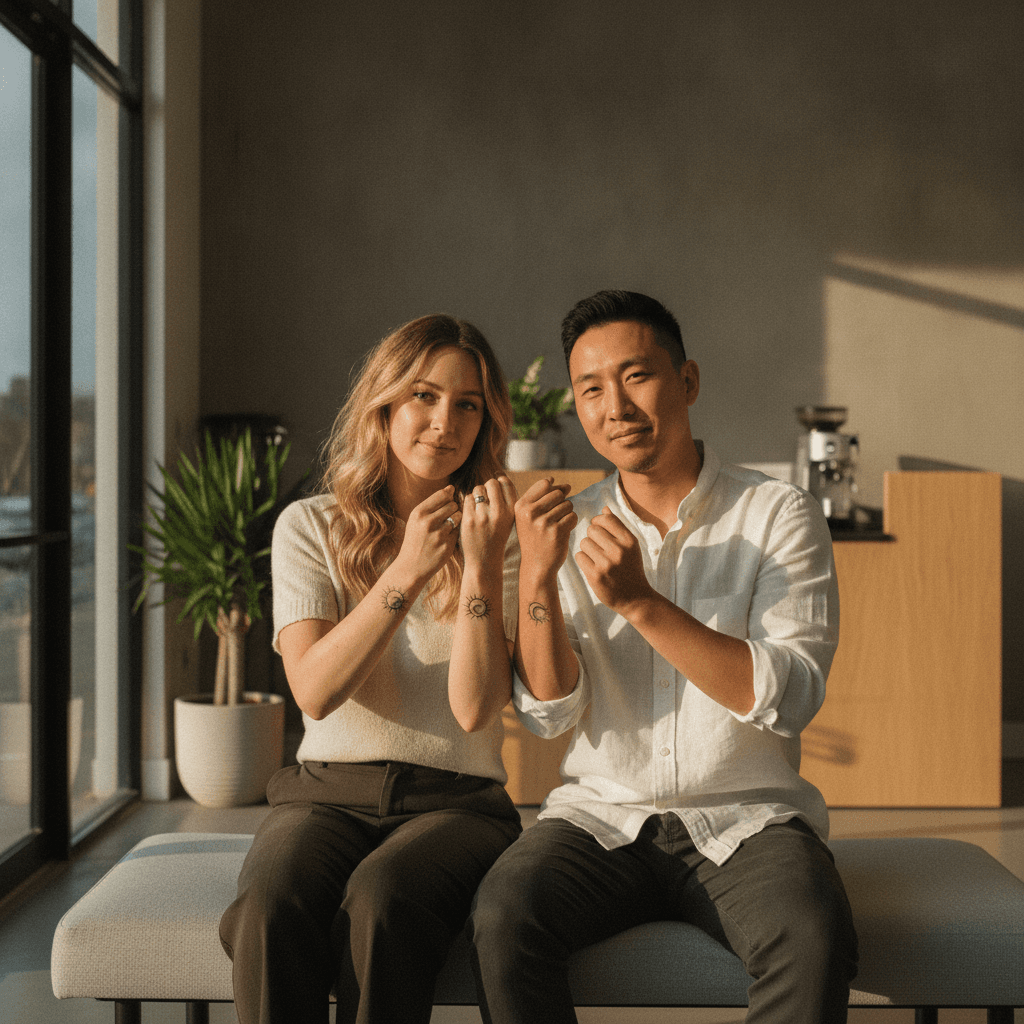
Matching tattoos land in a pricing sweet spot most people misjudge. The design is usually small, the ink is usually simple, and yet the total bill for two people can swing from around $200 to well over $1,200 depending on artist, placement, and how much custom work is involved. This guide breaks down what you should actually expect to pay in 2026, where the money goes, and the trade-offs that quietly double the invoice at the end of the session.
The realistic price range for matching tattoos
Most matching tattoo pairs land between $200 and $600 total. That covers two small pieces, typically 2 to 4 inches, done in a single sitting for both people at a mid-tier studio. Simple line work, one color (usually black), no shading, and a placement that is easy to reach like a wrist, forearm, ankle, or collarbone will keep you at the low end. Once you add color, dotwork, fine shading, or awkward placements like ribs and fingers, the pair moves toward $500–$800.
Studio minimums drive the floor. A serious shop will not touch a needle for less than $80–$150 per person, even for a single tiny symbol. So two matching stick-and-poke-sized pieces at a licensed studio usually start around $160–$300 for the pair, not the $50 total that Pinterest posts imply. If the artist quotes a suspiciously low flat rate, look at the shop hygiene and their portfolio before booking. Cheap matching tattoos are the single most common regret in the aftercare inbox.
For larger matching pieces, palm-sized or bigger, hourly pricing kicks in and the math changes fast. A $180 per hour artist doing two 90-minute matching forearm pieces will bill $540. Add a small color fill and you are at $600–$700 easily. See our tattoo pricing explained breakdown for how the underlying rate sheet works.
What actually drives the price
Five factors move the number more than anything else. Size, complexity, placement, artist tier, and city. Style matters too, but it usually shows up as complexity or artist tier in disguise.
- Size is the loudest input. A 1-inch heart is not half the price of a 2-inch heart, because studio minimums flatten the low end.
- Complexity covers line count, dotwork density, shading, and color layers. A matching pair of solid black roman numerals is fast. Matching botanical illustrations with fine shading are not.
- Placement changes both time and skill required. Wrists and forearms are quick. Ribs, sternum, fingers, and inside-arm placements slow the artist down and often add 20–40% to the hourly time.
- Artist tier is where budgets die. A three-year artist charges $100–$140/hour. A well-known fine-line specialist in a major city charges $250–$400/hour and has an eight-month wait.
- City stacks on top. NYC, LA, London, and Tokyo run 30–60% above secondary markets. Bali and Bangkok run 40–60% below for equivalent quality.
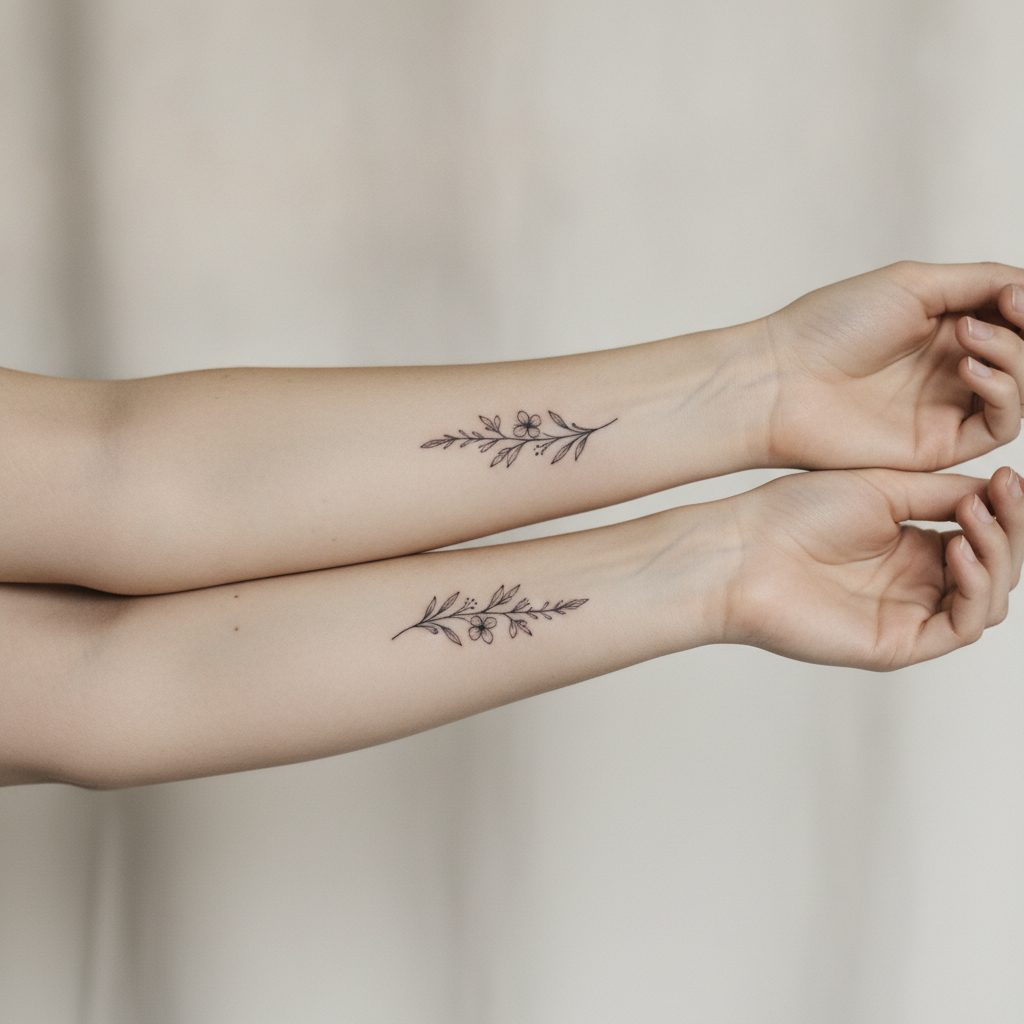
Couples vs. friends vs. family: the pricing is the same, the risk is not
Studios do not charge less because you are dating the other person in the chair. The pair pricing above applies whether you are a couple, best friends, siblings, or a parent and adult child. What changes is the risk profile of the design, and that changes what you should be willing to spend.
Couples tattoos have the highest change-of-mind rate. If you are considering a matching piece within the first year of a relationship, keep it under $200 per person and pick a design that reads as personal even if solo. A tiny wave, a favorite constellation, a shared date in numerals. All of these survive a breakup as standalone pieces. Symbols that only make sense as a pair, like split-heart or puzzle-piece designs, cost the same up front but cost $400–$1,500 to remove or cover later. See tattoo removal cost for the actual removal math.
Friendship and family matching pieces are lower-risk emotionally but higher-risk logistically. Coordinating three or four people for the same session usually means one person cancels, and the artist keeps the deposit. Book two at a time if possible. Larger groups should ask about a group deposit structure rather than individual holds.
What each style typically costs as a matching pair
Style choice is the second-biggest lever after size. These pair ranges assume small designs, 2–3 inches, done in one session:
- Fine-line black: $250–$500 per pair. Fast, popular, ages moderately well if the artist knows how deep to run the needle. See our fine-line tattoos style guide.
- Traditional (American traditional): $300–$550 per pair. Bold lines and simple color hold up for decades.
- Dotwork or geometric: $350–$650 per pair. Time-intensive per square inch, so even small pieces climb.
- Watercolor: $400–$700 per pair. Color layering plus the risk of muddy edges pushes toward higher-tier artists.
- Lettering or numerals: $200–$400 per pair. Fastest option if the font is standard. Custom calligraphy adds $50–$150.
- Micro-realism: $500–$900 per pair. Rare for matching designs because the subject is usually personal, but stunning when it works.
Fine-line and micro pieces age fastest. If you are picking a design meant to last 30 years, traditional and bold blackwork are the honest choices.
The hidden costs nobody talks about
The sticker price on the tattoo is only part of the total. Four line items catch people off guard on matching-tattoo day.
Deposits are non-refundable at almost every reputable studio and typically run $50–$150 per person. If one of you cancels, that money is gone even if the other person still gets tattooed. Second, tips are standard at 15–25%, applied to the tattoo price per person, not per pair. Two $250 tattoos with a 20% tip means $100 in tips alone. Third, custom design work often carries a separate fee of $50–$200 if the artist is drawing a piece from scratch rather than adapting flash. Fourth, touch-ups. Matching tattoos where one heals cleaner than the other are common, and the touched-up piece usually costs $50–$100 even at shops that offer "free touch-ups" within 3 months, because that policy usually excludes hands, fingers, and feet.
Budget the full envelope before you book. For a $500 pair of matching tattoos, expect roughly $600–$700 out the door after deposits, tips, and one touch-up.
How to keep the cost sane without going cheap
There are honest ways to lower the total and there are dishonest ones. The honest levers save real money without hurting the tattoo. The dishonest ones show up as a regret post six months later.
Pick a smaller design and a straightforward placement. A 2-inch wrist piece costs less than a 4-inch forearm piece not because of ink volume, but because the artist spends 45 minutes on it instead of two hours. Book both tattoos in the same session so you pay one setup fee, not two. Choose flash from the artist's book instead of commissioning a custom design and save $100–$300 in drawing time. Book mid-week and mid-day, when some artists offer 10–15% off to fill slower slots.
Do not chase price by leaving the licensed-studio ecosystem. Hotel-room artists, party artists, and cash-only strangers at conventions will save you $150 and cost you a $1,500 removal or cover-up. If your budget genuinely does not cover a real studio, wait three months and save. The tattoo is permanent. The savings are not.
Frequently asked
Do studios give discounts for matching tattoos? Sometimes, but not always, and usually only 5–15% off the pair. Ask directly before booking. Some artists prefer a small flat discount on the second piece; others price both at full rate. Discounts are more common when the design is truly identical and the artist is not doing custom drawing for each person.
Can we both get tattooed in the same session? Usually yes for small pieces, and it is the cheapest way to book. Most studios can seat two clients back-to-back with the same artist in a 2–3 hour block. Larger designs may need separate appointments because artist fatigue after 4+ hours degrades line quality noticeably.
What is the cheapest matching tattoo you can honestly get at a real studio? Around $80–$120 per person for a very small, simple design like a dot, a tiny heart, or a small symbol. That hits most studios' minimums. Anything cheaper than that is either a shop cutting corners on sterilization or a home artist you should not be visiting.
Should we get matching tattoos on our first appointment ever? Only if you both already know how you personally react to needle placement and healing. Getting your first tattoo ever as a matching piece with a partner adds emotional pressure to a physical experience your body has not tested yet. A safer path is each of you gets a small solo piece first, then does the matching design 2–3 months later after healing.
How much should we tip on matching tattoos? Tip per person, not per pair. Standard is 20% of your own tattoo cost. So on a $500 pair ($250 each), each person tips $50, for $100 total. Cash tips are preferred by most artists because studio card systems often take a cut.
Is it cheaper to do matching tattoos abroad? Yes, if you already have a travel budget. In Bali, Bangkok, or Mexico City, matching pairs at reputable studios often run $150–$350 total for work that would cost $500–$800 in a US or European city. Check the Bali tattoo pricing guide if you are considering it. The tattoo itself is not cheaper because the studio cuts quality. It is cheaper because rent and wages are lower.