cost guides
Lower Back Tattoo Cost: What You'll Pay in 2026
Lower back tattoo cost breakdown for 2026: hourly rates, size-based pricing, session counts, and the placement quirks that push the bill up.

Lower back tattoos are having a proper comeback, and the pricing reflects it. Studios that used to quote a flat $200 for a "tramp stamp" flash piece now book multi-session ornamental spines and lumbar florals at four figures. If you are pricing out your first lower back piece in 2026, expect a wider range than almost any other placement, because the same square of skin can hold a two-inch script or a full lumbar mandala that eats three sessions.
What lower back tattoos actually cost in 2026
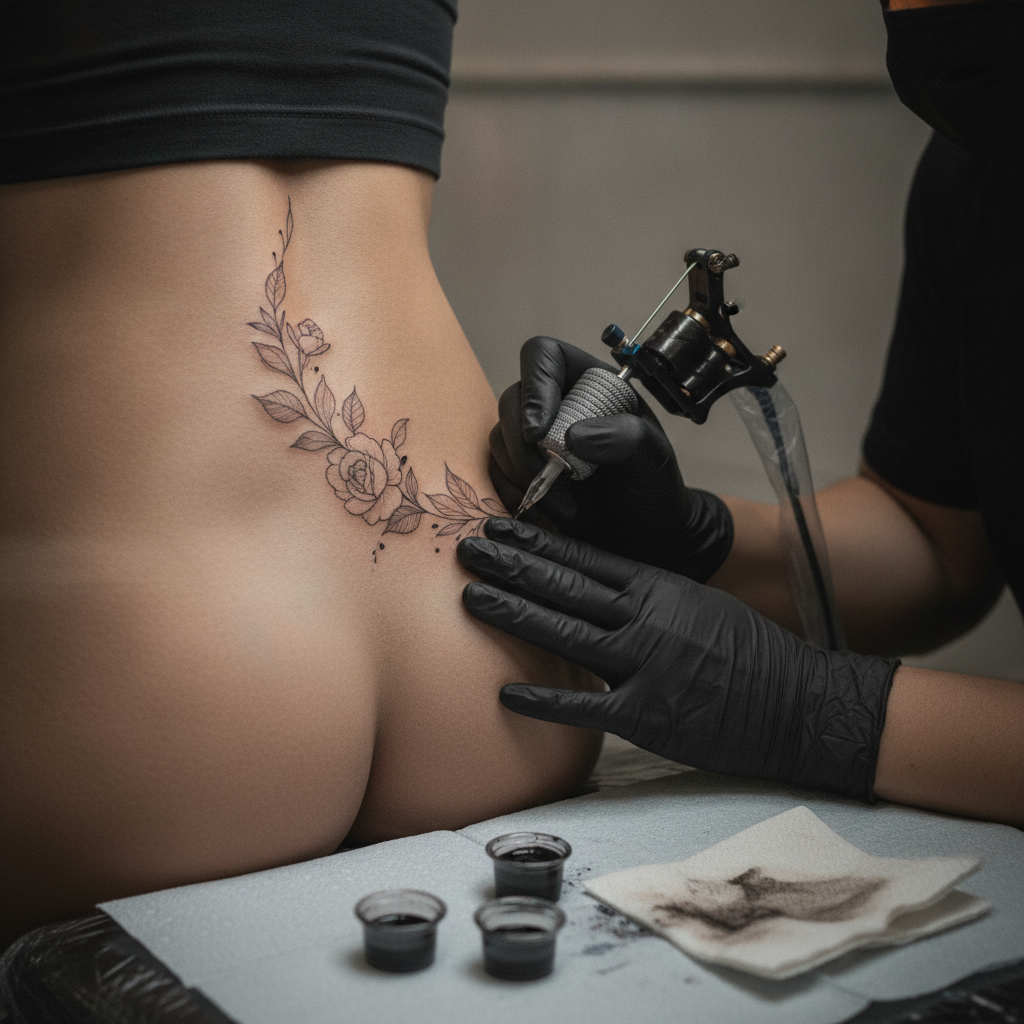
Most reputable US studios charge $150 to $300 per hour for lower back work, with coastal cities like Los Angeles, New York, and Miami sitting at the top of that band. Small pieces (a two to three inch script, symbol, or minimalist floral) generally run $200 to $450 flat. Mid-sized ornamental pieces that span the lumbar region and stop at the hip bones typically land between $700 and $1,500. Full lumbar-to-sacrum ornamental work, symmetrical mandalas, or dense blackwork spanning the entire lower back can run $1,800 to $4,500 across two or three sessions.
European pricing tracks slightly lower on the top end, with London and Amsterdam studios quoting £100 to £200 per hour and Berlin often sitting around €90 to €150. Southeast Asia is the outlier: Bali and Bangkok private studios often quote $80 to $130 per hour for the same skill level, which is why the placement has become a fixture on tattoo tourism itineraries. Wherever you book, the artist tier matters more than the geography. A guest-spot artist with a two-year waitlist will charge their rate regardless of city.
Why lower back placement pushes the bill up
The lower back looks like an easy canvas, but it prices higher per square inch than most people expect. The skin sits over the erector spinae muscles, which contract every time you breathe, shift, or brace. That movement forces the artist to work slower on line work, particularly along the spinal midline where a shaky line reads as crooked forever. Ornamental and geometric styles suffer the most from this, which is why symmetrical pieces almost always require a stencil re-check partway through the session.
Skin texture is the second factor. The lower back has a thicker dermis than the forearm or wrist, which means ink saturation takes more passes. Blackwork, in particular, needs two full passes to hold true black across the lumbar region. Fine-line work has the opposite problem: the skin's thickness and the constant micro-movement can cause hairline lines to blow out within a year if the artist packs them too aggressively. A skilled fine-line specialist charges a premium here for good reason, and you should understand why fine line tattoos cost more than they look before committing.
Size and session count breakdown
Sizing on the lower back is less about width and more about vertical span. Most artists price around three tiers:
- Small (2 to 4 inches): $200 to $450 flat, one session, 1 to 2 hours. Script, small symbol, minimalist floral, or a compact geometric ornament centered on the spine.
- Medium (4 to 8 inches): $700 to $1,500, usually one long session or two shorter ones, 4 to 8 total hours. Ornamental pieces that follow the belt line, single mandalas, or floral clusters that stop before the hip bones.
- Large (8 to 14 inches, full lumbar): $1,800 to $4,500, two or three sessions, 10 to 18 total hours. Symmetrical ornamental spans, dense blackwork, full lumbar-to-sacrum florals, and any color work that requires shading and highlights.
Color adds roughly 30 to 50 percent to the total because it requires additional passes for saturation and typically at least one dedicated color-only session. If you are combining a lower back piece with existing work, factor in a consultation fee of $50 to $150 to plan how the new piece integrates with what is already there, which is worth reading up on in this tattoo consultation cost breakdown.
Hidden costs most people forget
Deposits are non-negotiable at almost every reputable studio in 2026, and they usually run $100 to $300 for lower back work. That deposit locks your date and pays the artist for design time, and it comes off your final bill only if you show up. Cancel inside the studio's window (typically 48 to 72 hours) and it is gone. This trips up first-timers regularly, so read up on how tattoo deposits actually work before booking.
Tipping is the second hidden cost. The standard in the US remains 15 to 25 percent of the total artist fee, which on a $2,000 lower back piece means budgeting another $300 to $500. Europe expects less (5 to 10 percent), and Southeast Asia is optional but appreciated. Touch-ups are typically free within 3 to 6 months if the fading or dropout is not your fault (missed aftercare instructions void this), but any correction beyond that window prices at the artist's minimum, usually $100 to $250.
How to save without cheaping out
Skipping the consultation is the fastest way to overpay. A 30-minute consult lets the artist scope the piece properly, which usually shortens the session estimate by 20 to 30 percent because they are not designing on the fly. Booking a mid-week appointment sometimes shaves 10 to 15 percent off hourly rates at busier studios, and standing offers on flash sheets can drop a small piece from $400 to $200 without changing the artist.
What you should not do is chase the cheapest hourly rate you can find. Lower back tattoos hold poorly when they are done fast or by an underqualified artist, and the correction cost (either a cover-up or laser removal) will always exceed what you saved. Laser removal on lower back work runs $250 to $600 per session and typically requires 6 to 10 sessions to fully clear, which puts most poorly-done lower back tattoos in the $2,500 to $6,000 removal bracket. Pay the going rate the first time.
Frequently asked
How much does a small lower back tattoo cost? Small lower back pieces (2 to 4 inches) typically run $200 to $450 flat in the US, done in a single 1 to 2 hour session. Script, small symbols, and minimalist florals sit at the bottom of that range, while detailed ornamental work sits at the top.
Do lower back tattoos cost more than other placements? They cost slightly more per hour than forearm or thigh work because the skin moves constantly with breathing and the midline requires slower, more careful line work. Expect a 10 to 20 percent premium over comparable pieces on flatter, more stable placements.
How many sessions does a full lower back tattoo take? Full lumbar pieces (8 to 14 inches, ornamental or blackwork) usually require two or three sessions of 4 to 6 hours each. Fine-line and color work at that size often stretches to three or four sessions because the artist has to space passes to let the skin recover.
Are lower back tattoos still called tramp stamps? The term has largely dropped out of use in the tattoo industry itself. Studios market them as lumbar, sacral, or lower back placements, and the design language has shifted toward ornamental, floral, and script pieces rather than the horizontal tribal bands of the 2000s.
What is the cheapest way to get a good lower back tattoo? Book a flash piece with a skilled artist rather than commissioning a custom design. Flash sheets are pre-drawn, which cuts design time to zero and often prices a small-to-medium piece at 30 to 40 percent below custom rates without sacrificing artist quality.
How painful is a lower back tattoo compared to other placements? Most clients rate lower back pain at 6 to 8 out of 10, higher than forearm or thigh but lower than ribs or spine. The muscle contraction and proximity to the sacrum make longer sessions harder to sit through, which is why full pieces are typically split across two or three days.