cost guides
Fine-Line Tattoo Cost: What You'll Pay in 2026
Fine-line tattoo cost in 2026 runs $100 to $1,200 depending on size, artist tier, and city. Here's the breakdown most studios won't post on their site.

Fine-line work looks cheap until you ask the artist for a quote. A wrist piece that takes ninety minutes can run more than a four-hour traditional flash because the artists who pull clean single-needle lines book months out and price accordingly. This guide walks through what you actually pay in 2026 across sizes, cities, and artist tiers, plus the hidden costs that turn a $200 estimate into a $450 invoice at the counter.
What fine-line tattoos cost by size
Small fine-line pieces under two inches typically land between $100 and $250 in most U.S. cities. A single botanical sprig, a two-word script, or a tiny geometric symbol falls in this range when the studio has a shop minimum around $100 to $150. Size alone is not the whole story because single-needle work demands slower hand speed and fresher needles per session, so price per square inch runs higher than bolder styles like American traditional or blackwork.
Medium pieces between two and five inches sit at $250 to $600 for most reputable artists. Think a forearm botanical sleeve outline, a collarbone phrase in handwriting script, or a small portrait line drawing. These take ninety minutes to three hours of needle time and need careful stencil placement that adds another thirty to sixty minutes of artist labor before the machine ever turns on.
Large fine-line pieces above five inches climb fast. A delicate spine piece, a forearm composition with multiple botanical elements, or a full ribcage line drawing runs $600 to $1,200 and often spans two sessions. Single-needle lines on long curved surfaces require the artist to reset hand position frequently, which doubles working time compared to a same-size traditional piece.
Hourly rates for fine-line specialists
Most fine-line artists in 2026 charge by the hour rather than flat rate because line density varies so widely across designs. Typical hourly rates by tier:
- Apprentice to junior fine-line artists: $80 to $130 per hour
- Mid-career specialists with a clean portfolio: $150 to $220 per hour
- Established names with two-plus year waitlists: $250 to $450 per hour
- Celebrity-tier artists in Los Angeles, New York, or London: $500 to $1,200 per hour
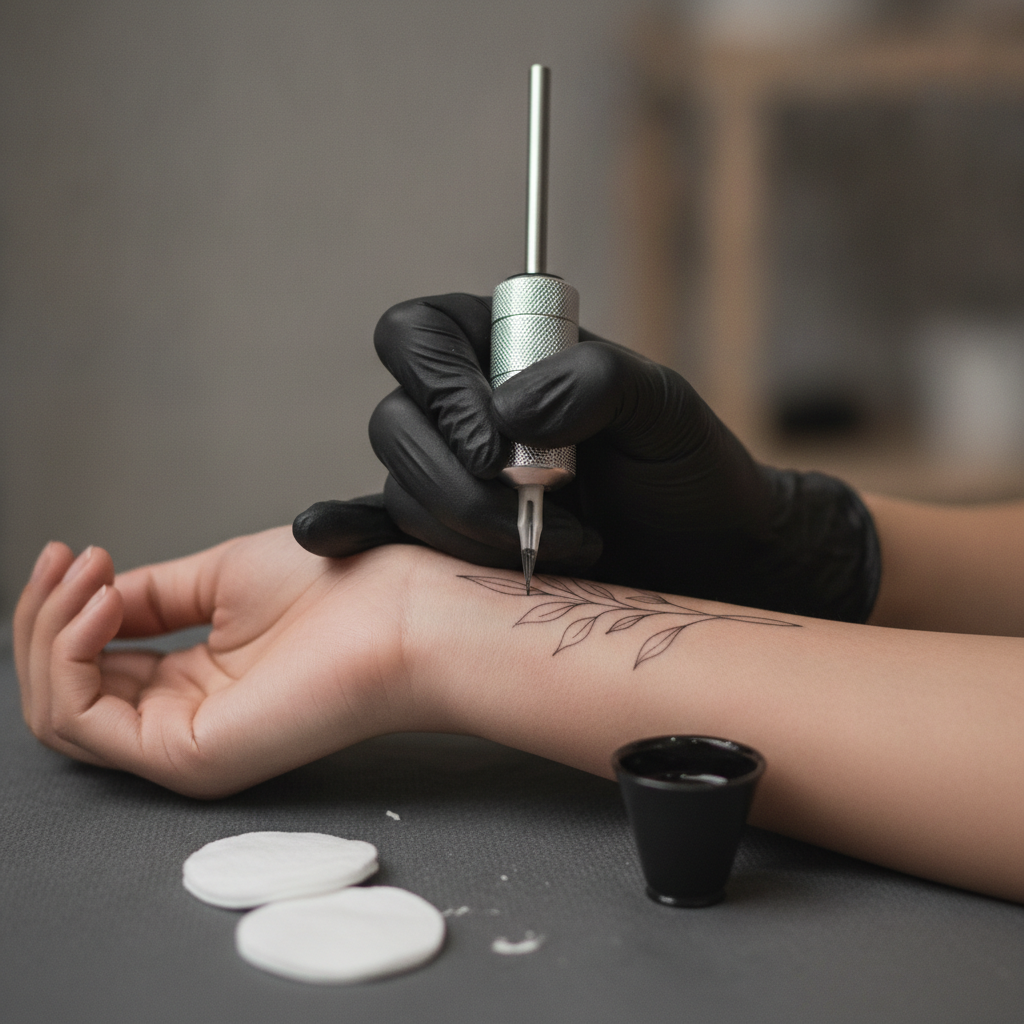
The jump from mid-career to established is where pricing logic stops being linear. You are paying for the artist's reputation, their ability to refuse work that does not fit their style, and the security that a single-needle line will not blow out six months later. Cheap fine-line work fails more often than cheap traditional work because the margin for error on a 0.18mm needle is so much smaller. Tattoo blowouts on fine-line pieces are often unfixable without a full cover-up.
City and country price differences
Geography shifts the baseline more than any other factor. A piece that costs $350 in Austin runs $600 in Manhattan and $180 in Bangkok at comparable quality tiers. Rough 2026 averages for a three-inch fine-line forearm piece:
- New York, Los Angeles, San Francisco: $400 to $700
- Chicago, Austin, Miami, Seattle: $300 to $550
- Mid-size U.S. cities: $250 to $450
- London, Paris, Berlin: €280 to €550
- Tokyo, Seoul: ¥35,000 to ¥80,000
- Bangkok, Bali, Ho Chi Minh City: $120 to $280
- Mexico City, Buenos Aires: $80 to $200
The Southeast Asia and Latin America numbers are not always lower quality. Several of the most-followed fine-line artists on Instagram work out of Bali, Bangkok, and Mexico City because the cost of living lets them charge less while still earning well. Getting a tattoo in Bali is a legitimate option if you research the studio's hygiene certifications carefully.
What drives the price beyond size and city
Several factors push a fine-line quote up that first-timers do not anticipate. Placement on high-mobility skin like the inner wrist, fingers, or feet adds 20 to 40 percent because the artist works slower and the design needs simplification to survive the healing process. Color in a fine-line piece adds time and ink cost, often another 30 percent over pure black single-needle work. Custom design fees range from $50 to $300 depending on how many revisions the artist offers before the appointment.
Stencil complexity matters more than people realize. A botanical piece with twelve overlapping leaves needs a precise multi-layer stencil that the artist may build over two days. Some studios bill design time separately at half the hourly rate, others fold it into the deposit. Always ask before booking.
Touch-ups are another line item. Fine-line work fades faster than bold styles because the lines are thinner and the ink sits in a smaller channel. Most artists offer one free touch-up within three to six months, but the second touch-up typically costs $80 to $200. Budget for this from the start if you want the piece to look crisp at year three. See our touch-up cost guide for the full breakdown.
Deposits, tips, and the real out-the-door price
The sticker price you get over email is rarely what you pay. A typical 2026 booking flow:
- Non-refundable deposit of $100 to $300 at booking, applied to the final invoice
- Custom design fee if the piece requires original artwork, $50 to $300
- Studio minimum applies to any single session, usually $100 to $200
- Final invoice for needle time at the agreed hourly rate
- Tip, typically 20 to 25 percent of the pre-tip total
A $400 quote becomes $480 to $500 once you add a 20 percent tip, which is now the U.S. standard for tattoo work. Tipping guidance varies by region but undertipping on a fine-line piece is a fast way to find yourself off the artist's books for future work. In Europe and most of Asia tipping is optional and 10 percent is generous rather than expected.
When fine-line is worth paying more for
The case for spending $400 on a small piece instead of $150 comes down to two things: line quality and longevity. A clean single-needle line laid by a specialist will still look like a single line at year five. A budget piece often spreads into a fuzzy double line within eighteen months as the ink migrates in the dermis. The difference is invisible the day you walk out of the studio and brutal three years later.
If your design is purely decorative and you accept that it may need redoing in a few years, a mid-tier artist at $150 per hour is fine. If the piece is a memorial, a name, or anything you want crisp for a decade, save until you can book the established artist. The wait list is part of the product.
Frequently asked
Why does a tiny fine-line tattoo cost so much? Fine-line work uses a single needle that lays less ink per pass, so the artist takes more time per square inch than they would with a three-liner. You are also paying the shop minimum, which usually covers setup, sterilization, and the first $100 to $200 of artist time regardless of how fast the piece goes.
Can I negotiate fine-line tattoo prices? Not at established studios. Trying to negotiate is read as disrespectful and often gets you politely declined. You can ask whether a smaller version of the design fits your budget, which is a different conversation, or whether the artist takes flash bookings at a lower rate.
Is fine-line worth the extra money compared to traditional? For small delicate designs, yes, because fine-line is what makes those designs possible. For larger compositions, traditional and neo-traditional often age better and cost less per square inch. Match the style to the size and intent of the piece, not the trend cycle.
How long does a typical fine-line session take? A small wrist or ankle piece takes 45 to 90 minutes including stencil placement. A forearm botanical piece runs two to four hours. Larger compositions usually split across multiple sessions to keep skin trauma low and lines clean.
What should the deposit be on a fine-line tattoo? Industry standard in 2026 is 20 to 30 percent of the estimated total, with a $100 minimum. Anything above 50 percent is a red flag unless the artist is doing significant custom design work upfront. See the full tattoo deposit guide.
Will my fine-line tattoo fade faster than other styles? Yes, slightly. Thin lines hold less ink so they show fade earlier than bolder work. Sun exposure is the biggest factor. Daily sunscreen on the piece from month three onward makes a measurable difference at year five.