cost guides
Lettering Tattoo Cost: Script, Block, and Custom Pricing in 2026
Lettering tattoos run $80 to $2,500 depending on font, length, placement, and whether the design is custom-drawn or picked from a font sheet.
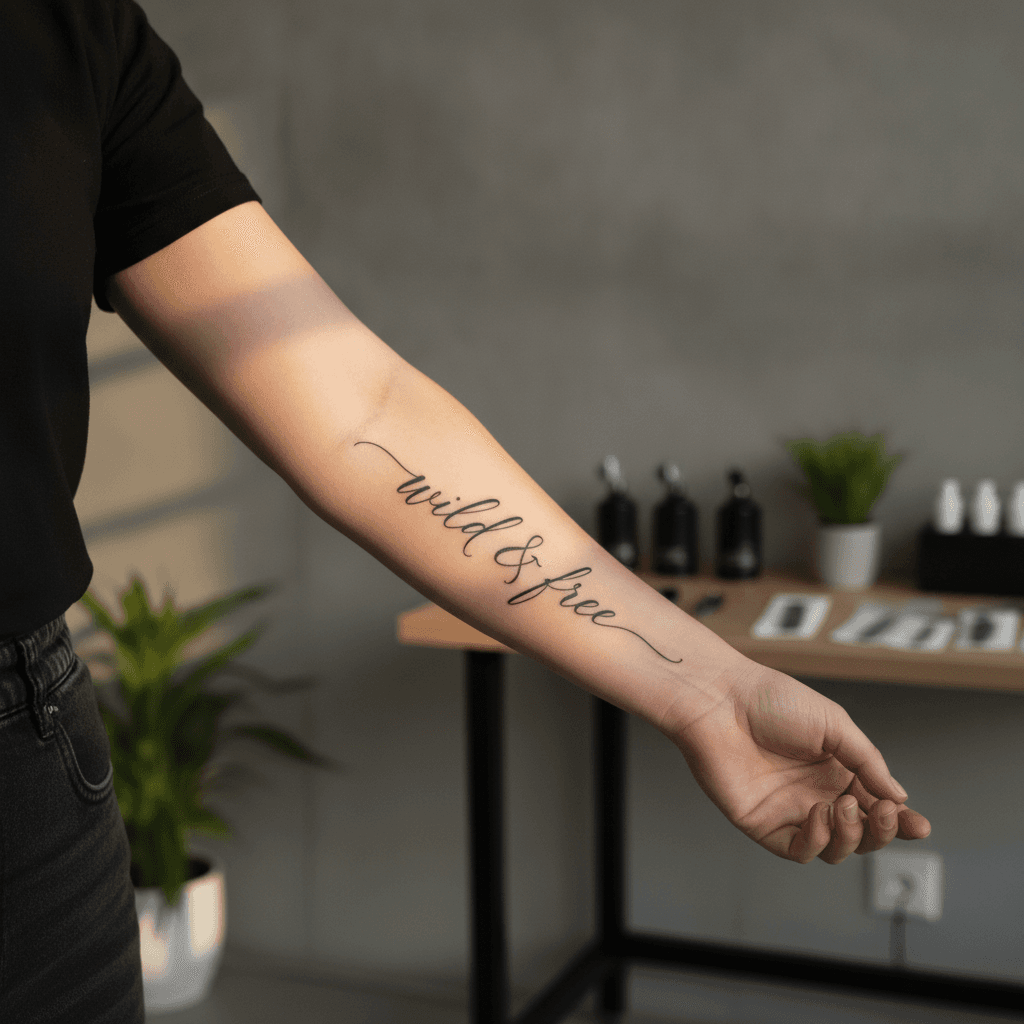
Lettering looks simple on paper and priced like it should be cheap. In practice it is one of the most technically demanding tattoos an artist takes on, because a single wobbly line ruins a word forever and the client reads that word every day for the rest of their life. This guide breaks down what lettering tattoos actually cost in 2026, why fonts, length, and placement move the number so much, and where budget clients tend to overpay or underpay for the work they end up with.
Base pricing by size and font style
A short single-word script tattoo in a common font sits at the shop minimum, which in most US cities runs $80 to $150 in 2026. Once you cross into three or four words, or start layering a decorative serif or gothic blackletter, you are usually looking at $150 to $350 for something that fits on a wrist, ankle, or ribcage line. A full quote spanning the length of a forearm, spine, or collarbone typically lands between $400 and $900, and once you want custom-drawn lettering with flourishes, ornamentation, or a mixed script and illustrative layout you are quickly in the $800 to $2,500 range for a single sitting.
Font style is the biggest hidden multiplier. Single-needle fine-line script demands more time per letter than bold sans-serif block, and blackletter or old English requires layered fills that push a small piece past what looks like a fair rate for its size. If you are comparing quotes, ask specifically whether the artist priced the lettering as flat-rate flash or as custom work, because the same three words can differ by $300 depending on that one answer. A useful primer on the wider pricing model is our breakdown of hourly vs flat-rate tattoo pricing, which explains why lettering artists often prefer flat quotes for anything under an hour.
Custom-drawn vs font-sheet lettering
Picking a word in a downloadable font and having it stenciled is the cheap route. Most shops charge $80 to $200 for a straight font-sheet job because there is no design labor, and the artist can move from consult to needle in under an hour. The tradeoff is that the tattoo reads like every other version of that font on Pinterest, and if the font was designed for print rather than skin, letters like lowercase e, a, and o will thicken and blur as the ink settles over the first year.
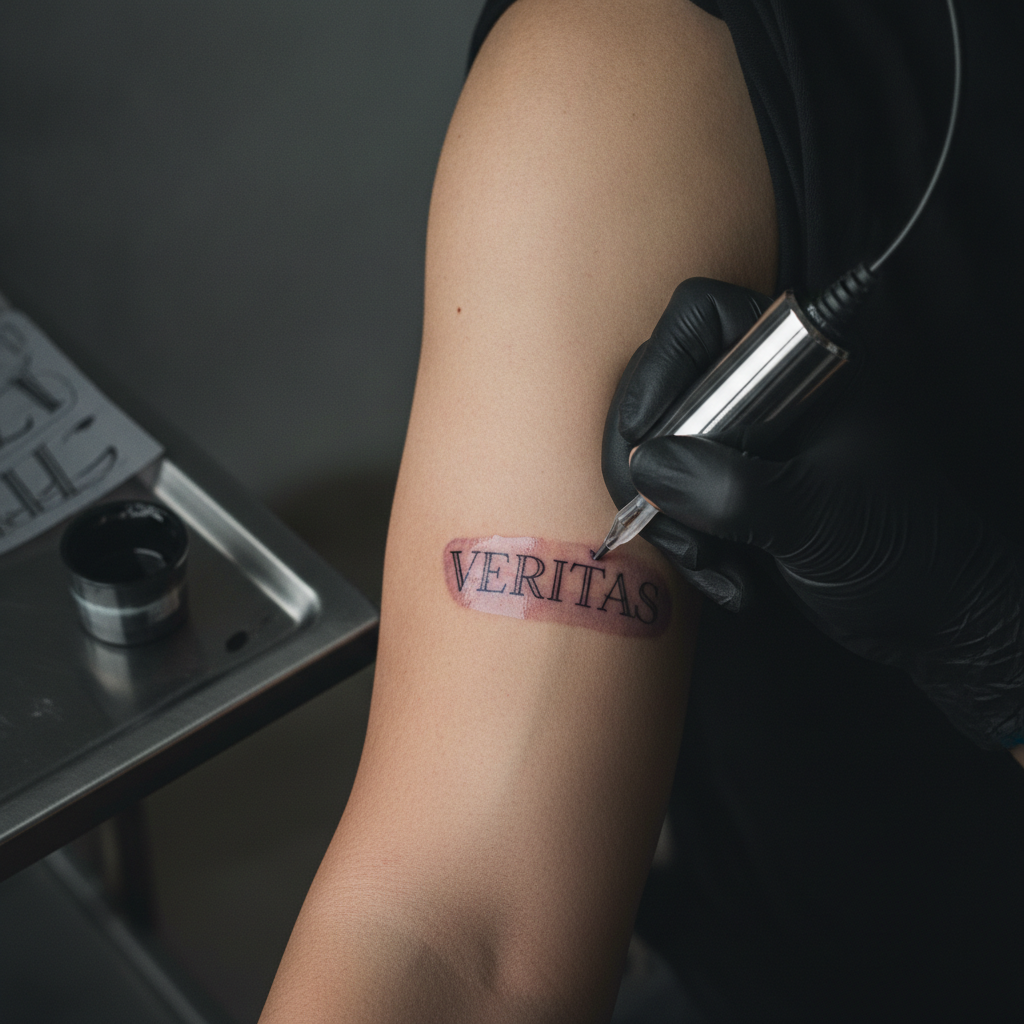
Custom-drawn lettering is a different product. The artist charges a design fee, usually $75 to $250 folded into the total, and spends anywhere from one to four hours drafting a piece that accounts for how strokes will spread on your specific skin, how the word flows around the natural curve of the placement, and how the composition reads at arm's length. Expect $350 to $900 for a custom-drawn wrist or forearm piece, and $900 to $2,500 for anything spanning the spine, ribcage, or full sternum with ornamental flourishes. The premium buys longevity and a design that ages cleanly, which is the entire point of paying for lettering that will be legible in twenty years.
What placement does to the price
Placement changes lettering pricing more than most clients expect, because thin skin, high movement, and awkward angles all force the artist to work slower. A wrist or inner forearm quote is straightforward and prices track directly with word count and font complexity. Move the same piece to the ribs, sternum, or spine and expect a placement premium of 20 to 40 percent, both because the client will need more breaks and because the artist has to stretch skin constantly to keep letter geometry from distorting.
Hands, fingers, and neck lettering sit at the top of the placement premium ladder for a different reason. These spots hold ink poorly, blow out easily, and often require a free touch-up at four to eight weeks, which the artist prices into the initial quote. A single-word finger tattoo that would cost $80 on a forearm often runs $150 to $250 on the finger for exactly that reason. Compare notes with our detailed guides on hand tattoo cost and neck tattoo cost before you commit to a placement that adds three digits to the quote.
Typical price bands to bookmark
- Shop minimum single word, common font: $80 to $150
- Short quote, wrist or ankle, clean script: $150 to $300
- Forearm sentence or clavicle line, custom-drawn: $350 to $700
- Ribcage or spine passage, ornamental script: $700 to $1,500
- Full sternum or back-of-neck ornamental blackletter with flourishes: $1,200 to $2,500
- Design fee for custom lettering, folded into total: $75 to $250
Hourly rates for lettering specialists in 2026 sit at $150 to $300 per hour in most US cities, and $250 to $450 per hour with named single-needle artists in New York, Los Angeles, and London. Most single-word lettering finishes in under an hour of needle time, but the artist bills for consult, drafting, stencil, and setup, which is why the total quote rarely matches the raw needle minutes.
Artist tier and specialisation premium
Lettering is one of the few tattoo categories where booking a specialist genuinely changes the price. A general shop artist will quote a script forearm piece around their normal hourly rate. A lettering specialist, especially one who hand-draws every commission and works exclusively with single-needle or fine-liner setups, will quote 30 to 80 percent higher for the same square inches. The reason is durability, since specialists build stroke weight and letter spacing to survive the ink spread that ruins amateur script tattoos within two years.
If you want the piece to still read cleanly at year five, budget for a lettering specialist and treat the extra $200 to $500 as insurance against a laser removal quote down the line. For context on removal, our tattoo removal cost guide walks through what it takes to erase a botched piece, and the numbers make paying up front for a specialist look reasonable.
Hidden costs most quotes miss
A first-time client usually forgets four line items that show up around the final bill. First is the deposit, typically $50 to $200, which locks in the appointment and is credited to the final price. Second is the tip, which runs 15 to 25 percent of the tattoo total and is standard for lettering the same as any other style. Third is touch-ups. Fine-line lettering on high-movement placements often needs one free touch-up at four to eight weeks, and shops that skip this pricing conversation early tend to charge $80 to $150 later.
Fourth is the redraw. If the client wants three or four rounds of design revision, the artist will fold that into the design fee at the start, but requesting a full redraw the morning of the appointment can add $100 to $300 or push the session to a second visit entirely. Clear communication at the consult stage prevents almost every one of these surprises, which is a habit worth building for any tattoo but doubly for lettering, where the word itself has to be right before the needle touches skin.
Frequently asked
Why does a small lettering tattoo cost as much as a larger illustration? Lettering is priced on precision, not surface area. Every letter has to be geometrically correct, evenly spaced, and stroked at a consistent weight, and small mistakes are more visible in text than in illustration. Artists price that difficulty into the quote regardless of size.
Is script or block lettering cheaper? Straight block lettering in a common font is usually the cheapest option, since there are fewer decorative strokes and no complex flourishes to draft. Script and cursive add drafting time and needle passes, and blackletter or old English runs the highest of the three because of layered fills.
How much should I budget for a memorial quote across my forearm? Plan for $400 to $900 in most US cities for a clean custom-drawn quote spanning the forearm. If you want an ornamental font, a flourish under the last word, or a fine-line signature at the end, budget closer to $700 to $1,200 and give the artist two to three weeks of drafting lead time.
Do lettering tattoos need more touch-ups than other styles? Yes, especially on hands, fingers, ribs, and feet. Thin lines blur first, and lettering has almost no forgiveness for that spread. Expect one touch-up around week four to eight and possibly another at year three, and ask up front whether the first touch-up is included.
Can I bring my own font and have the artist copy it? Most artists will work from a reference font, but expect them to adjust letter shapes so the design survives ink spread on skin. If you want a literal one-to-one copy of a print font, understand the tattoo will look thicker and less crisp than the reference within a year, and a good lettering artist will push back on the choice for that reason.
Is it worth flying out to a lettering specialist? For a small single-word piece, no. For a spine, sternum, or full-sleeve script composition that you plan to keep visible, yes. The difference between generalist and specialist lettering shows up most on ambitious pieces, and travel plus the specialist rate still tends to come in under the removal cost of a piece that ages poorly.