style guides
Blackout Tattoos: Style Guide, Risks, and What to Expect
Blackout tattoos saturate large sections of skin with solid black ink. Here is how the style works, what it costs, how it heals, and who it suits.
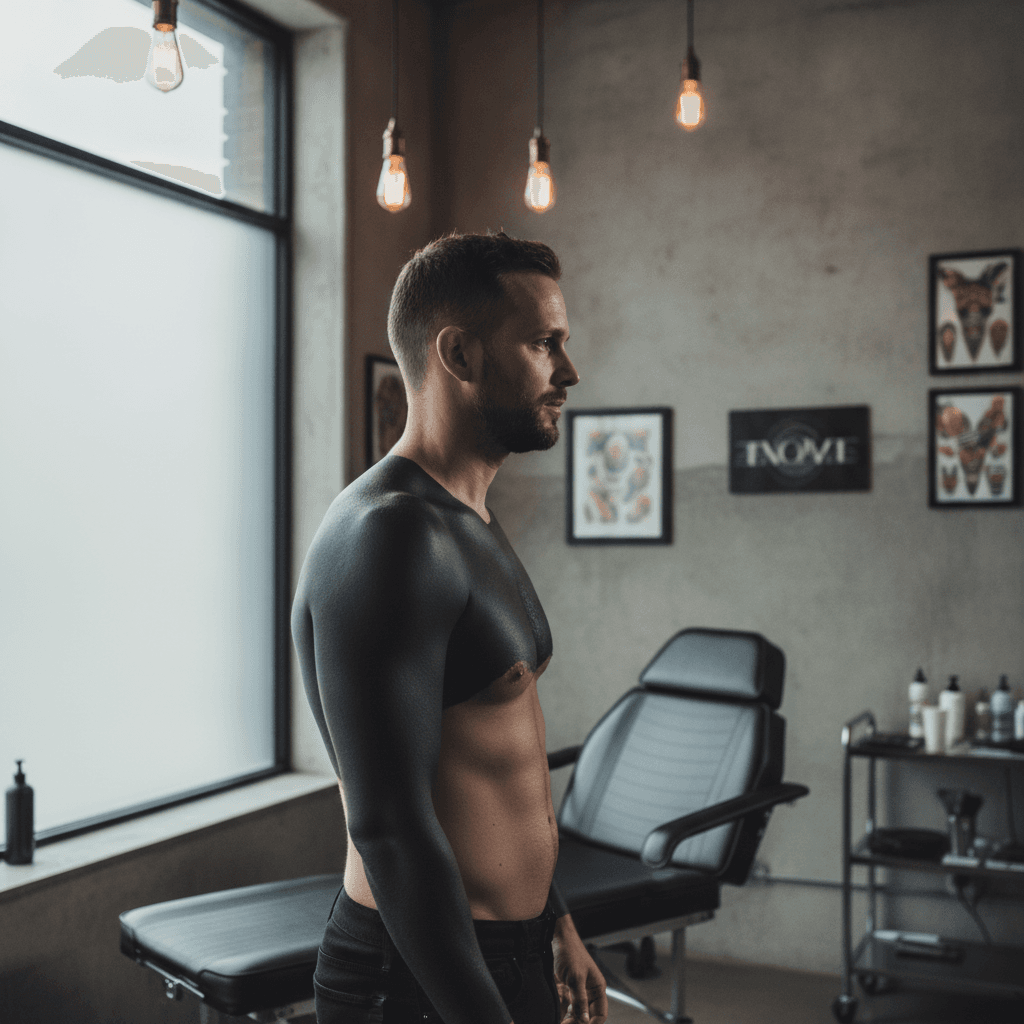
Blackout tattoos take a section of skin and fill it with solid black ink until nothing else shows through. A full forearm, half a chest, an entire calf, sometimes a whole sleeve. The result reads like a shape, not a picture. It is one of the most aggressive commitments in modern tattooing, and the style has grown fast over the last decade thanks to artists like Chester Lee and Hoode who built entire careers on it. This guide covers what the style actually is, how the process works, what it costs, how it heals, and the specific risks you need to weigh before booking a consult.
What a blackout tattoo actually is
A blackout is any tattoo where large connected areas of skin are packed with solid black ink to full saturation. There is no shading, no negative space inside the blackout field, and often no imagery. Some pieces are pure geometric shapes. Others use the black as a background for later negative-space linework or white-ink detail. The style sits under the broader blackwork umbrella but is distinct from dense illustrative blackwork or dotwork shading. A dense blackwork sleeve might use 60 percent ink coverage with negative space bones between motifs. A true blackout is 95 to 100 percent solid coverage across a defined region.
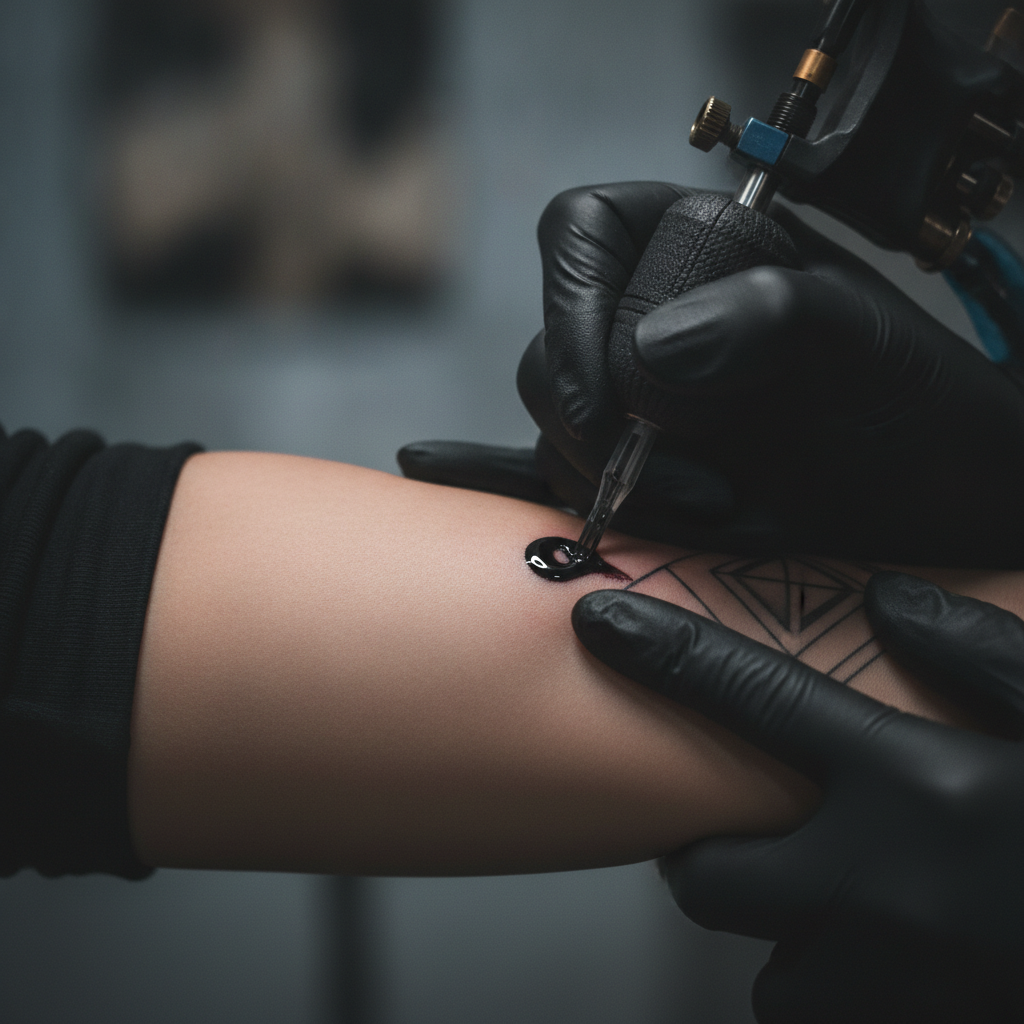
Artists use magnum needle groupings, usually 15M to 27M curved magnums, and pack ink in slow overlapping passes. The goal is a flat matte black surface with no light patches, no gaps around hair follicles, and clean edges where the black meets untattooed skin. That edge line is the hardest part of the whole piece. A wobbly transition ruins the visual effect, so most blackout artists spend as much time on the border as they do on the fill.
How the process actually works
Blackout work is almost never done in one session. Skin can only tolerate so much trauma before it stops accepting ink, and packed black requires two to four passes in the same area to reach full saturation. Most artists split a large blackout into base pass, fill pass, and touch-up pass, with four to eight weeks of healing between each.
- Session 1: base pass. The artist packs an even but lighter layer of black across the entire area. It looks patchy and grey-black when healed.
- Session 2: fill pass. Second pass over the same area at higher saturation. This is when the piece starts to read as true solid black.
- Session 3: touch-up. Small light patches, edge cleanup, and any areas that pushed ink out during healing.
Session length runs three to six hours because packing solid black is slow and fatiguing for the artist and painful for you. Pain sits toward the higher end of the pain chart since you are getting the same square inch of skin worked repeatedly rather than a line drawn once. Numbing cream helps for the first hour but wears off, and most artists will not use it near the edge line because it firms the skin and makes the border harder to cut clean.
What it costs
Blackout pricing runs higher per square inch than most other styles because of session count and needle wear. A full sleeve blackout, forearm to shoulder, typically lands between $2,500 and $6,000 across three or four sessions with a mid-tier artist. A single forearm panel runs $800 to $2,000. A calf blackout is $1,500 to $3,500. Chest and back pieces scale higher, often $4,000 to $10,000 for a half chest or single shoulder blade.
Most blackout specialists charge hourly at $180 to $350 per hour rather than flat rate, since the total ink and needle burn is hard to predict. If you are booking with a name artist like Chester Lee or one of his direct students, expect $400 to $600 per hour and a six to twelve month waitlist. Read the hourly vs flat rate guide if you want to understand which pricing model favors you for a multi-session piece. Deposits are usually 20 to 30 percent and are non-refundable if you cancel inside two weeks.
Healing is different from a normal tattoo
A blackout heals harder than any other tattoo style. The skin has been traumatized across a huge continuous surface, and the swelling, oozing, and scabbing all happen at scale. Expect the tattooed area to weep plasma and ink for 48 to 72 hours. Sleep on old sheets and put a towel down. The wrap-and-wash protocol from the first 24 hours guide still applies, but you may need to change second-skin wraps twice a day instead of once because of the volume of fluid.
Peeling starts around day 5 to 7 and looks alarming. Sheets of grey-black skin come off in the shower. This is normal and does not mean the tattoo is failing. The skin underneath will look uneven and patchy for two to three weeks. Do not judge the result until at least six weeks post-session, and do not book the touch-up session until then. Full healing to the point where you can evaluate saturation takes eight to twelve weeks, longer than the four to six weeks most tattoos need. Keep the area out of direct sun for the entire healing window and use SPF 50 mineral sunscreen for life after that. UV fades black ink faster than most people expect, and a faded blackout looks noticeably worse than a faded linework piece because the flat field shows every inconsistency.
When blackout works well and when it does not
Blackout is often chosen for cover-ups over old tribal work, botched pieces, or tattoos that are too dense to salvage with a traditional cover-up. It reads as a fresh design choice rather than an obvious patch. It also suits people who want a bold graphic silhouette rather than imagery.
It does not suit everyone. If you have prominent moles in the target area, most reputable artists will tattoo around them, leaving small skin-colored islands in the black field. This is a safety practice, not an aesthetic choice. Covering moles with ink makes future skin cancer screening much harder. Blackout also does not sit well on people who scar easily or who have keloid tendencies. The volume of trauma across a large surface increases the risk of raised scarring, and once scarred skin is under solid black, the texture stays visible.
The real risks
Blackout carries three risks worth taking seriously before you commit.
- Ink rejection and blowout. Packing black to saturation over multiple sessions can push pigment into deeper skin layers, causing a bluish halo around the edges. Read the blowout guide for prevention specifics. Choose an artist with a proven blackout portfolio and healed photos, not just fresh work.
- Scarring. Repeat trauma to the same area can raise the skin. Some people never scar, others develop visible ridges especially on the sternum, shoulder blade, or inner bicep.
- Removal is essentially impossible. Laser removal works by breaking down pigment particles the immune system can carry away. A blackout piece contains an order of magnitude more ink than a normal tattoo. Even 20 sessions of Q-switched laser will not fully clear it, and the process risks scarring and hypopigmentation. Regret is not an option here. Live with the design on paper for at least six months before booking.
Frequently asked
How many sessions does a full blackout sleeve take? Three to five sessions is typical, spaced six to eight weeks apart. Total time from consult to finished piece runs six to twelve months. Rushing between sessions damages skin and produces a patchier result.
Does blackout ink turn blue or green over time? Modern black inks from brands like Fusion, Eternal, and Solid Ink are formulated to stay black. Older India-ink based blackwork from the 1990s and early 2000s did shift toward blue-grey. A well-executed modern blackout with quality ink stays true black for 10 to 15 years before noticeable fade, longer with SPF discipline.
Can I get color or white ink over a blackout later? White ink over healed black almost always reads grey, not white, and fades within two to three years. Some artists offer white highlights but manage expectations. Negative-space linework, where the artist plans a design first and packs black around it, is the reliable path to detail inside a blackout region.
Is a blackout more painful than a regular tattoo? Yes, meaningfully so. The pain is not sharper per line, but the duration and the repeated work over the same skin makes it a slog. Most people describe hours four and five of a blackout session as the hardest tattoo experience of their life. Eat a full meal beforehand, hydrate, and take breaks.
Can I get a blackout if I have dark skin? Yes, and it heals beautifully on medium to deep skin tones. Contrast against the surrounding skin is lower, which some people prefer for a subtler graphic effect. Choose an artist experienced with darker skin since needle depth and technique differ from work on light skin.
What happens if I hate it in five years? Assume you will still have it. Laser removal is impractical at this scale. Cover-up options on top of a blackout are limited to white or heavy color work by a specialist, and results are unpredictable. This is why the six-month rule matters. If you are not certain after living with the design idea for that long, do not book.