cost guides
Tattoo Minimum Charge: Why Small Tattoos Cost More Per Inch
Most tattoo shops charge a minimum of $80 to $200 even for the smallest design. Here's why setup costs drive the floor and how to make the most of it.
Most first-time tattoo seekers learn the minimum charge the hard way. You walk into a shop with a tiny design idea, expecting to pay maybe forty dollars, and the artist quotes you one hundred and twenty. Nothing has changed about your design. The shop is just protecting its floor. Tattoo minimum charges run $80 to $200 in most US markets, and the reason has almost nothing to do with the size of your tattoo and almost everything to do with what happens before the needle touches your skin.
What a tattoo minimum charge actually is
A minimum charge is the lowest amount a shop or artist will accept for any tattoo, regardless of how small or simple. Most US shops set their floor between $80 and $200. High-end private studios in Brooklyn, Los Angeles, and Toronto often start at $250 or more. Small-town shops sometimes go as low as $60, but that has been getting rare. The minimum exists because the fixed costs of running a session do not shrink with the size of your design.
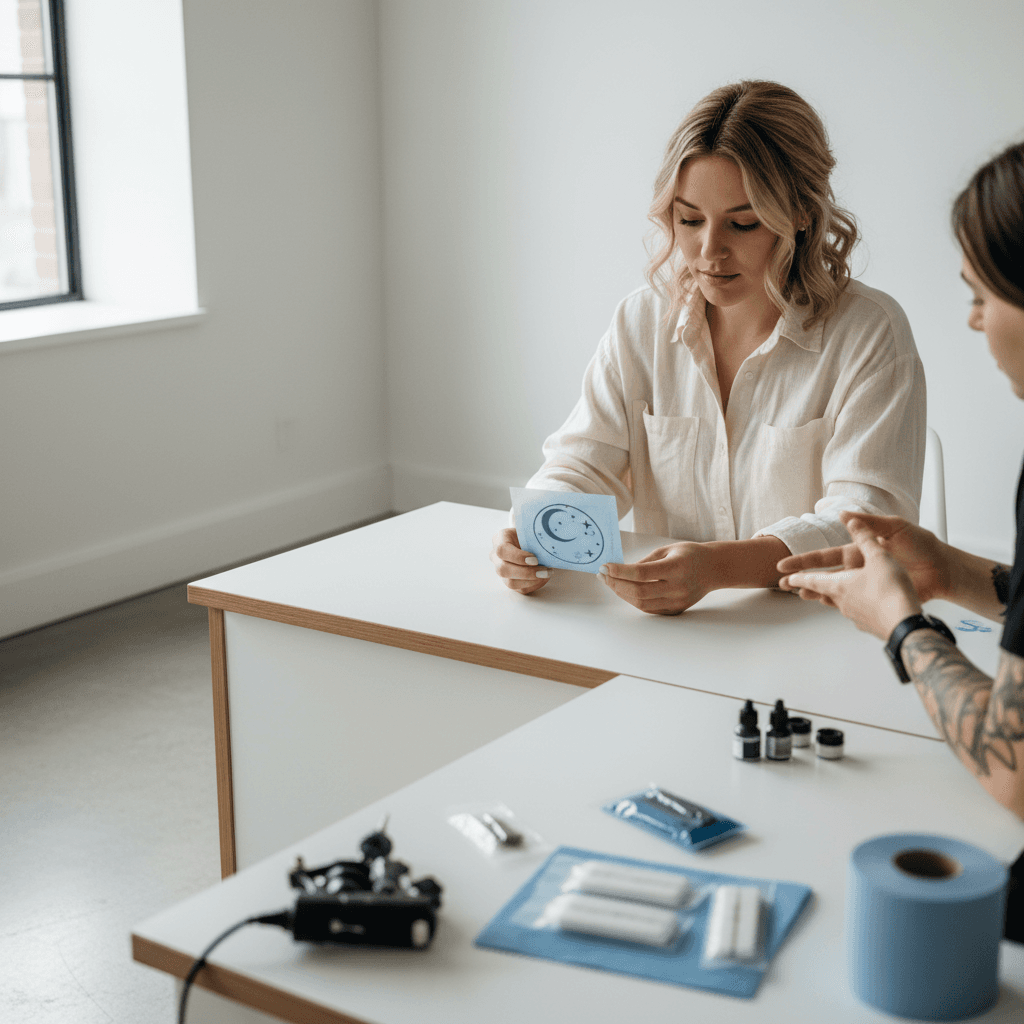
Think about what happens between you booking the appointment and the first line going down. The artist sets up a fresh station, opens new needles, pours new ink caps, drapes the chair, prints the stencil, applies it, and walks you through aftercare. That sequence takes 20 to 45 minutes whether you are getting a single dot or a half sleeve. Then the shop has to clean and re-sterilize everything after you leave. The minimum is the price of being one of the artist's slots that day.
Why setup costs drive the floor
Tattoo supplies are not as cheap as they look from the customer side. A box of disposable cartridge needles costs $25 to $90 depending on configuration. Ink caps, gloves, barrier film, razors, green soap, stencil paper, sterile water, and machine sleeves add up to $8 to $15 per setup before you count the artist's time. Autoclave maintenance, shop rent, license fees, and insurance all run on the same fixed schedule whether the artist did one tattoo or seven that day. Most American shops split revenue with the artist at 50 to 60 percent on the artist's side, so the artist needs to clear enough above costs to make the booth time worthwhile.
Tattoo pricing in general is mostly about labor hours, but the minimum is the one place where fixed overhead dominates. If an artist averages four small tattoos per day at the minimum, and each one eats 30 minutes of setup and 20 minutes of actual tattooing, they are spending more than half their day on prep work that does not scale with design size. The minimum charge bakes that in.
Typical minimums by market
US averages by city tier as of 2026:
- Small markets (rural and suburban Midwest): $60 to $100
- Mid-tier cities (Austin, Denver, Nashville, Portland): $100 to $150
- Major coastal cities (NYC, LA, San Francisco, Seattle): $150 to $250
- High-end private studios anywhere: $250 to $500
International is its own conversation. Berlin shops average €80 to €120 minimums. Tokyo runs ¥10,000 to ¥20,000. Bangkok stays cheaper at 1,500 to 3,000 baht, roughly $42 to $85. London sits between $100 and $180 depending on the postcode. The cost of a small tattoo in Manhattan can be triple the same tattoo in a Bangkok studio, and the work is not three times better. You are paying for rent, license fees, and the local hourly rate ceiling.
What you actually get at the minimum
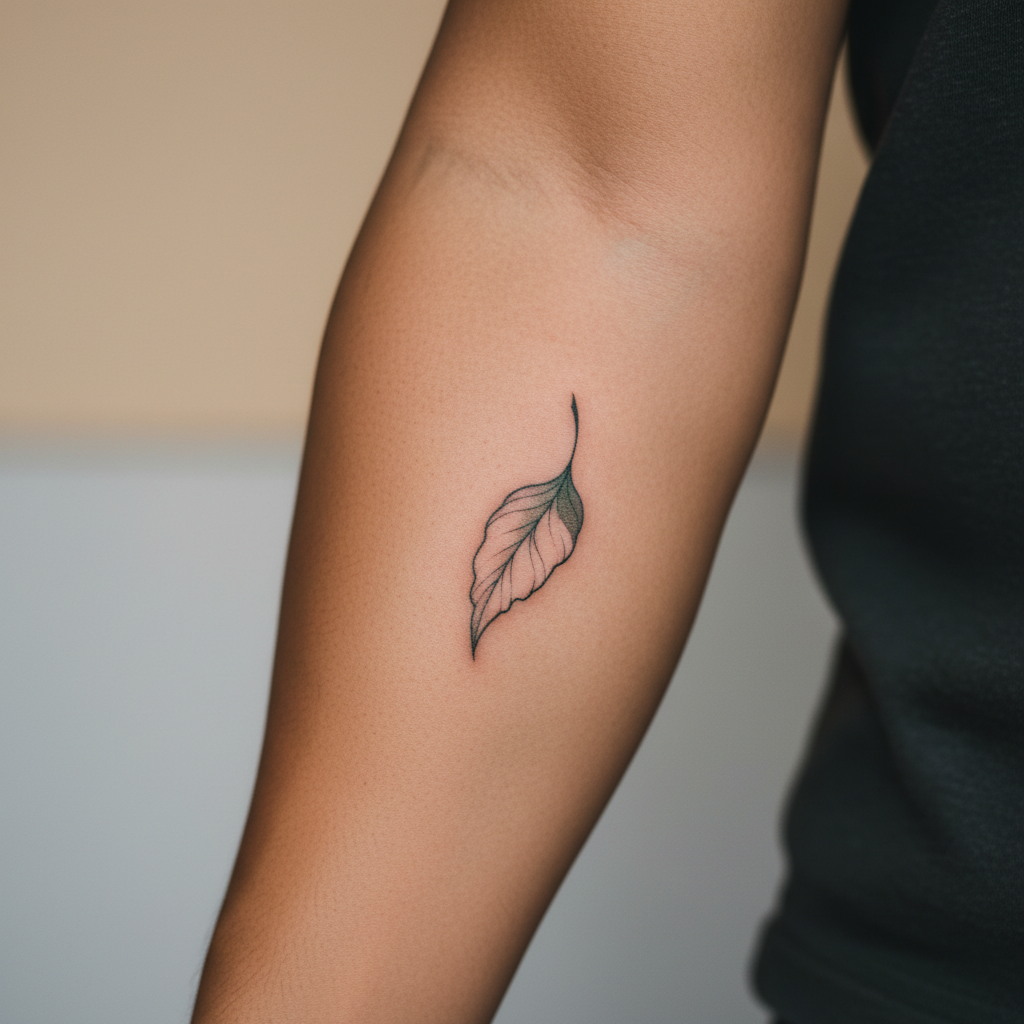
The minimum buys you up to about 30 minutes of needle time on most simple designs. That is enough for a small word in script, a single line drawing of a leaf or animal, a tiny symbol like a heart or arrow, or a small geometric shape. Anything that requires shading, color packing, or fine internal detail will quickly push past the floor. A single black-line lotus the size of a quarter sits comfortably at the minimum. The same lotus with watercolor wash and dotwork shading will usually price out at $150 to $250 because the actual tattoo time crosses an hour.
Two things are not included in the minimum charge: custom design work and revisions. If you want the artist to draw something from scratch instead of bringing a reference, expect a $50 to $150 design fee on top of the floor. Some artists fold the fee in if the tattoo is small enough; others charge separately. Always ask before the consult ends so you are not surprised at checkout.
How to make the minimum work for you
If you are paying the floor anyway, get the most out of it. Combine two tiny ideas into one stencil and have them placed near each other so the same setup covers both. Pick a design that uses the artist's strengths. A fine-line specialist will pack twice the detail into 25 minutes that a traditional artist would. Bring a clean reference instead of a vague description, since drawing time inside the booth eats into your needle time.
Things that are worth doing at the minimum:
- Small script word or short phrase
- Tiny symbolic line drawing (heart, arrow, moon, leaf, wave)
- Single geometric shape with no shading
- A matching micro-design with a friend at the same session
Things that almost always cost more than the minimum:
- Anything with color packing
- Fingers, hands, and feet (placement difficulty surcharge)
- Lettering longer than four to five words
- Any design with fine internal detail
- Cover-ups of an existing tattoo, even small ones
Deposits, tips, and the real total
Most shops require a $50 to $150 deposit at booking, which is applied to your minimum charge at the session. Deposits are usually non-refundable but can roll over if you reschedule with 48 hours notice. The deposit is not a separate cost. It is a hold on the appointment slot.
The other line item people forget is tipping. Standard is 20 to 25 percent on the final price, including minimum-charge sessions. A $150 minimum becomes a $180 to $190 cash-out after tip. Tipping at the minimum follows the same percentage as a full sleeve session, even if the work took 20 minutes, because the artist still gave you their booth time and full setup.
Frequently asked
Why is my tiny tattoo more expensive than a friend's bigger one? Your friend probably paid an hourly rate that worked out better per square inch because their tattoo crossed the threshold where the minimum stops mattering. A two-inch tattoo at a $150 minimum costs more per square inch than a six-inch piece at the same studio's $180 hourly rate. The minimum is the worst per-inch deal a shop offers, but it is also the only way to get small work done at a reputable studio.
Can I negotiate the minimum? Almost never. The minimum is the shop's protected floor and most studios enforce it across the whole team. Artists who quietly accept less than minimum tend to lose booth privileges. The one exception is friends-and-family pricing, which is at the artist's discretion and not something you ask for. If you want a lower number, find a smaller-market shop, not a bigger discount.
Is the minimum the same for apprentices? Apprentices usually charge $40 to $80 for the same work, sometimes free if they are still building portfolio. The tradeoff is variable quality and a much longer session for the same piece. For a permanent tattoo in a visible spot, the savings rarely justify the risk. For a hidden first tattoo where you mostly want the experience, an apprentice rate can be fair.
Does the minimum cover touch-ups? Most reputable shops include one free touch-up within 30 to 60 days of the original session, including on minimum-charge work. The fine print is that you have to follow proper aftercare. If healing went wrong because you skipped wrapping or scratched a scab, expect to pay a fresh minimum for the rework.
Why do hand and finger tattoos cost more even when they are tiny? Hand and finger tattoos take longer than they look. The skin is thin and uneven, the placement is awkward, and the fade rate is high enough that artists often refuse to do them without a waiver. Most shops add a 25 to 50 percent surcharge on top of the standard minimum for these placements. A $150 minimum becomes a $200 to $225 floor on a single finger letter.
Is the minimum higher for color tattoos than black work? Often yes, but not always at the same rate as larger color pieces. The minimum mostly covers setup, and color setup uses one or two extra ink caps that cost less than a dollar each. Where color drives cost up is the time needed to pack pigment, which usually pushes the session above the floor on its own.