design ideas
Hand Tattoo Ideas: Placement, Visibility, and Longevity
Hand tattoos look striking but age fast and sit in the most public spot on your body. Here is what to design, where to place, and how long it holds.

Hand tattoos sit in a category of their own. They are permanent in a way few other placements are, visible every time you shake hands, order coffee, or hold a phone, and they age faster than almost any other spot on the body. If you are weighing a hand piece, the design matters less than how you plan around friction, sun, and the fact that your palm washes dozens of times a day.
Why hands are a different placement entirely
The skin on the back of the hand is thin and pulled taut over tendons and bones. The side of the hand gets rubbed against desks, bags, and door handles all day. The fingers flex thousands of times between sunrise and bed. Every one of those factors speeds up ink breakdown, which is why a hand tattoo that looks crisp at the three-month mark can go blurry inside two years.
Palm tattoos are their own case. The palm sheds skin cells at a rate the forearm never comes close to, and most palm work needs a touch-up within six to twelve months. Some artists refuse palm work outright because the retention is so unpredictable. If you want a palm piece, go in expecting at least one and probably two sessions beyond the original, and budget accordingly.
Hands also catch more sun than any other common tattoo spot. UV is the single biggest driver of fade, and skipping sunscreen on your hands will cost you clarity faster than any other mistake. A good tattoo aftercare routine for a hand piece has to include SPF 30 or higher as a daily habit, not a vacation afterthought.
Placement zones and what each one can hold
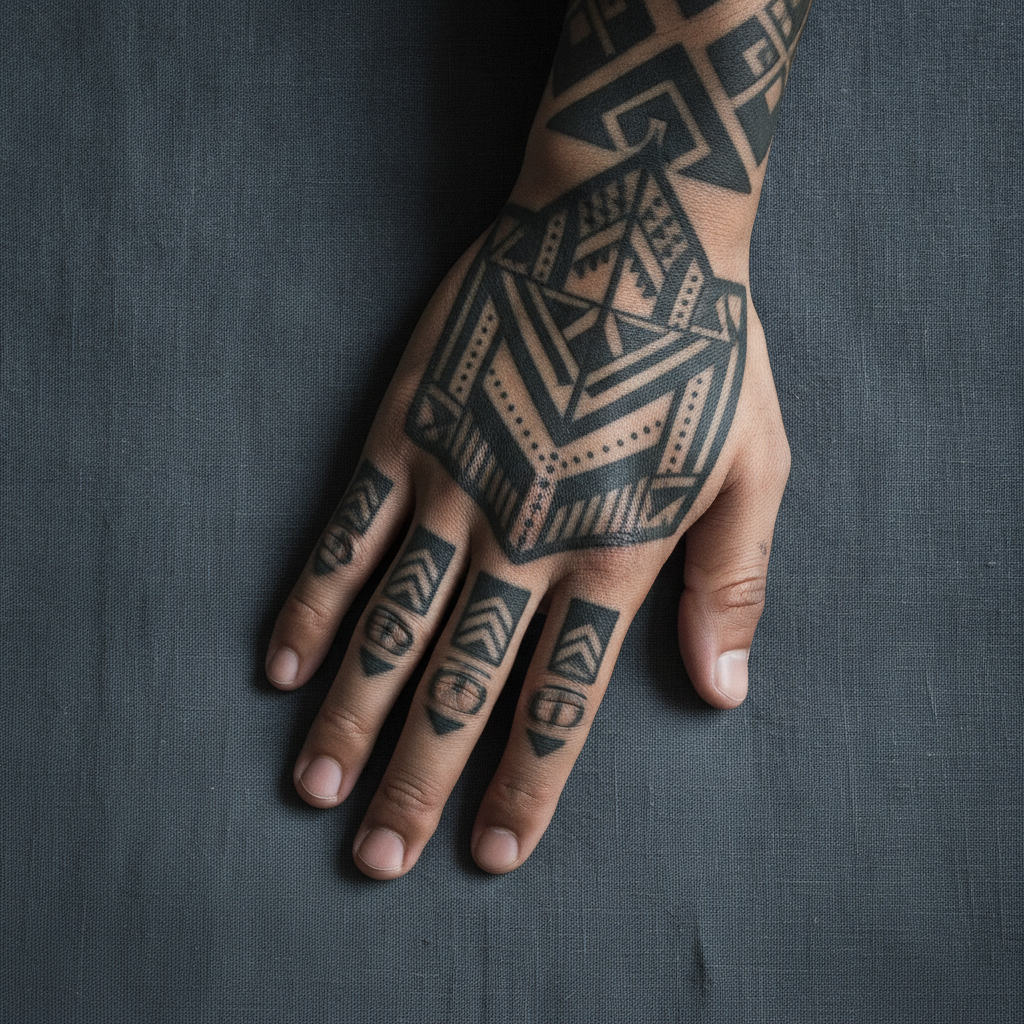
The back of the hand holds the most design real estate. You get roughly a 3 by 3 inch workable area between the wrist crease and the knuckle line, which is enough for a single bold motif, a small clustered scene, or a continuation piece from a sleeve. This is the most forgiving hand zone for detail, though detail here still means thicker lines than you would run on a forearm.
The fingers hold tiny single-element designs best. Rings, small symbols, single words in short fonts, and simple linework around the base of the finger all work. The sides of the fingers and the knuckle creases fade the fastest, so anything placed on a flex point should be designed with that in mind. Letters on knuckles are a classic look but need to be bold blackwork, not fine-line, to survive the first year.
The side of the hand, running from the pinky down toward the wrist, is a strong vertical panel for short script, a single flower stem, or a small list of names. It is less exposed to sun than the top of the hand, which helps retention, but it rubs against surfaces constantly, which hurts it.
Design scales that actually hold
The rule most artists follow for hands: if a line is thinner than 1mm, assume it will blur or disappear in two to five years. That rules out most fine-line work in the strict sense of the style. If you love fine-line tattoos, the hand is the one placement where you probably want to go up a size and thicken your lines by at least 30%.
Bold blackwork and traditional American styles age best on hands. The thicker ink deposits, the heavier outlines, and the solid fills all give the design something to hold onto as the top layers of skin cycle through. A traditional rose on the back of the hand photographed from a 1960s sailor will often still read clean today. A delicate single-needle floral spray from last year is likely already losing shape.
For scale, think in simple terms. One strong motif on the back of the hand works. Two medium motifs cluttered together usually does not. Fingers need to breathe between elements, which means one design element per finger segment and no attempt at fine shading. If you want multiple elements, run a cohesive composition across the full hand instead of stacking small pieces that will blur into each other.
Visibility and the job question
Hand tattoos are visible 100% of the time you are not wearing gloves. This matters more than people expect. Office norms have softened over the last decade but hand tattoos still read differently than a forearm piece that disappears under a cuff. Interviews, courtrooms, hospital work, airline crew roles, and most client-facing executive positions still skew conservative about visible ink on the hand.
Before you commit, do an honest audit. Will your current job care? Will the next three jobs you plausibly want? Some fields now treat hand tattoos as unremarkable. Others will quietly route you out of hiring loops. If you work in a field that cares, consider whether the piece you want could sit on the inside of the wrist, where you control visibility with a watch or a shirt cuff.
- Hidden placements for job flexibility: inner wrist, inside of the forearm, upper back, ribcage, upper thigh
- Semi-hidden placements: back of forearm (long-sleeve coverage), outer bicep, calf
- Fully exposed year-round: hands, fingers, neck, face
Cost, sessions, and touch-up timing
Hand tattoos run on the higher end per square inch than most other placements because they are technically difficult. The artist is working on a curved, thin-skinned, high-movement surface with no flat zone to anchor on. Expect $200 to $450 for a single small motif at a mid-tier shop, and $600 to $1,500 for a full back-of-hand composition from an experienced hand specialist. Hourly rates in major U.S. cities for hand work typically sit at $200 to $350 an hour.
Plan on a free or discounted touch-up at the four to eight week mark, which most shops include. Then plan on paid touch-ups every two to four years for the life of the tattoo. A fully-maintained hand piece from a good artist can look crisp for a decade. A hand tattoo that never gets touched up will usually read muddy by year five.
Session length tends to be short because the hand is painful and the skin cannot take extended work. Most hand pieces finish in a single 90-minute to 2-hour session, with the touch-up booked for 6 to 10 weeks later. Pain on the back of the hand runs sharp and bony. The side of the hand and the fingers rate among the more intense tattoo spots on standard pain charts, closer to the ribcage than the forearm.
Frequently asked
Will shops refuse to tattoo my hand if it is my first tattoo? Many reputable shops will. Hands, necks, and faces are commonly called "job stoppers" and some artists will not do them unless you already have significant work elsewhere. The reasoning is retention risk and permanence. If you are getting turned away, that is often a sign the artist is being careful, not difficult.
How long does a hand tattoo actually last before it needs work? With daily sunscreen, moisturizer, and a good initial heal, expect 2 to 4 years before the first noticeable fade. Without sun protection, 12 to 18 months is more realistic. Bold work holds longer than fine-line work. Finger tattoos almost always need touch-ups within the first year.
Does hand tattoo pain really hurt more than other spots? Yes for most people. The thin skin and bone proximity make the vibration and needle contact feel sharper than fleshy areas like the thigh or outer arm. Fingers and knuckles rate at the top of most tattoo pain charts along with the ribs and sternum. The sessions are short, which helps.
Can I get a palm tattoo? You can, but understand the retention. Palm tattoos fall out at rates ranging from partial fade to near-total loss within the first year. Plan on two to three sessions to lock in the design, and even then expect it to look softer than a tattoo on any other spot. Only certain artists will take palm work, and most will set expectations clearly before starting.
What should I avoid designing on a hand? Thin single-needle lines, dense micro-detail, small lettering under 10mm tall, delicate color gradients, and anything that depends on crisp edges to read correctly. All of these degrade fast on the hand. Portraits and ultra-realistic work also do not hold well in such a small, high-movement area.
How do I take care of a fresh hand tattoo when I need to wash my hands constantly? Wash with lukewarm water and unscented soap, pat dry, and apply a thin layer of unscented aftercare balm. For the first week, keep hand washes short and avoid soaking in dishwater, pools, or baths. Wearing nitrile gloves at work for the first 10 to 14 days is standard practice if your job involves frequent hand contact with water or chemicals.