aftercare
Drinking Alcohol After a New Tattoo: How Long to Wait
Drinking alcohol after a new tattoo can affect ink retention, healing speed, and how the piece looks long-term. Here is how long to wait and why it matters.
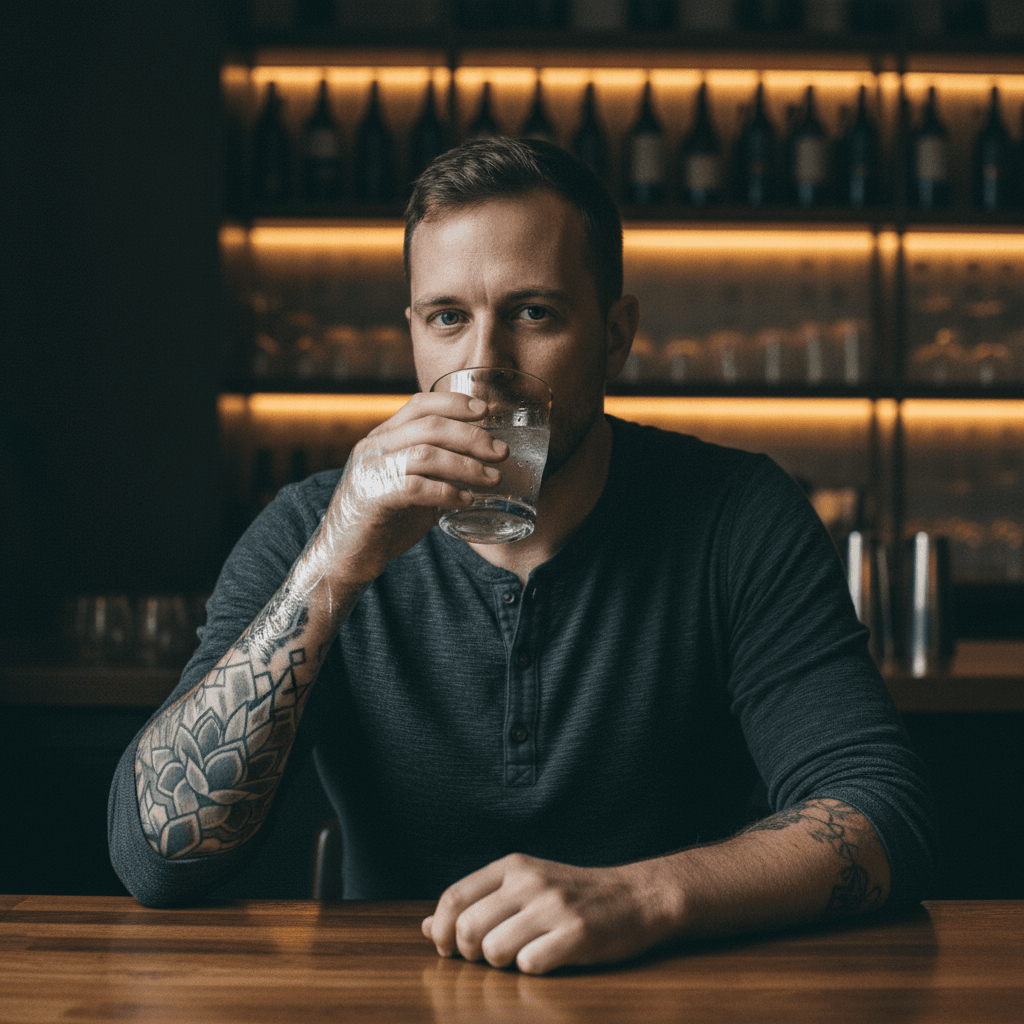
A drink after the chair feels earned. The session was three hours, your skin is buzzing, and a celebratory beer with the friend who came along makes sense. The problem is that alcohol changes how your blood behaves, and your fresh tattoo is a wound that needs that blood to behave normally. The first 24 to 48 hours after a tattoo are when most aftercare mistakes happen, and alcohol is one of the easier ones to avoid once you know what it actually does to fresh ink.
How alcohol affects fresh tattoo wounds
Alcohol is a vasodilator and a mild blood thinner. After even one or two standard drinks, blood vessels dilate and platelets become slightly less effective at clotting. For a tattoo that is still essentially an open wound, that translates to more plasma seeping through the skin, more diluted ink in the early hours, and a longer scabbing phase. Tattoo artists who have worked on hungover clients know the visual signature: the skin bleeds and weeps more during the session, ink pushes back out as the body tries to flush the foreign material, and the final saturation often comes out patchy.
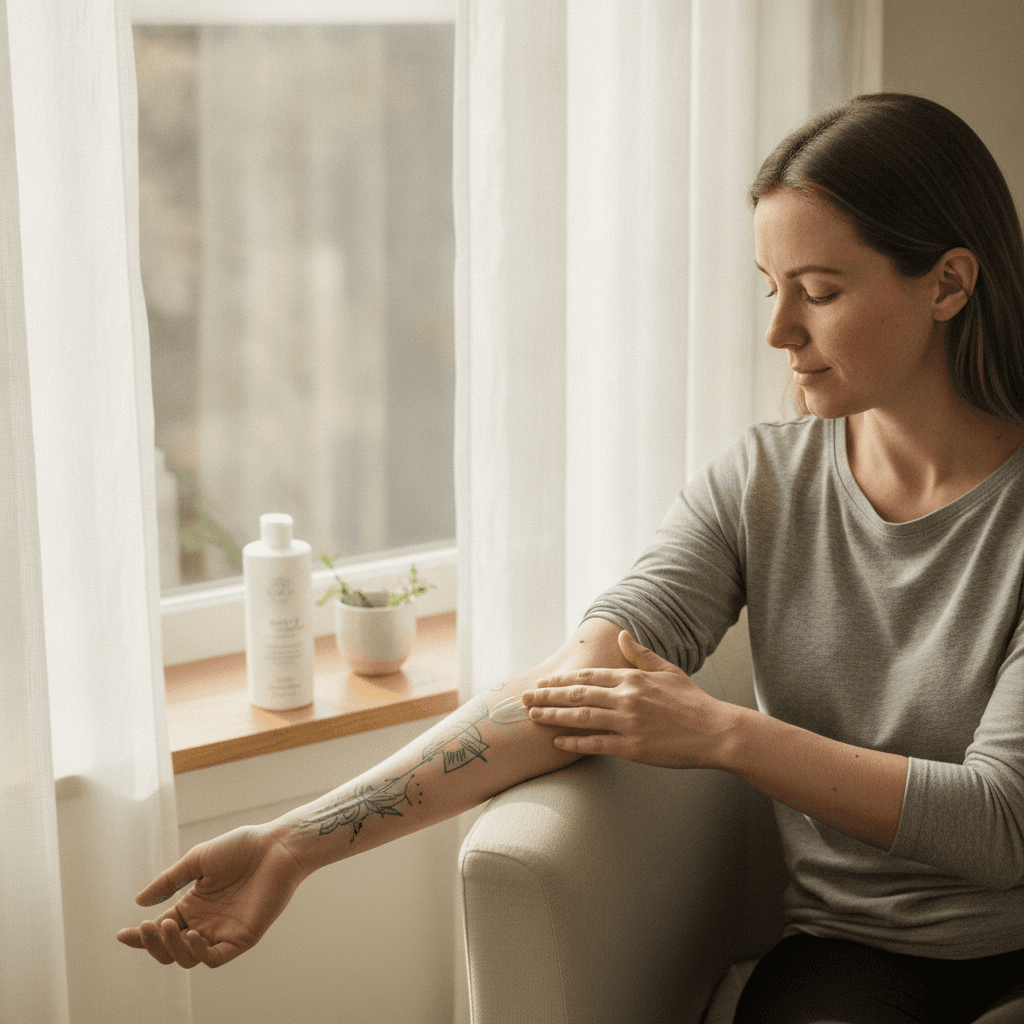
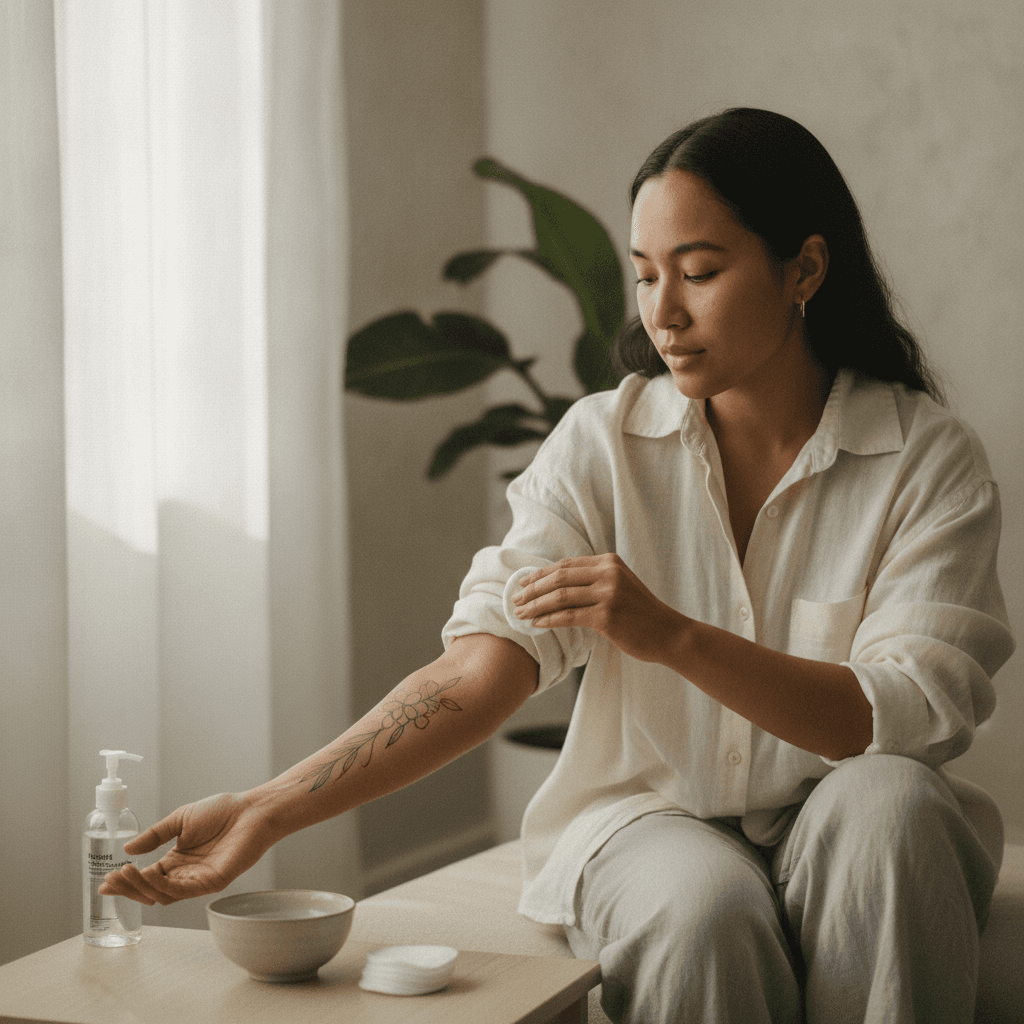
The same mechanism keeps causing trouble for the first 24 hours after you walk out of the studio. Your immune system is already mounting a response to thousands of tiny needle punctures, which is the same biology covered in our first 24 hours aftercare guide. Adding alcohol means you are asking a system under load to also process the equivalent of a mild toxin. Inflammation runs higher, fluid retention increases, and the redness around the tattoo lingers an extra day or two longer than it otherwise would.
How long to wait before drinking
The conservative window most reputable artists give is 48 hours. The biology supports a shorter version: 24 hours covers the worst of the plasma-leak window, which is when ink loss matters most. If you want to drink between hour 24 and hour 48, keep it to one or two drinks, hydrate aggressively alongside whatever you are drinking, and skip anything stronger than beer or wine. Spirits dehydrate harder and slow healing more per unit of alcohol than lower-ABV options.
Anything past 72 hours is essentially fine for most healthy adults. By then the tattoo has formed a stable seal, the scabbing process is underway, and your blood chemistry no longer threatens the saturation or color hold of the piece. If you want a sense of where your tattoo sits each day, the day-by-day healing timeline lines up with these alcohol windows almost exactly. The longer-term concern shifts from ink loss to immune-system load, which matters most for pieces that took multiple hours or covered large surface area.
- First 24 hours: zero alcohol. Single highest-impact window for ink loss and bleeding.
- 24 to 48 hours: one or two light drinks if you must, never spirits, hydrate alongside.
- 48 to 72 hours: moderate drinking is fine for most healthy adults.
- 72+ hours: no tattoo-specific restriction. Standard healing rules apply.
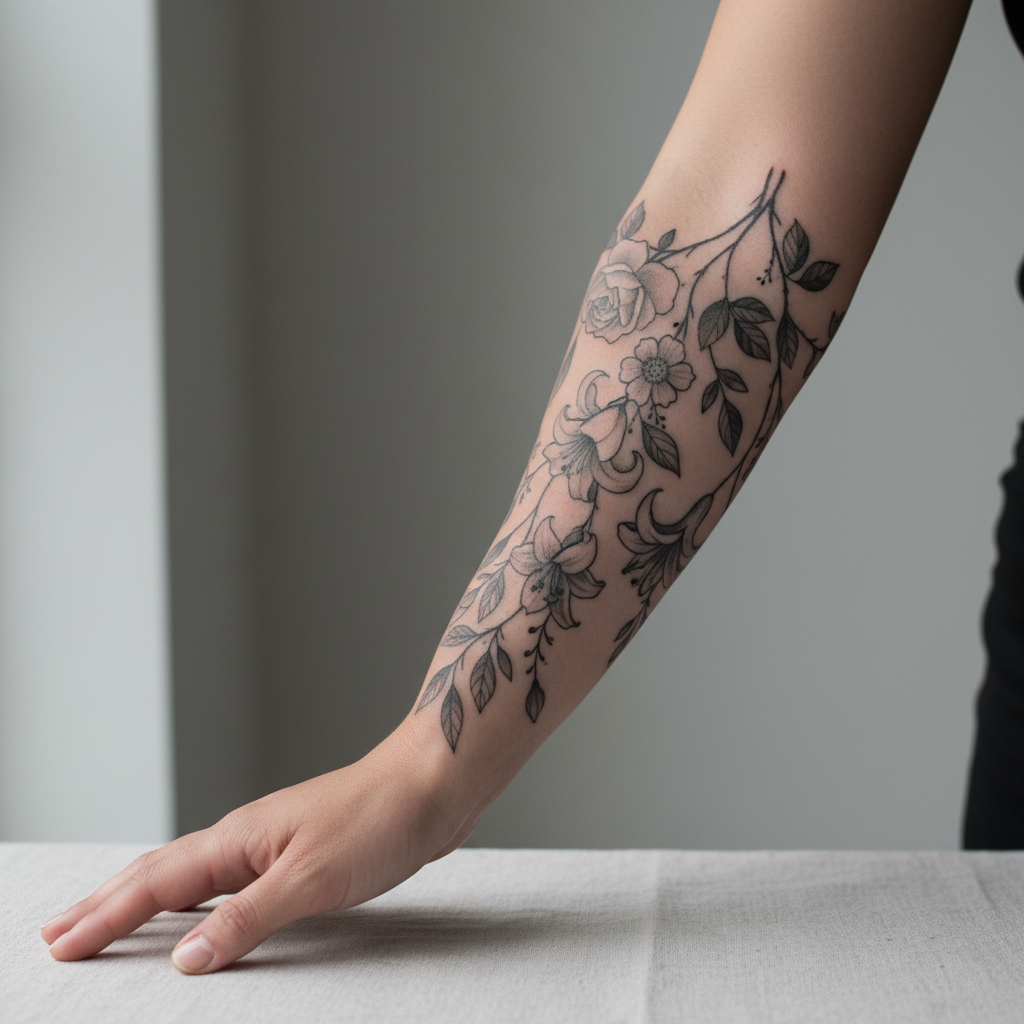
What about drinking before the session
This question matters even more than the after-session version, and the answer from most studios is firmer: do not drink in the 24 hours before your appointment. Many artists will refuse to work on a client who shows up obviously drunk or hungover, and the reasons run beyond ink quality. Alcohol thins the blood enough that artists have to wipe the skin more often, which slows the work, increases trauma to the surrounding tissue, and bumps the session into the next price tier on an hourly rate. The piece also tends to heal worse, with more pronounced scabbing, dull color sections, and a higher chance of needing a paid touch-up later.
The legal side is real too. Most studios in the US, UK, and most of Europe require sober consent on the waiver, which is treated like any other medical consent. An artist who tattoos someone visibly under the influence opens themselves up to liability if the client later regrets the piece. If you are nervous about a long session, ask the studio about their policy on breaks, music, and what you can bring for sugar and electrolytes. That works far better than a drink to take the edge off.
Special cases worth knowing
A few situations change the timeline. People taking blood thinners like warfarin, daily low-dose aspirin, or certain SSRIs should add an extra 24 to 48 hours to whatever baseline they would otherwise follow, because the combined anticoagulant effect compounds. Anyone with a large back piece, full sleeve, or chest panel done in one sitting should treat the immune-load risk seriously and skip alcohol for a full week, since the body is fighting harder and longer on those pieces. Similar logic applies to anyone planning to hit the gym after a fresh tattoo, where stacking physical stress on top of an already loaded immune system makes both decisions worse.
Tattoos on the lower legs and feet swell more from alcohol consumption because gravity already concentrates fluid in those areas. If your fresh tattoo sits on the ankle, foot, calf, or knee, the visible swelling and prolonged scabbing after even a moderate drinking night is noticeably worse than for an arm or shoulder piece in the same window. Many artists working on lower-leg pieces will explicitly warn clients about this and push the no-alcohol window out to 72 hours.
Hydration and what to drink instead
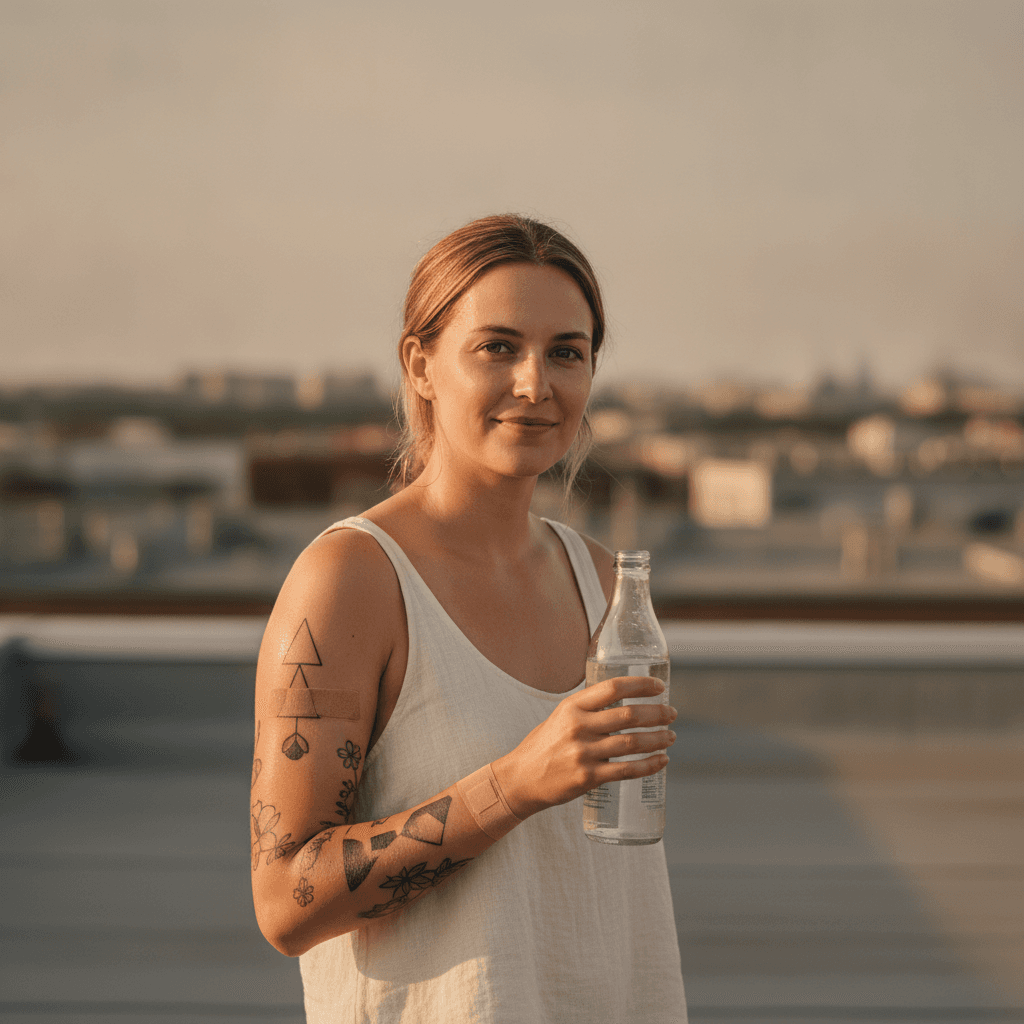
Water is the answer most people skip and the cheapest aftercare upgrade you can make. Your body uses fluid to flush inflammatory byproducts and to keep the new ink-loaded dermal layer pliable while it seals. Aim for around three liters of water in the first 48 hours, more if your tattoo is large or if you are in a hot climate like Bangkok or Sydney where insensible fluid loss runs higher. Electrolyte drinks help too, especially after long sessions where you barely moved and ate poorly during the appointment.
If the social pressure of skipping drinks is the real issue, non-alcoholic beer and zero-proof spirits have come a long way and let you hold a glass without sabotaging the tattoo. Tonic water with bitters, kombucha, or any of the new zero-alcohol cocktail menus that have spread through major cities give you the ritual without the bleed-out. Treat the first three days like a mini training cycle. Sleep matters, water matters, and skipping alcohol is the highest-leverage decision in that window.
Frequently asked
Can I have one beer the night of my tattoo? Technically yes, but the impact is real even at one drink. A single beer in the first 12 hours will likely cost you some ink retention, especially on heavily saturated fills. If you can wait until at least hour 24, your tattoo will look better in 30 days. The few hours of waiting is the cheapest insurance you can buy on a piece you just paid for.
Will drinking after my tattoo ruin it? A single drink will not destroy the work, but moderate to heavy drinking in the first 24 to 48 hours often leads to patchy saturation that requires a touch-up. Touch-ups run from free to half-rate at most studios within the first six months, but they cost time and a second healing cycle. Most regret comes from the inconvenience, not catastrophic damage.
Does it matter what kind of alcohol I drink? Yes. Beer and wine sit lower on the ABV scale and hydrate slightly via their water content, which lessens the dehydration penalty. Spirits, especially cocktails with sugar mixers, deliver a higher alcohol load per drink and dehydrate harder. If you must drink within 48 hours, beer is the least disruptive option, followed by wine, with spirits being the worst choice for healing.
Can I drink alcohol while my tattoo is peeling? By the peeling stage, usually day four onward, the wound has sealed and alcohol no longer threatens ink retention. Standard hydration rules apply at that point. Drink water alongside your alcohol because dehydrated skin peels and itches more aggressively, which makes the peeling phase more uncomfortable but does not damage the final result. Our guide on what tattoo peeling looks like normally walks through what to expect in those days.
Will my artist know if I had a drink before coming in? Almost always, yes. Experienced artists read the skin during the first ten minutes of work. Excessive bleeding, slow ink uptake, and the smell of alcohol on the breath are obvious signals. Some artists will continue and charge a longer session; others will reschedule and forfeit the deposit. Both outcomes cost you more than skipping the pre-session drink would have.
How long should I wait if I had a multi-hour session? For sessions over three hours or pieces over the size of a hand, push the no-alcohol window to 72 hours minimum. The immune system is doing more work, the wound surface area is larger, and the consequences of slowed healing are visible across more skin. A weekend off the drinks is a cheap trade for a clean heal on a piece that took you four figures and a full afternoon.