cost guides
Biomechanical Tattoo Cost: Pricing, Sessions, and Artist Tiers
Biomechanical tattoos run $200 to $400 per hour and rarely fit inside 20 hours. Here is what artists charge, why sessions stack up, and where the money goes.
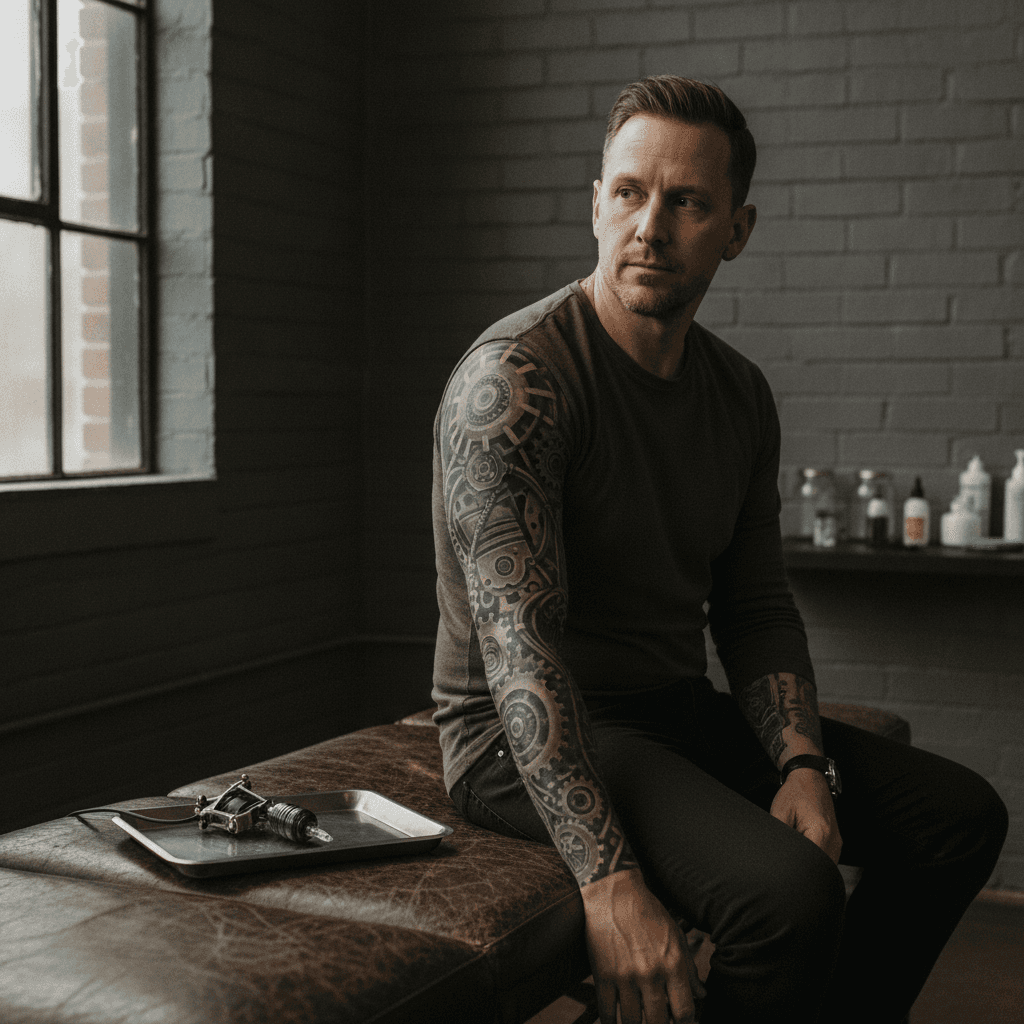
Biomechanical tattoos sit at the top end of the pricing chart for good reason. The style demands custom design work, dense black-and-grey shading, and multi-session commitment that most other styles simply do not require. If you are pricing out a forearm panel or a full sleeve, this guide covers what artists actually charge in 2026 and why the total climbs faster than a comparable Japanese or traditional piece.
What biomechanical tattoos actually cost
Expect hourly rates of $200 to $400 for a competent biomechanical specialist in a major US or European city. Mid-tier artists in smaller markets sit closer to $150 to $220 per hour, while heavily booked names with a waitlist and a strong Instagram portfolio push $450 to $600 per hour. Flat-rate pricing exists for smaller standalone pieces, usually $600 to $1,500 for a 4 to 6 inch panel, but almost every serious biomechanical project is billed hourly because the shading time is impossible to quote up front.
Session length matters as much as the rate. Biomechanical shading is done in long passes, and most artists prefer 4 to 6 hour sittings to keep tonal consistency across a section. A half-sleeve typically lands between $2,500 and $6,000 across three to five sessions. A full sleeve runs $6,000 to $15,000 across six to ten sessions, and a full back piece can climb past $18,000 for anything with color inlays or heavy detail. These numbers assume you are working with a dedicated biomechanical artist, not a generalist attempting the style.
Deposits sit at $150 to $500 and roll toward the final session. Rescheduling more than once usually forfeits the deposit. Read the tattoo deposit guide before booking a long biomechanical project so you know what you are locking in.
Why the style costs more than most others
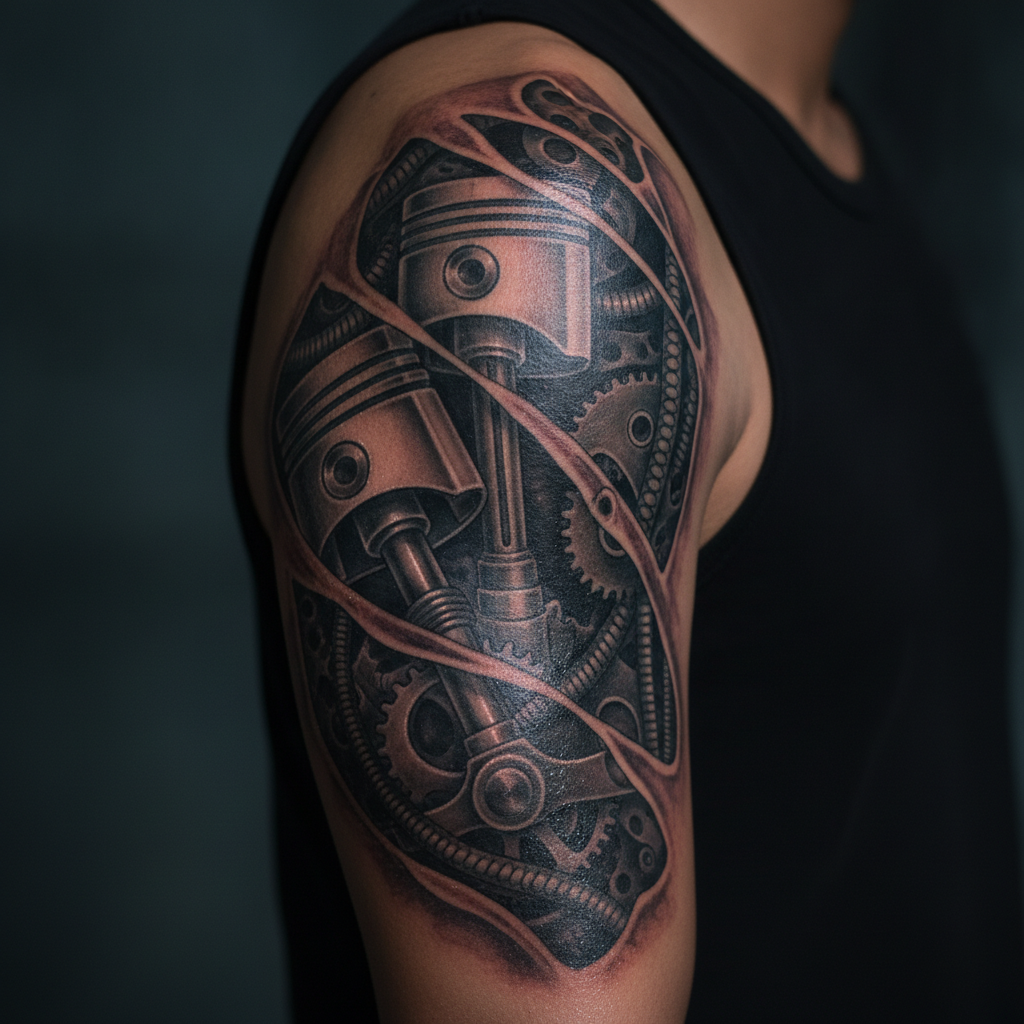
Biomechanical work is essentially hyperrealism with a fabricated subject. The artist is drawing gears, pistons, exposed muscle, hydraulic tubing, and torn-skin illusions that must read as three-dimensional on a curved body surface. That means every shadow is placed deliberately, every highlight is negative space, and every plate seam has to follow the anatomy underneath. There is no flash sheet you can pull from, and there is no shortcut for the shading.
Custom design fees are common on the front end. Expect $150 to $600 for a full biomechanical concept sketch, sometimes bundled into the first session fee and sometimes billed separately. Artists who insist on paid design time are protecting themselves against clients who ghost after seeing the drawing. Ask up front whether the design fee is credited toward the tattoo or held separately.
Ink consumption is higher than most people expect. A dense black-and-grey sleeve burns through washes and blacks quickly, and studios pass that cost through in the hourly rate rather than itemizing it. This is one reason biomechanical rates run above realism rates even when the artist charges the same on paper. Realism uses more selective shading. Biomechanical fills more skin.
Placement pricing and pain-tax reality
Forearm and outer bicep placements are the cheapest per square inch because the artist works fast on flat, forgiving skin. Inner bicep, ribs, sternum, and the back of the knee all cost more per hour on average, because artists slow down for tender areas and clients need more breaks. Some artists add a flat 10 to 20 percent surcharge for placements that require heavy stretching or awkward positioning across a multi-hour session.
Body sites where biomechanical work commonly runs:
- Half sleeve, outer arm dominant: $2,500 to $5,500
- Full sleeve, wrist to shoulder: $6,000 to $15,000
- Chest panel, single side: $3,000 to $7,500
- Full back piece: $10,000 to $22,000
- Thigh panel: $2,000 to $5,000
- Calf wrap: $2,500 to $6,500
These figures assume a specialist. A generalist quoting biomechanical work at $120 per hour is usually a warning sign, not a bargain. Cheap biomechanical rarely holds up once the shading heals, because thin gradients blur into a muddy shape without a skilled hand placing them.
Cover-ups and hybrid biomechanical projects
Biomechanical is one of the most requested cover-up styles because the mechanical plates and torn-skin illusions absorb existing linework beautifully. Cover-ups typically add 30 to 50 percent to the standard rate. A $4,000 sleeve concept over blank skin can become a $6,000 project when it has to hide a faded tribal band or old lettering. The artist needs additional shading passes and design revisions to make the underlying ink disappear.
Hybrid biomechanical work with color inlays, such as red exposed muscle tissue or blue cable glow, adds 15 to 25 percent to the total. Color takes extra time to pack and often requires a dedicated touch-up session after the initial healing. If you want a full color biomechanical piece rather than black-and-grey with accents, expect the timeline to stretch by two to three sessions and the budget to jump another 20 percent. Compare this against color vs black-and-grey pricing before committing.
Touch-ups are more common in biomechanical than in most styles because dense shading is where healing tends to lift. Budget a free or reduced-rate touch-up 2 to 3 months after each major session. Most reputable biomechanical artists build one touch-up per project into the quoted total.
Budgeting a multi-year biomechanical project
Full sleeves and back pieces are almost never finished in a single calendar year. A realistic biomechanical sleeve runs 8 to 14 months from first session to final touch-up, assuming a session every 6 to 8 weeks and normal healing time. Back pieces stretch 12 to 24 months. Plan the financial commitment across that whole window, not against a single lump-sum estimate.
A useful rule: budget the artist's hourly rate multiplied by 30 hours for a sleeve, 45 hours for a chest and sleeve combination, and 60 hours for a full back with wraparound elements. Add 15 percent for design fees, deposits, and touch-ups. Set aside another 10 percent for tips, which are expected on every session, not just the final one. The tip guide covers session-by-session tipping norms.
Payment structure varies. Some studios take the deposit and then charge per session at the end of each sitting. Others bill in advance for booked hours. A few high-end artists require a lump-sum project deposit of 20 to 30 percent that rolls across sessions. Confirm the payment cadence before the consultation ends so you can plan cash flow across the project.
Frequently asked
How many sessions does a biomechanical sleeve take? Six to ten sessions across 8 to 14 months is the normal range. Each session runs 4 to 6 hours, and healing time between sittings is typically 6 to 8 weeks. Shorter timelines exist for smaller pieces or artists who prefer long single-day marathons, but back-to-back marathon sessions raise the risk of shading inconsistency across a healing sleeve.
Is biomechanical more expensive than realism? Yes, usually by 10 to 25 percent per hour with a comparable artist. The style covers more skin with dense shading and requires more design time on the front end. Realism artists can charge similarly, but their sessions tend to be shorter because portrait work uses more negative space than biomechanical fill.
Can I get a small biomechanical piece for under $1,000? A small standalone panel, roughly 4 by 4 inches on a flat placement, can land at $600 to $900 with a mid-tier specialist. Anything smaller loses the depth illusion that makes the style work. If your budget caps at $1,000, ask the artist whether the concept can breathe at that size or whether it will read as clutter once healed.
Do I need consultations before booking? Always. Biomechanical work requires a design conversation, reference review, and placement mapping before the artist agrees to book time. Most studios charge $50 to $150 for the consultation and credit it toward the first session. Skipping this step almost always leads to redesign fees or scrapped concepts.
Are cover-ups always more expensive? Yes. Expect 30 to 50 percent above the base rate for a biomechanical cover-up, and expect the artist to require an in-person consultation to assess the underlying ink. Dark tribal, old script, and heavy black linework are the hardest to cover and push toward the top of that range.
How do I know an artist is priced fairly? Look at their healed work portfolio, not just fresh photos. Fresh biomechanical looks impressive on almost any artist, but healed shading tells you whether the price matches the skill. If a specialist charges $300 per hour and their two-year healed sleeves still hold crisp shading and readable depth, the rate is fair. If healed work looks muddy or flat, no rate is low enough.