cost guides
Watercolor Tattoo Cost: What You'll Pay in 2026
Watercolor tattoos run $180–$300 per hour for skilled color specialists. Here is what small, medium, and large pieces actually cost in 2026.
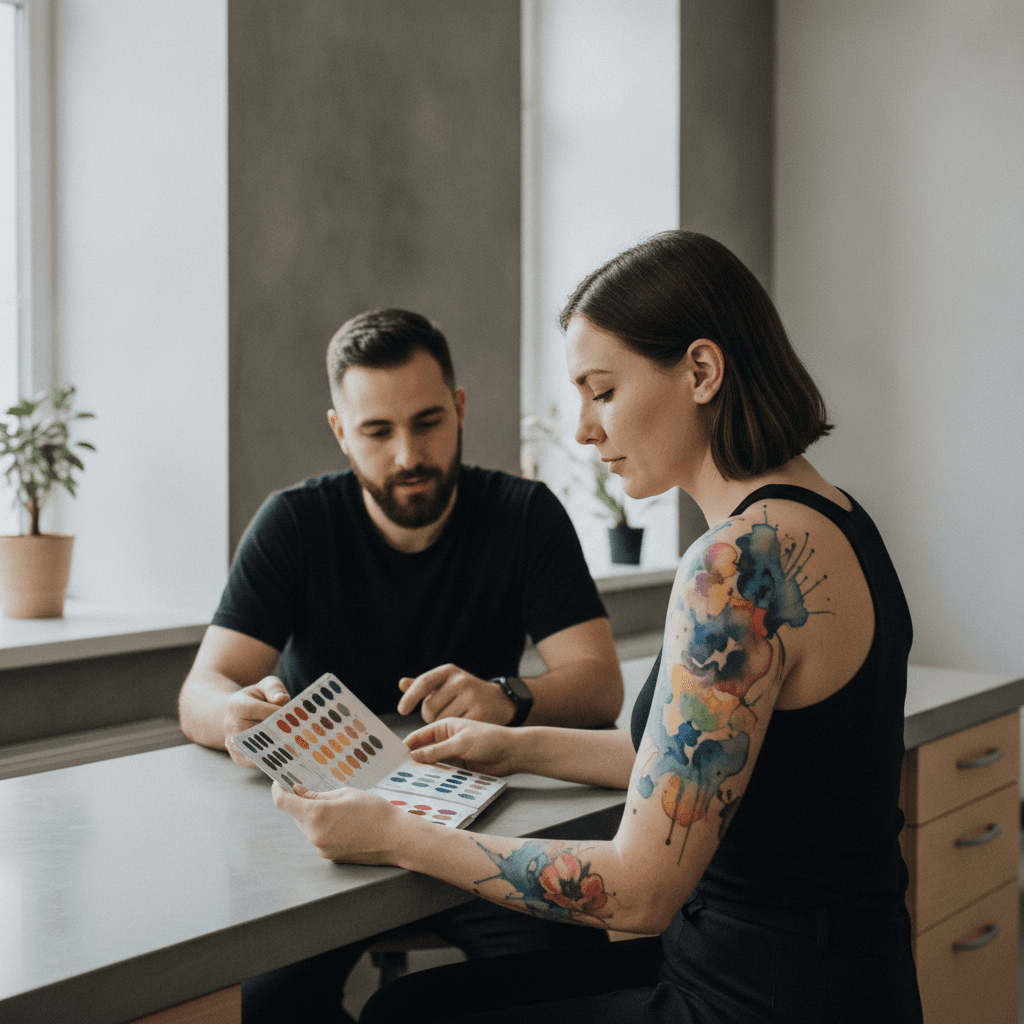
Watercolor tattoos sit in a strange pricing bracket. They look loose and splashy, so people assume they should be cheap, but every artist who does them well charges as much as a realism or Japanese specialist. The reason is technical. Soft color washes that hold their shape for a decade require a very specific pigment, machine, and layering approach that most artists do not offer at all.
What watercolor tattoos actually cost in 2026
Expect $180 to $300 per hour with a color specialist in a mid-tier US city, and $300 to $450 per hour with a name artist in New York, Los Angeles, or a booked-out European studio. A small piece under three inches sits between $250 and $500 flat. A palm-sized floral spread or abstract splash runs $600 to $1,200 for a single session. A half-sleeve of layered washes with fine-line anchor elements typically lands between $2,400 and $4,500 spread across two to four sessions.
Those numbers assume a working color specialist, not a generalist trying watercolor for the first time. A generalist may quote $120 per hour and finish faster, but the piece often needs a rebuild inside three years. The savings evaporate the moment you pay a specialist to fix it. If you want the style to age well, price the specialist from the start.
- Under 3 inches: $250 to $500
- Palm size, single session: $600 to $1,200
- Quarter sleeve: $1,400 to $2,600 across one to two sessions
- Half sleeve: $2,400 to $4,500 across two to four sessions
- Full sleeve: $5,500 to $10,000 across four to seven sessions
For context on how this compares to other color-heavy styles, our realism tattoo cost breakdown covers a style with similar hourly rates but very different session counts.
Why watercolor costs more per hour than plain color work
The pigment behavior is the first cost driver. Watercolor style relies on saturated color pushed at a lower density than a traditional bold-color piece. Getting soft washes to hold requires diluting some passes, running a magnum grouping at a specific angle, and layering in a way that a standard color tattoo does not need. Artists who master this spend years developing a personal method, and they price accordingly.
The design phase is the second cost driver. Watercolor rarely uses reference sheets or flash. Almost every commissioned piece is custom. That means two to six hours of design work before the machine ever touches skin, and most artists bake this into their hourly rate rather than billing it separately. If you see a quote that feels high before the session even starts, the design labor is already inside it.
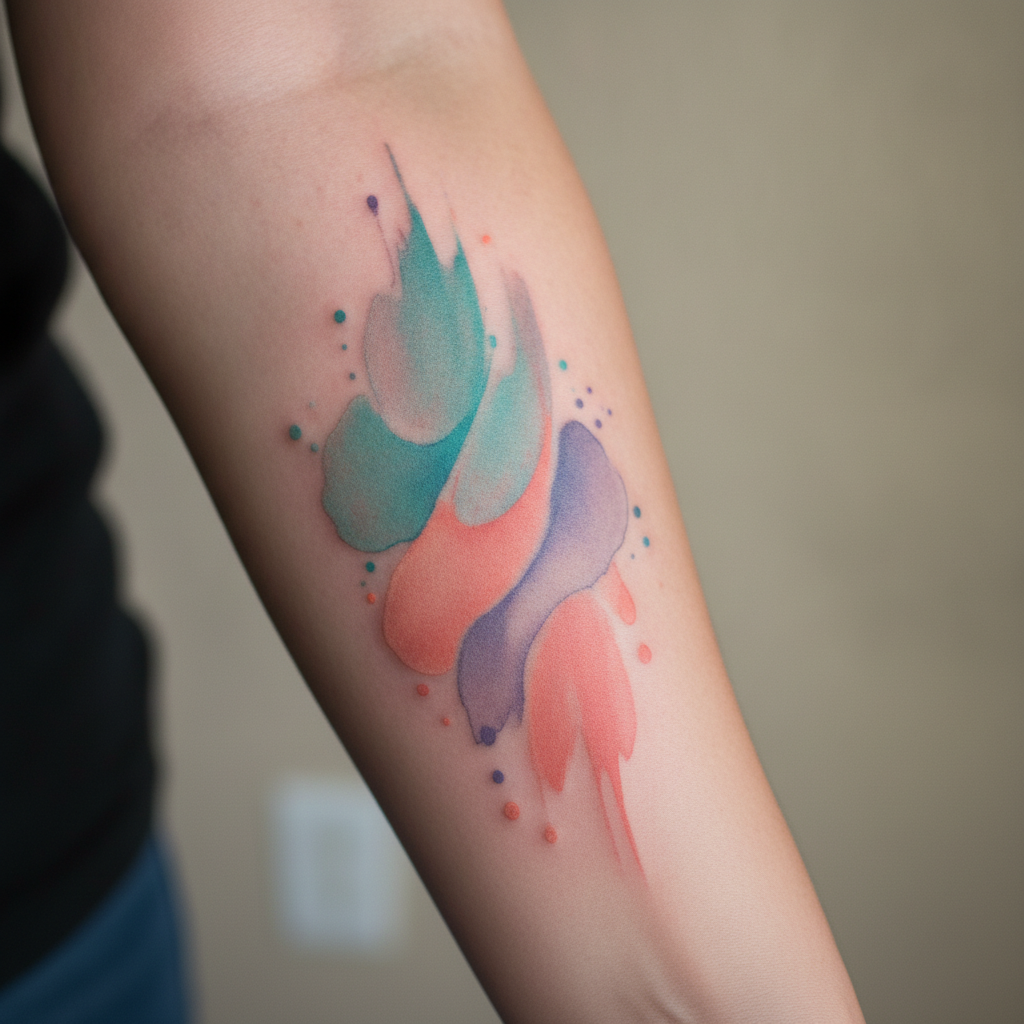
Skin tone also affects pricing in a way most first-time clients do not expect. Warm and deeper skin tones require pigment adjustments, extra passes for saturation, and sometimes a black or dark-blue anchor line for structural longevity. A skilled color specialist charges the same hourly rate regardless of skin tone, but the session count can rise by one or two, which shifts the total cost. This is worth raising in your consultation directly so nobody is surprised at the halfway mark.
How session length and count shape the total
Most watercolor pieces are built across multiple shorter sessions rather than one long marathon. Color layers need to settle, and pushing too much pigment into a single sitting can turn a soft wash into a muddy patch. A typical booking pattern is a three to four hour first session for base washes and outline anchors, then a two to three hour second session six to eight weeks later for color depth and detail, and a shorter touch-up session two to three months after healing.
That structure raises the total cost above the equivalent time in a single sitting. Studios charge session minimums that usually match a two-hour floor, and travel or setup fees apply per booking in some shops. If you are flying in or driving more than an hour, ask the artist whether they can compress your work into two full-day sessions instead of three medium ones. Many will accommodate the schedule.
Deposits, touch-ups, and hidden add-ons
Deposits on watercolor pieces trend higher than the shop average because the design labor is heavier. Expect $150 to $500 held against the first session, applied to the final bill on completion. Our tattoo deposit guide covers the standard forfeiture rules and cancellation windows in more detail.
Touch-ups matter more for watercolor than any other style. Soft washes can lift during healing if aftercare slips, and a five to fifteen percent color-lift in the first heal is common. Reputable artists include one free touch-up inside six to twelve months. After that window, expect $150 to $400 per touch-up depending on how much color needs rebuilding. Budget for at least one paid touch-up every three to four years if you want the piece to keep its saturation. Compare that to a blackwork piece which may go a decade without any refresh at all.
Where you can and cannot save money
You can save money on placement. Forearm, upper arm, thigh, and calf placements take pigment cleanly, heal predictably, and require fewer touch-ups. That means fewer sessions and a lower lifetime cost.
You cannot save money on the artist. Every dollar you shave off the hourly rate by choosing a generalist costs you double in rework inside three to five years. Watercolor is one of the least forgiving styles for underqualified execution. A cheap piece that goes muddy is not a repairable piece. It becomes a cover-up job, and cover-up work on failed color is among the most expensive rebuilds in the industry.
Skip anyone who quotes a flat rate without seeing your skin, discussing size, or sketching first. Skip anyone whose portfolio shows only fresh healed shots taken the day of the session. Ask to see healed photos taken twelve months after the piece was completed. That single filter removes ninety percent of the pricing risk.
Frequently asked
Is a watercolor tattoo more expensive than a fine-line tattoo of the same size? Yes, typically by twenty to forty percent. Fine-line work uses a single needle grouping and one ink, so the hourly rate is lower and the session count is smaller. Watercolor requires multiple color layers, custom design work, and follow-up sessions, all of which push the total up.
Do watercolor tattoos need more touch-ups than other styles? Usually yes. Plan for a touch-up at six to twelve months and another every three to four years. The soft-wash technique that makes the style distinctive is the same reason color can lift over time, especially on limbs exposed to sunlight.
Can I get a small watercolor tattoo under $300? It is possible with a booked-out apprentice in a reputable studio or with a specialist on a quiet booking day. Realistic small-piece pricing for a competent artist starts around $250 for a single-color wash and climbs quickly once you add layers or fine-line elements.
How much should I tip a watercolor tattoo artist? Twenty percent of the final bill is standard, matching the industry norm. On a $2,000 piece that means $400 in cash on completion. Read our tipping guide for edge cases like shop-owner artists and multi-session projects.
Does watercolor cost more on darker skin? The hourly rate is the same, but the session count often rises by one or two because pigment saturation requires extra passes. Discuss this with your artist directly in the consultation so the total cost is set expectations from the start.
What happens if I underpay and choose a cheap artist? The most common outcome is a piece that looks acceptable at healing and starts to blur or fade inside two years. The color washes lose definition, edges bleed into surrounding skin, and the whole piece takes on a muddy grey tone. Rebuilding costs two to four times the original price and sometimes requires laser lightening first.