cost guides
Walk-In Tattoo Cost: What You Pay Without an Appointment
Walk-in tattoos typically run $80 to $250 for small flash pieces, with most shops enforcing a $80 to $150 minimum charge regardless of size.

Walk-in tattoos usually land between $80 and $250, and most of that spread comes down to shop tier, artist availability, and whether you pick a piece off the flash wall or ask for something custom on the spot. Nearly every reputable shop enforces a minimum charge, so even a pea-sized dot costs more than the ink and time it takes. This guide breaks down what walk-in pricing actually looks like in 2026, what pushes the number up, and how to walk in and get the best possible piece for your money.
What a walk-in tattoo actually costs
For a standard small flash design at a mid-tier shop, expect $80 to $150 all in. That covers the shop minimum, a simple line-and-shade piece under two inches, and setup. Add color, size, or detail and you climb quickly. A palm-sized flash piece with two or three colors typically runs $180 to $300, and anything approaching the size of a business card starts crossing into hourly territory at $150 to $250 per hour depending on the artist's tier.
Custom walk-ins cost more than flash walk-ins because the artist has to draw the design during their break or between clients. Most shops charge a $20 to $50 design fee on top of the tattoo itself, or roll it into a slightly higher flat rate. If the artist has to redraw something more than once, expect that to bump the price. This is one reason experienced walk-in customers pick flash: the design is already priced, and you know the number before the needle touches skin.
Cities move these numbers. In New York, Los Angeles, London, and Tokyo, walk-in minimums run $150 to $200 and flash pieces start closer to $180. In smaller US cities, secondary European markets, and most of Southeast Asia, minimums sit at $60 to $100 and flash pieces often cost $80 to $150. Bali, Bangkok, and Ho Chi Minh City still offer walk-in flash under $80 at some shops, though the top studios in those cities now price closer to Western rates.
Why shops charge a minimum
The minimum charge covers fixed costs that do not scale with tattoo size. A new needle cartridge, fresh ink caps, a disposable tube, sterile drapes, gloves, cleaning solutions, and the time to set up and tear down the station all cost the shop money whether you get a dot or a full sleeve. On top of that, the artist gives up time they could have spent on a bigger booked piece.
Most US shops set the minimum at $80 to $150. Higher-end studios in major cities run $150 to $200. Some celebrity-tier shops charge $300 or more just to sit in the chair. When you see a "$40 tattoo Tuesday" special, it usually means the shop is running a limited flash sheet with pre-drawn designs, a fixed size cap, and a single simple color scheme to keep the setup time down.
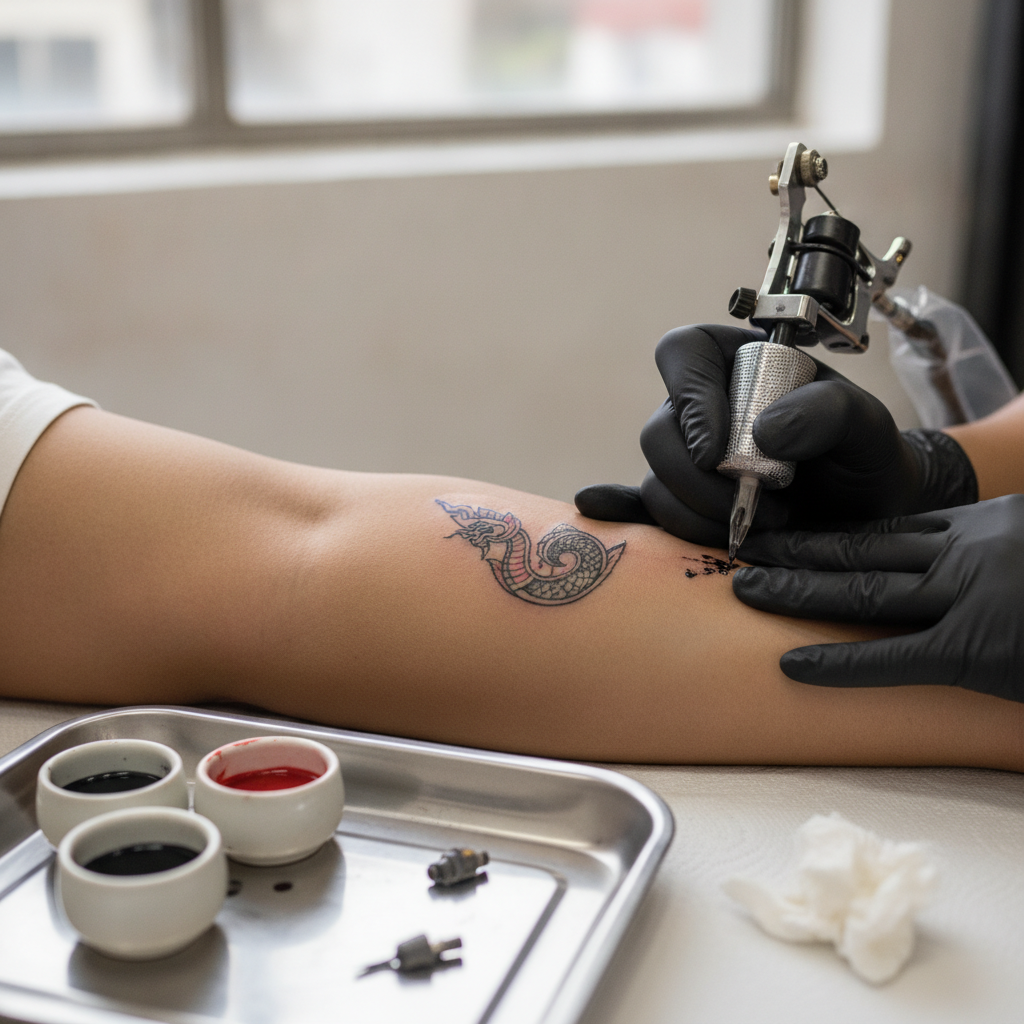
Flash vs custom walk-ins
Flash tattoos are pre-drawn designs the shop offers off a sheet or a binder. Because the design work is already done, the price is fixed and usually posted, and the artist can start within minutes. Traditional flash sheets, neo-traditional flash, and small blackwork icons are the most common walk-in offerings. Expect $80 to $200 for most flash pieces under three inches.
Custom walk-ins ask the artist to design something on the spot. This works well for simple ideas: a name in a specific font, a small symbol, a memorial date, a tiny animal silhouette. Anything with complex composition, portraiture, or heavy detail almost always gets bumped to a booked appointment because the artist needs prep time. A custom walk-in usually costs 20 to 40 percent more than a comparable flash piece, and the artist may ask for a $20 to $50 draw fee before starting.
- Flash tattoo: pre-drawn, fixed price, faster start
- Custom walk-in: drawn on the spot, higher price, longer wait
- Booked custom: full design consultation, deposit required, best result for complex work
If you want a specific style, check the shop's flash before committing to custom. Many artists post their available flash on Instagram, and pulling a design off that sheet is faster and cheaper than describing an idea from scratch.
What pushes walk-in prices up
Size is the biggest driver. A one-inch tattoo takes 20 minutes and costs the minimum. A palm-sized piece takes an hour or more and usually shifts to hourly pricing at $120 to $250 per hour. Placement matters too. Fingers, hands, feet, and ribs cost more because the skin is harder to tattoo, sessions run longer, and the healing gets tricky. Some shops add a 20 to 30 percent surcharge for hands and fingers, and a few refuse walk-ins on those spots entirely.
Color adds cost. Each new color means a new ink cap, extra cleaning between passes, and more time. A three-color flash piece usually costs 30 to 50 percent more than the same design in black. Fine detail also adds cost because the artist works slower and the piece takes more passes to build up cleanly. If you pick a flash design with heavy shading or micro-linework, expect the price to sit at the higher end of the posted range.
Artist tier matters even for walk-ins. A shop apprentice or junior artist doing walk-ins might charge the shop minimum plus a small bump, while a resident artist with a strong portfolio charges $150 to $250 per hour even for walk-in work. Some shops rotate which artist handles walk-ins, and asking for a specific person usually means waiting longer or coming back another day.
How to save money on a walk-in
The single best move is to pick a flash design and stick with it. Do not ask the artist to modify it. Modifications add draw time, which adds cost, and most shops price modifications like custom work anyway. If you want something specific, look through the flash sheets first and see if a design close to your idea already exists.
Go on a slow day and slow hour. Tuesday through Thursday afternoons are usually the quietest, and some shops run flash specials on those days. Weekends and evenings are the busiest and the priciest. Bring cash. Many shops still prefer it, and a few offer a 5 to 10 percent cash discount because they avoid the card processing fee.
- Pick flash over custom
- Go on a weekday afternoon
- Bring cash and tip in cash separately
- Ask about the shop minimum before you sit down
- Book two smaller pieces together if you want to justify the minimum
Skip the impulse to add color if you are on a budget. A clean black flash piece costs less, heals faster, and holds up better long term than a rushed color piece squeezed into a walk-in slot. If you want a bigger or more complex tattoo, book a proper appointment. Walk-ins are designed for pieces the artist can finish in an hour or less, and trying to stretch that usually costs more than booking would have.
Tipping on a walk-in tattoo
Tipping is expected in most US and Canadian shops, and the standard is 20 to 30 percent of the tattoo price. On a $120 walk-in, that means $24 to $36 on top. Tip in cash if you can, and hand it to the artist directly at the end of the session. In Europe, tipping is less standard but appreciated, and 10 to 15 percent is common. In Japan, tipping is generally not expected and can be awkward. If in doubt, ask at the counter what the local norm is.
If the walk-in ends up being simple and quick, some clients tip a flat $20 to $30 rather than a percentage. If the artist stayed late, took extra care on placement, or fit you in during a busy day, tipping on the higher end is a normal gesture and helps if you ever want to come back for booked work.
Frequently asked
Do walk-in tattoo shops accept cards? Most modern shops accept cards, but many still prefer cash and a few are cash-only. Card fees usually add 2 to 4 percent to the total, and some shops pass that on. Bring cash for the tip regardless, since it goes directly to the artist.
Can I get a walk-in tattoo the same day I decide? Yes, that is the whole point of walk-ins. Show up during shop hours with a rough idea or pick from the flash wall, and if an artist is free you can usually sit down within 30 minutes. Weekends often mean a wait of one to three hours.
Do walk-in shops require ID? Every reputable shop requires a government-issued photo ID showing you are 18 or over. In some US states, the minimum age is 16 or 17 with parental consent, and a parent must be present with matching ID. No shop worth visiting will skip the ID check.
Is a walk-in tattoo lower quality than a booked one? Not necessarily. The same artists usually handle both, and flash designs are refined pieces the artist has done many times. The main difference is that walk-ins are limited to simpler, faster designs. Complex custom work needs the design and prep time that only a booked appointment provides.
Can I negotiate the price of a walk-in tattoo? No. Prices are fixed at the shop minimum or the posted flash rate, and haggling is considered rude in most tattoo shops. If a price feels too high, walk out politely and try another shop. Related reading: how tattoo pricing actually works, what a shop minimum covers, and what to expect from small tattoo costs.
Do I still need to leave a deposit for a walk-in? Deposits are usually only required for booked appointments. Walk-ins are paid in full at the end of the session. Some higher-end shops now ask for a small upfront payment before starting on a custom walk-in to cover the design time if you change your mind mid-way. If you plan to come back for booked custom work, expect a tattoo deposit of $50 to $200 at that point.