cost guides
Spine Tattoo Cost: What You'll Pay in 2026
Spine tattoos usually run $400 to $2,500, depending on length, detail, and artist tier. Here's how the pricing actually breaks down.

Spine tattoos are one of the most requested placements right now, and also one of the hardest to price on the spot. The area is long, narrow, and sits directly on bone, which changes how artists quote it. Most spine pieces land somewhere between $400 and $2,500 in the US in 2026, but the honest answer depends on length, style, and whether you're paying a first-year apprentice or someone with a six-month waitlist.
Typical spine tattoo price ranges in 2026
For a short spine piece, roughly 4 to 6 inches of simple linework or a small script running along the vertebrae, expect $400 to $700 in most US cities. A mid-length ornamental column covering 8 to 12 inches, the kind with mandala anchors and connecting linework, usually runs $900 to $1,600. A full spine tattoo running from the nape down to the tailbone with detailed ornamental or illustrative work is a multi-session project and generally lands at $1,800 to $3,500 total, sometimes higher when the artist charges by day rate rather than by hour.
Hourly rates on the spine track normal shop rates. In smaller US cities you'll see $120 to $180 per hour. In New York, LA, or Miami, $200 to $300 per hour is standard for mid-tier artists, and named specialists charge $350 to $500 per hour. Bangkok, Bali, and Mexico City run cheaper at $70 to $150 per hour, but factor in travel and the tighter margin for revisions if something goes wrong.
- Short script or symbol (4 to 6 inches): $400 to $700
- Ornamental column (8 to 12 inches): $900 to $1,600
- Full spine piece (18 to 24 inches): $1,800 to $3,500
- Named-artist full spine in a major US city: $3,500 to $6,000+
Shop minimums usually apply here too. Even a tiny two-inch symbol at the base of the neck rarely goes below $150, and many shops set their minimum at $200 to $250 to cover setup, single-use needles, and studio overhead. If you're quoted $80 for a spine piece, that's a red flag on hygiene or experience, not a bargain.
Why spine placement changes the math
The spine is a bone-adjacent placement with almost no fat cushion, which slows the work down. Artists usually run their machine at a lower speed to avoid blowouts, take more breaks for you to breathe through the sharpest sections, and end sessions earlier than they would on a thigh or outer arm. A piece that would take three hours on a forearm can take four to five on the spine simply because you tap out sooner.
That translates to fees in two ways. If your artist charges hourly, you pay for that extra chair time. If they quote flat rate, they build in a placement premium of 10 to 25 percent over the same design on a friendlier area. Some artists are transparent about this. Others just quote higher and don't explain why. Ask directly. Any experienced artist will tell you the spine takes longer per square inch.
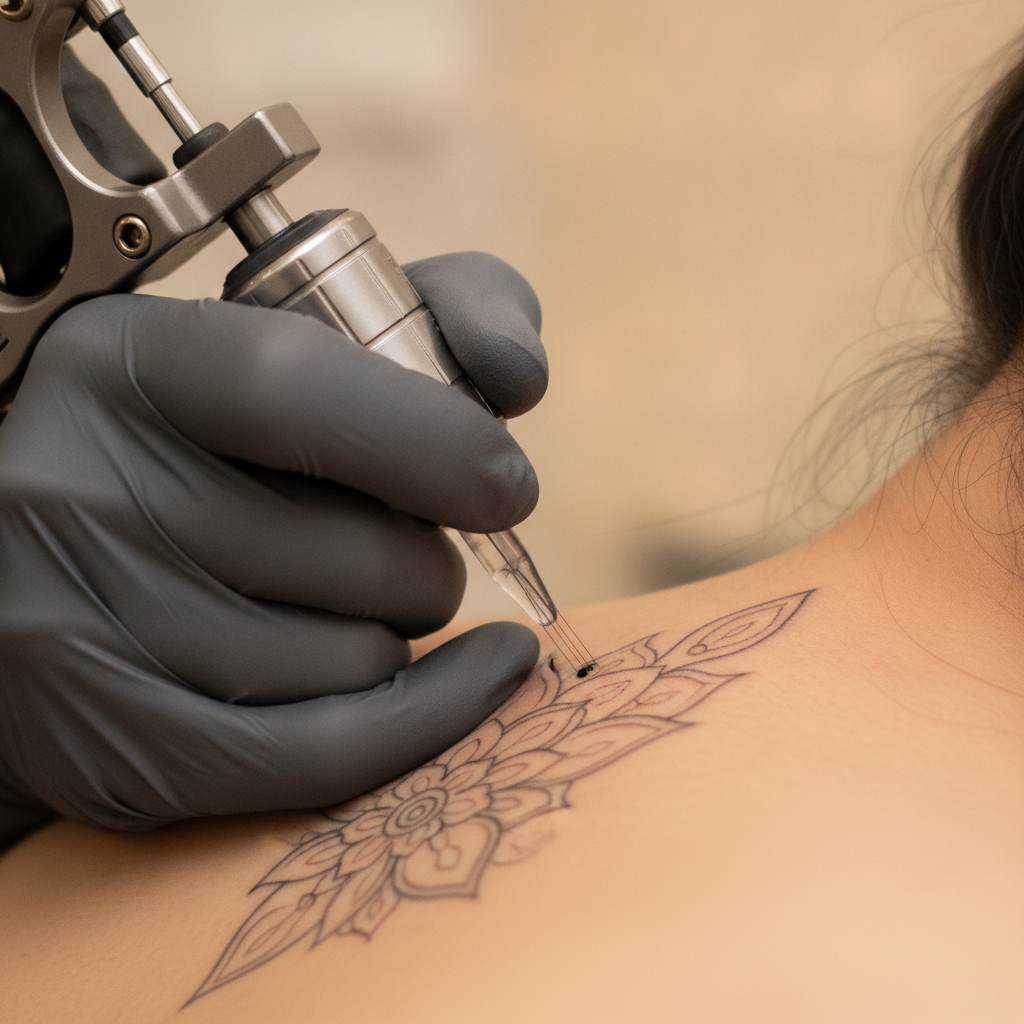
There's also a design constraint that affects pricing. The spine is narrow, roughly 3 to 4 inches wide before you're wrapping onto ribs or shoulder blade. Complex designs get compressed into that column and often need more careful stencil work, more revision rounds, and sometimes a paid design consultation of $50 to $150 before the session. This is where fine-line and ornamental artists shine, and where realism struggles unless you go wider than the spine itself.
Style-specific price ranges
Style matters more on the spine than on most placements because the shape of the space rewards some styles and punishes others. A fine-line spine script is the most affordable serious option. Twelve inches of clean single-needle script runs $600 to $1,200 in the US and takes one long session. It's the classic "sanskrit down my spine" look that dominated early 2020s, still popular in 2026 for names, dates, and short quotes.
Ornamental blackwork with mandalas and connecting linework is the most common commissioned style for spine tattoos right now. A full ornamental column with three or four anchor mandalas runs $1,500 to $2,800 in the US and usually needs two sessions. If you want the blackwork density fully saturated, add a third touch-up session at $200 to $400.
Dotwork spine tattoos are underrated pricing-wise. The style is time-intensive on the artist's end, more dots per inch means more machine hours, but the finished piece ages beautifully on this placement. Expect $1,800 to $3,200 for a full ornamental dotwork piece over two sessions. Japanese-influenced spine pieces with dragons or koi wrapping the vertebrae are a longer commitment, usually $2,500 to $5,000 across three to four sessions, since the style demands background and shading that pushes into the ribs.
Realism and portrait work on the spine is rare and expensive when it happens. The narrow column doesn't give a realism artist enough room to build proper light and shadow, so most decline the placement or price it as a premium job at $3,000 to $6,000.
Hidden costs to plan for
The quoted price is rarely the total. Budget for a deposit of $100 to $300, which is applied to your first session but forfeited if you no-show. If you want a custom design rather than a flash piece, expect a design fee of $50 to $200, sometimes waived if you commit to booking. Some artists charge for redraws beyond the first revision.
Tipping is standard in the US at 15 to 25 percent of the session cost, so a $1,200 spine session usually means $180 to $300 on top. Outside the US, tipping norms vary. In Bangkok and Bali, $20 to $50 per session is generous and appreciated but not expected. Aftercare supplies add another $30 to $60 for balm, unscented soap, and a fresh Saniderm roll. Touch-ups within the first year are often free or discounted at $100 to $200, but only if you follow the artist's aftercare instructions and show up on time. Read our touch-up cost breakdown if you want the full picture on that.
Time off work is a real cost people forget. A long spine session leaves you sore for two to three days. Sleeping on your side is uncomfortable for a week. If you have a physical job, factor in one or two lost workdays per session.
What actually drives the final quote
Four things drive the number your artist puts on the paper. Length is the biggest lever. A 6-inch piece and a 20-inch piece on the same style can be five times apart in price. Detail density matters next. A minimalist geometric line takes an hour. The same 6-inch span filled with mandala work and stippling takes four to six hours.
Artist tier is the third lever, and it's not linear. A solid mid-career ornamental artist at $200 per hour will usually give you a better spine tattoo than a celebrity artist at $600 per hour who books six months out and rushes the session. Reputation buys you consistency and fewer touch-ups, not necessarily a better result. The fourth lever is location. The same artist charges more when they guest-spot in a high-rent city than at their home studio.
- Length and coverage: the biggest single price driver
- Detail density: minimalist vs. ornamental changes hourly count 3 to 5x
- Artist tier: mid-career specialists often beat celebrity names on value
- Studio location: expect a 30 to 50 percent premium in NYC, LA, or Miami
If you're comparing quotes, ask each artist for a session-count estimate, not just a total. Two artists at the same price point might be planning very different amounts of chair time, and that tells you which one is being realistic about what the piece will actually take.
Frequently asked
How much is a small spine tattoo? A small spine tattoo of 2 to 4 inches usually costs $200 to $500 in the US. Shop minimums typically start at $150 to $250, so even a tiny single-symbol tattoo won't go below that. Fine-line and simple linework designs sit at the lower end, while dotwork or ornamental micro-pieces push toward $500.
Is a spine tattoo more expensive than a forearm? Yes, usually by 10 to 25 percent for the same design. The spine takes longer per square inch because of bone proximity and shorter session tolerance. If your artist quotes hourly and both sessions take the same time, you'll pay the same. But most spine sessions run longer than the equivalent forearm work.
Do I tip on a spine tattoo the same as other placements? Tipping norms don't change by placement in the US, 15 to 25 percent is standard on the pre-tip total. Some clients tip on the higher end for spine work because they know it took the artist more focus and drained them physically. That's a nice gesture, not a rule.
How many sessions does a full spine tattoo take? A full spine piece from nape to tailbone typically takes two to four sessions of three to five hours each. Ornamental and fine-line styles usually finish in two sessions. Dotwork and Japanese-influenced pieces almost always need three or more. Book them four to six weeks apart to let each section heal fully before the next round.
Can I get a spine tattoo done in one sitting? Short spine pieces up to 6 inches are usually done in a single sitting of 2 to 3 hours. Anything longer than 8 inches gets uncomfortable enough that most artists split it, both to protect the finished linework and to avoid pushing your pain tolerance past the point where you tense up and affect the result.
Does spine placement affect touch-up cost? Slightly, yes. Spine touch-ups usually cost $150 to $350 versus $100 to $200 for a comparable forearm touch-up, again because of longer session time and the need for careful stencil realignment. Most artists include one free touch-up within 3 to 6 months of the original session if you followed their aftercare guidance.