cost guides
Chicano Tattoo Cost: Pricing Guide by Size and Complexity
Chicano tattoos run $180–$350 per hour on average, with full sleeves landing between $2,800 and $6,500 depending on detail density and artist tier.
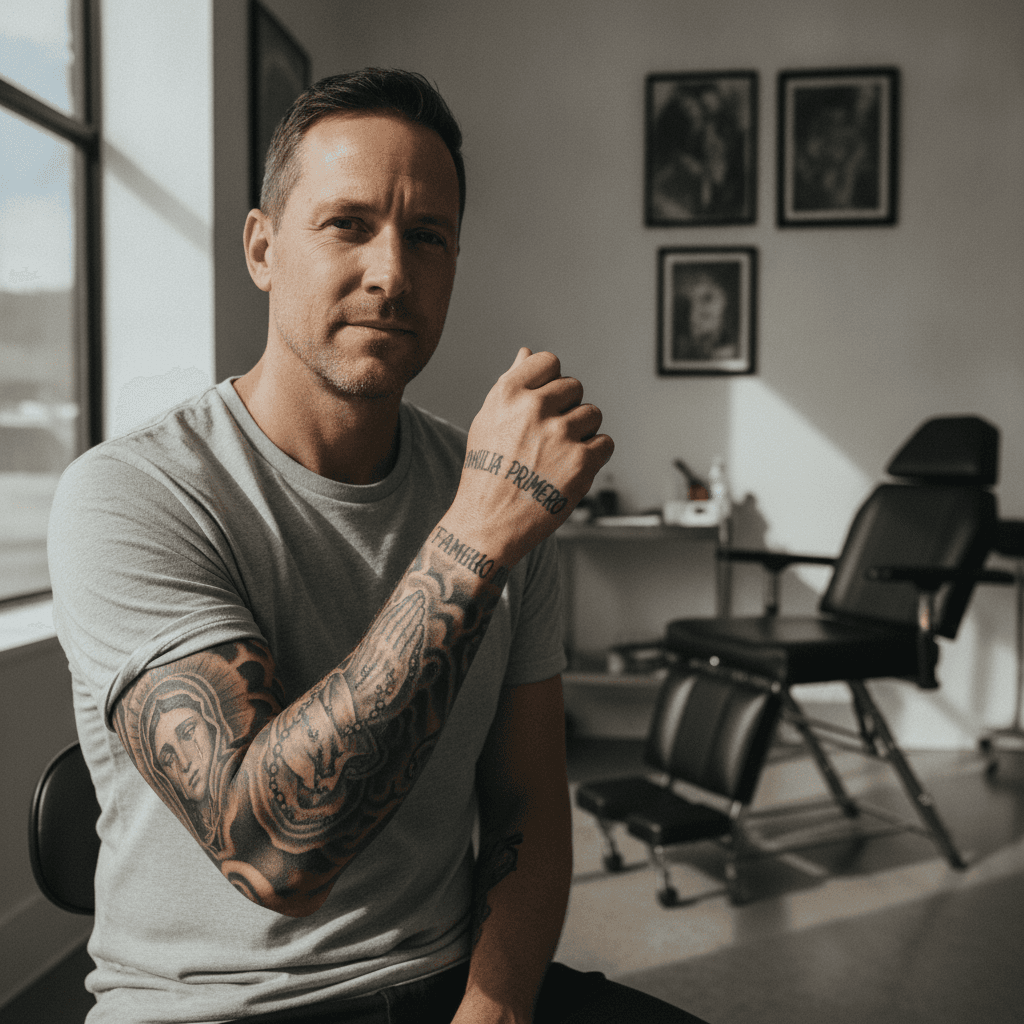
Chicano tattooing sits in a strange spot in the pricing world. It looks like a black-and-grey realism piece to a first-time client, but under the hood it uses different needle configurations, longer session counts, and a specialist skill set that most shop artists do not carry. That combination pushes the hourly rate a tier above generic black-and-grey and makes total project cost harder to estimate from a photo alone. This guide breaks down what you actually pay, why, and where the money goes on a real Chicano piece.
What Chicano tattoos actually cost
The current North American average for a competent Chicano artist sits between $180 and $280 per hour. A recognized specialist, the kind of artist who books six months out and travels to conventions, charges $300 to $450 per hour and often works on a flat quote instead of the clock. In Los Angeles, San Antonio, Chicago, and other cities with a deep Chicano tradition, hourly rates skew twenty percent higher than the national average because demand for authentic style knowledge outpaces the number of artists who can deliver it.
Total project cost depends far more on session count than on the hourly figure. A single-session forearm piece with light script and one small portrait typically lands at $600 to $1,100. A half sleeve with layered imagery, fine script, and a central subject runs $1,800 to $3,200 across two to three sessions. A full sleeve with a dense narrative composition, multiple portraits, and religious iconography reaches $2,800 to $6,500 over four to seven sessions. Back pieces built in the Chicano tradition sit at $4,500 to $9,000 because the surface area demands both scale and the same interior detail density.
Flat quotes are common at the higher tier. A specialist quoting $4,800 for a sleeve is pricing the design, the session count, and the artist's reputation as a single package. Hourly quotes protect the artist against complexity they cannot fully predict from a reference, and they protect you if the piece finishes faster than estimated.
Why Chicano pricing runs high
Three technical factors push Chicano rates above standard black-and-grey. The style relies on fine single-needle and 3RL configurations for script and fine linework, then switches to soft grey washes with magnum shaders for smoke, cloth folds, and skin tone. That tool switching adds real bench time and demands a broader skill range than a single-technique style. Second, the imagery is dense. A finished Chicano sleeve often carries eight to fifteen distinct subjects, and each subject needs its own composition decision and shading pass. Third, script is central to the style, and clean legible script at small sizes is one of the hardest things to execute cleanly on skin.
Design labor is not free either. A specialist typically spends four to ten hours drafting a custom Chicano sleeve, adjusting scale to your arm anatomy, and refining the script layout so it flows with the imagery instead of fighting it. Most artists fold this into the first session or charge a design deposit of $150 to $400 that credits against the total.
The style also demands healed touch-ups more often than heavy blackwork. Fine grey wash and single-needle script can lighten during the first year, particularly on darker skin or on placements that see sun exposure. Budget an additional $200 to $500 for a healed touch-up session twelve to eighteen months after the piece finishes.
Session count and time on the machine
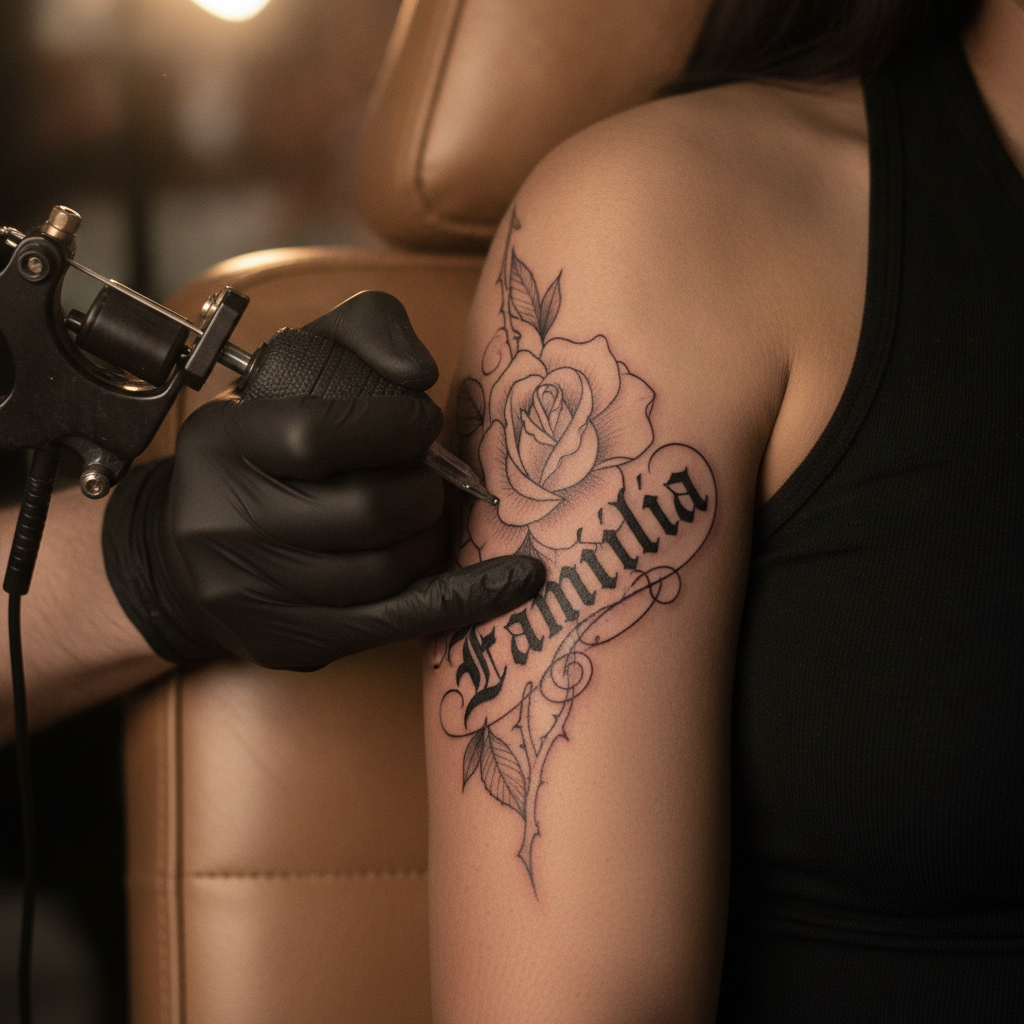
A meaningful Chicano piece is almost never a one-session project. The style rewards patience, and skin does not accept the required detail density in a single sitting. Plan for the following session counts by scale:
- Small forearm or bicep placement: 1 session, 3–5 hours
- Half sleeve: 2–3 sessions, 10–16 hours total
- Full sleeve: 4–7 sessions, 22–35 hours total
- Back piece: 6–10 sessions, 35–55 hours total
- Chest and stomach panel: 4–6 sessions, 20–32 hours total
Session spacing matters for the final price. Chicano artists prefer four to six weeks between sessions because grey wash needs to settle and heal cleanly before the next layer goes down. Rushing the schedule increases the odds of a touch-up session later, which adds cost. A patient schedule usually finishes cleaner and cheaper than an aggressive one.
Placement, skin, and how they change the quote
Placement changes both the hourly rate and the total session count. Ribs, sternum, spine, and inner bicep all extend session length because tender skin forces shorter sittings and slower work. A rib panel that would take one four-hour session on a forearm often needs two three-hour sessions on ribs. Some artists add a ten to twenty percent surcharge for high-difficulty placements, others simply let the extra time show up on the invoice.
Skin tone affects the pigment choices and the final look, which in turn affects touch-up frequency. On deeper skin, Chicano artists lean on higher contrast, avoid the lightest grey washes that will not read, and often use slightly more saturated black lines. This is not more expensive per hour, but it can add a session because the artist works in more contrast passes to hit the intended value range.
Existing tattoos in the placement area can extend the quote. A Chicano sleeve built around, over, or into existing work needs extra design time and sometimes a laser lightening session, which runs $75 to $200 per treatment across three to eight visits. Factor that into the total if you are covering or blending.
Deposits, tipping, and hidden costs
Expect a deposit of $150 to $500 for a booked project, applied against the final session. Losing a deposit for a same-week cancellation is standard. Some specialists take a larger non-refundable design deposit of $300 to $800 for full sleeve or back piece work because the drawing time is real labor.
Tip fifteen to twenty percent of the total, paid in cash at the end of each session rather than as a lump sum at the end of the project. On a $4,000 sleeve, that is $600 to $800 across the run. Skip the tip only if the work was legitimately disappointing, and in that case have the conversation before you leave the shop.
The quieter costs add up. Numbing cream for a long session runs $30 to $60. A comfortable meal before a five-hour appointment matters more than most first-timers expect. Parking in Los Angeles or downtown Chicago can add $20 to $40 per session. None of these are deal breakers, but plan for them.
Choosing an artist without overpaying
Rate does not equal quality inside the style. A $200 per hour artist with a strong portfolio in Chicano fine-line will produce cleaner work than a $400 per hour generalist who takes the booking. Look for three specific things in a portfolio: script that stays legible at small sizes after healing, grey wash that holds smooth gradients without patchiness, and portrait work with real facial structure rather than flat shading. If all three appear on healed photos, the rate is defensible.
Convention pricing is worth knowing about. Many Chicano specialists offer flash sheets at conventions for $200 to $600 per small piece, which is a discount against their normal hourly rate and a legitimate way to get work from an artist who normally has an eighteen-month waitlist. The tradeoff is that flash is not custom, and the piece will exist on other people.
Compare Chicano quotes against standard black-and-grey pricing and against neighboring specialist styles like neo-traditional and realism to see where the premium sits. If you are still deciding on style, the Chicano style guide breaks down the visual vocabulary. Sleeve pricing sits inside the broader sleeve cost guide if you want a general benchmark before you start collecting quotes.
Frequently asked
Is Chicano more expensive than regular black-and-grey? Yes, by roughly twenty to forty percent per hour. The style demands more technical range, denser composition, and specialist experience with script and portraiture. The total project cost gap is larger because Chicano pieces almost always need more sessions than a straight black-and-grey design at the same size.
How much should I budget for a first Chicano piece? For a first single-session forearm or bicep piece, budget $800 to $1,500 all-in including tip and deposit. That covers a reasonable size with one or two subjects, script, and enough hours for the artist to work at a comfortable pace. If you want the artist to work bigger, expect to book a second session and roughly double the budget.
Can I get a Chicano tattoo priced hourly instead of flat? Most mid-tier Chicano artists work hourly. Specialists at the top of the market usually quote flat because their design time and reputation are baked into the number. Hourly is more transparent for smaller pieces. Flat is more predictable for anything larger than a half sleeve.
Do Chicano tattoos need more touch-ups than other styles? Slightly. Fine single-needle script and light grey wash can soften in the first twelve to eighteen months, especially on sun-exposed placements. One healed touch-up session at $200 to $500 twelve to twenty-four months after completion is standard. After that, a well-executed Chicano piece holds for five to ten years before needing another look.
What is the cheapest way to get authentic Chicano work? Book flash at a convention with a recognized specialist. A $300 to $600 flash piece from a top artist beats a $200 per hour custom piece from a generalist. You give up the custom design, but you get the real style and the artist's actual hand.
Does location really change the price that much? Yes. Los Angeles, San Antonio, Chicago, and New York run twenty to forty percent higher per hour than smaller cities. A piece that costs $3,500 in Phoenix can cost $4,800 in Los Angeles with the same artist skill level. Traveling for the work is common and often cheaper than paying the local premium if you already need to fly.