cost guides
Behind-the-Ear Tattoo Cost: Prices, Pain, and What to Expect
Behind-the-ear tattoos usually run $80 to $350. Here is what drives the price, why the placement is trickier than it looks, and how to budget.

Behind-the-ear tattoos look tiny and cheap on Instagram, then quote higher than people expect once they sit in the chair. The placement is small, but the surface is curved, close to bone, and covered by hair that has to be shaved and worked around. Most pieces land between $80 and $350 in the US, and the price is driven less by size than by studio minimums, artist tier, and how much fussy detail you are asking for on a square inch of skin.
Typical price ranges by design type
A plain symbol, tiny heart, single word, or short roman numeral behind the ear usually hits the shop minimum. In most US cities that minimum sits at $80 to $150, in major metros $150 to $250, and in destination studios in New York, Los Angeles, London, or Tokyo it can start at $250 to $400. The actual ink takes fifteen to thirty minutes. You are paying for setup, sterilisation, the artist's time to draw and stencil, and the shop's overhead, not the needle strokes themselves.
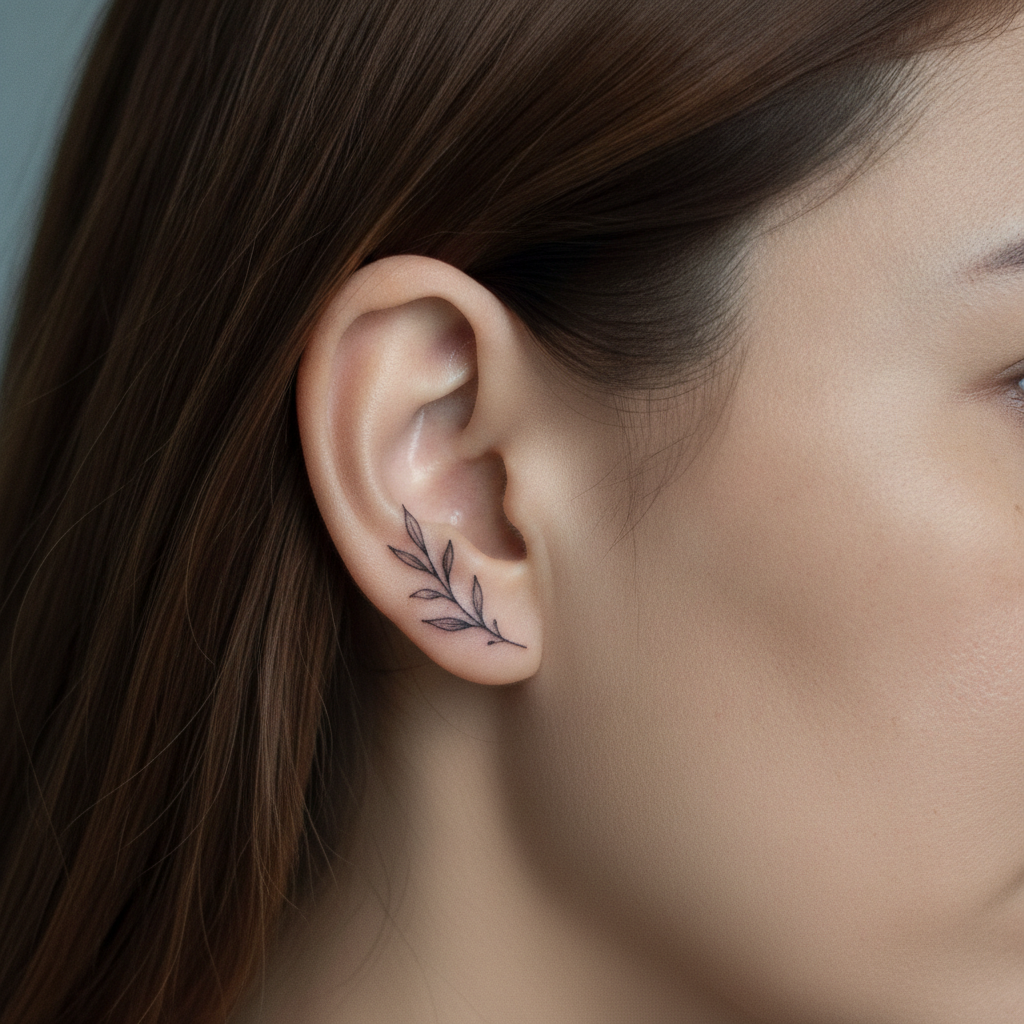
Small fine-line pieces such as a botanical sprig, a wave, a constellation of three or four stars, or a delicate line drawing typically run $150 to $300. These take forty-five to ninety minutes because fine-line work behind the ear requires slow, deliberate passes to avoid blowouts on thin skin. Micro-realism portraits, tiny script quotes, or detailed geometric patterns push into the $250 to $500 range and usually need a specialist who charges by the hour rather than a flat rate.
Anything larger than a US quarter behind the ear starts overlapping onto the mastoid bone, the hairline, or the neck. Pieces that extend down behind the earlobe or wrap toward the nape can climb to $400 to $800 because they take multiple hours and often need a second session for touch-ups.
What actually drives the price
Studio tier is the biggest single factor. A neighbourhood street shop in a mid-sized US city might do a small script behind the ear for $100 flat. The same piece at a private studio with a two-month waitlist in Brooklyn or Silver Lake will quote $300 to $450 as a hard minimum, even though the design is identical. You are paying for the artist's portfolio, the shop's reputation, and the guarantee that the linework will hold up.
Artist experience compounds fast on small placements. A three-year artist charging $120 per hour and a ten-year specialist charging $250 per hour will both spend about an hour on a fine-line piece behind your ear. The specialist's version will still be readable at year ten. The junior artist's version may need a touch-up by year three, which costs another $80 to $150. Cost per year of legibility often favours the pricier artist for detailed work in this spot.
Design complexity matters more than raw size here. A single dot or tiny cross takes minutes. A three-word script in a custom font, or a tiny mandala with dotwork shading, can take ninety minutes even though the finished piece fits under a thumbnail. Ask your artist to quote based on estimated chair time, not the drawing on paper.
Why behind-the-ear costs more per square inch than a forearm
The skin behind the ear is thin, sits over hard bone, and has almost no give. Artists work slower here to control needle depth and prevent the ink from spreading under the surface, which is what causes the blurred halo effect called a blowout. Fine-line artists in particular quote a premium for this zone because the failure mode is expensive to fix and hard to hide.
Access is also awkward. The artist works around the ear itself, the jawline, and the client's hair, which usually needs to be shaved or clipped in a small patch. You will be lying on your side for most of the session, and the artist has to reposition the stencil more often than they would on a flat forearm. All of that adds real minutes to a session that is already dominated by fixed setup costs.
There is also a stencil problem. Curved skin distorts flat transfer paper, so the artist often freehands part of the design after the initial stencil is laid down. Freehand time on a specialist's schedule is not cheap.
Add-on costs most people forget
- Deposit: usually $50 to $150, deducted from the final price. Non-refundable if you no-show.
- Consultation: many custom-focused studios charge $30 to $75 for a design consult on anything more involved than flash.
- Touch-up: some artists include one free touch-up in the first six months, others charge $80 to $150. Ask before you book.
- Tipping: 20 to 25 percent of the tattoo price is standard in the US. On a $200 piece, budget another $40 to $50 in cash.
- Numbing cream: some studios sell it for $20 to $40, others ban it because it changes how the skin takes ink. Ask first.
Add these up and a $180 quoted piece often becomes a $260 to $290 real-world spend once tip and deposit are folded in. Budget accordingly instead of walking in with exact change.
How to keep the price reasonable without cutting corners
Book flash instead of custom if you want the lowest defensible price. Most shops keep a flash sheet of small designs priced at or near their minimum, and many of those designs work well behind the ear. You skip the design fee, the consultation, and the extra chair time, and you still get a piece done by a licensed artist in a real studio.
Consolidate placements if you already know you want more than one small tattoo. Sitting for two small pieces in the same session usually costs less than booking two separate sessions, because the setup fee only applies once. If you have been thinking about a wrist piece and a behind-the-ear piece, do them on the same day and negotiate a combined price up front.
Avoid extreme detail at small scale. A tight micro-realism portrait behind the ear will cost three to four times what a bold single-line drawing costs, and the detailed version is more likely to blur within five years. For a good primer on what different price tiers actually buy, our tattoo pricing explained guide walks through the full framework, and hourly vs flat-rate tattoo pricing breaks down when each model favours the client.
Do not chase the cheapest quote in your city. Behind-the-ear placements are one of the most common regret spots because a bargain artist blew out the linework and the client had to pay a laser removal specialist $200 to $500 per session to fade it. See our tattoo removal cost breakdown for what a bad first tattoo actually costs to undo.
What to ask before you sit down
Get a firm quote in writing, ideally over email or through the studio's booking system. Ask whether the quote includes a touch-up, what the deposit policy is, and whether tip is expected in cash. Confirm the artist has done behind-the-ear work before and ask to see healed photos, not fresh ones. Fresh tattoos always look sharper than they will at month six.
Ask about session length. If the artist quotes ninety minutes for a piece that looks like a fifteen-minute job, that is usually a signal they are being honest about setup, stencilling, and the slower pace this placement demands. A ten-minute quote for a fine-line piece here is a red flag.
Confirm aftercare. Behind-the-ear tattoos get exposed to hair products, pillowcases, sweat, and phone contact during healing, which makes them one of the higher-maintenance spots to look after. Follow the standard tattoo healing timeline day by day and keep hair off the area for the first week.
Frequently asked
Is a behind-the-ear tattoo more painful than a forearm tattoo? Yes. The skin is thin and sits directly over the mastoid bone, so the vibration and needle sensation transmit sharply. Most people rate it six or seven out of ten, higher than a forearm which usually rates three or four. A short session keeps the pain manageable, and most small pieces finish in under an hour.
How long does a behind-the-ear tattoo take to heal? The surface heals in two to three weeks, matching most small tattoos. Full dermal healing takes three to four months. Hair contact, pillow friction, and phone use are the main aftercare complications. Keep hair pulled back for at least seven days and switch pillowcases every two days during the initial peel phase.
Will hair grow back over my behind-the-ear tattoo? Yes, unless the tattoo is placed above the hairline in an area you keep shaved. Most people ask the artist to place the design where hair naturally covers it when it is down, giving them the option to hide or show the tattoo. Discuss placement with your artist before the stencil goes on.
Can I get a colour tattoo behind my ear? Technically yes, but most artists steer clients toward black or single-shade grey here. Colour pigments fade faster in areas with sun exposure and thinner skin, and touch-ups on this spot are more expensive than on flatter placements. Black ink also stays crisper on a small scale.
Do I need to tip on top of a shop minimum? Yes. Tipping is standard in the US regardless of whether the price hit a minimum or not. Twenty to twenty-five percent of the tattoo price in cash is the norm. On a $100 minimum piece, plan on $20 to $25 in tip. The artist did the same setup and clean-down work as they would for a $500 piece.
How long does a behind-the-ear tattoo last before needing a touch-up? Bold black linework usually holds five to eight years before a touch-up is noticeable. Fine-line and micro-realism pieces often need a first touch-up at year three to four. Sun exposure, aggressive shampoo, and rubbing from over-ear headphones all shorten the interval. Budget for one touch-up within the first four years for any detailed piece.