Traditional tattoos in Bali.
Also called American traditional · old school · flash tattoo · sailor tattoo
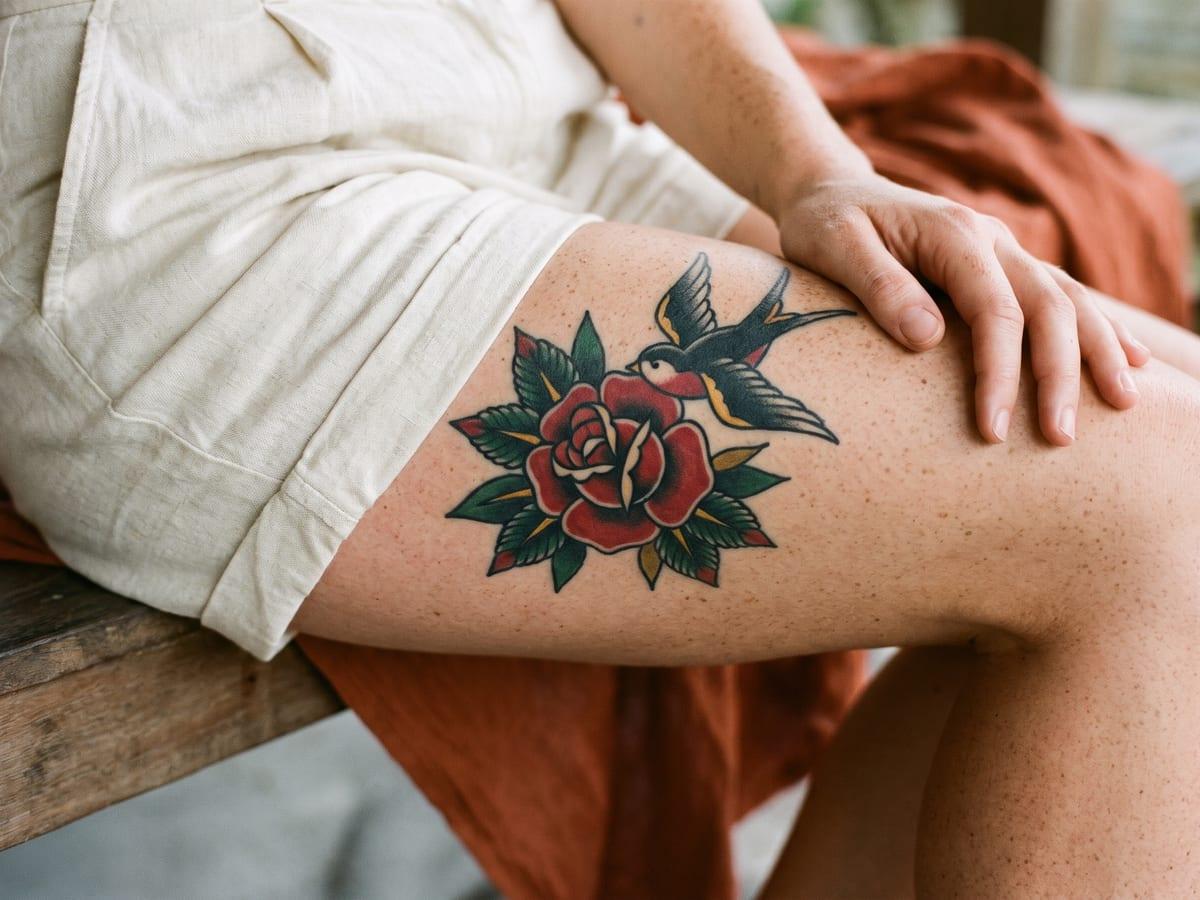
Bold black outlines, a few strong colours and designs straight off the wall. See 449 real traditional tattoos from Bali studios, the 112 studios that list the style and why it ages so well.
- 4.9 average Google rating across 36,000+ reviews
- 112 studios list traditional
- 449 real pieces from 167 studios
- Studios
- 112
- most in Seminyak
- Library photos
- 449
- from 167 studios
- Google rating
- 4.9★
- across 36,000+ reviews
- Areas
- 9
The short answer
- 01Traditional tattoos use a bold black outline, solid shading and a small palette of strong colours, in classic flash designs.
- 02112 Bali studios list traditional, with an average Google rating of 4.9; Seminyak has the most of them.
- 03Animals, roses, birds, skulls, daggers and snakes lead our photos, and it sits most often on the upper arm, forearm and calf.
- 04Bold lines and solid colour are among the longest lasting looks in tattooing; colour still needs sunscreen for life.
- 05Most pieces are one sitting, so a traditional tattoo fits a short trip. Book it for the end: no sea, pool or sun until it heals.
At a glance
- The look
- Bold outline, solid colour, simple shading
- Colour
- Colour or black (47% black and grey in our photos)
- Most often on
- The upper arm, forearm and calf
- Sittings
- Usually one per piece
- Ages
- Among the best of any style
- Sea, pool and sun
- Not until it has healed
From our library of studio photos
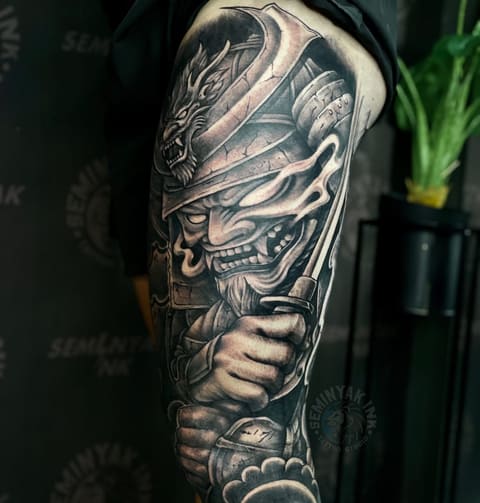
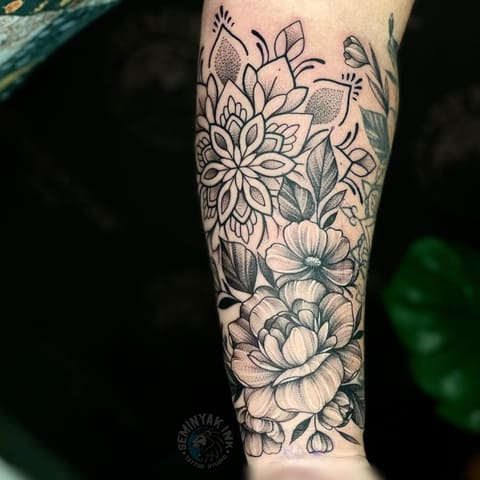
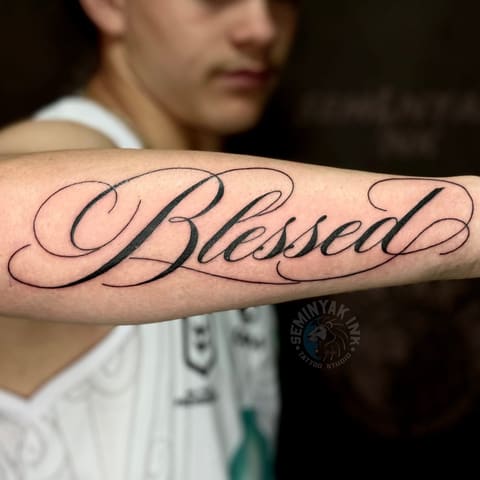
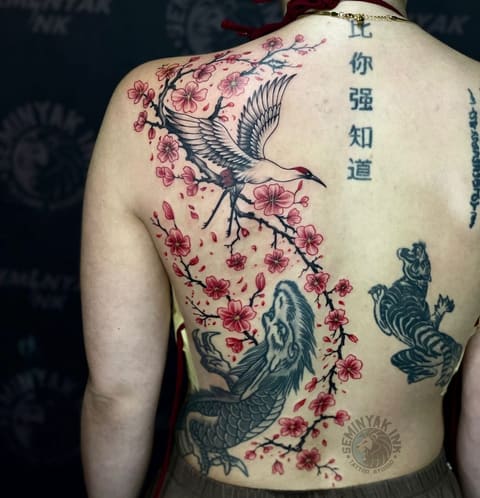
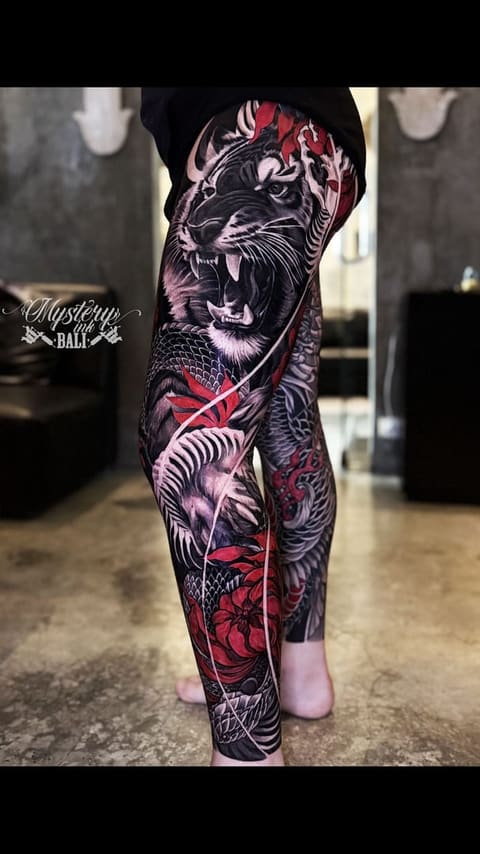
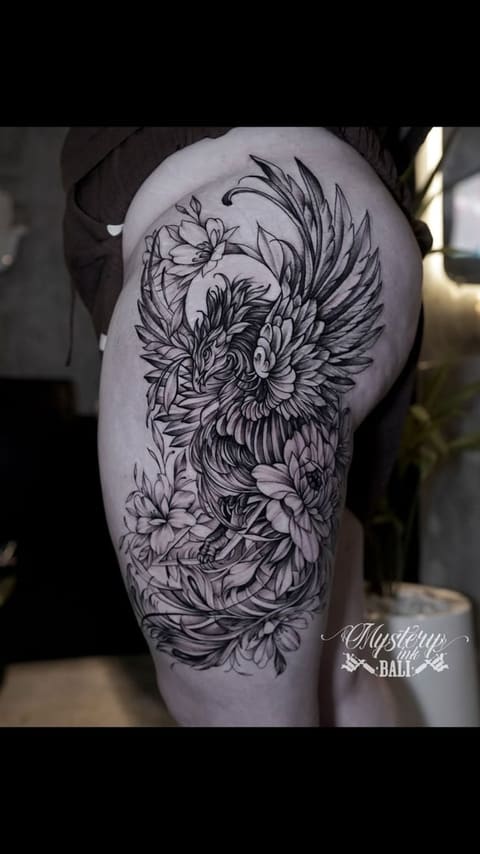
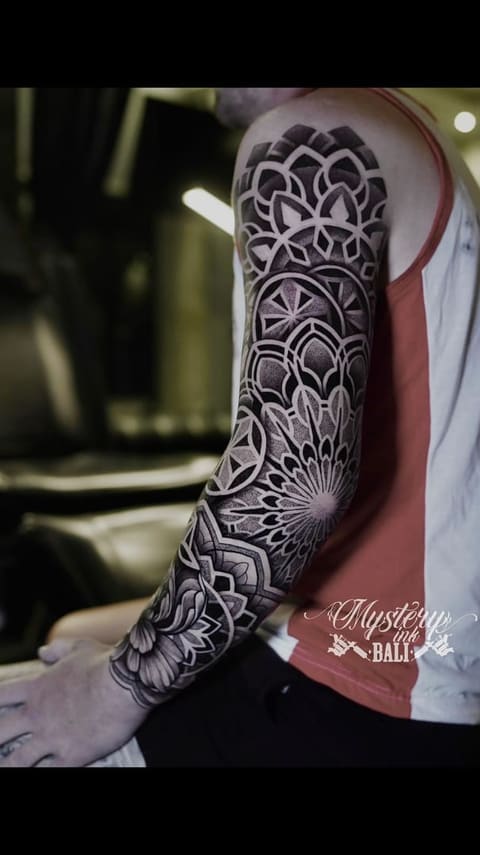
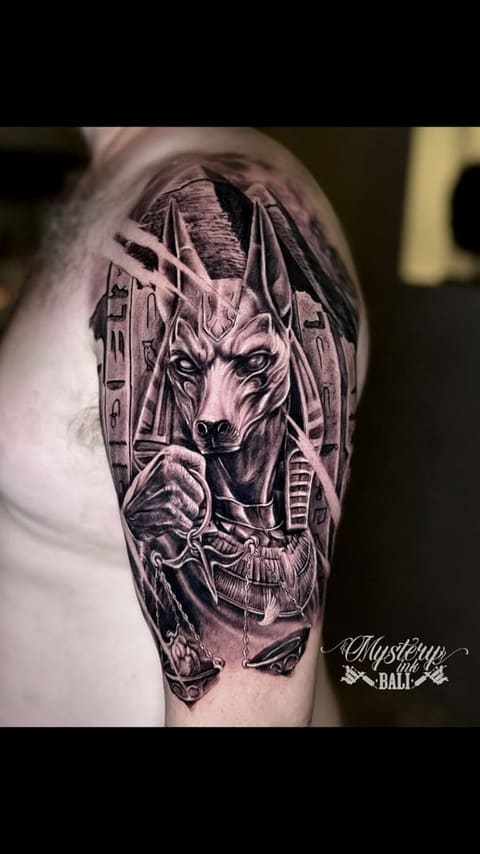
Traditional in real work.
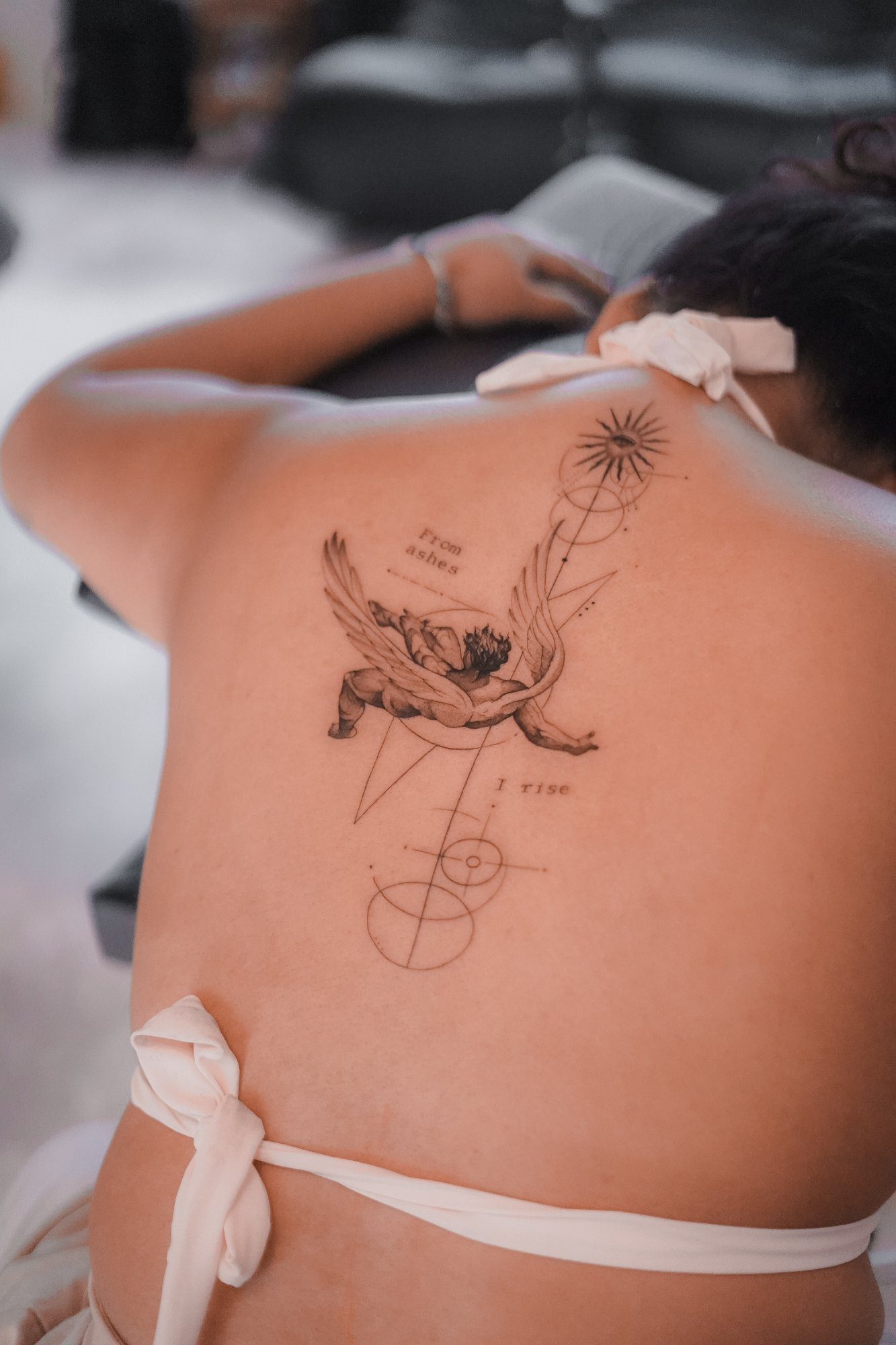
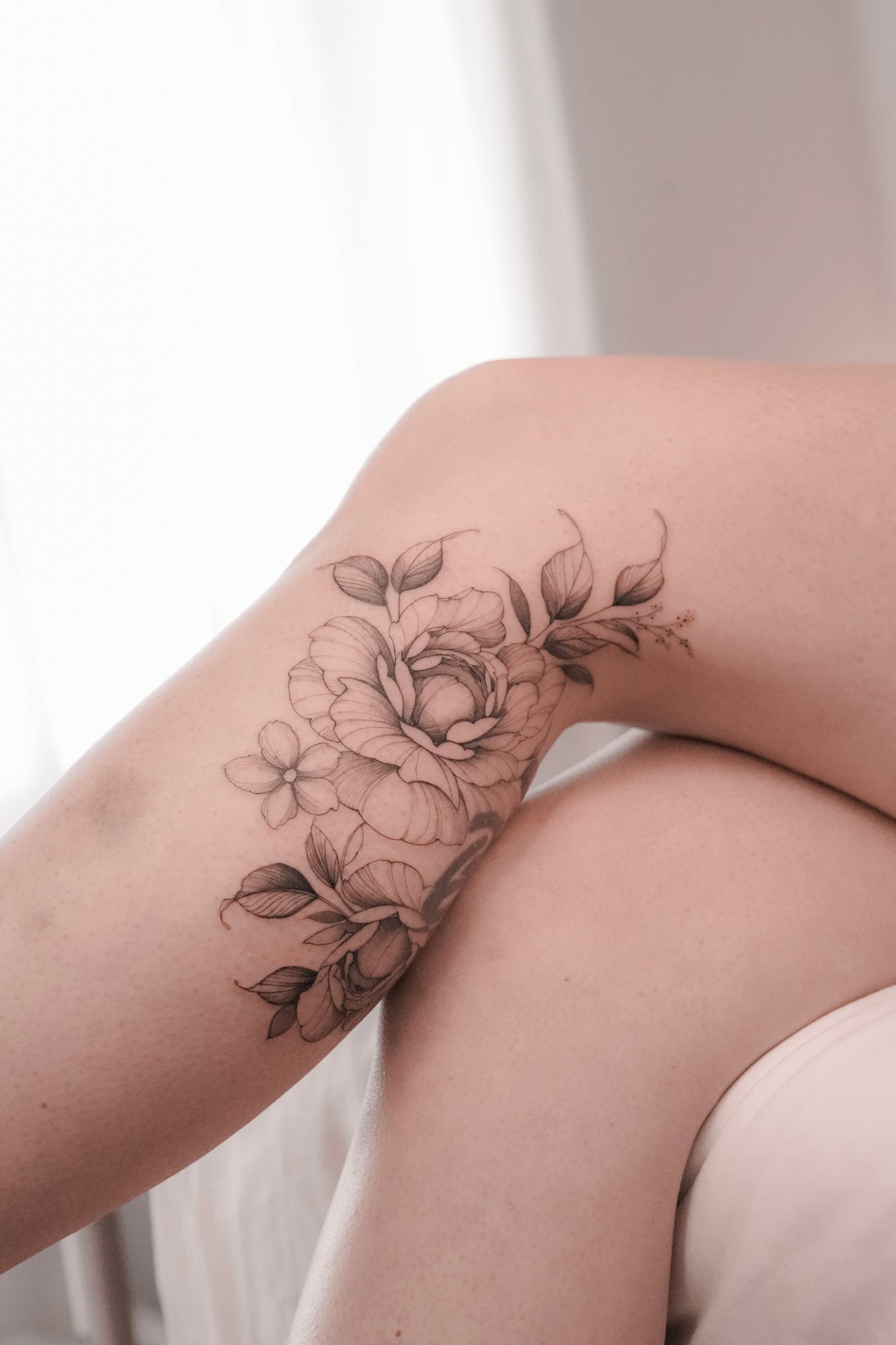
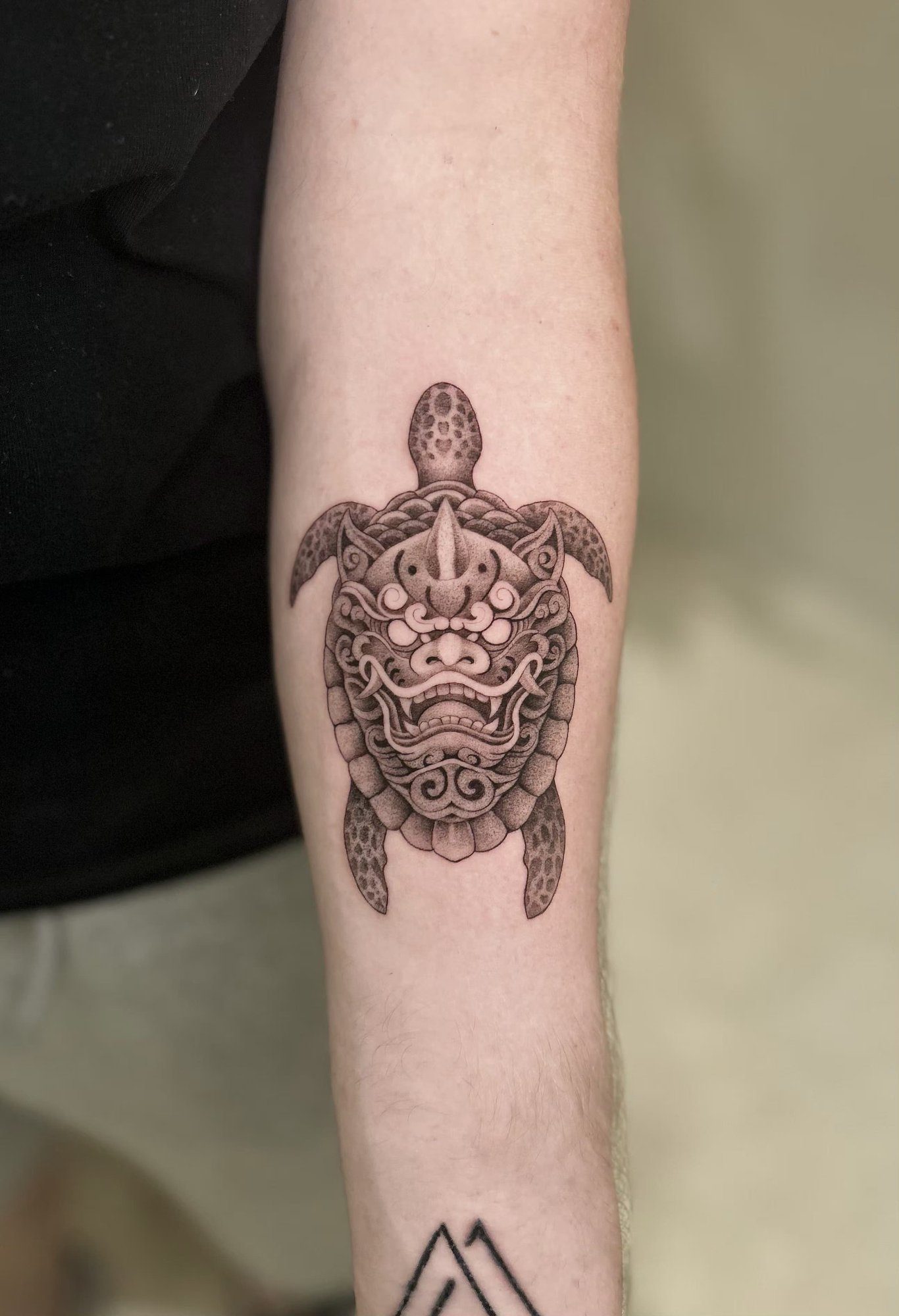
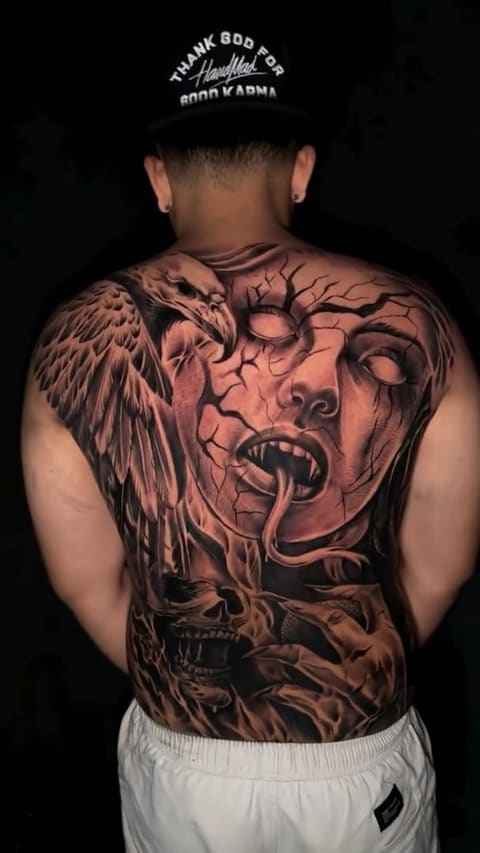
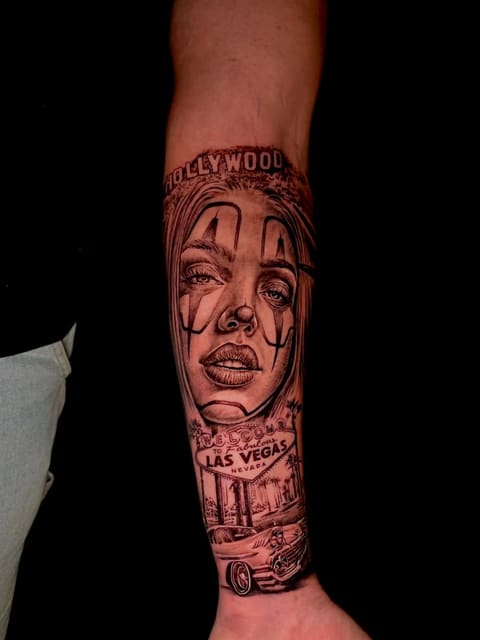
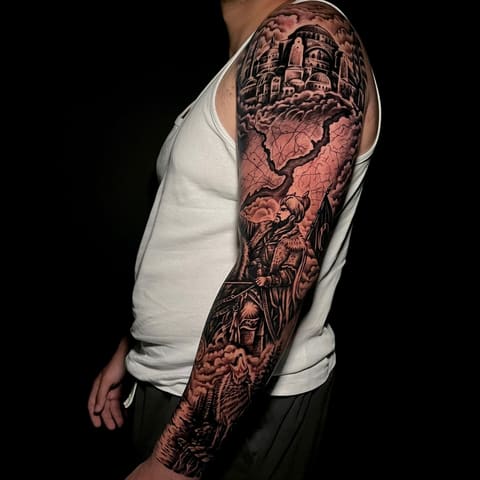
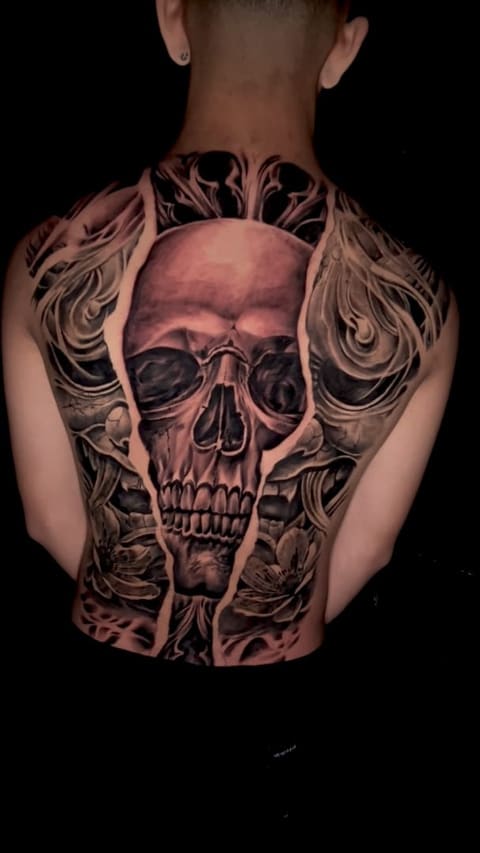
449 tattoos from 167 Bali studios, each from the studio's own posts. Tap one to see it large and the studio that made it, or save it as a reference for your request.
See all 449 in the inspiration library →
- upper arm139
- forearm131
- calf80
- shin53
- shoulder51
- thigh42
- chest35
- back30
Body parts in our 449 photos of the style. A photo can show more than one.
- animal 139
- symbol 116
- flower 91
- rose 61
- bird 50
- skull 46
- script 40
- plant 31
- dagger 30
- mythical 29
47%of these photos are black and grey
Bali prices, dollars first
What traditional costs in Bali.
Traditional pieces are often priced per design, and flash that is already drawn can be quicker, and so cheaper, than a custom drawing of the same size. Few Bali studios publish a price list and almost none publish one for traditional, so the table shows typical prices by size for any style, from the studios that do, beside what traditional studios list themselves. Ask the studio whether a design is flash or custom, and what that does to the price.
Every style: too few studios publish traditional prices yet. Each range is the middle half of the studios' prices; detailed work usually sits toward the top.
What traditional studios publish
- Amor Fati Uluwatu - Tattoo & Piercing StudioUluwatu & Bukit
- Tiny tattoo (up to 5 cm)
- $47IDR 850K
- Small tattoo (5 to 10 cm)
- $165IDR 3M
- Medium tattoo (10 to 15 cm)
- $276IDR 5M
- Two Guns Tattoo BaliLegian
- Minimum charge
- $77IDR 1.4M
- Amor Fati Canggu - Tattoo & Piercing StudioCanggu & Pererenan
- Tiny tattoo (up to 5 cm)
- $47IDR 850K
- Hendric Shinigami Tattoo BaliSeminyak
- Minimum charge
- $83IDR 1.5M
- Skin Canvas Tattoo Art StudioUluwatu & Bukit
- Small tattoo (5 to 10 cm)
- $33IDR 600K
- Medium tattoo (10 to 15 cm)
- $88IDR 1.6M
- Sunset Ink BaliCanggu & Pererenan
- Minimum charge
- $28IDR 500K
- Sae Collective Studio UluwatuUluwatu & Bukit
- Tiny tattoo (up to 5 cm)
- $55IDR 1M
- Tiny tattoo (up to 5 cm) · Realism
- $165IDR 3M
- Medium tattoo (10 to 15 cm)
- $276IDR 5M
- Large tattoo (15 to 25 cm)
- $552IDR 10M
- Amor Fati Seminyak - Tattoo & Piercing StudioSeminyak
- Tiny tattoo (up to 5 cm)
- $47IDR 850K
- HUSTLE INK TATTOO BALILegian
- Tiny tattoo (up to 5 cm)
- $39IDR 700K
- Tiny tattoo (up to 5 cm) · Cover-ups
- $83IDR 1.5M
- Small tattoo (5 to 10 cm)
- $83IDR 1.5M
- Medium tattoo (10 to 15 cm)
- $165IDR 3M
- Minimum charge
- $66IDR 1.2M
- Bidar AtelierCanggu & Pererenan
- Minimum charge
- $33IDR 600K
Each studio's own price list, for any style unless it says so. Minimums are the least a studio charges for any tattoo.
What moves the price
- Flash or customA design from the studio's flash is already drawn. A custom piece adds drawing time.
- SizeTraditional needs room for its bold lines, so it is rarely tiny. Price follows the size band.
- ColourSolid colour packed evenly takes longer than black and grey shading.
- Flash daysSome studios hold flash days with set designs at a set price. Ask, or watch their posts.
- PlacementShins, ribs and the inner arm are slower than the outer arm or calf.
- The artistClean, even lines and smooth solid colour are the whole style. Look at healed work.
Dollar amounts are approximate, at Rp18,130 = $1 (GOV.UK consular rate for November 2026).
Ranked by reviews
112 studios that do traditional.
Verified partners first, then by Google reviews. Open a studio for its photos, prices and reviews, or narrow by area.
Showing 20 of 112 studios

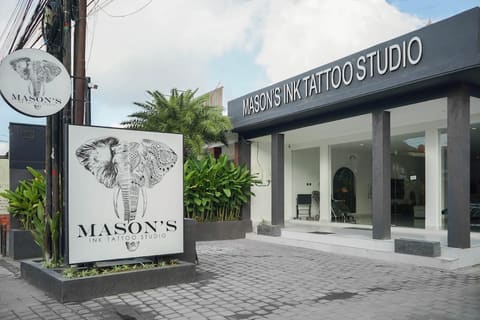
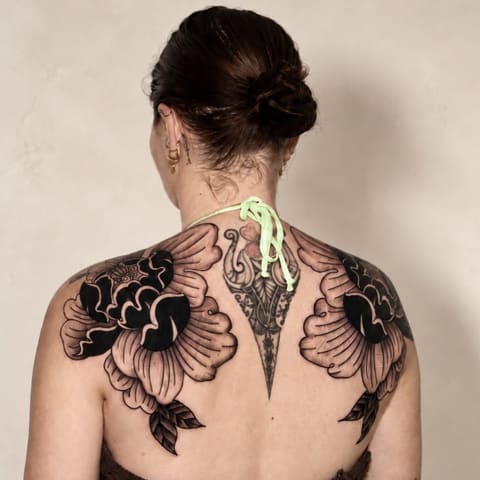
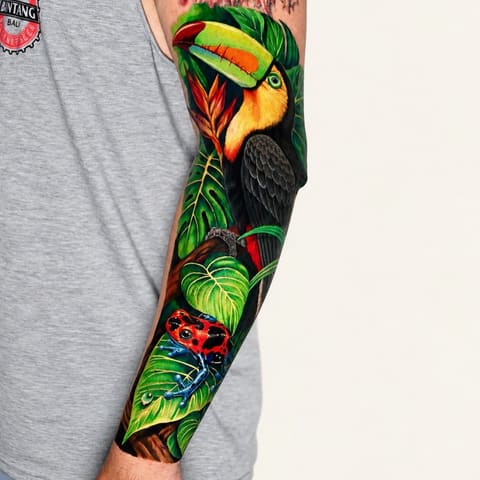
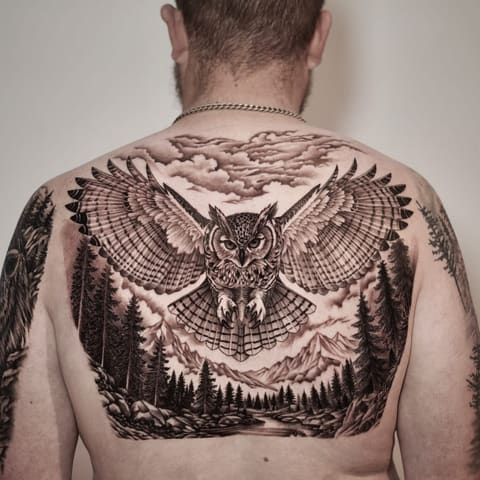
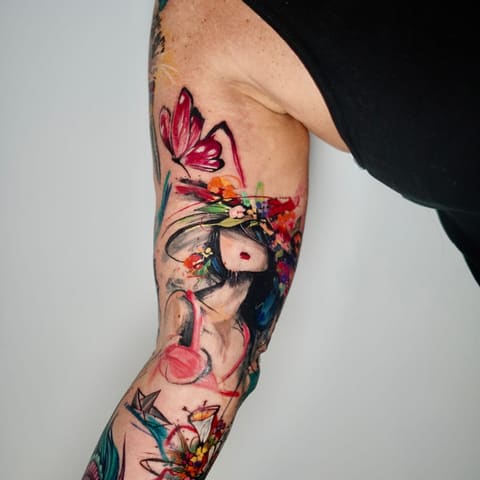
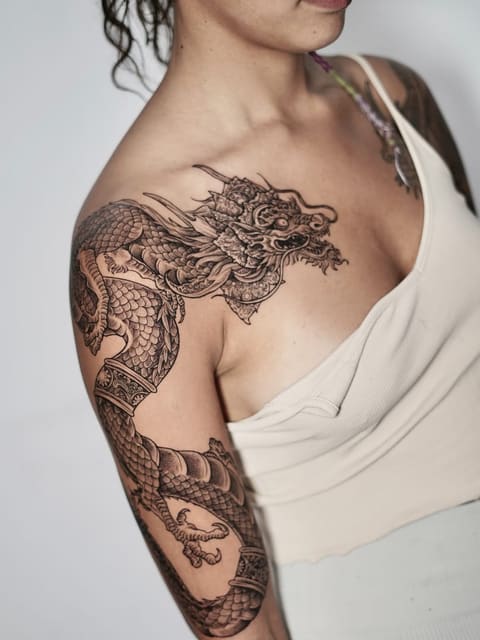
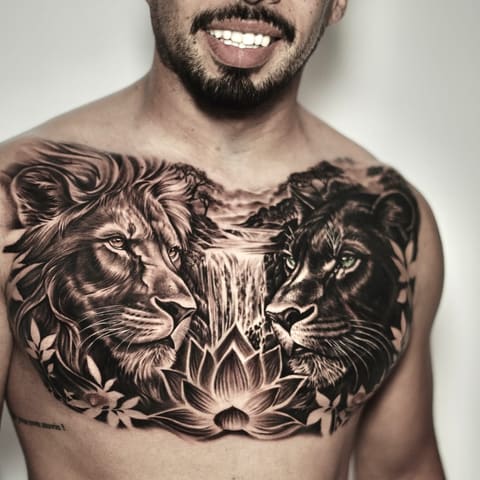

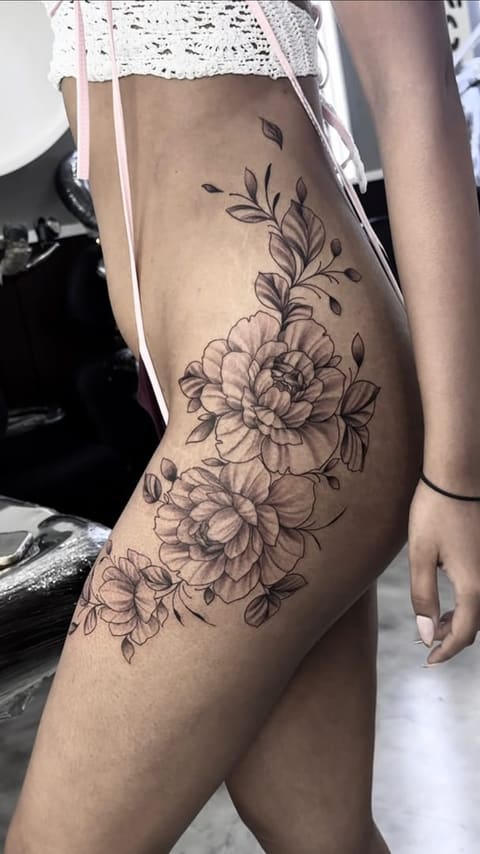
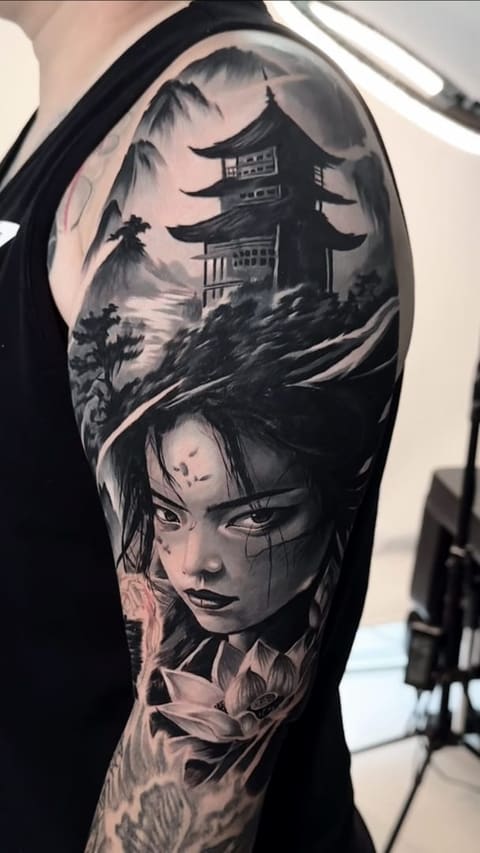
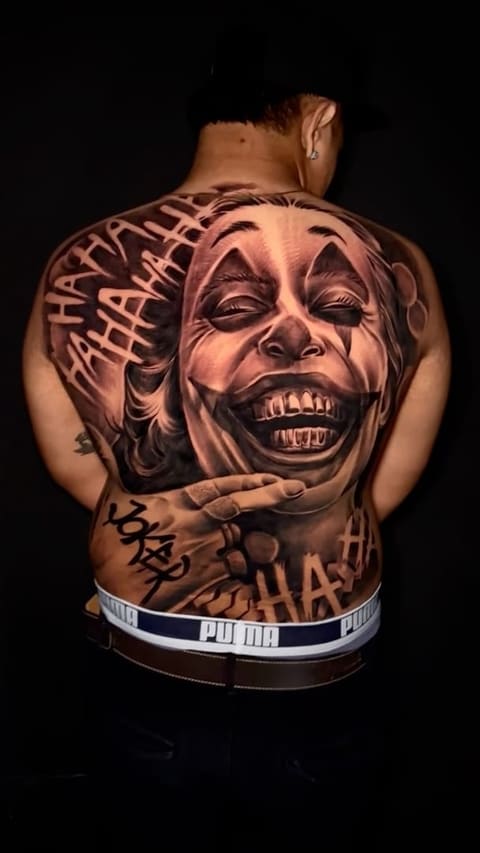
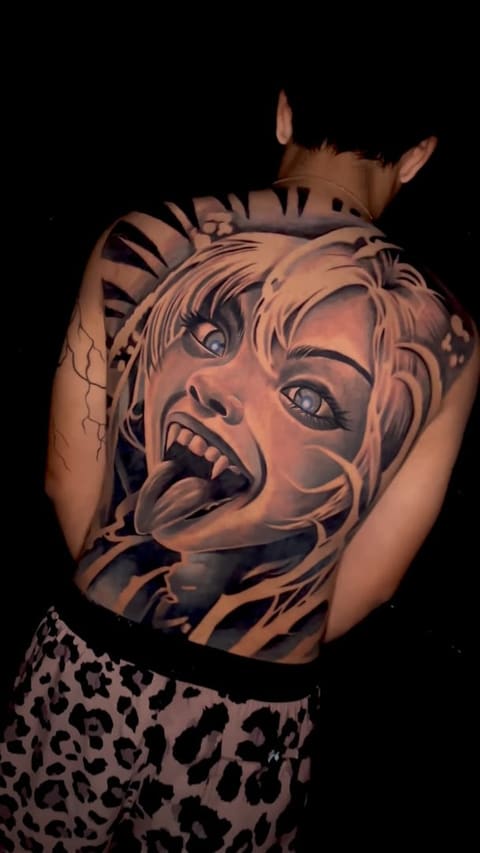
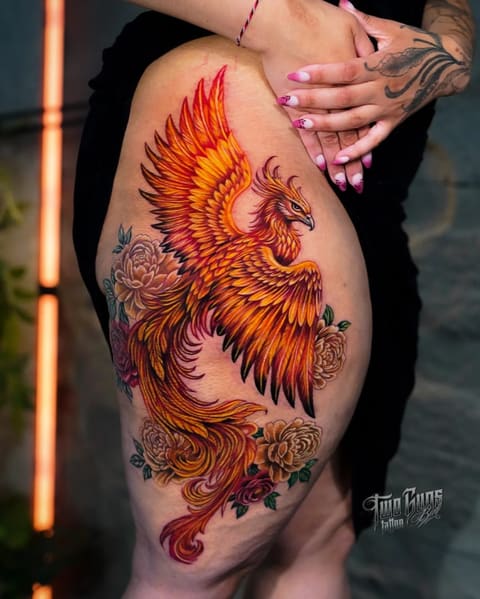
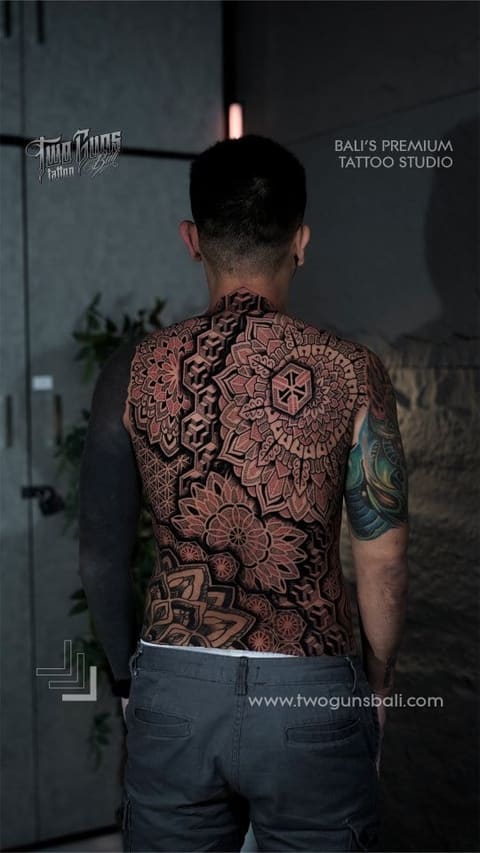
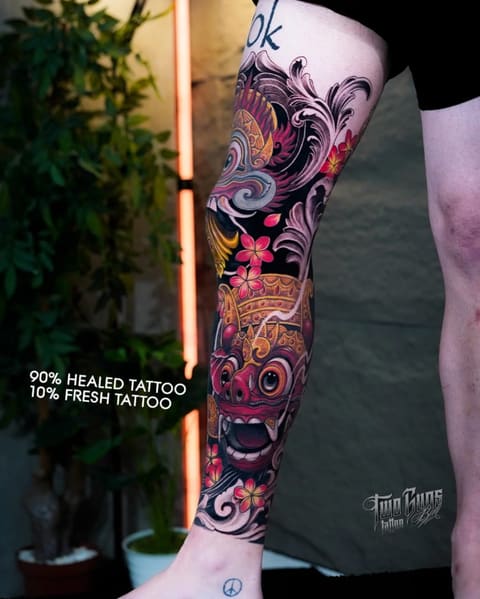
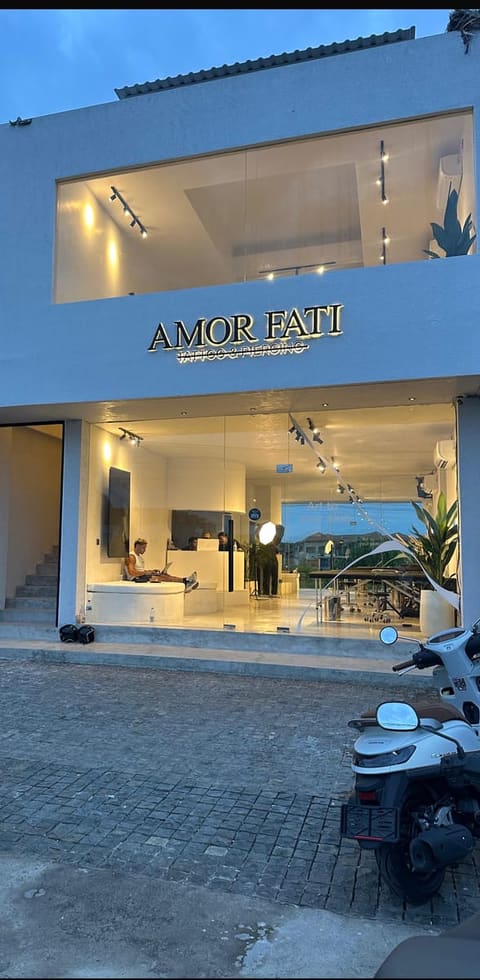
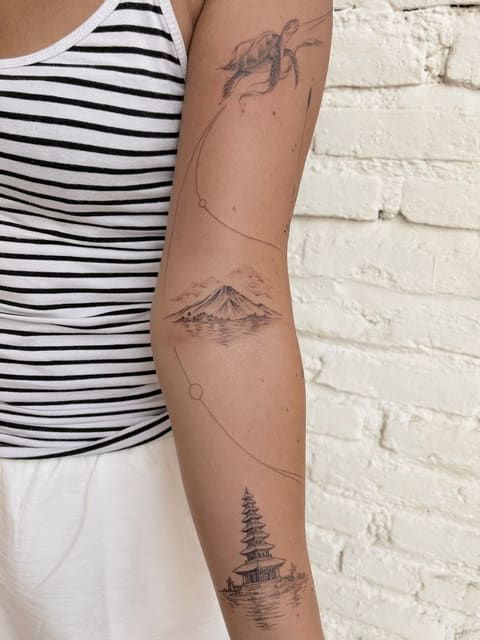
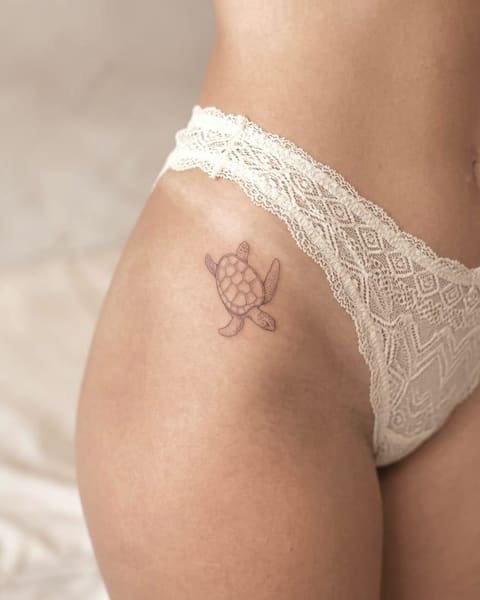
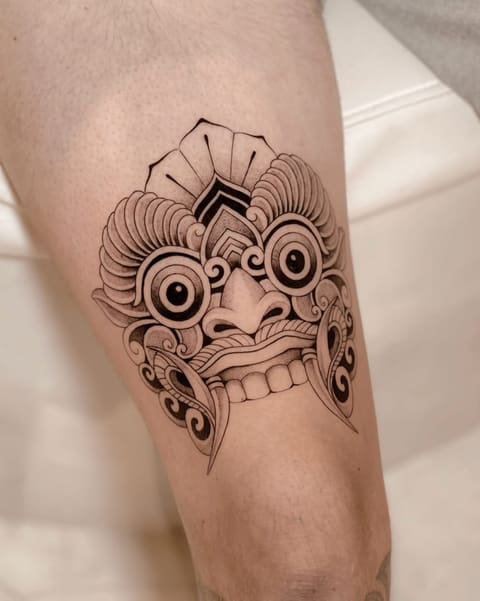
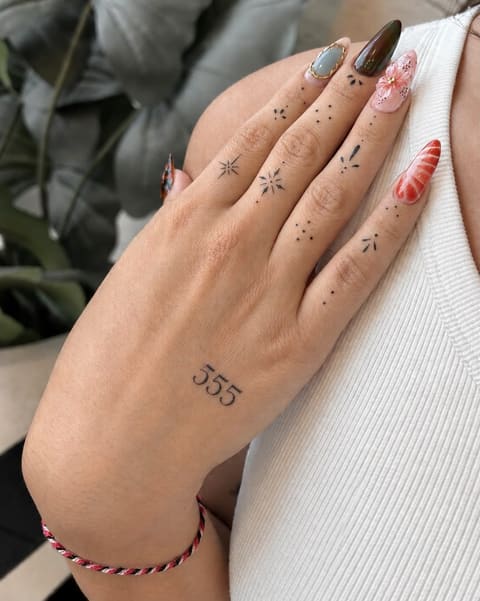
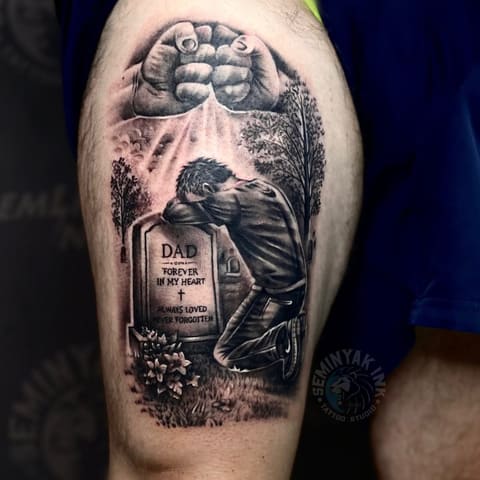
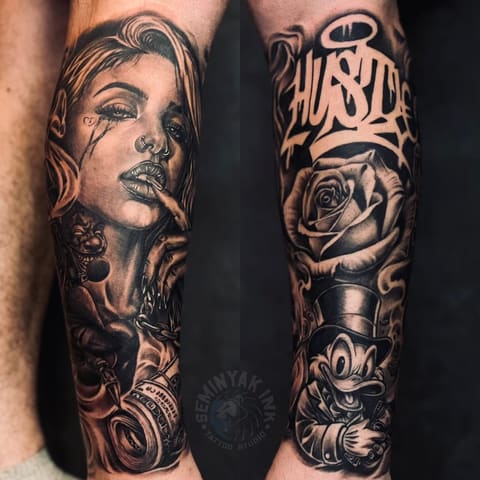
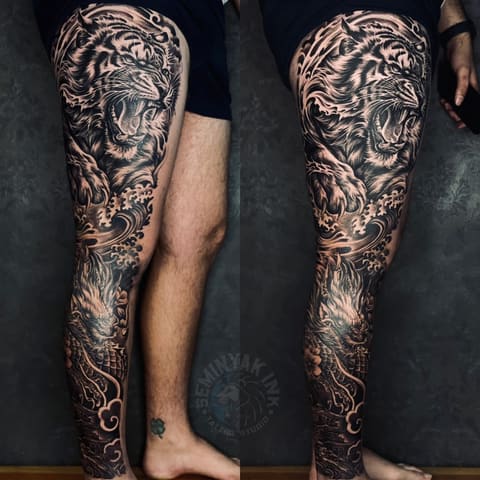
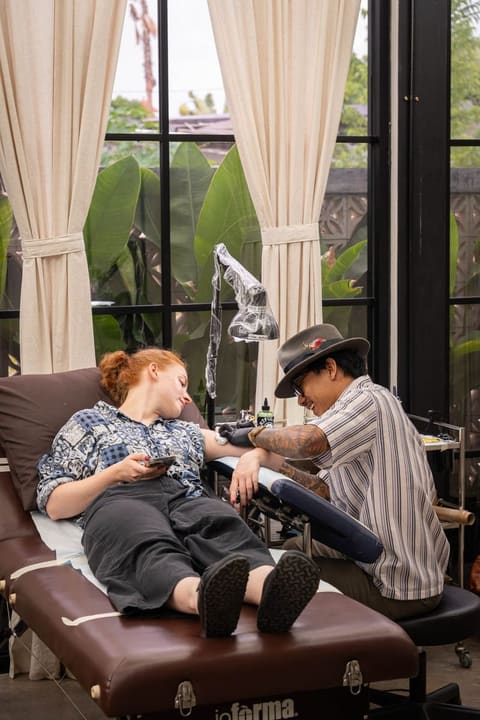
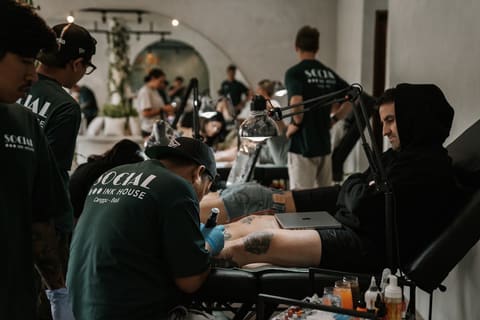
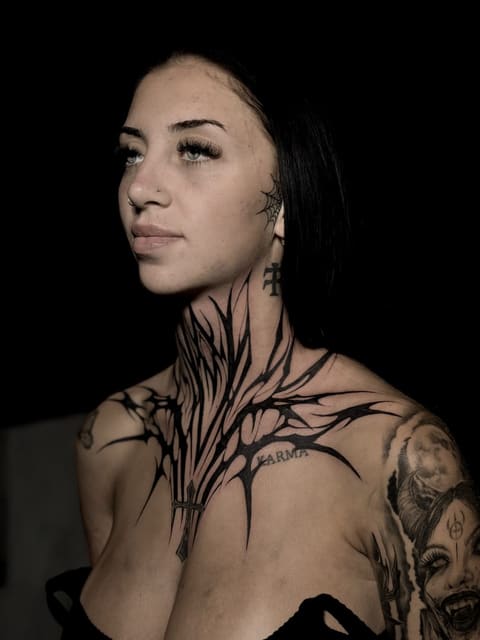

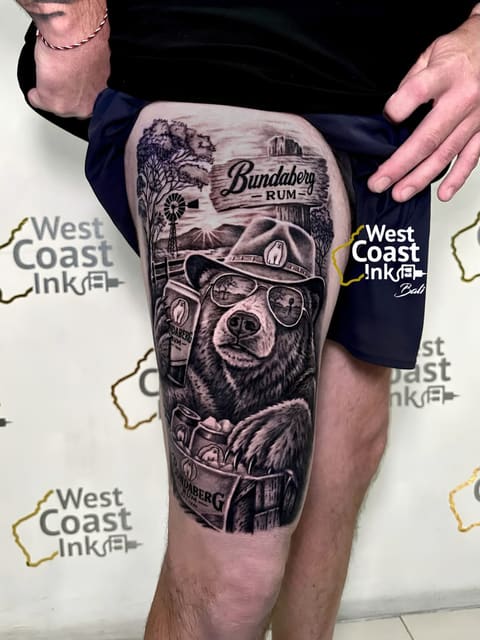
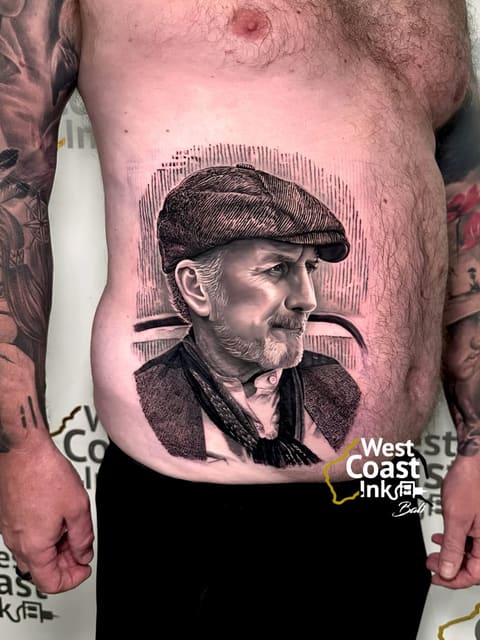
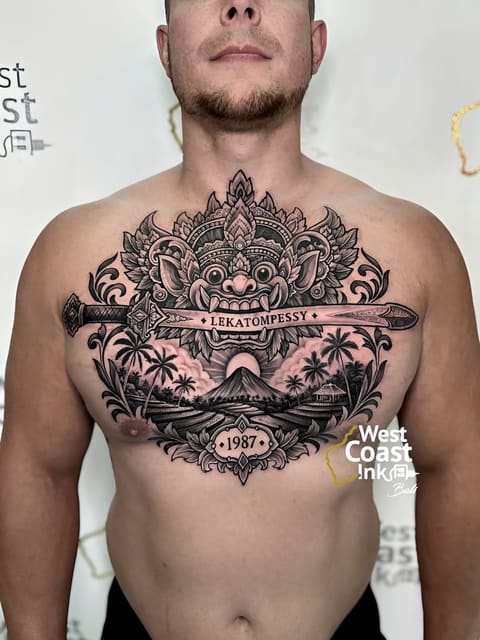
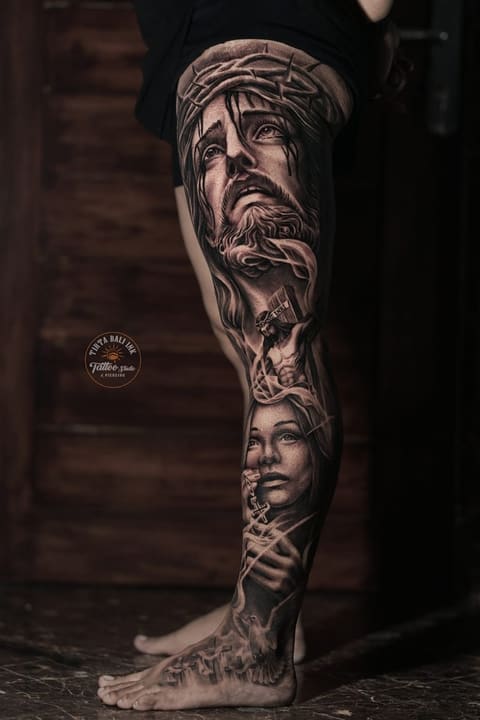
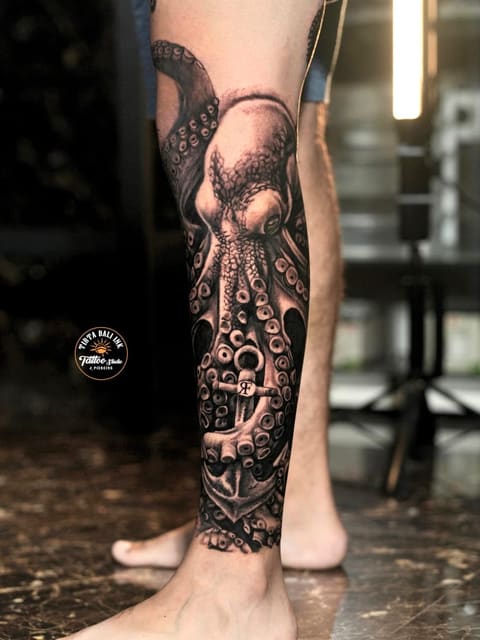
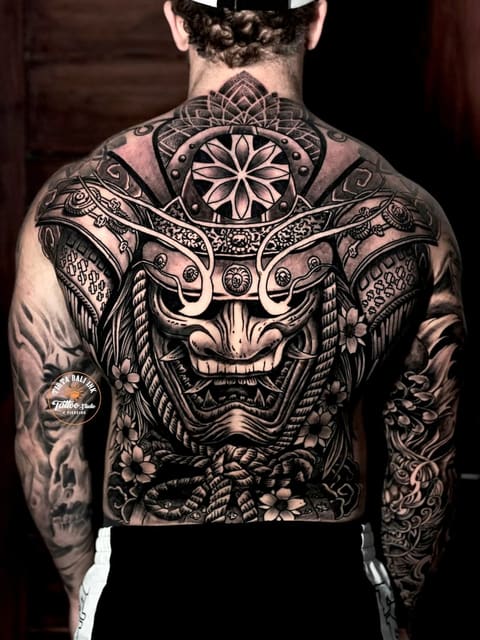
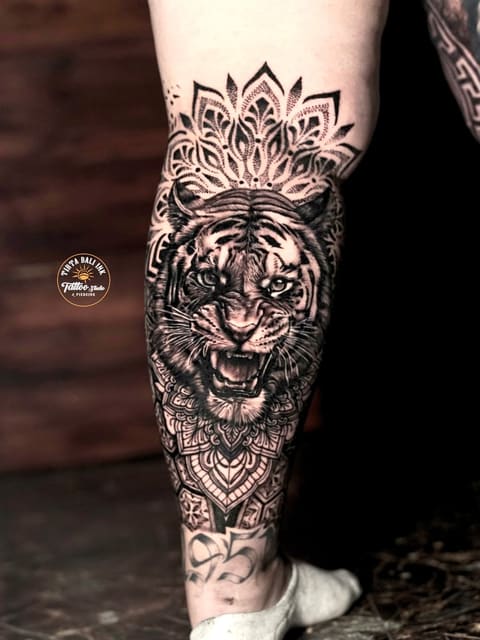
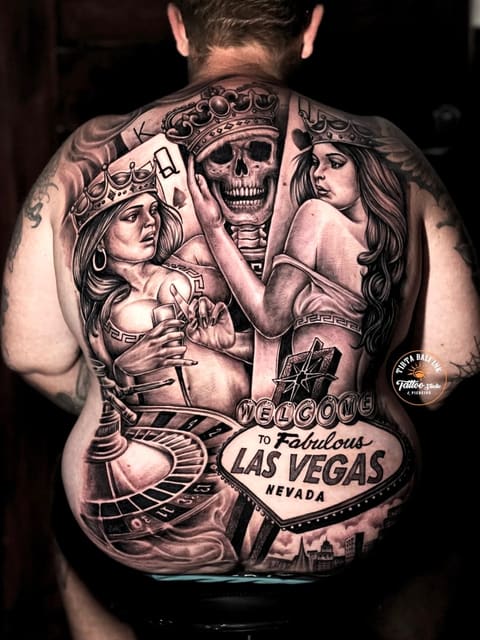
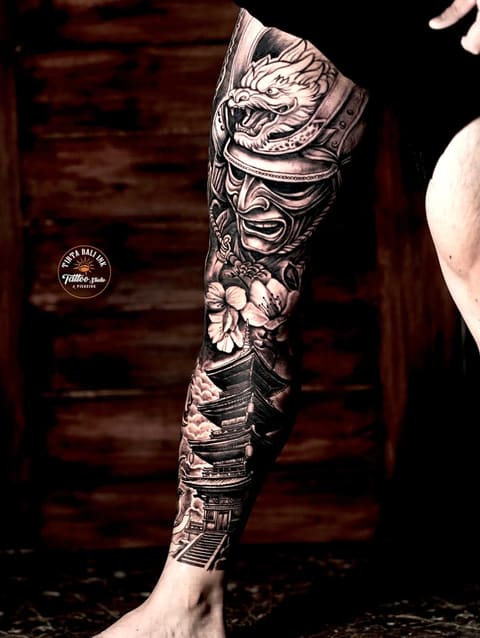
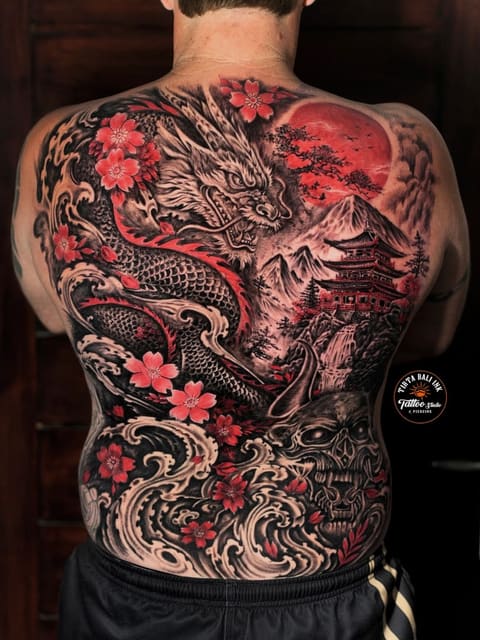
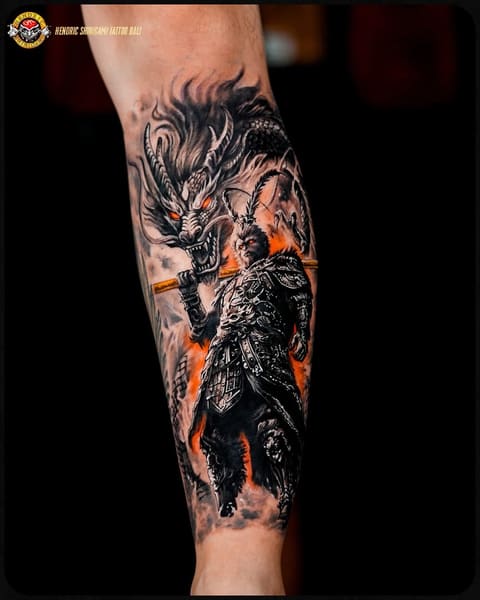
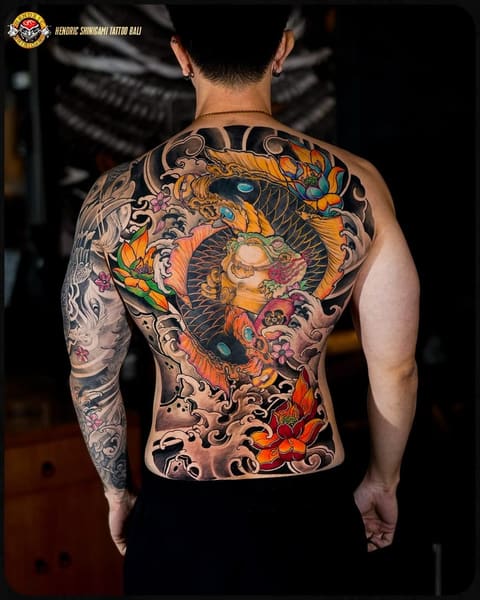
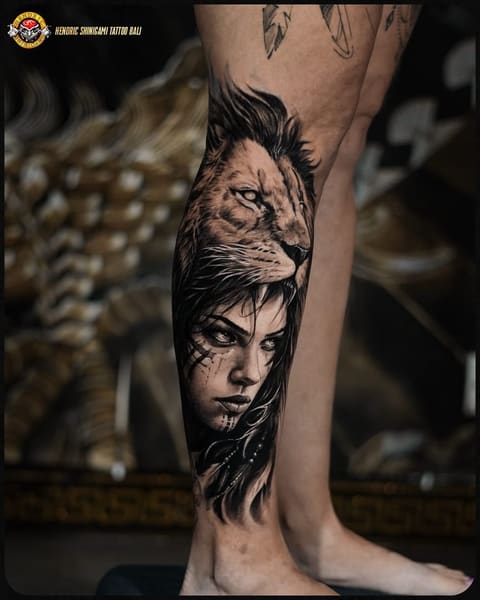
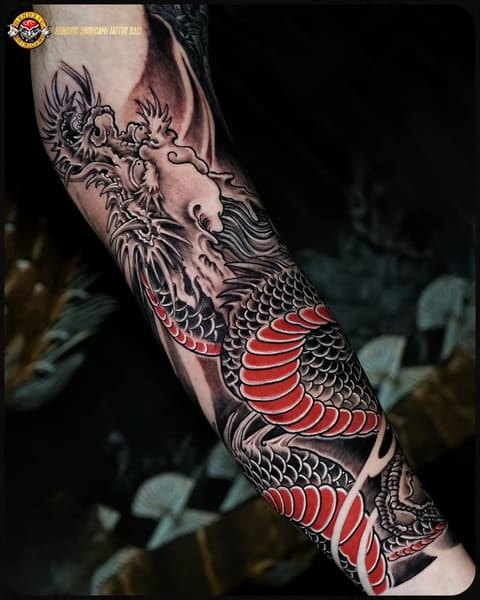
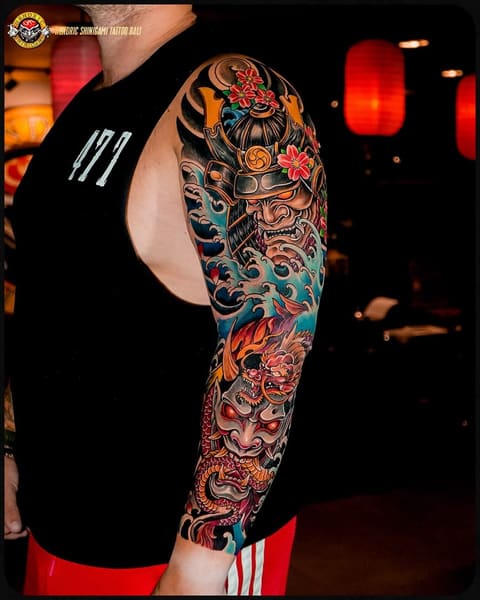
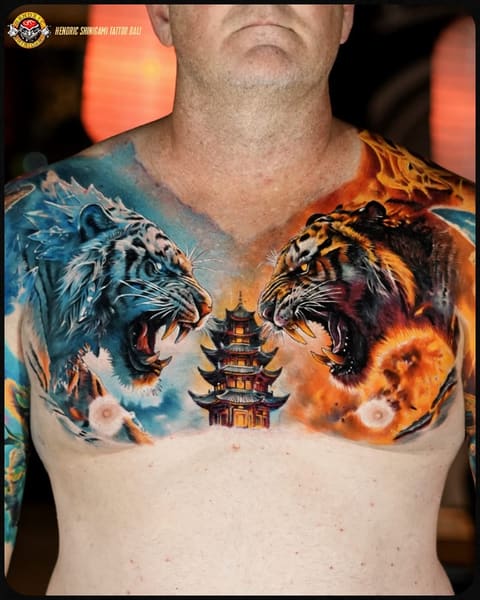
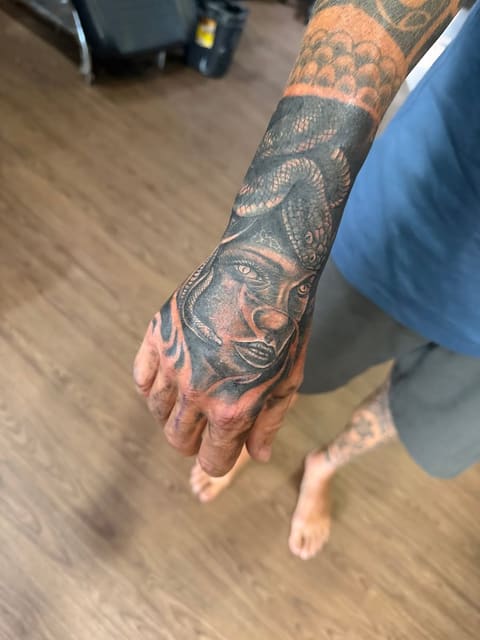
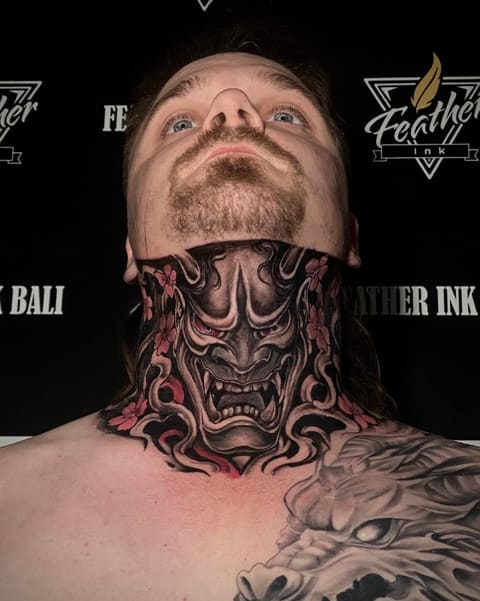
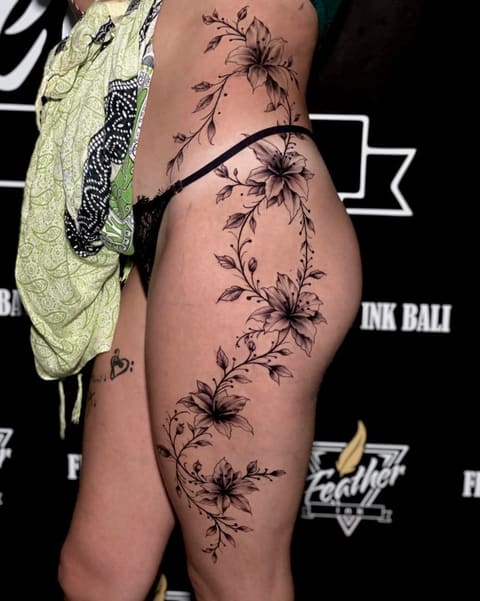
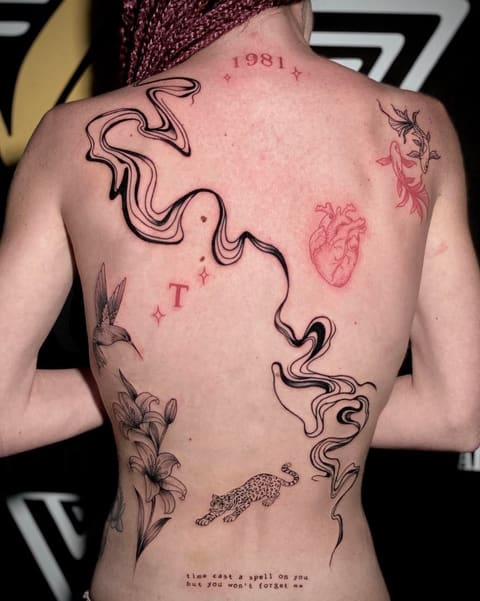
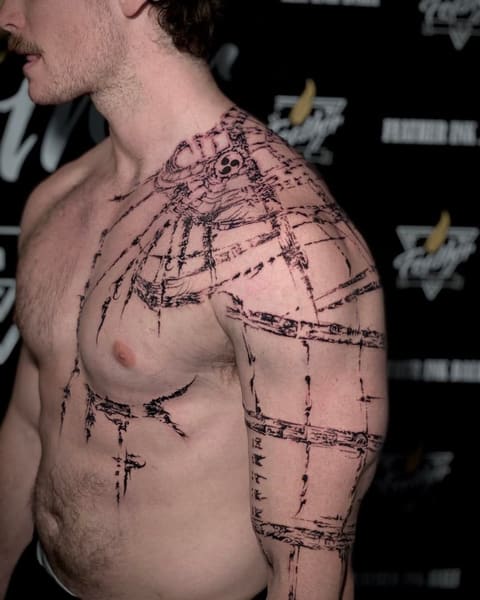
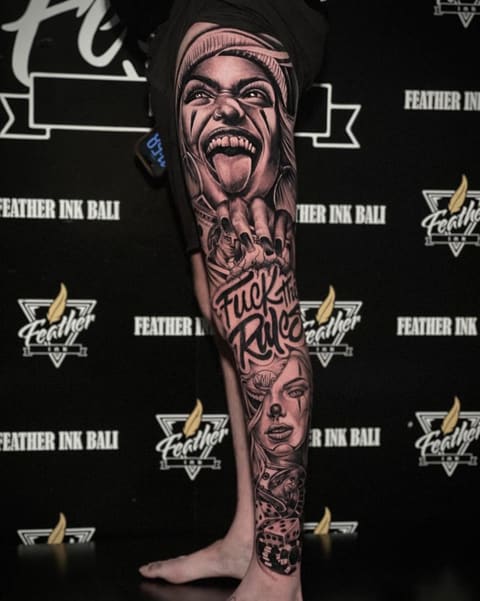
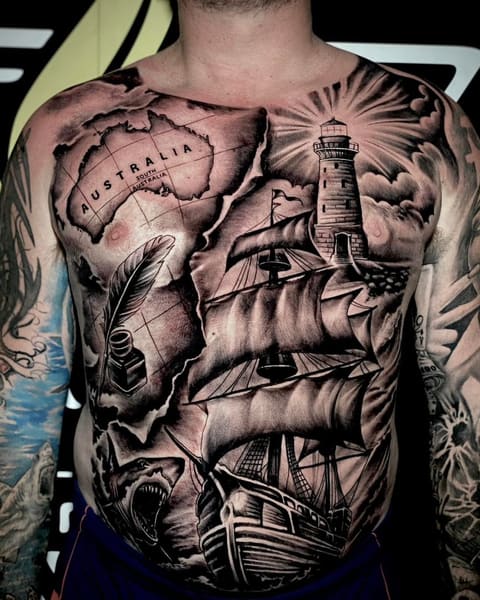
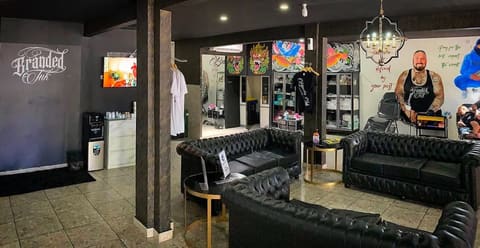
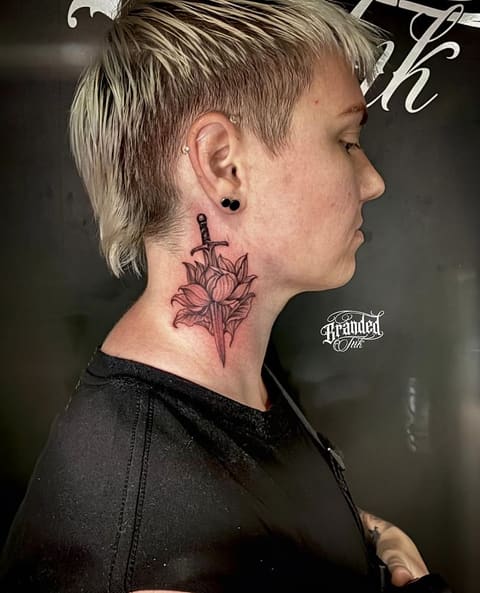
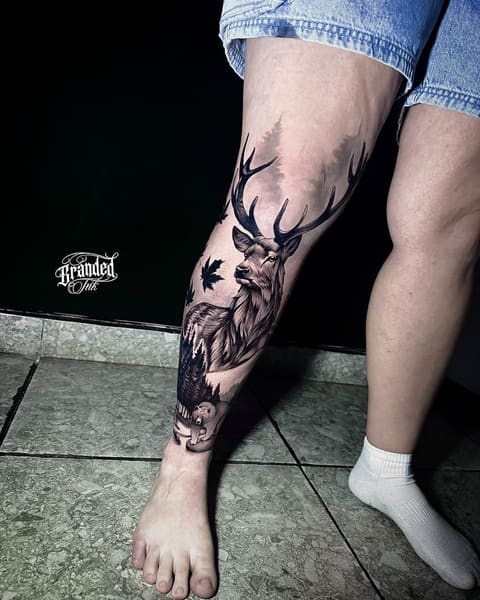
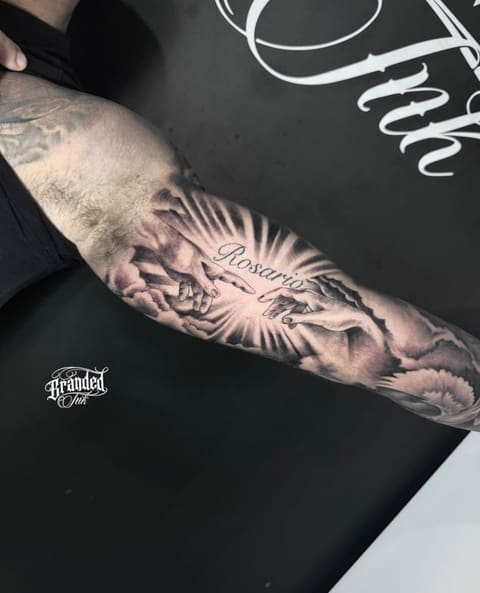
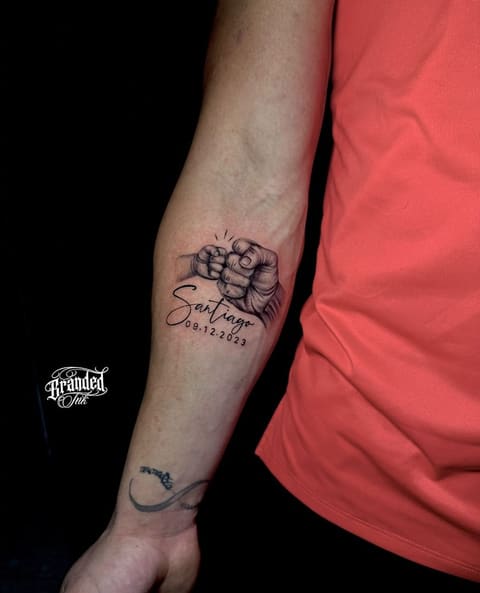
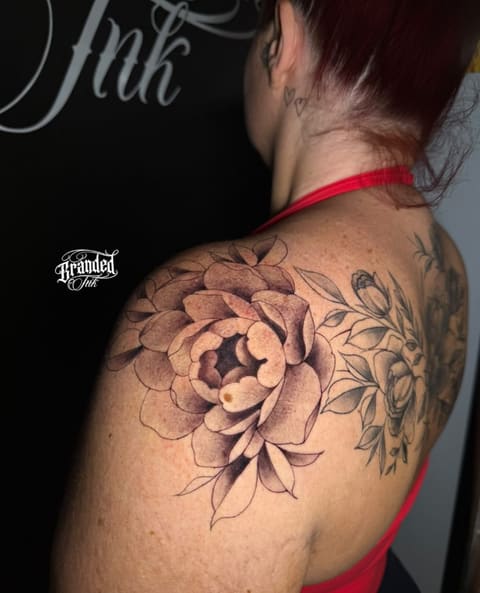
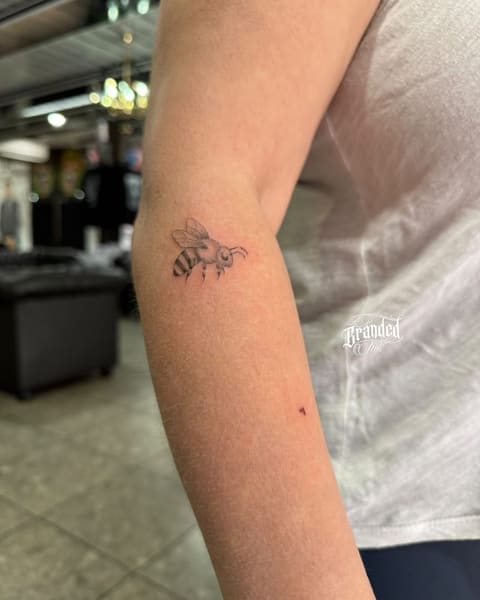
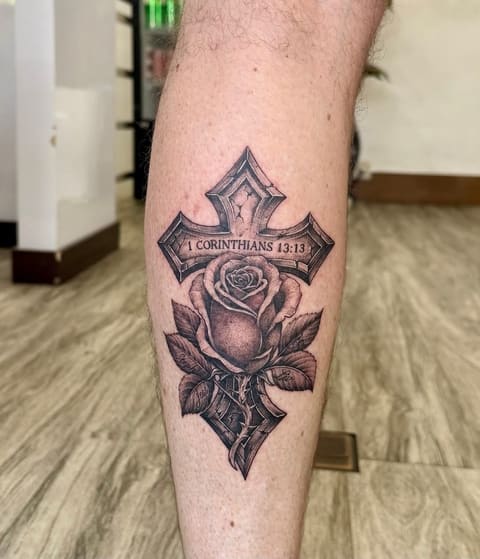
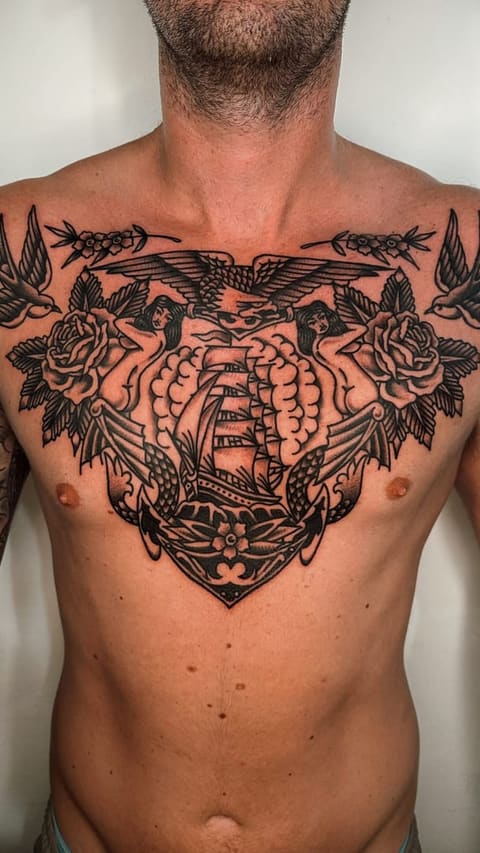
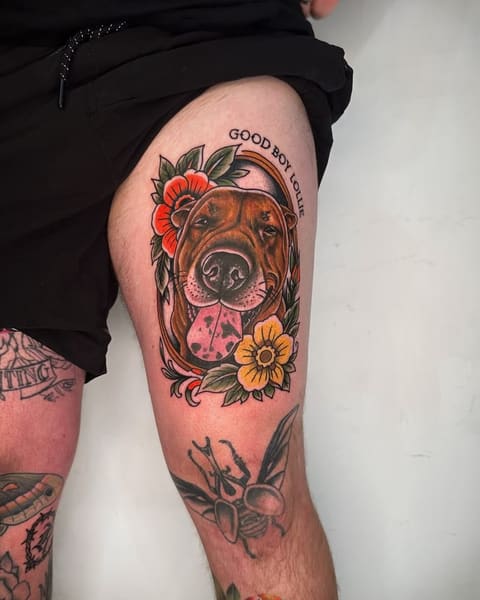
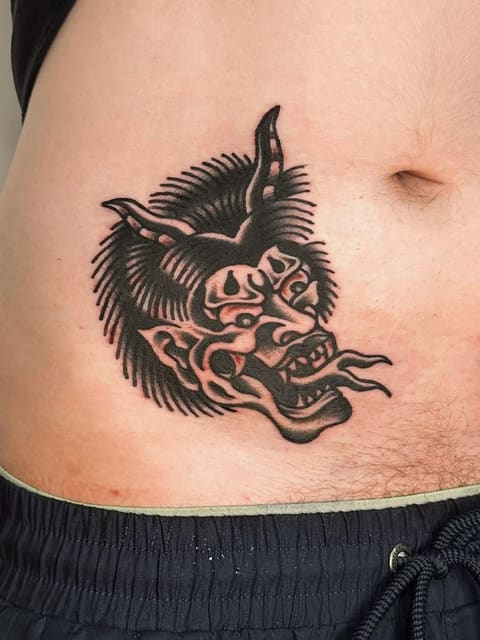
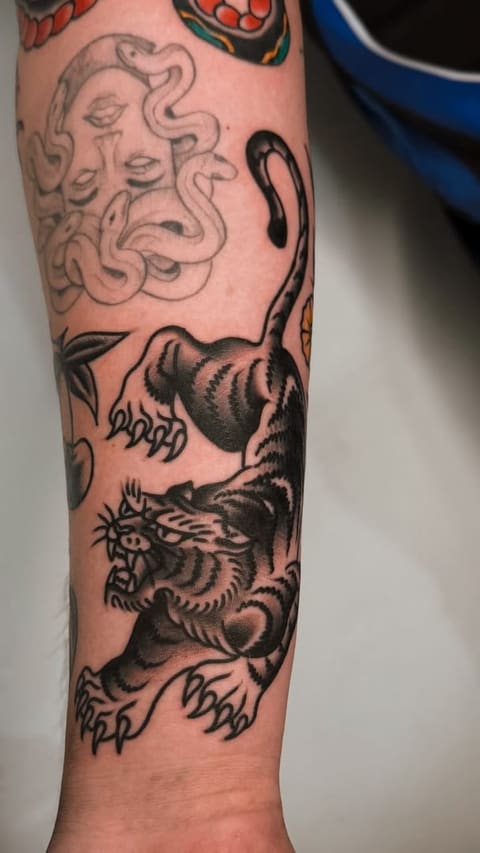
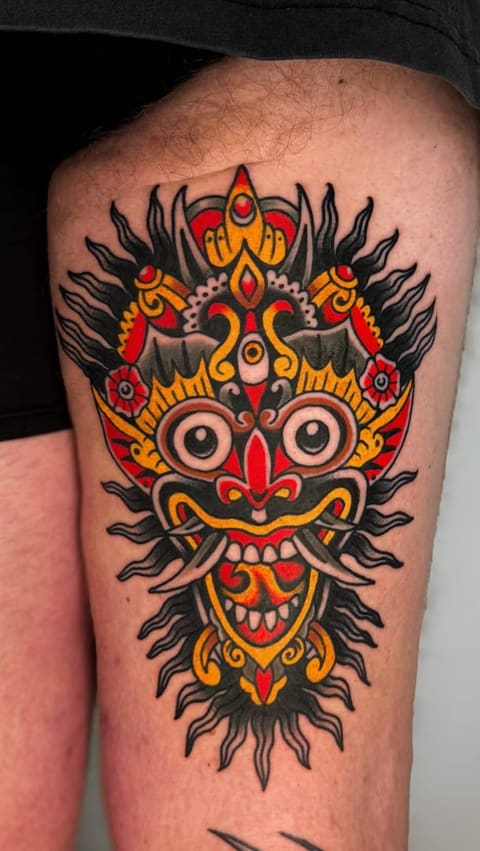
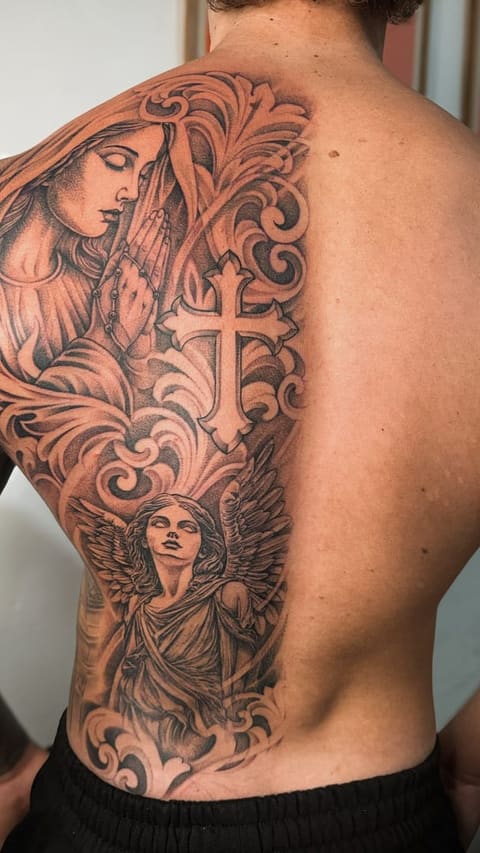
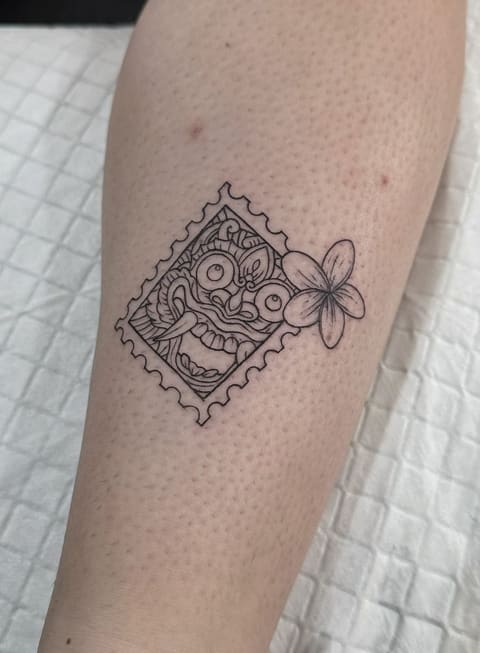
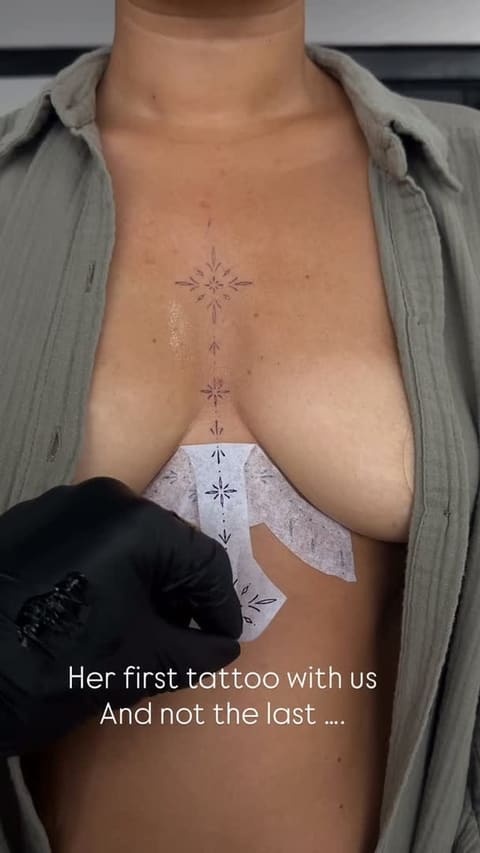
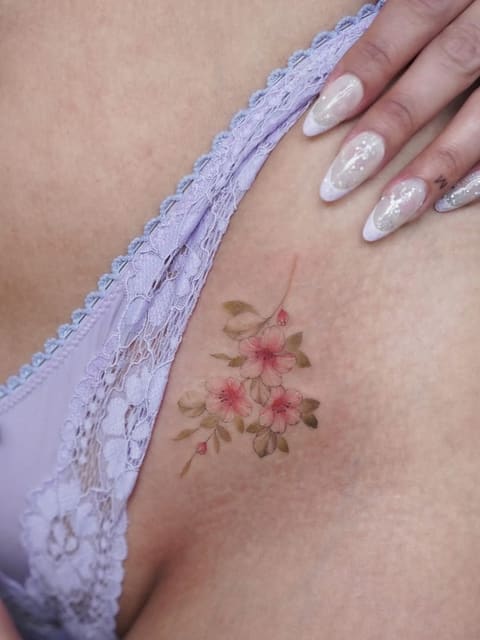
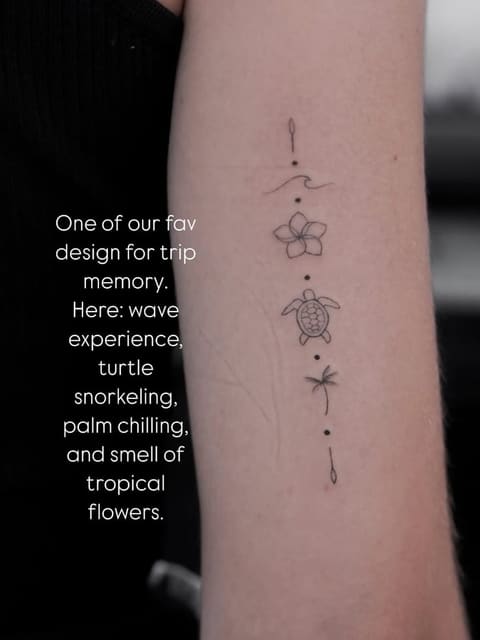
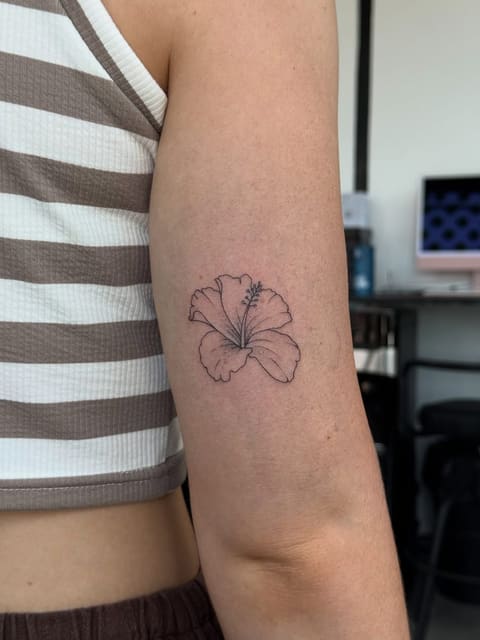
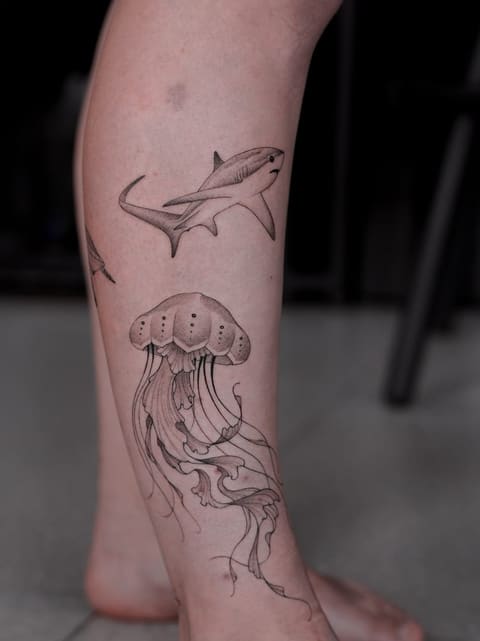
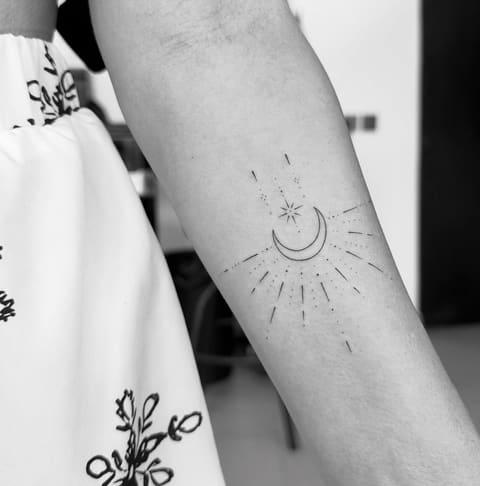
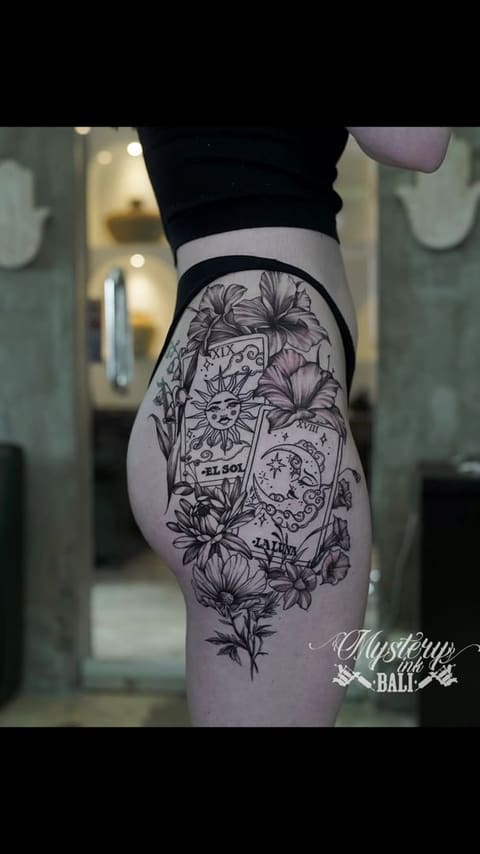
Prices come from each studio and can change. Typical ranges are worked out from the price lists we hold for Bali. Ask the studio for a quote.
Free for you
Send your traditional idea to studios
Tell us the idea, the size and where it goes, add your reference photos, and we send it to studios that do this style. Or see it on your skin first.
The guide
Traditional, step by step.
10 short chapters: what it is, where it sits, how it ages and how to fit it into a Bali trip.
What traditional is
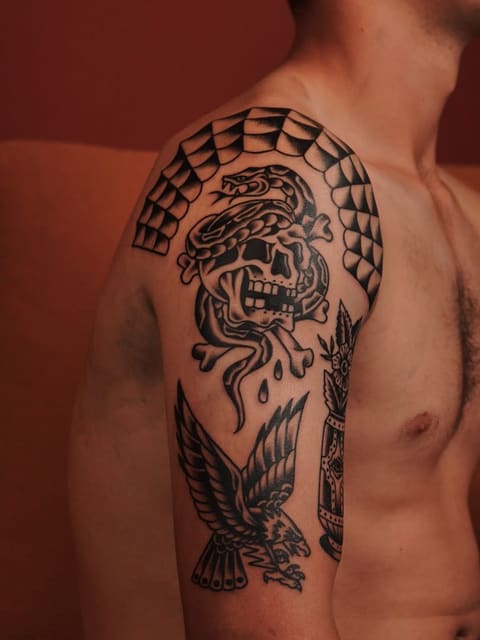
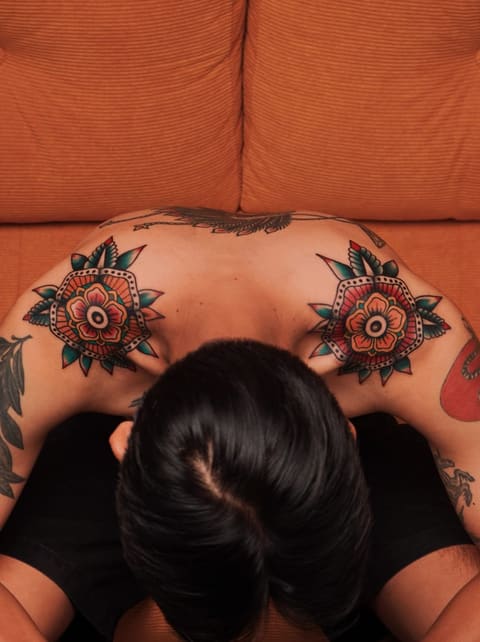
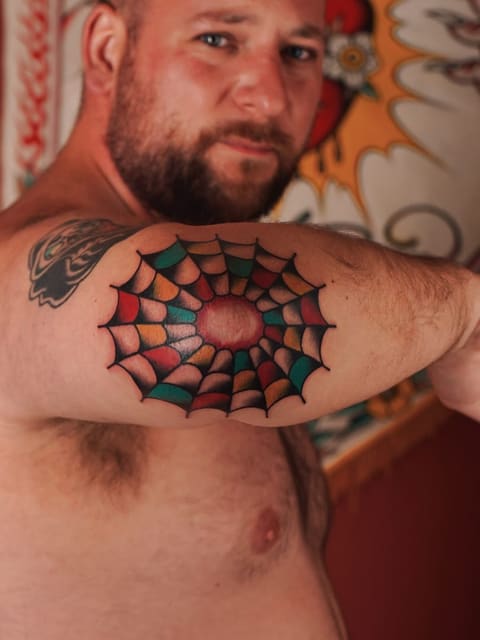
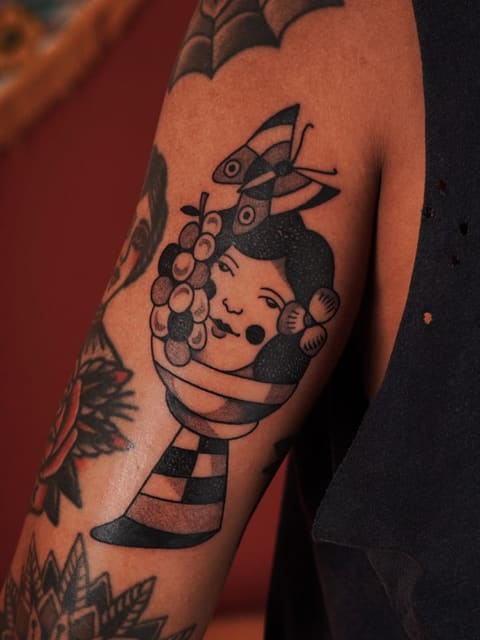
Traditional tattooing, often called American traditional or old school, is the classic Western tattoo: a bold, even black outline, simple solid shading and a small palette of strong colours such as red, green, yellow and black. Designs are clear and flat, so they read from a distance.
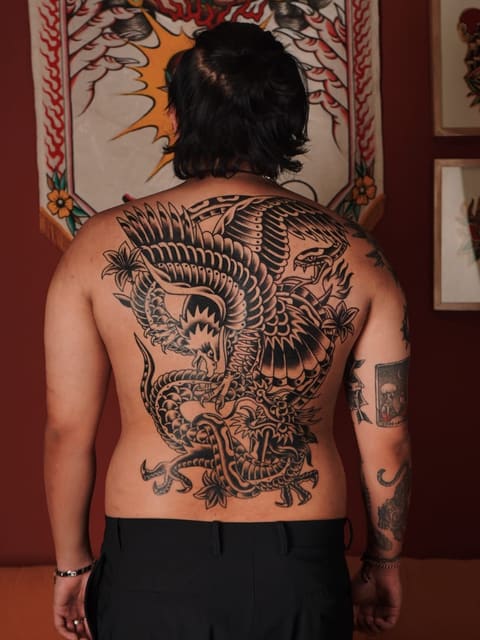
In our library, animals lead the traditional photos, then symbols, flowers and roses, birds, skulls, daggers, snakes, eagles, swallows and panthers. Many photos show the classic pairings: a snake with a rose, a dagger through a heart, a swallow with a banner.
Colour is common but not required: 47% of the traditional photos in our library are black and grey, built on the same bold outline with black shading only.
Flash culture
Flash is the heart of the style. Flash designs are drawings tattooists make to be tattooed, displayed on the walls or in the windows of a studio to show its style and skill (Smithsonian National Air and Space Museum, 2020). You walk in, pick one off the wall and sit down.
The classic designs carry old meanings. Smithsonian curators note that the swallow stood for the journey across the seas, because it is a bird that can go long distances and return home, and that many servicemen were tattooed before shipping out in the Second World War, the era of flash artists such as Sailor Jerry (Smithsonian National Air and Space Museum, 2020).
- Off the wallFlash is drawn to be tattooed. Pick it and sit down.
- The swallowA bird that flies far and comes home.
- Flash daysSet designs at a set price. Watch studio posts.
- Try it firstSee it on skin has traditional flash to place at size.
Some Bali studios post their flash on social media and some hold flash days, with set designs at a set price. If you are not sure, try a design first: our See it on skin tool has traditional flash designs, such as a swallow, a panther and a ship, that you can place on a 3D body at size.
Traditional, neo-traditional or Japanese?
All three share bold outlines and solid colour. Traditional keeps it flat and simple, one design at a time. Neo-traditional keeps the outline but adds depth, more colours, varied line weights and decorative frames, so it looks more like an illustration. Japanese joins its motifs with waves, clouds or wind into one large piece that follows the body.
In our library, traditional photos are most often tagged colour as well, then blackwork and illustrative. If you want the classic look, say "old school" or "American traditional" and send photos; if you want more depth and detail, look at neo-traditional.
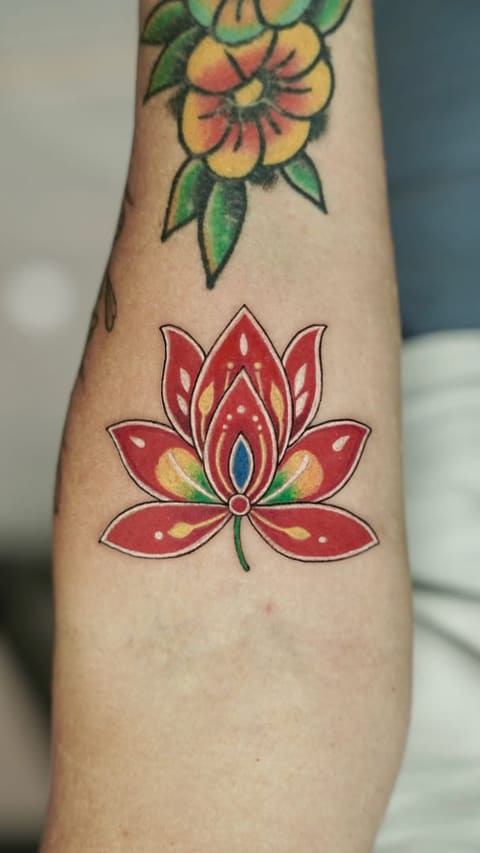 Traditional112 studios · 449 photosBold black outlines, a few solid colours and classic flash: roses, swallows, daggers, panthers.SizeSmall to medium, single piecesHow it agesAmong the longest lasting looks in tattooing.Most often onupper arm, forearm, calf
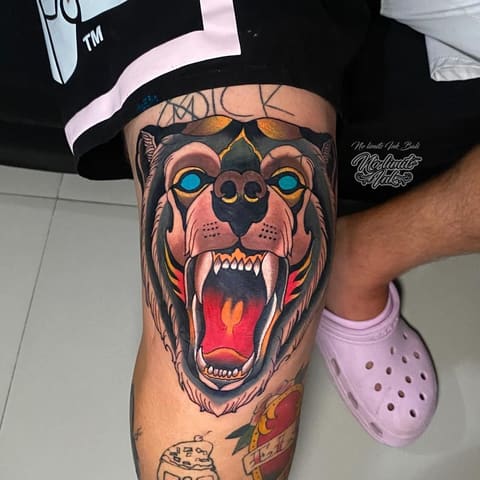 Neo-traditional50 studios · 99 photosTraditional's bold outline with more depth, a wider palette and decorative frames.SizeMedium to largeHow it agesOutlines hold; soft gradients can lighten.Most often onupper arm, forearm, calf
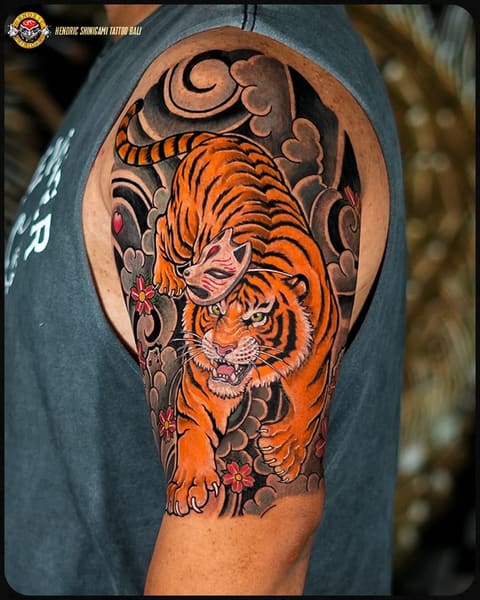
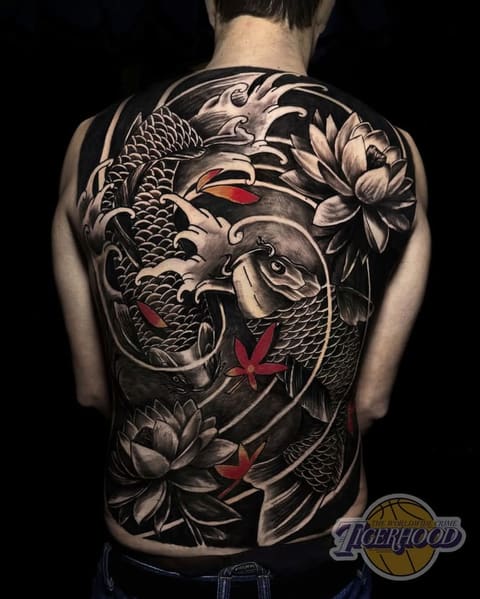 Japanese137 studios · 969 photosFolklore motifs joined by waves, clouds or wind into one flowing piece.SizeLarge: sleeves, backs, thighsHow it agesBold and dark; ages very well.Most often onupper arm, forearm, shoulder
Studios, photos and placements are counted from our listings and our library of studio photos. The words are a general guide; your artist knows your skin.
Who it suits and where it sits
Traditional suits people who want a strong, classic tattoo that lasts, people who like choosing on the day, and collectors who add a piece every trip. It suits a first tattoo too, as long as you want something bold.
In our photos it sits most often on the upper arm, forearm and calf. Arms and legs are the classic spots, often filled over time with separate pieces in a patchwork, the gaps later joined by small fillers such as stars or dots. Shins and calves suit tall designs such as a dagger or a snake.
- Outer arm and forearmThe classic home of a flash piece.
- Calf and shinTall designs such as daggers and snakes.
- PatchworkSeparate pieces collected over the years.
- Too smallBold lines can fill in if there is no room.
Give it room. Thick lines need space, and a traditional design shrunk too small can fill in as the years pass. Most flash is drawn for a palm sized piece or a little bigger, which is the medium band in our price table.
A good fit if
- You want a tattoo that still reads clearly from across a room in 30 years.
- You like classic designs: a rose, a swallow, a panther, a ship, a heart with a banner.
- You want a strong piece done in one sitting on a short trip.
- You like the idea of collecting pieces over the years, a patchwork of flash.
Think twice if
- You want soft, delicate or photo-like detail. Fine line or realism suits that better.
- You want it tiny. Bold lines need room, or they fill in.
- You want one big composed piece with a background. Look at Japanese.
- You plan to surf or swim every day straight after the session.
Why bold will hold
"Bold will hold" is an old saying among tattooists, and one model of ink in skin supports it. Built by Ian Eames at University College London, it predicted that the small details of a tattoo are lost first while thicker lines are less affected (UCL, 2011). Traditional is made of thick lines and solid fills, with few small details to lose.
- Are less affected by ageing than small details, in one model of ink in skin
- Thick lines
- Source: Eames, University College London, 2011
- Sunscreen the AAD advises on tattooed skin, reapplied every two hours
- SPF 30+
- Source: American Academy of Dermatology
Every tattoo still softens. Pigment is held by immune cells that are replaced over time and pass it on to new ones (Baranska and colleagues, 2018), so lines spread a little over decades. A bold outline hides that spread; a thin one shows it.
The sun matters too. The AAD notes that UV light can fade some tattoo inks, and advises a broad spectrum, water resistant sunscreen of SPF 30 or more on tattooed skin, applied 15 minutes before going out and reapplied at least every two hours.
Colour, red ink and the sun
Red is the signature colour of traditional tattoos, in roses, hearts and flames. It is also the colour most often behind skin reactions: a review of tattoo reactions found red pigment is the most common cause of reactions in tattoos (Forbat and colleagues, 2016). Reactions are not common, but if a red area stays itchy, raised or sore long after healing, see a dermatologist.
Colour also fades in the sun sooner than black. Dermatologists warn that UV light can cause colour tattoos to fade early (Gonzalez and colleagues, 2020), and in one review about one in five tattooed people reported sun sensitivity in their tattooed skin (Serup, 2015). Sunscreen once it has healed, and shade on the beach, keep the colours bright.
- The pigment most often behind reactions in tattoos
- Red
- Source: Forbat et al., Dermatology and Therapy, 2016
- Tattooed people with sun sensitivity in their tattooed skin
- 1 in 5
- Source: Serup, Current Problems in Dermatology, 2015
- Can cause colour tattoos to fade early
- UV
- Source: Gonzalez et al., Photodermatol Photoimmunol Photomed, 2020
If you would rather avoid colour, black and grey traditional is just as classic, with the same bold outline and black shading only.
Sittings, walk-ins and booking
Most traditional pieces are one sitting, and flash that is already drawn can go on the same day you choose it. Many Bali studios take walk-ins when an artist is free, and some hold flash days. A custom design, or a big piece such as a chest panel, needs booking ahead.
- One sittingMost flash is finished the same day.
- Walk-insMany studios take them when an artist is free.
- Custom workBook ahead, above all in high season.
- Plan the patchworkLeave room for the next piece.
If you are collecting a patchwork, plan each piece so it leaves room for the next, and tell the artist where you might add more later. Keep a photo of each healed piece, so the next artist can match the line weight and colours.
Planning it on a Bali trip
A new tattoo is an open wound for a while. Health advice is to avoid soaking a healing tattoo in a bath, a pool or the sea, and to keep it out of direct sunlight (Better Health Channel). Cleveland Clinic dermatologists also advise against sunscreen on it until it has healed, so shade and loose clothes do the work.
Traditional suits a trip because it is usually one sitting. Do the surfing and diving first, get tattooed in the last days and let it heal at home. Australia's Smartraveller advice for Indonesia also asks travellers to check the hygiene and safety of a tattoo studio before going ahead.
Follow studios that post their flash, choose an artist by healed traditional work and ask whether they take walk-ins or hold flash days.
Surf, swim and dive while your skin is bare. Drop into the studio and look through its flash on the wall or in the book.
Eat, drink water, skip alcohol the night before and wear clothes that leave the spot free. Check the stencil in a mirror.
Shade, short showers and no soaking. Loose clothes over it and the aftercare kept up on the flight home.
Healing in the heat
Healing follows a pattern. Itching and flaking are common in the first two weeks; after about three weeks scabs and flakiness usually ease; and the top layer of skin is usually healed after about two months, while deeper layers can take several more months (Cleveland Clinic). Flakes of packed colour can look alarming, but losing a little colour in the flakes is normal.
- Itching and flaking are common for about this long
- 2 weeks
- Source: Cleveland Clinic, 2026
- About when scabs and flaking usually ease
- 3 weeks
- Source: Cleveland Clinic, 2026
- About when the top layer of skin is healed
- 2 months
- Source: Cleveland Clinic, 2026
Heat makes it harder. Sweat, sand, straps and a scooter ride in the midday sun all rub on a healing tattoo. Wash it gently with mild soap, pat it dry and moisturise lightly when it feels dry; the AAD suggests a water based lotion and warns that petroleum based products can cause ink to fade.
Advice varies: a review of 700 American aftercare sheets found it differed widely, and only about one in five said when to see a doctor (Liszewski and colleagues, 2023). See a doctor for fever, skin that is hot to the touch, a bad smell or a lot of discharge, pain that grows instead of easing, or red streaks running from the tattoo (Cleveland Clinic).
Day 1
Bold and tender
The studio wraps it and tells you when to take the wrap off. Wash with clean hands and mild soap, pat dry and keep it in the shade.
Days 2 to 14
Flaking colour
Itching and flaking are common, and flakes can carry a little colour. That is normal; leave them alone and moisturise lightly.
Weeks 2 to 4
Dull, then bright
After about three weeks the flaking usually eases. Colours can look dull under the new skin before they brighten.
About 2 months
Healed on top
The top layer is usually healed by now, while deeper layers take longer. Check the colour for gaps, then sunscreen every time it sees the sun.
Red flags and questions to ask
Most Bali studios are careful and proud of their work, and their reviews show it. Traditional hides nothing: a shaky line or a patchy fill is there to see. Infections come from unhygienic practice, equipment that is not sterile and contaminated ink (FDA), so check these before you pay a deposit.
Shaky or uneven outlines in healed work
Traditional is built on clean, confident lines. Wobbles and uneven weight show forever.
Patchy colour in healed photos
Solid colour should heal solid. Ask for healed photos, not only fresh ones.
A bold design shrunk to tiny
Thick lines need space. A good artist will tell you when a design is too small to stay clear.
Needles or gloves not opened in front of you
Single use, sterile needles and fresh gloves for each client are the basic standard. Watch them come out of the packet.
Ink you cannot ask about
Ink can be contaminated even in a sealed bottle, says the FDA. A careful studio knows which brand it uses, colours included.
No aftercare in writing
Aftercare advice differs a lot. Ask for it in writing, with what should make you come back or see a doctor.
Questions to ask before you pay a deposit
- 1.Can I see healed traditional work, colour included?
- 2.Is this design flash or custom, and does that change the price?
- 3.What size does this design need for the lines to stay clear?
- 4.Do you hold flash days, or take walk-ins?
- 5.Is a touch-up included if the colour heals patchy?
- 6.Which inks do you use, and are your needles single use?
Questions, answered.
How many studios do traditional tattoos in Bali?
112 studios in our listings offer traditional, with an average Google rating of 4.9. Seminyak has the most of them. Each studio page shows its own photos and reviews.
How much does a traditional tattoo cost in Bali?
Studios usually price per design, by size and colour. Flash that is already drawn can cost less than custom work. Few studios publish prices, so the price section shows the typical price by size from those that do.
What is American traditional?
The classic Western tattoo style: bold black outlines, simple solid shading and a few strong colours, in clear designs such as roses, swallows, daggers, panthers and ships. Old school is another name for it.
What is tattoo flash?
Designs drawn by tattooists to be tattooed, shown on a studio's walls or in a book, says the Smithsonian. You pick one and the artist tattoos it, often the same day.
Why do traditional tattoos age so well?
Thick lines and solid fills have little small detail to lose. A model of ink in skin from University College London predicted that small details fade first and thicker lines are less affected.
What does a swallow tattoo mean?
Smithsonian curators note that the swallow stood for the journey across the seas, because it is a bird that flies long distances and returns home. Today many people choose it for travel and coming home.
Can I get a walk-in traditional tattoo in Bali?
Often, yes, for flash, when an artist is free. Some studios hold flash days with set designs at a set price. For custom work or in high season, book ahead.
How big should a traditional tattoo be?
Big enough for its bold lines to keep their space, which for most flash is about palm size or a little bigger. Shrunk too small, thick lines can fill in over the years.
Is red ink safe?
Most people have no problem, but red pigment is the most common cause of reactions in tattoos, according to a 2016 review. If a red area stays itchy, raised or sore long after healing, see a dermatologist.
Can traditional be done in black and grey?
Yes, and it is just as classic: 47% of the traditional photos in our library are black and grey. It keeps the bold outline with black shading only.
What is a patchwork sleeve?
A sleeve built from separate traditional pieces collected over time, with gaps later joined by small fillers such as stars or dots. Plan each piece to leave room for the next.
How long does a traditional tattoo take?
Most pieces are one sitting. A small flash piece can be quick; a large custom piece takes longer. Ask the studio for an estimate so you can plan the day and the days after.
Can I swim after a traditional tattoo?
Not until it has healed. Health advice is to keep a healing tattoo out of baths, pools and the sea, and out of direct sun. It is usually one sitting, so it is easy to book for the end of the trip.
How do I keep traditional colours bright?
Keep it covered and out of the sun while it heals, without sunscreen on it. Once healed, the AAD advises a broad spectrum, water resistant SPF 30 or more, reapplied every two hours. Colour fades sooner in strong sun than the black outline does.
Is a flash walk-in safe?
It can be, if the studio keeps the same standards for a walk-in as for a booking: single use, sterile needles and fresh gloves opened in front of you, and colours it can name. Infections can come from unhygienic practice, unsterile equipment or contaminated ink.
How do I book a traditional artist in Bali?
Open a studio below to see its traditional work, reviews and area, and send your idea or the flash you like with the size and placement. Or take the quiz and we send your request to studios that do traditional.
Sources and review
How we made this page
Reviewed by the Peachy Tattoos editorial team
Last reviewed November 10, 2026
Studio counts, ratings, areas and prices come from our listings of Bali studios. Photo counts, placements and subjects come from our library of the studios' own photos. Health and healing facts come from the sources listed here, named where they are used.
Check our work
Ask an AI assistant to fact check this page against its sources.
References
- 1.Body art during World War II: from the Lyle Tuttle tattoo art collection (Carolyn Russo) · Smithsonian National Air and Space Museum, 2020
- 2.Caring for tattooed skin · American Academy of Dermatology
- 3.Tattoo aftercare tips from a dermatologist · Cleveland Clinic Health Essentials, 2026
- 4.Think before you ink: tattoo safety · U.S. Food and Drug Administration, 2024
- 5.Tattoos · Better Health Channel, Victoria State Government, 2015
- 6.Indonesia travel advice: health · Smartraveller, Australian Government
- 7.Maths predicts how a tattoo will age (Ian Eames, University College London, in Mathematics Today) · Phys.org, 2011
- 8.Unveiling skin macrophage dynamics explains both tattoo persistence and strenuous removal (Baranska et al.) · Journal of Experimental Medicine, 2018
- 9.Patterns of reactions to red pigment tattoo and treatment methods (Forbat et al.) · Dermatology and Therapy, 2016
- 10.Ultraviolet radiation may cause premature fading of colored tattoos (Gonzalez et al.) · Photodermatology, Photoimmunology and Photomedicine, 2020
- 11.Seamless prevention of adverse events from tattooing (Serup) · Current Problems in Dermatology, 2015
- 12.An analysis of the content and recommendations of 700 American tattoo aftercare instructions (Liszewski et al.) · Dermatology, 2023
This guide is general information, not medical advice. Your artist knows your skin and your design; see a doctor for any sign of infection or a skin reaction.
Ready for your traditional tattoo?
One request, sent to studios that do the style. Free, and no account.