design ideas
Back Piece Tattoo Composition: Layout, Flow, and Scale
A back piece is the biggest single canvas on the body. Here is how to plan composition, flow, and scale so it reads as one design instead of a pile of unrelated tattoos.
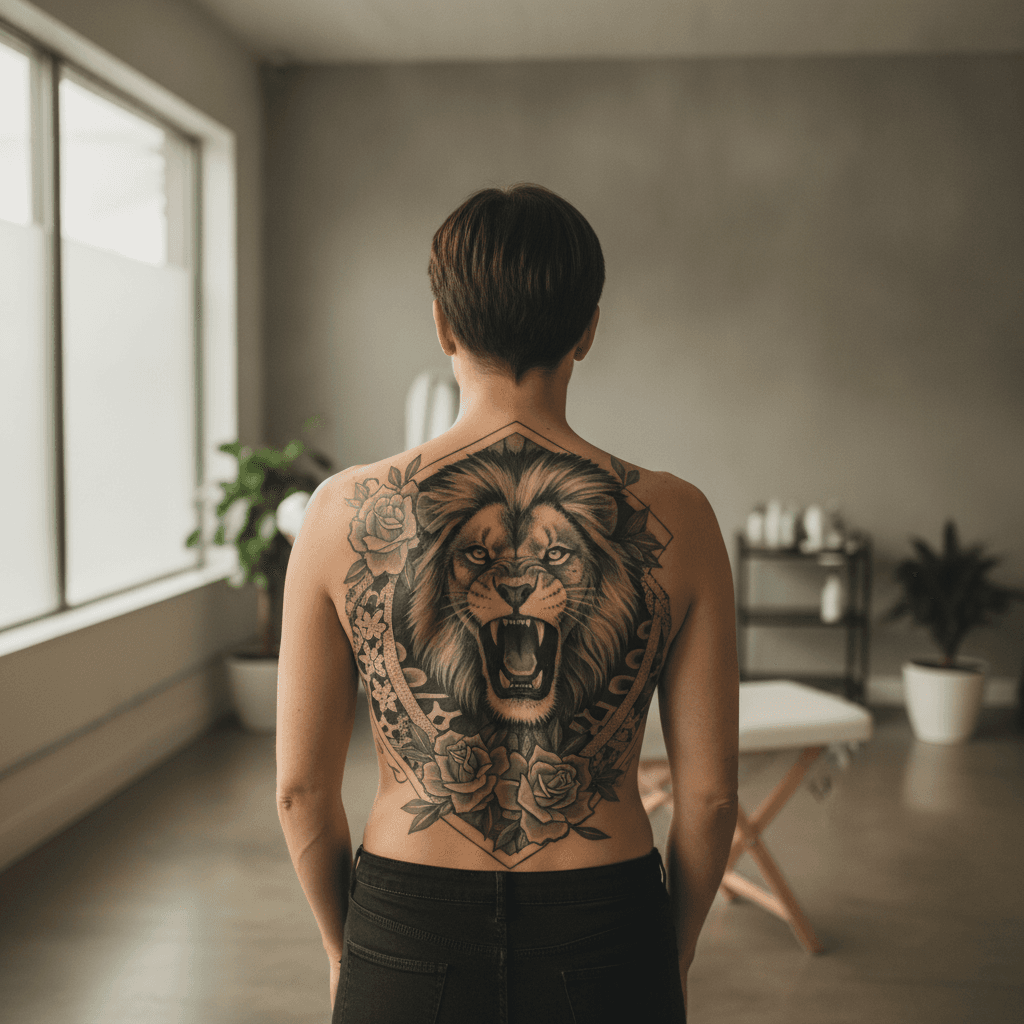
A back piece is the biggest single canvas on the human body, and it rewards planning the way no other tattoo does. Most people who end up with a coherent back piece did not start by walking in and asking for one. They started with a subject, a style, and a rough map of where the design would breathe and where it would compress. This guide covers how to think about layout, flow, and scale before the first stencil goes on, and how to leave room for the piece to grow into a bodysuit later if you want it to.
Why the back is different from any other placement
The back offers roughly 400 to 600 square inches of tattooable skin depending on your build, which is more than a full sleeve on both arms combined. That much real estate breaks the usual rules of tattoo composition. A forearm design has a natural frame with the elbow and wrist as boundaries. The back has no clean edges, so the artist has to invent them. Good back pieces treat the spine as a central axis, the shoulder blades as anchors, and the lower back as a base that carries visual weight. Bad back pieces treat the back as one flat rectangle and end up looking like a poster stuck to skin.
Muscle movement matters more here than on any limb. Latissimus dorsi flex changes the width of the mid-back by two or three inches when you raise your arms, and a design placed without accounting for that will pull and distort. Experienced back-piece artists sketch the stencil while you stand, then have you raise both arms and check where the lines shift. A design that only looks right when you are perfectly still is a design that will look wrong most of the time.
The three layout schools
Most back pieces fall into one of three composition traditions, and picking one early makes every downstream decision easier.
Japanese irezumi is the oldest and most codified. It uses a central figure (dragon, koi, Fudo Myoo, hannya) surrounded by wind bars, water, cherry blossoms, and maple leaves as background. The whole piece reads as one continuous scene wrapping the torso, and the shoulders, chest, and thighs are treated as extensions of the same canvas. If you are drawn to this tradition, read our Japanese irezumi style guide before your consultation. Irezumi back pieces typically take 40 to 80 hours across 10 to 20 sessions.
Western large-scale illustrative and realism pieces treat the back more like a framed painting. A single central subject dominates, often a portrait, an animal, or a mythological scene, with negative skin used as the frame. These pieces demand more from the artist because there is no repeating background pattern to hide small inconsistencies. Book with someone whose portfolio shows finished large-scale realism, not just isolated forearm pieces.
Blackwork and ornamental back pieces use symmetry, geometry, and repeated motifs to organize the space. Mandalas radiating from between the shoulder blades, symmetrical wing patterns, or fully saturated blackout panels with negative-space ornament are all common approaches. These read as decorative rather than pictorial, and they usually finish faster than irezumi or realism because there is less shading gradation.
Flow: how the design moves across the body
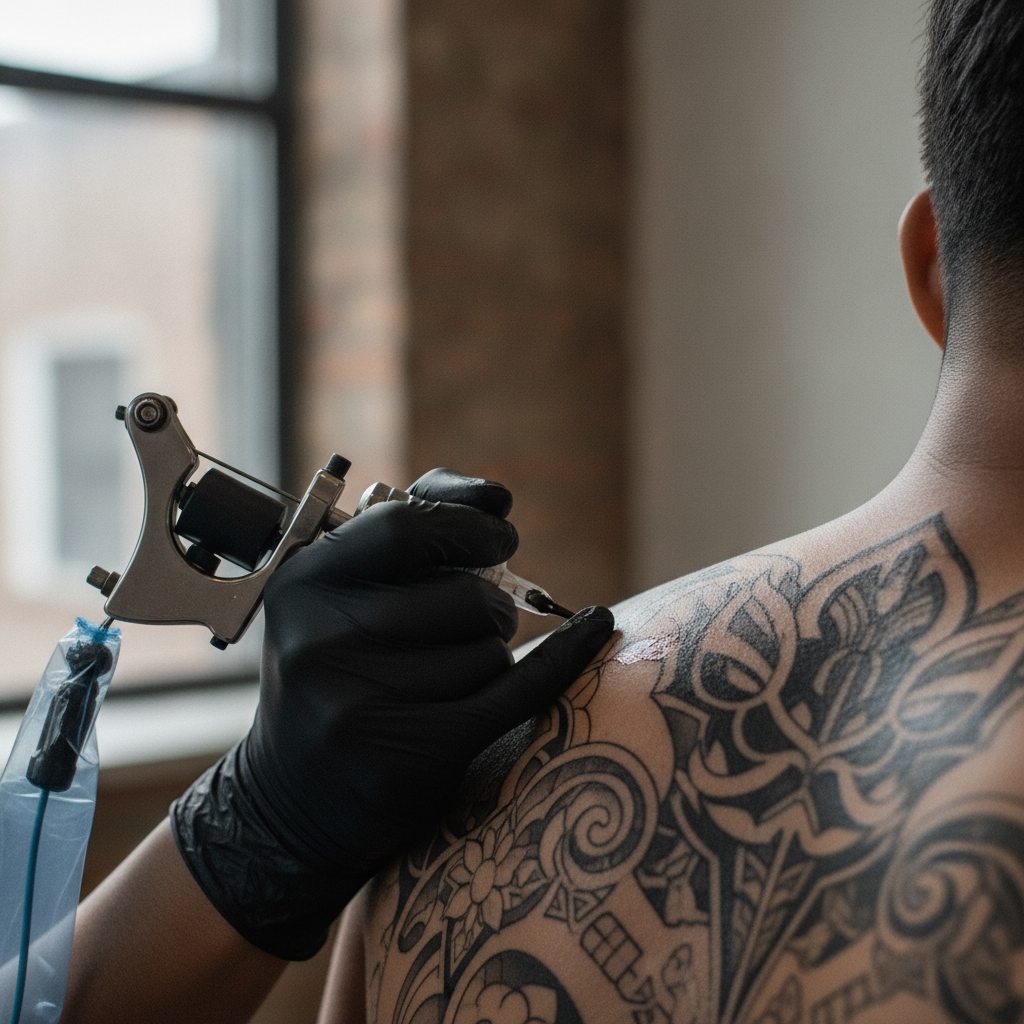
Flow is the term artists use for how the eye travels through a composition. On a back piece, flow usually follows one of three paths. Vertical flow runs top to bottom, using the spine as the central column, and works well for tall subjects like dragons, trees, or figures. Diagonal flow runs from one shoulder to the opposite hip, which is the most dynamic option and the standard for irezumi. Radial flow spreads outward from a central point, usually between the shoulder blades, and works for mandalas, wings, and symmetrical ornamental pieces.
Whichever direction you choose, the composition needs to acknowledge the natural planes of the back. The upper back tilts forward. The lower back tilts back. Between them, the mid-back is roughly flat. A design that ignores those planes will look tacked-on. A design that uses them will look like it belongs on that body specifically. This is one reason back pieces are always designed on your skin, not on paper first. Any back-piece artist worth booking will draw the final stencil freehand onto your back at the first session and adjust it while you stand, sit, and move.
Negative space is part of flow too. Fully saturated back pieces (no unshaded skin visible) are dramatic but visually heavy, and they age harder than pieces with breathing room. Most modern back pieces leave 20 to 40 percent of the skin untouched, using that negative space to define the outer edge of the design and give the eye somewhere to rest.
Scale: how big everything should be
The single biggest mistake first-time back-piece clients make is asking for too much detail. Fine linework and micro-realism do not translate to back-piece scale. A subject that reads clearly on a forearm at 6 inches will disappear on a back at 24 inches because the eye is now looking at it from across a room instead of across a coffee table. Back pieces are read at conversation distance, which means the primary subject needs to be recognizable from 8 to 12 feet away.
The rule of thumb most artists use: the central figure should be at least 12 to 18 inches tall, with major features (a face, a wing, a hand) sized at 3 to 5 inches minimum. Anything smaller becomes decorative filler. Background elements can be smaller but should still be legible at arm's length. If a client insists on cramming fine-line detail into a back-piece design, most experienced artists will either talk them out of it or refuse the booking, because they know how it will age.
- Central figure: 12 to 18 inches tall minimum
- Major features (faces, hands, key details): 3 to 5 inches minimum
- Line weight: 1.5 to 3 mm for outlines, thicker than a sleeve
- Session length: 4 to 6 hours per sitting for most people, longer for endurance
- Total time: 40 to 100 hours depending on style and detail
Cost and timeline expectations
Back pieces are priced by session, not by the piece, because no artist can accurately predict total hours before starting. Expect $150 to $400 per hour with a booked artist in a major market, and expect the piece to take 8 to 20 sessions spread over 12 to 24 months. Full estimates land between $6,000 and $30,000 for a completed back piece, with most falling in the $10,000 to $18,000 band. Our back piece tattoo cost guide breaks down the pricing bands by style.
Healing between sessions matters more than for smaller work. Most artists want at least 4 to 6 weeks between back-piece sessions, both to let the skin fully heal and to give you a break from the physical stress. Sleeping is the hardest part after a session. Side-sleeping is fine on a fresh forearm tattoo but nearly impossible on a fresh back piece, and stomach-sleeping presses the fresh ink into the sheets. Most people end up sleeping on their side with a pillow tucked between their body and the mattress to keep the back off the bed. Follow our full aftercare timeline for what to expect week by week.
Leaving room for a bodysuit
If there is any chance you will extend the piece into a bodysuit later (arms, chest, ribs, thighs), tell your artist at the very first consultation. Bodysuits are not sleeves stuck onto a back piece. They are one continuous composition that treats the whole body as the canvas, and the back piece has to be designed with the eventual continuation in mind. The most common mistake is a back piece that terminates in a hard border at the shoulder or hip, which then becomes impossible to blend into a future arm or thigh piece.
Artists who specialize in Japanese irezumi and large-scale blackwork routinely design back pieces with continuation lines that fade into negative space at the shoulders, ribs, and hips. Even if you never continue the piece, those soft edges will always look better than hard ones. If you know you want a bodysuit, budget 200 to 400 total hours and 3 to 5 years of monthly sessions with the same artist. It is the closest thing tattooing has to a life project.
Frequently asked
How long does a full back piece take from start to finish? Most back pieces take 12 to 24 months of monthly or bi-monthly sessions, totaling 40 to 100 hours of tattoo time. Irezumi and full-color realism sit at the longer end. Ornamental blackwork and mandala pieces can finish in 40 to 60 hours because the shading is more graphic than gradational.
Do I have to commit to the whole piece before we start? Yes and no. You commit to the overall composition and style before the first session, because the outline and placement of the central figure lock in the entire canvas. But you can pause between sessions for months or years, and you can extend the piece over time. What you cannot do is start with a small standalone tattoo in the middle of your back and later ask an artist to build a back piece around it.
How painful is a back piece compared to smaller tattoos? The spine, shoulder blades, and lower back are all in the top tier of tattoo pain. Individual sessions are not necessarily worse than a rib or sternum tattoo, but the cumulative exhaustion of a 5-hour back session is significant. Most people describe it as manageable pain that becomes tolerable after the first 45 minutes as endorphins kick in, then gets harder again in the last hour of each session.
Can I get a back piece as my first tattoo? Some artists will do it, most will not. The concern is not that you cannot handle the pain. It is that you have no reference point for how a large tattoo will age on your skin, how you will feel about carrying that much ink permanently, or whether you actually like the style enough to commit to a two-year project. Most experienced back-piece artists ask that you have at least one medium-sized tattoo (a half-sleeve or thigh piece) before booking a back piece.
How do I choose the right artist? Look for portfolios that show finished large-scale work, not just isolated small pieces. Ask to see healed back pieces, not just fresh ones, so you can judge how the artist's work ages. Book a consultation, not a session, and use it to discuss composition and flow before you commit to a deposit. Any artist who wants to start tattooing without a proper consultation on a piece this size is not the right artist for it.
Should I get color or black-and-grey? Both work at back-piece scale. Color reads more dramatically at first but requires more touch-ups over 20 to 30 years, especially reds and yellows. Black-and-grey ages more consistently and holds up better under sun exposure. Irezumi traditionally uses color. Western large-scale realism and ornamental blackwork usually stay black-and-grey. Pick based on the style you want, not on ageing concerns alone.